Lee Martin - Late One Night
Здесь есть возможность читать онлайн «Lee Martin - Late One Night» весь текст электронной книги совершенно бесплатно (целиком полную версию без сокращений). В некоторых случаях можно слушать аудио, скачать через торрент в формате fb2 и присутствует краткое содержание. Год выпуска: 2016, Издательство: Dzanc Books, Жанр: Современная проза, на английском языке. Описание произведения, (предисловие) а так же отзывы посетителей доступны на портале библиотеки ЛибКат.
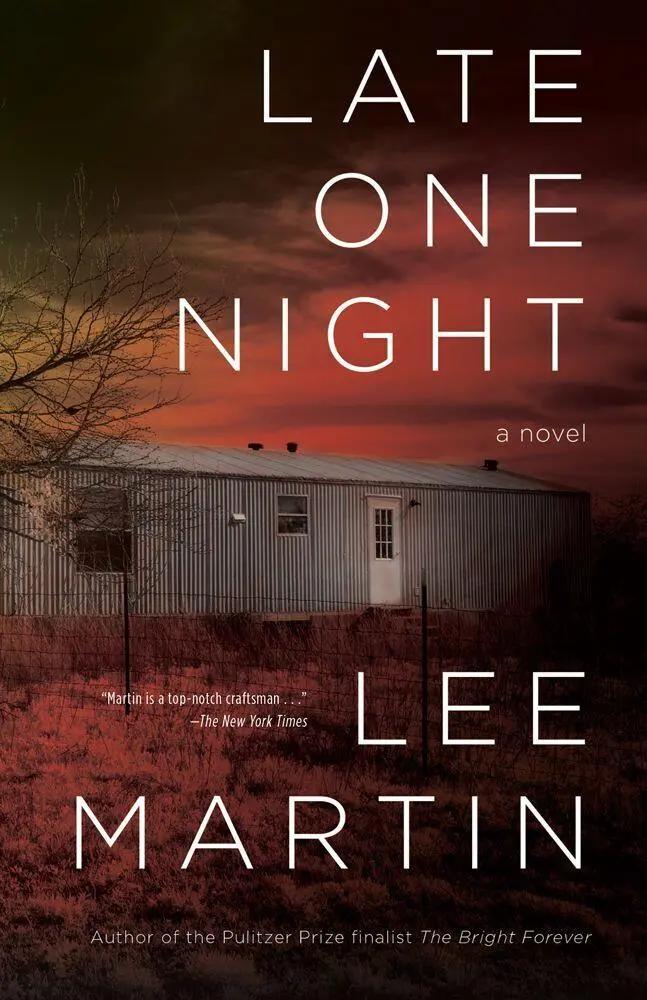
- Название:Late One Night
- Автор:
- Издательство:Dzanc Books
- Жанр:
- Год:2016
- ISBN:нет данных
- Рейтинг книги:3 / 5. Голосов: 1
-
Избранное:Добавить в избранное
- Отзывы:
-
Ваша оценка:
Late One Night: краткое содержание, описание и аннотация
Предлагаем к чтению аннотацию, описание, краткое содержание или предисловие (зависит от того, что написал сам автор книги «Late One Night»). Если вы не нашли необходимую информацию о книге — напишите в комментариях, мы постараемся отыскать её.
Ronnie and his girlfriend, Brandi Tate, maintain his innocence — he’s a loving, caring father who wants to do everything he can to protect his family. But as the gossip continues, Ronnie feels his children (and, eventually, Brandi) pulling away from him. Soon enough, he finds himself at a crossroads — should he allow gossipmongers to seal his fate, or should he fight to prove that he’s not the monster people paint him to be?
In
, Lee Martin examines the devastating effect of rumors and the resilience of one family in the face of the ultimate tragedy.
Late One Night — читать онлайн бесплатно полную книгу (весь текст) целиком
Ниже представлен текст книги, разбитый по страницам. Система сохранения места последней прочитанной страницы, позволяет с удобством читать онлайн бесплатно книгу «Late One Night», без необходимости каждый раз заново искать на чём Вы остановились. Поставьте закладку, и сможете в любой момент перейти на страницу, на которой закончили чтение.
Интервал:
Закладка:
But now this — what Anna Spillman had said. Lois couldn’t help but speak up. “They had a bad furnace.” Her voice was loud, as if she knew that if she didn’t shout she’d never get out what she wanted to say. Roe snapped her head up to see where that voice had come from. Anna turned on her heel to look. “That furnace,” Lois said again. “Della was burning wood. It was bitter cold and the baby had the croup. Something must have gone wrong with that furnace or with the Franklin stove.”
She looked to Wayne then, and he could see the pain and fear in her eyes. He felt the store start to tilt a little and he tried hard to keep it from spinning all the way around. He focused on a spot directly in front of him, the sheepish look on Anna Spillman’s face.
“It’s just talk about that fire being set.” He’d heard the rumors about the blaze being suspicious, and a man from the State Fire Marshal’s office had been to talk to him, asking questions about the condition of the furnace and whether he knew of any accelerants stored inside or outside the trailer. Wayne knew folks were talking about Ronnie. At first he wanted it to be true so he’d have someone to call to account instead of blaming himself for not making Della and the kids leave the trailer and bunk up at his and Lois’s house that night. Then he started to think it was better the other way, better if the fire was something no one could have helped. An accident flung down from the heavens. He wanted to believe that Della and the kids had been chosen because for some reason or an other that wasn’t for him to know, God needed them and this was his way of calling them home. Why he had to make them suffer so, Wayne couldn’t figure out. He preferred to think of them made whole again and at rest in the hereafter. He’d leave the mysteries to someone else to fret over. “All that talk about Ronnie,” he said, “it doesn’t amount to anything.”
“Wayne, you’re probably right,” Roe Carl said. “Hello, Lois. I didn’t see you folks come in.”
Lois held up the last package of Brach’s and said, “I came to get candy.”
“You didn’t have WPLP on this morning?” Anna said. “The local news?”
“We don’t listen to the radio anymore.” Lois threw the package of Brach’s onto the conveyor belt. “Ring me up,” she said to the girl at the register, a skinny-minnie of a thing with lipstick the color of black cherries.
“The fire marshal’s come to a conclusion,” Anna said. “Oh, Lois, I’m just sick over all of this.”
Wayne said, “You mean it was set? The fire? They know that for sure?”
He’d been by the place in the days after, and he’d seen the deputies from the fire marshal’s office combing through the debris. They brought a dog with them, the kind trained to sniff for accelerants — gasoline, kerosene, turpentine, that sort of thing. The deputies got down on their knees and dug around in the ruins. They took samples to send to the lab in Springfield. “Multiple points of origin.” Anna said the words carefully, recalling them from the radio news. “That’s what they’re saying.”
Just minutes before, she’d heard the sheriff talking with the fire chief in the Real McCoy using the same words: multiple points of origin . She’d lingered, clearing the table behind theirs, catching as much of the story as she could. The dog had sniffed out gasoline. The fire had started in more than one place. There were trail marks, more than one burn-through in the flooring, spalled concrete. There was crazed glass, finely cracked; collapsed springs in the furniture and the bedding; alligator blisters on the charred wood — all signs that the fire burned fast and hot. “It was set all right,” Milt Timlin said, and Biggs said, “The question now is who did it.”
“So it’s for sure?” Wayne said to Anna. The store was spinning fast now, and he couldn’t take it anymore.
“Lois!” Anna called out in a frantic voice.
The skinny-minnie girl let out a squeak and said, “Oh, what should I do?”
Lois turned her head to look for Wayne, but he was on the floor, tumbled down so fast she couldn’t have caught him if she’d tried.
At that moment, Roe Carl saw the sheriff’s car drive past, heading south on Main Street, and she watched it go for the briefest instant before she picked up the phone and called 911.
Ronnie was on the porch of Brandi’s house when he saw the sheriff’s car coming at him down Locust Street. He’d spent the morning alone — Brandi at work and the kids at school — trying to figure out what he could and couldn’t tell Angel about that pocketknife and how it came to be behind the trailer. Yes, he’d gone back there the night of the fire, but he didn’t yet know how to tell that story in a way that would make any sense, because he still didn’t understand why he’d done what he had — didn’t like to think about it, truth be told. Didn’t like to think about Shooter either and what story he might be spinning.
Here toward noon, Ronnie had finally decided to give up all that thinking and to drive over to Brick Chapel about that job the way he was supposed to have done the day before, but Angel hadn’t come home, and he’d been too worried about her to do anything but get on the telephone and call anyone he could think of who might have seen her — even Missy Wade, as much as it galled him. He’d driven the streets looking for Angel. Then he gave up and went back to Brandi’s, and that’s when Shooter called.
Ronnie would have to find a way to explain all that to the man in Brick Chapel, and then hope he understood and still had that job. It was a good job at a garment factory, working in the warehouse running a forklift, moving bolts of material, loading and unloading trucks. A job with health benefits and profit sharing and a week’s paid vacation every year. A steady job worth driving sixty miles there and back every day. He could work at it for years and years to come and make a life for his girls. Now that he had them, even with Brandi’s check, things were going to be tight, especially with the new baby on the way. He’d made up his mind that he wasn’t going to ask Missy for any of the money in the bank, not unless he absolutely had to. He wasn’t going to give her the satisfaction of playing Good Samaritan to his need. He’d rather that money turned to dust in the bank and Missy would have to explain to all the good folks who made donations why she’d never let Ronnie use it for his girls.
That’s what was on his mind when he stepped out onto the porch and saw the sheriff’s car. He watched it come, hoping it might turn left onto Jones Street and move on out of his day, but he could already see that the car was slowing. It came to a stop along the curb just to the left of Brandi’s drive, and Ronnie didn’t wait. He went out to see what Biggs might want, fearing that he knew exactly why the sheriff was there.
“I told you I wasn’t filing charges against Wayne,” he said to Biggs, who had put his window down. Ronnie laid both hands on top of the car and leaned down. The two-way radio crackled, the heater fan blew out warm air. Biggs had an aroma made up of leather and fried foods and some sort of pine-scented aftershave.
“I’m not here about that.” He reached over and squelched the two-way. “I need to talk to you about the fire.”
“Now? I’m on my way to see about a job.”
“I don’t think we should wait. Haven’t you heard?”
“It’s over at Brick Chapel. A good job at the garment factory.”
“Ronnie, the fire marshal’s report came in. We need to talk.”
Biggs wanted him to get in the car and ride over to the courthouse in Phillipsport with him.
“Like I’m some damned criminal?” Ronnie said. “Let people see me like that? Bad enough I got to stand out here talking to you and all the neighbors peeking out windows.”
Читать дальшеИнтервал:
Закладка:
Похожие книги на «Late One Night»
Представляем Вашему вниманию похожие книги на «Late One Night» списком для выбора. Мы отобрали схожую по названию и смыслу литературу в надежде предоставить читателям больше вариантов отыскать новые, интересные, ещё непрочитанные произведения.












Обсуждение, отзывы о книге «Late One Night» и просто собственные мнения читателей. Оставьте ваши комментарии, напишите, что Вы думаете о произведении, его смысле или главных героях. Укажите что конкретно понравилось, а что нет, и почему Вы так считаете.