Adam Johnson - Emporium
Здесь есть возможность читать онлайн «Adam Johnson - Emporium» весь текст электронной книги совершенно бесплатно (целиком полную версию без сокращений). В некоторых случаях можно слушать аудио, скачать через торрент в формате fb2 и присутствует краткое содержание. Год выпуска: 2003, Издательство: Penguin Books, Жанр: Современная проза, на английском языке. Описание произведения, (предисловие) а так же отзывы посетителей доступны на портале библиотеки ЛибКат.
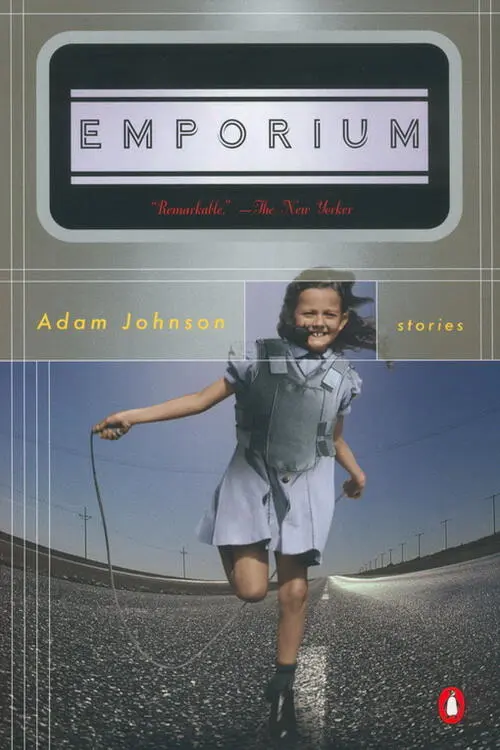
- Название:Emporium
- Автор:
- Издательство:Penguin Books
- Жанр:
- Год:2003
- ISBN:нет данных
- Рейтинг книги:3 / 5. Голосов: 1
-
Избранное:Добавить в избранное
- Отзывы:
-
Ваша оценка:
Emporium: краткое содержание, описание и аннотация
Предлагаем к чтению аннотацию, описание, краткое содержание или предисловие (зависит от того, что написал сам автор книги «Emporium»). Если вы не нашли необходимую информацию о книге — напишите в комментариях, мы постараемся отыскать её.
Emporium — читать онлайн бесплатно полную книгу (весь текст) целиком
Ниже представлен текст книги, разбитый по страницам. Система сохранения места последней прочитанной страницы, позволяет с удобством читать онлайн бесплатно книгу «Emporium», без необходимости каждый раз заново искать на чём Вы остановились. Поставьте закладку, и сможете в любой момент перейти на страницу, на которой закончили чтение.
Интервал:
Закладка:
Flying south a couple miles, I turn onto the Bayou Works road, and across the levee, I can see the silver ship, with its orange rafts and black booms, looking from here like it is parked in a grassy field. A group of oil companies pitched in to buy it in hopes of preventing a Valdez-like spill on the Gulf, but they can’t agree on a name or even a color to paint it. The ship sits silent under coats of galvanized primer, fixed to a mooring it has never left. Pulling up to the fence, I hit the high beams and honk.
Randy comes to the gate wearing boots, a black tee, and khaki pants with black stripes down the sides. There’s a walkie-talkie in his back pocket. He pulls out a ring of keys and starts trying them, one-by-one, in the gate’s padlock.
I hang my fingers in the chain link and look at him.
“They’re serving a search warrant on my house tomorrow.”
Randy pauses, a key about to enter the lock. “Who is?”
“Who? Who do you think? BATF.”
“What for?” he asks.
“It’s a long story. Did you know about it? I mean, are you going to be there?”
“Serving warrants is serious business — there’s site containment, infra red, metal detection teams, void sweeps. They don’t let me near that, and I don’t really hear any news. Who the hell am I? I can’t even pass my entrance test.”
I hold his eyes. I get a feeling from him. I suppose I’ve always felt it, that he has no secrets, that I can believe him. “There went your one excuse for standing me up.”
“Come on,” he says, popping the lock. He shakes open the gate.
There’s a huge concrete dock with a yellow-striped helipad. At the edge of the deck, an anhinga dries its wings under the floodlights.
On the gangway, I stop him. “So tell me why you blew me off.”
“I had to work. I told you I’d probably have to work.”
“You’re kidding me.”
“You don’t get it, do you? I have a job. What if there was a spill? Who’d open the gates? Who’d turn on the deck lights for the helicopters? Someone has to prime the tanks for the recovery crews.”
“You should have called.”
“What would I have said?” he asks. “You only hear what you want, anyway.”
He turns and walks up the stairs. It takes me a moment, but I follow him, climbing behind, up four flights of grating. We enter the bridge, a dark, angled room filled with tall chairs that have shock absorbers and shoulder harnesses. Looking through the windscreen, you can’t see anything. It’s like being up in the Custer, flying out past the oil platforms, where there are no landmarks and the dark of the sky and the dark of the sea are one. This view has the same spookiness as flying in a dream, when you don’t know what’s keeping you afloat or how long it will last.
Randy flips all the equipment on and mans the console’s island, where a Raytheon radar screen warms up and then ticks out a green-and-blue map, showing everything from the Intracoastal towers to the humped blips of the Sabine power station, thirty-five miles away.
Randy explains how radar works, and I listen, as if I didn’t grow up around it.
There is a button-tipped joystick on the console, and Randy turns it on. Somewhere atop the boat a searchlight ignites, and it is like nothing I’ve seen. Through the windscreen, we suddenly see marshlands unfurl toward open water, while cloud banks drag their asses along glades of sawgrass and cane.
“This thing’s made by Boeing,” he says.
The light is bright enough to leave insects stunned and turn mist into steam, so that the beam is like a smoky tube extending to the horizon. Randy hands me a pair of pale yellow binoculars, and I follow as he trains the beam on a skiff, far in the distance. On the small boat, deep in the marsh grass, I make out a man with a police flashlight and a compound bow, poaching alligators in the dark.
“He’s out there every night,” Randy says. “I call Fish and Game, but by the time they get out here, he’s gone. That’s an endangered species, you know.”
He aims the light west, pointing it toward Texas. “There’s the city of Vidor, world Ku Klux Klan headquarters. And here’s Toomey, dog fights, hate crimes, waterway piracy, and nine unsolved murders this year, a per-capita record, even for Louisiana.”
Sitting on the edge of the panel, Randy works the joystick, and as he swivels the light to bear on another target, the beam flashes past a shotgun shack built on stilts along the banks of the Black Bayou. It’s the kind of place Mom and I had to live in when I was a girl, during Berlin’s first year in Germany. I don’t remember that time really — we stayed there a while, then money started coming in the mail, and we moved.
Randy’s free arm swings around my shoulders, so that he can better point by guiding my line of sight down his finger. Then he shifts the light toward an orange dome on the horizon. “That’s Beaumont, rape capital of America. You ever want to get raped, just go to Beaumont.”
“Thanks for the tip,” I tell him, but my mind’s on that shotgun shack, how my Mom and I lived out of boxes in a place just like it when my father went away, and it seemed like he was never coming back.
“It’s a dangerous world out there,” Randy tells me. “Did you know strange black airplanes fly around here at night? Then there’s Port Arthur, home of Janis Joplin. Three tons of ammoniumphosphate fertilizer went missing there last week, and—”
I take the joystick from Randy, interrupting him, and I point the light back on the little shack. I’m not thinking about lawyers and lawsuits and warrants, but those bottles of ketchup and mustard. That’s the kind of thing you pack when you’re moving into a little house on stilts, when you’ll never see your old house again.
“If you point the light that way,” Randy says. “You’ll see—”
“Shh,” I tell him and study the house, its dangling clothesline, the rusty fish stringer on the rail. This is where normal people live, I think — vinyl siding, propane tanks. Then suddenly, a young couple stumbles out onto the porch. A man, wearing only sweatpants, stands sideways in the light, his hair sleep-wild and glowing, and the light’s bright enough to show through the bedclothes of the young woman with him.
Randy flips a toggle, and the beam shuts down. In the dark, he lifts his hands.
“There you go,” he says. “That’s the kind of thing I’m talking about. You go and do something crazy like scare those people out of their bed, and you wonder why nobody asks you to the dance. They probably think we’re aliens.”
I can hear Randy, but the afterglow in my eyes only lets me see that girl, forearm braced against the light. That’s when I lean over and flip the spotlight on again. I am an alien from outer space, and I’ve come to abduct her boyfriend, occupy her house, and if I feel like it, maybe even point my disappearing ray at her. It could be all three, and the only thing this earthling can do is wince in the light, hand high like a stop sign.
THE HISTORY OF CANCER
It was the year we saw bathroom tile as a form of divination. Sparkling, hard, it held all our answers. My friend Ralph’s father came home in the early evenings, covered with white plaster, and it was our job to haul the tile out of his truck and take it out back. He never made it easy on us. The tile was hidden under junk in five-gallon buckets or stuffed in all the drawers of his toolbox. He had a huge lunch cooler with his name spelled on the side — FORST — in black electrical tape, and you never knew what to expect: it could weigh sixty pounds with stolen tile or be light as orange peels. He pulled that cooler from the cab and walked up the drive, swinging it, while Ralph and I took bets as to whether or not it would drop us to the ground when he handed it over, whether it would take both of us to drag it around back.
Читать дальшеИнтервал:
Закладка:
Похожие книги на «Emporium»
Представляем Вашему вниманию похожие книги на «Emporium» списком для выбора. Мы отобрали схожую по названию и смыслу литературу в надежде предоставить читателям больше вариантов отыскать новые, интересные, ещё непрочитанные произведения.







Обсуждение, отзывы о книге «Emporium» и просто собственные мнения читателей. Оставьте ваши комментарии, напишите, что Вы думаете о произведении, его смысле или главных героях. Укажите что конкретно понравилось, а что нет, и почему Вы так считаете.