Adam Johnson - Emporium
Здесь есть возможность читать онлайн «Adam Johnson - Emporium» весь текст электронной книги совершенно бесплатно (целиком полную версию без сокращений). В некоторых случаях можно слушать аудио, скачать через торрент в формате fb2 и присутствует краткое содержание. Год выпуска: 2003, Издательство: Penguin Books, Жанр: Современная проза, на английском языке. Описание произведения, (предисловие) а так же отзывы посетителей доступны на портале библиотеки ЛибКат.
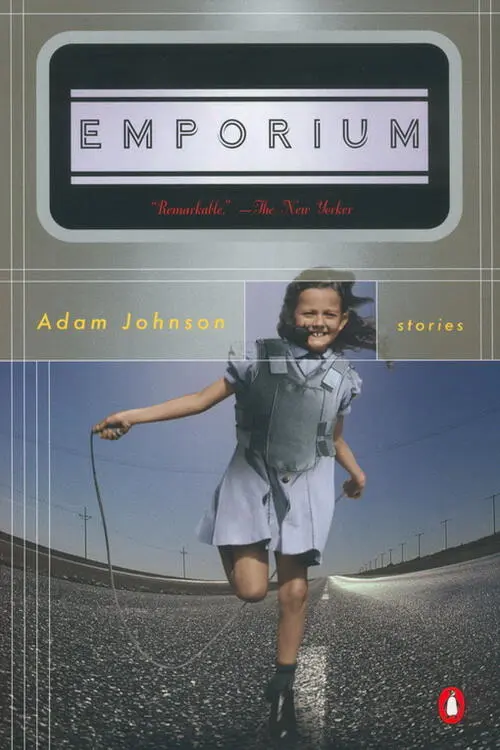
- Название:Emporium
- Автор:
- Издательство:Penguin Books
- Жанр:
- Год:2003
- ISBN:нет данных
- Рейтинг книги:3 / 5. Голосов: 1
-
Избранное:Добавить в избранное
- Отзывы:
-
Ваша оценка:
Emporium: краткое содержание, описание и аннотация
Предлагаем к чтению аннотацию, описание, краткое содержание или предисловие (зависит от того, что написал сам автор книги «Emporium»). Если вы не нашли необходимую информацию о книге — напишите в комментариях, мы постараемся отыскать её.
Emporium — читать онлайн бесплатно полную книгу (весь текст) целиком
Ниже представлен текст книги, разбитый по страницам. Система сохранения места последней прочитанной страницы, позволяет с удобством читать онлайн бесплатно книгу «Emporium», без необходимости каждый раз заново искать на чём Вы остановились. Поставьте закладку, и сможете в любой момент перейти на страницу, на которой закончили чтение.
Интервал:
Закладка:
Someone crunches through the shale ahead, and out of the mist appears Doc Teeg with a bait bucket and a fishing rod you can telescope with the flick of a wrist. After Teeg’s wife left him, he backed his four-door pickup to our lake and dumped all her belongings to the bottom in an effort to create the kind of artificial reef that trophy-size sportfish prefer. He figures a thirty-thousand-dollar donation of Limoges china and Rochefoucauld silver makes Berlin’s fishing hole part his. My mother won’t speak to him.
He hails us, and first thing, grabs my forearm, rotating my ulna while feeling deep with a thumb. Doc Teeg’s not a doctor anymore, though he set my arm last spring and is tracking Berlin’s stomach and liver. Now that they took his certificates, his work is free and you don’t need to make appointments. His bedside manner is better since he became an ex-doctor, the same way Berlin became a better father after they took his pilot’s licenses and he left the fame of his gin.
Doc Teeg finds the fracture line with his thumbnail, and tracing it under my skin almost makes me sing.
“Berlin, I hear your girl half-nelsoned herself quite a wrestler last night,” Teeg says, like I’m not even there.
“Don’t start on Randy,” I tell him. “That little wrestler rappels out of Blackhawk helicopters.”
Berlin ignores me. “We’ll need that big-ass pickup of yours today.”
Teeg squints, feels deep into my arm with his fingertips, as if he’s imagining my fracture from the inside. He’s chewing gum, too; he looks me in the face, jawing it. “Auddie,” he says, “your arm isn’t strong enough yet to go taking on any championship wrestlers. I suggest some daily wrist exercises to get you in shape for any big matches you’ve been planning.”
Berlin lifts his hand to cut him off. “Stop it with the wrist talk.”
“Rehab the problem area with an up-and-down, circular motion.”
“Teeg,” Berlin warns.
“I’m talking about fishing,” Teeg says and snaps his rod to full length. He mock reels in a big one and smiles. “I’m prescribing fishing therapy for the girl’s wrist.”
Doc Teeg owes my father four hundred grand. Or it’s the other way around. They don’t talk about the money the same way they don’t talk about the reason Teeg can’t practice medicine anymore or how my father became the Jughead of Berlin.
“You just bring that truck by,” Berlin says.
“Where’s that dog of yours?” Teeg asks me, meaning the dog he lost to Berlin at cards two years ago, a blue-merle catahoula pighound named Beau. Beau’s fast and wild, and my dog by default. The little advice I have to offer the world, at age sixteen, is to never name a dog Beau because it will never learn the word no.
Sometimes Teeg really misses that dog, and my dad’s not against giving a man his dog back, especially if it might be in lieu of four hundred grand. It’s that Berlin believes you should remember your screwups, so he tries to keep his past life within sight, but just out of reach. It is on this thinking that he gave me the keys to his Super Sport. This is also why, I believe, we strap on our gear and go stunting in his last airplane on these nights he can’t sleep.
From behind his gum, Teeg whistles a call I could never do, one he says he learned during his triage field training in Stuttgart, and through the dark trees come the sounds of Beau thrashing in the distance, bounding our way. This means he’ll probably chase us down the runway, snapping in the prop wash.
For a moment, we are held by the noisy rush of Beau, charging the underbrush for us. Berlin and Teeg seem to hear in this ruckus something I don’t, as if the dog were fetching something they’d rather not see again. A couple years ago, these two’d still be drinking this time of night, bright-faced and loud in the poker room where I now sleep. This morning, though, they have little to say, and we part before Beau arrives. Doc Teeg rolls off alone toward his ex-wife’s possessions and a dog that’s no longer his, while Dad and I head down the levee because we fly only in the dark, under the radar.
The old Custer biplane sits at the end of our strip, acock under a musty tarp. We peel back the canvas, draining water pooled over the twin cockpit holes, and then check the fuselage for cottonmouths, even though you can smell a cottonmouth ten feet away. Berlin had the Custer painted the same black as the Super Sport, so on nights we’re out over the Gulf, the underbelly of the wings take on a deepwater cast, like the unborn, sea-black of caviar.
Berlin hoists the tail around so the Custer points down the dark void between trees, while I wipe the windscreen and pull control cables. There is the squeak of ailerons, a high whine from the air starter, and soon blue smoke pours from the cowling as we jar down a strip I’m supposed to keep mowed. The grass is tall enough in some spots that the prop blasts us with a faint green mist, more the smell of itch than anything, and in one stroke, we lift and roll south over the dark pine stand, charging out of a shallow fog into a moonless sky that’s star-chart clear.
I plug in my intercom. “Check.”
“Check,” Berlin says and points the nose due south, the stick in front of me leaning toward the Gulf of Mexico with my father’s ghost hand.
We rise above a Louisiana lost beneath spring sheets of fog, and as long as we’re under a four hundred-foot radar ceiling, the curve of the earth is ours. Being an ex-pilot has its beauty. There’s no flight patterns, tower clearances, or radio commands. Forget inspections, insurance, manifests, and checkouts. Licensed pilots aren’t allowed to buzz their friends, land on parish roads, or sleep at the controls, the reason we’re up here in the middle of the night.
The Custer levels into perfect air, sharp and pressing, tinted from below by the husky smell of rice fields and a lingering mildew from the biplane’s canvas seats, while ahead is the pristine scent of a high-friction, hardwood propeller, infusing salty air with the finest mist of motor oil. This was Berlin’s first airplane, and though he at one time owned thirteen, it is his last. The license-revoking event is no secret. This time last year, he lifted his ten-seater Bonanza seaplane off our lake to take a group of oil executives fishing in the outbank islands. The men had driven late from Houston, were in our game room all night, so when they climbed in the Bonanza at dawn, they all beamed with drinky exhaustion and the kind of elation gamblers get after risking lots and coming out even.
I was eating breakfast on the dock when Berlin lifted off and banked over me. Water from the floats rained on my eggs. I never went on those fishing trips. At home fishing’s easy — we know where they are — but on the Gulf, you can spend all day with no idea if you’re in the right place. You’re just casting out there, blind. Where’s the fun in that?
All this is public record now. Flying over the Atchafalaya Basin, Berlin scanned for forecasts. Civil Air Radio called for midlevel clouds, thickening, with winds fifteen knots from the east, and the Coast Guard broadcast a muddy chop on an outbound tide. Berlin reevaluated his fishing strategy. In these conditions, the big tarpon fish would go for shiners and not the shrimp he’d brought. There was also a general call for more alcohol, so Berlin decided to put down and change bait.
Descending through a haze of gin, my father set the seaplane down on the number two runway of Thibodeaux Regional, causing a crash that seems filled with certainty, destiny even. Clear and beautiful, it was the last sure thing in our lives, and I see it often:
The Bonanza floats in from the west. White egrets lift from the runway ditches, and banking away, beat each other’s wings. The hull, swan-dive smooth, hovers close to the asphalt, touches. Lacking landing gear, the plane’s breast digs in, flipping the craft, so that everything assumes an unintended motion: Propellers knurl. Orange tackleboxes burst. Fits of ice magnify the light. Dried fish scales, glued to the bait coolers for years, are freed — they litter the air, stick to people’s lips. Graphite rods flex, coils of monofiliment unspooling. And then there are the lures, poised midair; jewel-eyed, cut from iridescent polymers and tensile steel, they teem like African insects. At last, belly skyward, the fuselage smokes with the near-ignition yellow of smoldering fiberglass. On the ground, shrimp flip and turn in puddles of hydraulic fluid and bourbon. For a while, there is only Johnny Cash, American hero, Berlin’s favorite.
Читать дальшеИнтервал:
Закладка:
Похожие книги на «Emporium»
Представляем Вашему вниманию похожие книги на «Emporium» списком для выбора. Мы отобрали схожую по названию и смыслу литературу в надежде предоставить читателям больше вариантов отыскать новые, интересные, ещё непрочитанные произведения.









Обсуждение, отзывы о книге «Emporium» и просто собственные мнения читателей. Оставьте ваши комментарии, напишите, что Вы думаете о произведении, его смысле или главных героях. Укажите что конкретно понравилось, а что нет, и почему Вы так считаете.