Irenosen Okojie - Butterfly Fish
Здесь есть возможность читать онлайн «Irenosen Okojie - Butterfly Fish» весь текст электронной книги совершенно бесплатно (целиком полную версию без сокращений). В некоторых случаях можно слушать аудио, скачать через торрент в формате fb2 и присутствует краткое содержание. Год выпуска: 2015, Издательство: Jacaranda Books Art Music, Жанр: Современная проза, на английском языке. Описание произведения, (предисловие) а так же отзывы посетителей доступны на портале библиотеки ЛибКат.
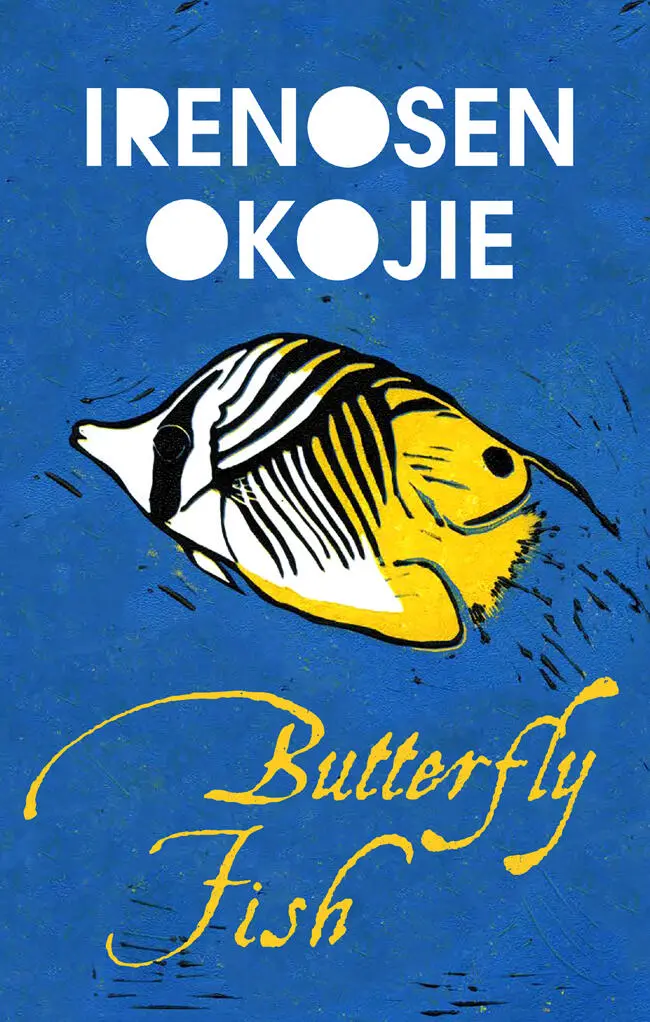
- Название:Butterfly Fish
- Автор:
- Издательство:Jacaranda Books Art Music
- Жанр:
- Год:2015
- ISBN:нет данных
- Рейтинг книги:4 / 5. Голосов: 1
-
Избранное:Добавить в избранное
- Отзывы:
-
Ваша оценка:
Butterfly Fish: краткое содержание, описание и аннотация
Предлагаем к чтению аннотацию, описание, краткое содержание или предисловие (зависит от того, что написал сам автор книги «Butterfly Fish»). Если вы не нашли необходимую информацию о книге — напишите в комментариях, мы постараемся отыскать её.
Butterfly Fish — читать онлайн бесплатно полную книгу (весь текст) целиком
Ниже представлен текст книги, разбитый по страницам. Система сохранения места последней прочитанной страницы, позволяет с удобством читать онлайн бесплатно книгу «Butterfly Fish», без необходимости каждый раз заново искать на чём Вы остановились. Поставьте закладку, и сможете в любой момент перейти на страницу, на которой закончили чтение.
Интервал:
Закладка:
Rangi and I held hands and ate sweet popcorn together. The movie, about professional impersonators who created their own world unlocked something in me. Loneliness was inescapable. Rangi liked the alcoholic priest who convinced nuns to jump out of planes. Spellbound, I watched the nuns riding bicycles in the sky, habits flapping as they spun. If only it were possible to be that free. If only I could be someone else so I wouldn’t have to live inside my head. I cried silently. A man began to talk rudely on his mobile. Rangi left our row. He smacked the man on the head, took the mobile phone and smashed it beneath his boot heel. Technology doesn’t have to fry your fucking brain he said to the startled man. When he returned, a pulse in his jaw ticked. In the shapeless dark I blinked up at him through my tears. The man, several rows behind us, muttered in disbelief but stayed seated.
Circles
Rangi and I began to hit funerals together. He’d pull up in that temperamental black Mazda with the faulty heating fan dressed in black, hands casually at the wheel. In keeping with my dysfunctional tendencies, I thought it was encouraging we had that level of honesty between us. He didn’t lecture me about the dangers of what I was doing or make me feel like a bad person. He was unique in that way, most people would have been very judgemental. Instead he said, “Too many people are concerned about how others perceive them. We should all be more in tune with our desires and not care so much.”
“By doing whatever we want whenever we want?” I asked, side-eyeing him curiously.
He shook his head. “When you live on the edge you experience life that much more. Elements of danger and instability make things more intense, more interesting. Too much routine and not enough freedom is what kills everybody slowly. Your unusual habits are… honest in their duplicity because at least you’re making choices.”
I had a feeling if I’d said I wanted to rob banks at gunpoint, he’d have let me do it, with no empathy for the distress other people would encounter. But banks were too risky and they didn’t have the appeal of funerals. For one, there would be no sadness in the air, only fear. No carrying the weight of other people’s losses, trying them on for size. I knew that despair, sometimes small or all encompassing. Funerals were manageable. Some days I felt inclined to steal and other days I didn’t. There were times I stood on the periphery, scanning small crowds for my mother’s face while Rangi sat in the car at a discreet distance, drinking under the glare of daylight.
On other occasions, he’d come into the services with me. We’d act like a couple that knew the deceased. I was astonished by his ability to blend in so quickly, his knack for making you feel both uneasy and comfortable. He imitated the physical expressions of other mourners beautifully, portraying a forlorn figure amongst the gatherings of mourners. Wielding a sad expression and slumped shoulders, he’d thread his way through pale gravestones.
People like Rangi and I, operated on a different frequency. When things got tricky, our signal was three rings to my mobile, which would vibrate silently in my handbag. I knew he enjoyed it. I wondered why he was drawn to death and whether it was for the same reasons I was. One day, we passed time in the car, a bottle of Jack Daniels between us, the engine running. He was calm hearing about my failed suicide attempt. Brushing several unruly twists away from my forehead, he said, “If more people saw death as a way of being reborn, they’d be less scared. This part of existence… it’s fleeting, miniscule. Don’t you feel the call of other planes inside? Don’t you feel their distances shrinking?” A Sainsbury’s delivery van came by; huge and white, it was purring beside us for a bit. Before I lost my courage in the jangle of its contents, I answered. “I think somebody wants something from me, to do me harm maybe. But I don’t know what it is they want,” I said, leaning into his bright-eyed gaze.
One evening, after another funeral raid we sat in a Rubik’s cube shaped bar made of glass. We watched small shadows form over our hands and the edges of the night rising in the tumblers we drank from. I saw myself naked in the gleam of his eyes, then naked on Dr Krull’s table, my medical notes spilling from my mouth onto the floor. Rangi was on form, wanting me to know all about him.
The son of an Irish mother and Maori father, Rangi had pretty much had every job you could imagine. In New Zealand, he’d worked as a trawlerman for a while, part of a crew on a twenty-one-metre twin rigger hauling tuna, snapper, salmon and all kinds of fish, hands perpetually slick with fish entrails. Sometimes working against a backdrop of forty foot swells, endless rain and gale force winds with the hazardous sea thrashing, curling and threatening to carry the men into cold, volatile currents.
“Those were rough, good times battling the elements with those men. Imagine the tough conditions, bloody fish scales, hauling heavy nets up. We made some great catches. Not everything you catch surrenders immediately.” He ran a finger over the pulse on my wrist, the far away expression on his face made me certain he wasn’t talking about fish.
During his early twenties, he’d travelled through South America; Mexico, Peru, Argentina, Columbia, taking odd jobs to get by. In Buenos Aires, he worked as a farmhand for a woman who prophesised about a red sky coming to kill them all and slept with a long rifle in her bed as though it were a lover.
“She was right about something coming,” Rangi explained, running a hand over his jaw before knocking back a shot of whisky. “Thieves broke in one night, they shot most of the livestock, killed her with her own gun. Coincidentally, I was away from the farm that night. A woman I’d been seeing had wanted to go dancing. It was funny, while we were out, I could taste blood in my mouth but I thought it was one of my nosebleeds coming. I didn’t understand until I got back to the farm the next day and saw the carnage.”
In Mexico, he supplemented bar work as a nude model. One particular painter named Javier had requested him often. Sometimes they drank together afterwards, listening to old Mexican records.
“So there are nude paintings of you floating around.” I smiled at this notion. “Do you think he was in love with you?”
He watched me from hooded eyes. “Why do you ask that?”
“I don’t know, just a feeling. You said he painted you naked sometimes.”
“Maybe he was. He was good to me.” He nodded at the barman, setting his glass on the countertop for another shot. I drew my own conclusions.
In Montreal, he worked nightshifts at a factory producing mannequins. His sleep became so badly affected; he started seeing body parts of other staff coming round the conveyor belt and the mannequins walking around with bits of dawn in their eyes.
“You drift in and out of a lot of people’s lives don’t you?” I asked, trying to shake away the feeling of unease, the coldness in my bones.
“Maybe they drift in and out of mine,” he said.
In London, he worked in a butcher’s shop, coming home smelling of raw meat. Sometimes, he supplemented that income cabbing, shepherding people at all hours of the night. We looked out at the city, the traffic, the flow of people scurrying in different directions. The buildings were hazy, their lines distorted. I could see Rangi climbing into distances before leaping ahead in a change of clothes.
On the drive back home, I swallowed the stone floating in my minds eye. It sank to the bottom of my stomach, doing nothing to temper the nausea I felt. I slid down in my seat. The partially rolled down window had light spots of rain. Windscreen wipers flattened small shapes of water. The purple collar of my dress was stiff, ready to corner stray creatures of night. The streets were peppered with lights. Saviours and sinners spun in close proximity. Hands became other instruments in cold pockets.
Читать дальшеИнтервал:
Закладка:
Похожие книги на «Butterfly Fish»
Представляем Вашему вниманию похожие книги на «Butterfly Fish» списком для выбора. Мы отобрали схожую по названию и смыслу литературу в надежде предоставить читателям больше вариантов отыскать новые, интересные, ещё непрочитанные произведения.











Обсуждение, отзывы о книге «Butterfly Fish» и просто собственные мнения читателей. Оставьте ваши комментарии, напишите, что Вы думаете о произведении, его смысле или главных героях. Укажите что конкретно понравилось, а что нет, и почему Вы так считаете.