Irenosen Okojie - Butterfly Fish
Здесь есть возможность читать онлайн «Irenosen Okojie - Butterfly Fish» весь текст электронной книги совершенно бесплатно (целиком полную версию без сокращений). В некоторых случаях можно слушать аудио, скачать через торрент в формате fb2 и присутствует краткое содержание. Год выпуска: 2015, Издательство: Jacaranda Books Art Music, Жанр: Современная проза, на английском языке. Описание произведения, (предисловие) а так же отзывы посетителей доступны на портале библиотеки ЛибКат.
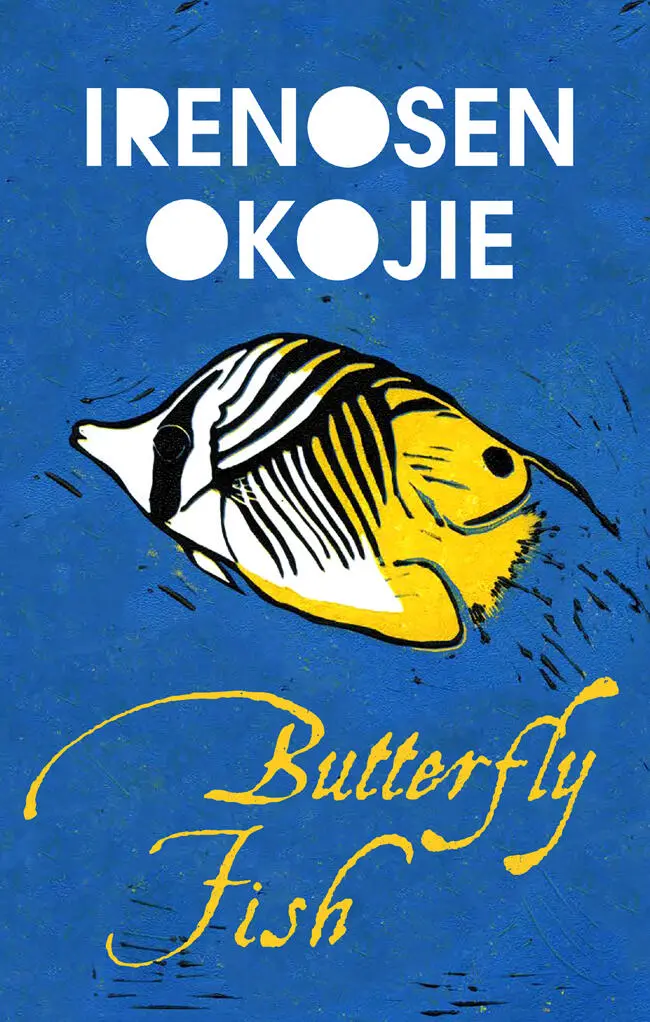
- Название:Butterfly Fish
- Автор:
- Издательство:Jacaranda Books Art Music
- Жанр:
- Год:2015
- ISBN:нет данных
- Рейтинг книги:4 / 5. Голосов: 1
-
Избранное:Добавить в избранное
- Отзывы:
-
Ваша оценка:
Butterfly Fish: краткое содержание, описание и аннотация
Предлагаем к чтению аннотацию, описание, краткое содержание или предисловие (зависит от того, что написал сам автор книги «Butterfly Fish»). Если вы не нашли необходимую информацию о книге — напишите в комментариях, мы постараемся отыскать её.
Butterfly Fish — читать онлайн бесплатно полную книгу (весь текст) целиком
Ниже представлен текст книги, разбитый по страницам. Система сохранения места последней прочитанной страницы, позволяет с удобством читать онлайн бесплатно книгу «Butterfly Fish», без необходимости каждый раз заново искать на чём Вы остановились. Поставьте закладку, и сможете в любой момент перейти на страницу, на которой закончили чтение.
Интервал:
Закладка:
Pendulum
The local park was tucked away behind high, Gothic black iron gates that I suspected snagged things unexpectedly; a pair of hands gripping its bars in disappointment after closing time, a letter blown by a gust of wind, one dirty, sodden trainer caught on the angular tip of a bar at the top, laces dangling down like threads. It was fairly large and unfurled maze-like, intersected by paths heading in different directions. On entering, a lengthy walkway was lined by trees that shook. To the right, at the back a pond shimmered, and the benches before it understood the language of ducks.
As I headed there, the high street hummed. Early evening meant scrums of school children dipped into buses that seem to sag beneath their weight. Shop doors whooshed open and shut, lone customers hunched over menus in poorly lit takeaway restaurants. Handles of heavy shopping bags tugged at the hands of people rushing to get home. Cars nudged each other towards the end of the day and streetlamps yawned light. A chill lodged in my bones. The gentle wind blew my coat open, exposing its red lining to bulls that leapt from behind steering wheels, ran through traffic naked, searching for their horns. I sank my hands deep into my coat pockets, lamenting on how small things could turn sinister; lumps of brown sugar in my cereal becoming dusty red stones, double breathing in my room at night, the rhythm of my breath being copied.
At the park, I cut across the middle, avoiding the long way round. Sometimes, I liked to sit by the pond gathering my thoughts, catching bits of conversation as people meandered by; intrigued by contexts I’d never fully know. Approaching the pond, I spotted a familiar, slight figure sitting on one bench, swathed in a bright, kaftan, there was smoke curling above her white hair. Mrs Harris looked very much like what she was: an old hippy drawing from a shrinking cigarette. She leaned forward, staring at whatever caught her eye in the distance, cigarette tip glowing amber. She threw pieces of bread at some ducks, turned to her left. It was too late to pretend not to have seen her and she waved me over enthusiastically. “Hello there!” She greeted.
At the bench I smiled sheepishly. “Hey there yourself, you’re in my spot.” I teased.
“Plenty of room for two.” She patted the space beside her but didn’t bother to remove the gold box of Marlboro Lights that stored weightless nicotine lungs. The ducks argued amongst themselves. I sat down, undid a few buttons of my coat to allow myself to breathe. I took in her side profile and realised then Mrs Harris had once been a looker with her emerald eyes, charming gap-toothed, wonky smile and high cheekbones. With white hair that was reminiscent of snow, hers was a sly beauty, which made it even more attractive in my eyes.
“What are you doing?” I asked. “Taking a break from something?”
“Aren’t we all usually trying to take a break in some way my dear? From routine, the cards we’ve been dealt. I was talking to the water.” She took another draw from her cigarette, blew smoke that curled into a root before disappearing.
I laughed. “You’re crazy.”
“It’s true,” she exclaimed wisely. “The water never lies. How do you think I knew you were in trouble that day? It was the water that alerted me, not just dropping my ring. The pipes had been clanging and hissing in a really odd, persistent way. I stopped by to hear if you were having the same problem and of course Buddy going missing gave me the perfect excuse.”
“That’s unnerving,” I said.
“Maybe, but it did happen that way. When you didn’t answer that second time, I let myself in with your spare key. I found you and the bath water was still running.”
I thought of her discovering me on the cold, chessboard linoleum floor. One Queen Piece in a limp heap, watering roots the eye couldn’t see, staining her forever with my blood, strange how you could inexplicably bond with someone by trying to slip away.
She threw another piece of bread at the ducks. “How are you doing?”
I shook my head, wanting to cry on her shoulder. “Oh you know, trying to breathe. Do you think becoming increasingly isolated can make someone see things in a distorted way?” I turned to face her fully, edging my body closer. She pinned me with an intense, luminous gaze. As though she could see what I meant behind the question.
“You mean like some people who for whatever reason don’t connect to others, lose their moral compass and become serial killers?”
“Well, not exactly, I’m not struggling with a lack of moral compass. I’m-”
“You meant losing touch with reality?” she interjected.
I blew out a tense breath. “Something’s shifted; I can feel it in the air. I’m anxious about being alone in my own flat. Once or twice I’ve woken up in the middle of the night thinking I’m having a fucking heart attack.”
“It’s not the flat, wherever you were, you’d have this issue. You see the grooves in that?” She pointed at the nearest tree, hand trembling. “What do you see?”
I studied the fat trunk, already leaning against a harsh wind to come, the pattern of swirls. “I see a sad girl with legs that don’t feel like her own.”
“Really? I see a resurrection and it’s not Jesus.” She smiled thinly, laugh lines deepening. “So who do you think is right?” she asked.
“I don’t know, both of us. Neither of us?”
She took my arm gently, held my gaze. “People like you and I sometimes find ourselves embracing different realities. There’s a beauty in it. It’s like having a key.”
Her eyes glowed and I felt their pull. For a moment she wasn’t a sweet, older woman. She looked feral and other worldly. Then the flames in her pupils shrank and she let go of my arm, flicking her cigarette butt away coolly. The noise of traffic grew louder, threatening to break into our green oasis.
“It doesn’t seem fair; you know this big thing about me. I don’t know enough about you. Pretend we’re strangers, tell me something true.” I instructed.
“I used to be an escape artist.”
“Tell me a lie.”
“I used to be an escape artist,” she sputtered, biting her amusement down.
“Come on!” I whined. “Play along.”
“Okay. My father was a Scotsman, tall and arrogant, a Doctor. My mother was Romany, a free spirit, what they call a gypsy. They were as different as two people could be but my father fell in love. His family were horrified; he married her anyway. He said it had been like something came over him.”
“What happened?”
“It turns out she wasn’t the marrying or motherly kind. Oh she was beautiful and had this mysterious quality that drew people. She could be kind but she was selfish, self-possessed. She took what she wanted from people without an afterthought. I’m not sure what world she was from.”
“What did you want from her?” I asked.
“What any child would want I suppose. To know her more, be loved by her, it became increasingly difficult, my parents… they had terrible arguments. At times it felt like the whole house shook.” She paused, reaching for things long buried then continued. “My mother liked the company of men very much you see and that caused even more quarrels. Over a certain period of time, she started coming home with strange cuts and bruises.” Mrs Harris shook, touched by a memory. “There were woods near where we lived and sometimes she’d arrive home from there covered in bruises, chanting bizarre things nobody knew the meaning of. One night when I was twelve, she left while we were asleep. Not even a note, I never saw her again.”
She ignored what must have been pity on my face, patted my thigh reassuringly. “In the years to come, I felt like I’d dreamt her. In a way you’re luckier than me, you can make your mother indelible.”
Читать дальшеИнтервал:
Закладка:
Похожие книги на «Butterfly Fish»
Представляем Вашему вниманию похожие книги на «Butterfly Fish» списком для выбора. Мы отобрали схожую по названию и смыслу литературу в надежде предоставить читателям больше вариантов отыскать новые, интересные, ещё непрочитанные произведения.



Обсуждение, отзывы о книге «Butterfly Fish» и просто собственные мнения читателей. Оставьте ваши комментарии, напишите, что Вы думаете о произведении, его смысле или главных героях. Укажите что конкретно понравилось, а что нет, и почему Вы так считаете.