Emma Cline - The Girls
Здесь есть возможность читать онлайн «Emma Cline - The Girls» весь текст электронной книги совершенно бесплатно (целиком полную версию без сокращений). В некоторых случаях можно слушать аудио, скачать через торрент в формате fb2 и присутствует краткое содержание. Год выпуска: 2016, Издательство: Random House, Жанр: Современная проза, на английском языке. Описание произведения, (предисловие) а так же отзывы посетителей доступны на портале библиотеки ЛибКат.
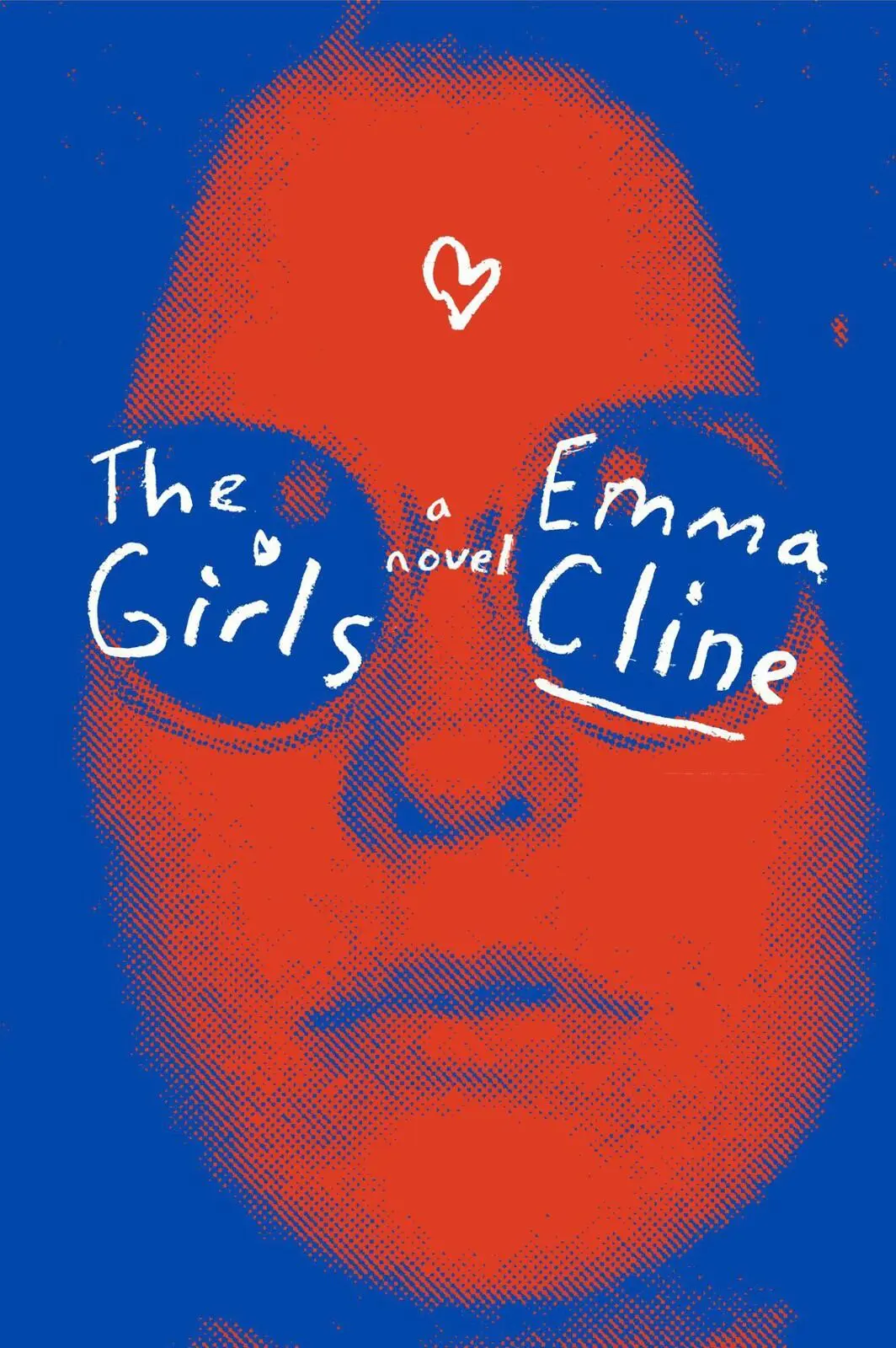
- Название:The Girls
- Автор:
- Издательство:Random House
- Жанр:
- Год:2016
- ISBN:нет данных
- Рейтинг книги:5 / 5. Голосов: 1
-
Избранное:Добавить в избранное
- Отзывы:
-
Ваша оценка:
The Girls: краткое содержание, описание и аннотация
Предлагаем к чтению аннотацию, описание, краткое содержание или предисловие (зависит от того, что написал сам автор книги «The Girls»). Если вы не нашли необходимую информацию о книге — напишите в комментариях, мы постараемся отыскать её.
Northern California, during the violent end of the 1960s. At the start of summer, a lonely and thoughtful teenager, Evie Boyd, sees a group of girls in the park, and is immediately caught by their freedom, their careless dress, their dangerous aura of abandon. Soon, Evie is in thrall to Suzanne, a mesmerizing older girl, and is drawn into the circle of a soon-to-be infamous cult and the man who is its charismatic leader. Hidden in the hills, their sprawling ranch is eerie and run down, but to Evie, it is exotic, thrilling, charged — a place where she feels desperate to be accepted. As she spends more time away from her mother and the rhythms of her daily life, and as her obsession with Suzanne intensifies, Evie does not realize she is coming closer and closer to unthinkable violence, and to that moment in a girl’s life when everything can go horribly wrong.
Emma Cline’s remarkable debut novel is gorgeously written and spellbinding, with razor-sharp precision and startling psychological insight. The Girls is a brilliant work of fiction — and an indelible portrait of girls, and of the women they become.
The Girls — читать онлайн бесплатно полную книгу (весь текст) целиком
Ниже представлен текст книги, разбитый по страницам. Система сохранения места последней прочитанной страницы, позволяет с удобством читать онлайн бесплатно книгу «The Girls», без необходимости каждый раз заново искать на чём Вы остановились. Поставьте закладку, и сможете в любой момент перейти на страницу, на которой закончили чтение.
Интервал:
Закладка:
Maybe before the ranch, that life would have been enough.
But the ranch proved that you could live at a rarer pitch. That you could push past these petty human frailties and into a greater love. I believed, in the way of adolescents, in the absolute correctness and superiority of my love. My own feelings forming the definition. Love of that kind was something my father and even Tamar could never understand, and of course I had to leave.
—
While I had been watching television all day in the stuffy, overheated dark of my father’s apartment, the ranch was going sour. Though I wasn’t aware to what degree until later. The problem was the record deal — it wasn’t going to happen, and that was not something Russell could accept. His hands were tied, Mitch told Russell; he could not force the record company to change their minds. Mitch was a successful musician, a talented guitar player, but he did not have that kind of power.
This was true — my night with Mitch seems piteous for that reason, a groundless whir of wheels. But Russell didn’t believe Mitch, or it didn’t matter anymore. Mitch became the convenient host for a universal sickness. The pacing rants that increased in frequency and length, Russell pinning it all on Mitch, that overfed Judas. The.22s traded for Buntlines, the frenzy of betrayal Russell worked in the others. Russell wasn’t even bothering to hide his anger anymore. Guy was bringing speed around, he and Suzanne running to the pump house, coming back with eyes black as berries. The target practice in the trees. The ranch had never been of the larger world, but it grew more isolated. No newspapers, no televisions, no radio. Russell began to turn away visitors and send Guy out with the girls on every garbage run. A shell hardening around the place.
I can imagine Suzanne waking up, those mornings, with no sense of the days passing. The food situation getting dire, everything tinted with mild decay. They didn’t eat much protein, their brains motoring on simple carbohydrates and the occasional peanut-butter sandwich. The speed that scraped Suzanne of feeling — she must have moved through the filtery electricity of her own numbness like moving through deep ocean.
Everyone, later, would find it unbelievable that anyone involved in the ranch would stay in that situation. A situation so obviously bad. But Suzanne had nothing else: she had given her life completely over to Russell, and by then it was like a thing he could hold in his hands, turning it over and over, testing its weight. Suzanne and the other girls had stopped being able to make certain judgments, the unused muscle of their ego growing slack and useless. It had been so long since any of them had occupied a world where right and wrong existed in any real way. Whatever instincts they’d ever had — the weak twinge in the gut, a gnaw of concern — had become inaudible. If those instincts had ever been detectable at all.
They didn’t have very far to fall — I knew just being a girl in the world handicapped your ability to believe yourself. Feelings seemed completely unreliable, like faulty gibberish scraped from a Ouija board. My childhood visits to the family doctor were stressful events for that reason. He’d ask me gentle questions: How was I feeling? How would I describe the pain? Was it more sharp or more spread out? I’d just look at him with desperation. I needed to be told, that was the whole point of going to the doctor. To take a test, be put through a machine that could comb my insides with radiated precision and tell me what the truth was.
Of course the girls didn’t leave the ranch: there is a lot that can be borne. When I was nine, I’d broken my wrist falling from a swing. The shocking crack, the blackout pain. But even then, even with my wrist swelling with a cuff of trapped blood, I insisted I was fine, that it was nothing, and my parents believed me right up until the doctor showed them the X-ray, the bones snapped clean.
12
As soon as I’d packed my duffel, the guest room already looked like no one had ever stayed there — my absence quickly absorbed, which was maybe the point of rooms like that. I’d figured Tamar and my father had already left for work, but when I came into the living room, my father grunted from the couch.
“Tamar’s buying orange juice or some stupid thing,” he said.
We sat together and watched television. Tamar was gone a long time. My father kept rubbing his freshly shaven jaw, his face seeming undercooked. The commercials embarrassed me with their strident feeling, how they seemed to mock our awkward quiet. My father’s nervous measurement of the silence. How I would have been, a month ago, tense with expectation. Dredging my life for some gem of experience to present to him. But I couldn’t summon that effort anymore. My father was both more knowable to me than he had ever been, and at the same time, more of a stranger — he was just a man, sensitive to spicy foods, guessing at his foreign markets. Plugging away at his French.
He stood up the moment he heard Tamar’s keys fussing in the door.
“We should have left thirty minutes ago,” he said.
Tamar glanced at me, reshouldered her purse. “Sorry.” She cut him a tight smile.
“You knew when we had to go,” he said.
“I said I was sorry.” She seemed, for a moment, genuinely sorry. But then her eyes drifted helplessly to the television, still on, and though she tried to click back to attention, I knew my father had noticed.
“You don’t even have any orange juice,” he said, his voice flickering with hurt.
—
A young couple was the first to pick me up. The girl’s hair was the color of butter, a blouse knotted at her waist, and she kept turning to smile and offer me pistachios from a bag. Kissing the boy so I could see her darting tongue.
I hadn’t hitchhiked before, not really. It made me nervous to have to be whatever strangers expected from a girl with long hair — I didn’t know what degree of outrage to show about the war, how to talk about the students who threw bricks at police or took over passenger planes, demanding to be flown to Cuba. I’d always been outside all that, like I was watching a movie about what should have been my own life. But it was different, now that I was heading to the ranch.
I kept imagining the moment when Tamar and my father, home from the office, would realize I was actually gone. They would understand slowly, Tamar probably coming to the conclusion faster than my father. The apartment empty, no trace of my things. And maybe my father would call my mother, but what could either of them do? What punishment could they possibly pass down? They didn’t know where I’d gone. I had moved beyond their purview. Even their concern was exciting, in its way: there would be a moment when they’d have to wonder why I’d left, some murky guilt rising to the surface, and they would have to feel the full force of it, even if it was only for a second.
The couple took me as far as Woodside. I waited in the parking lot of the Cal-Mart until I got a ride from a man in a rattly Chevrolet, on his way to Berkeley to drop off a motorcycle part. Every time he went over a pothole, his duct-taped glove compartment clattered. The shaggy trees flashed past the window, thick with sun, the purple stretch of the bay beyond. I held my purse on my lap. His name was Claude, and he seemed ashamed of how it jarred with his appearance. “My mother liked that French actor,” he mumbled.
Claude made a point of flipping through his wallet, showing me pictures of his own daughter. She was a chubby girl, the bridge of her nose pink. Her unfashionable sausage curls. Claude seemed to sense my pity, suddenly grabbing the wallet back.
“None of you girls should be doing this,” he said.
Читать дальшеИнтервал:
Закладка:
Похожие книги на «The Girls»
Представляем Вашему вниманию похожие книги на «The Girls» списком для выбора. Мы отобрали схожую по названию и смыслу литературу в надежде предоставить читателям больше вариантов отыскать новые, интересные, ещё непрочитанные произведения.








Обсуждение, отзывы о книге «The Girls» и просто собственные мнения читателей. Оставьте ваши комментарии, напишите, что Вы думаете о произведении, его смысле или главных героях. Укажите что конкретно понравилось, а что нет, и почему Вы так считаете.