Jessie Burton - The Muse
Здесь есть возможность читать онлайн «Jessie Burton - The Muse» весь текст электронной книги совершенно бесплатно (целиком полную версию без сокращений). В некоторых случаях можно слушать аудио, скачать через торрент в формате fb2 и присутствует краткое содержание. Год выпуска: 2016, Издательство: Ecco, Жанр: Современная проза, на английском языке. Описание произведения, (предисловие) а так же отзывы посетителей доступны на портале библиотеки ЛибКат.
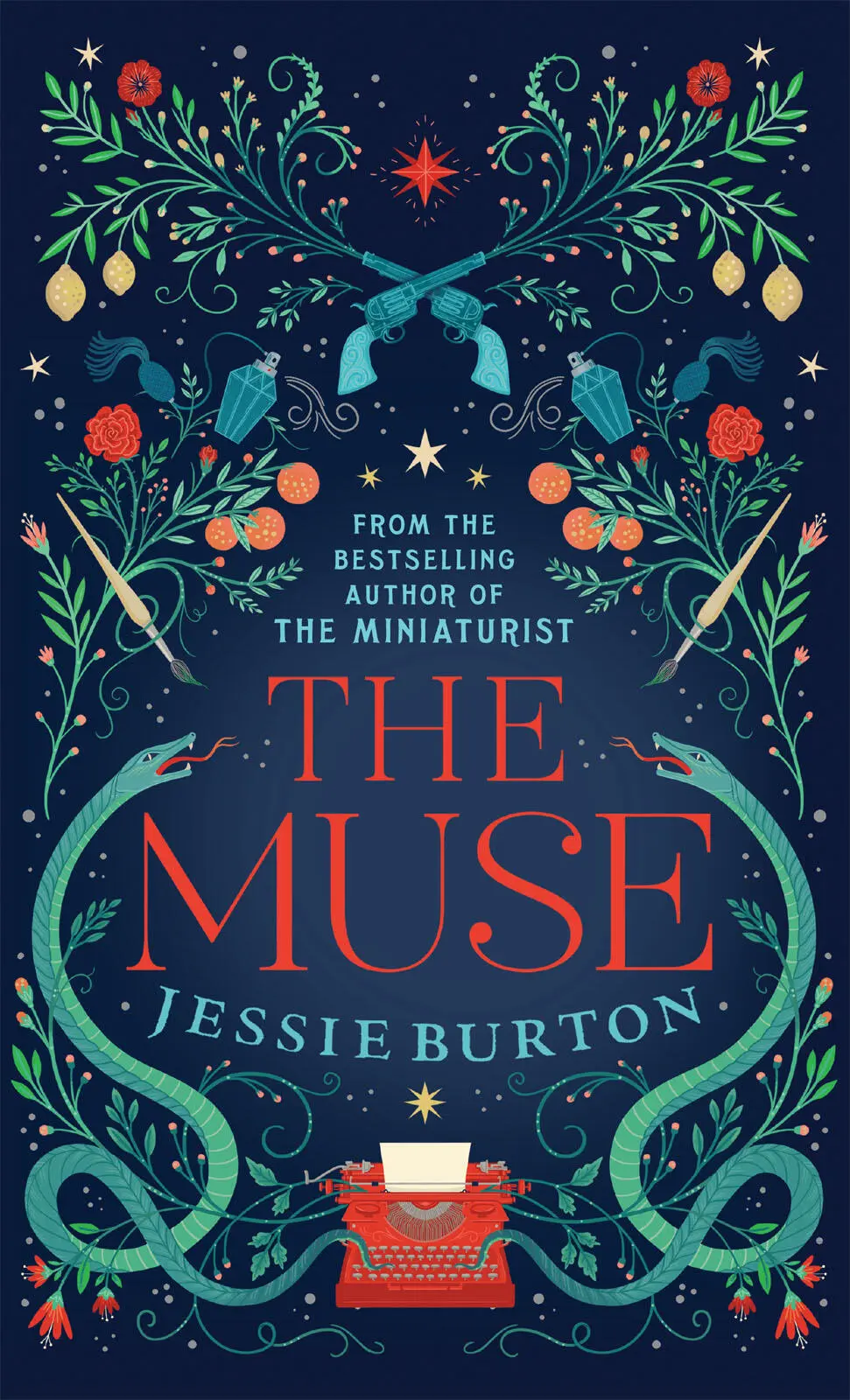
- Название:The Muse
- Автор:
- Издательство:Ecco
- Жанр:
- Год:2016
- ISBN:нет данных
- Рейтинг книги:4 / 5. Голосов: 1
-
Избранное:Добавить в избранное
- Отзывы:
-
Ваша оценка:
The Muse: краткое содержание, описание и аннотация
Предлагаем к чтению аннотацию, описание, краткое содержание или предисловие (зависит от того, что написал сам автор книги «The Muse»). Если вы не нашли необходимую информацию о книге — напишите в комментариях, мы постараемся отыскать её.
comes a captivating and brilliantly realized story of two young women — a Caribbean immigrant in 1960s London, and a bohemian woman in 1930s Spain — and the powerful mystery that ties them together.
England, 1967. Odelle Bastien is a Caribbean émigré trying to make her way in London. When she starts working at the prestigious Skelton Art Gallery, she discovers a painting rumored to be the work of Isaac Robles, a young artist of immense talent and vision whose mysterious death has confounded the art world for decades. The excitement over the painting is matched by the intrigue around the conflicting stories of its discovery. Drawn into a complex web of secrets and deceptions, Odelle does not know what to believe or who she can trust, including her mesmerizing colleague, Marjorie Quick.
Spain, 1937. Olive Schloss, the daughter of a Viennese Jewish art dealer and English heiress, follows her parents to Arazuelo, a poor, restless village on the southern coast. She grows close to Teresa, a young housekeeper, and her half-brother Isaac Robles, an idealistic and ambitious painter newly returned from the Barcelona salons. A dilettante buoyed by the revolutionary fervor that will soon erupt into civil war, Isaac dreams of being a painter as famous as his countryman, Picasso.
Raised in poverty, these illegitimate children of the local landowner revel in exploiting this wealthy Anglo-Austrian family. Insinuating themselves into the Schloss’s lives, Teresa and Isaac help Olive conceal her artistic talents with devastating consequences that will echo into the decades to come.
Rendered in exquisite detail,
is a passionate and enthralling tale of desire, ambition, and the ways in which the tides of history inevitably shape and define our lives.
The Muse — читать онлайн бесплатно полную книгу (весь текст) целиком
Ниже представлен текст книги, разбитый по страницам. Система сохранения места последней прочитанной страницы, позволяет с удобством читать онлайн бесплатно книгу «The Muse», без необходимости каждый раз заново искать на чём Вы остановились. Поставьте закладку, и сможете в любой момент перейти на страницу, на которой закончили чтение.
Интервал:
Закладка:
‘I wasn’t aware there were two,’ said Sarah, one fingernail flashing down an open seed-pod. The lacquer, Teresa noted, had chipped, and her mistress had done nothing to remedy it.
‘There was The Orchard , but Isaac had another painting. A self-portrait.’
‘You saw it?’ asked Sarah.
‘Briefly. It looks like Daddy’s coming back.’
‘Just when that telephone finally stopped ringing,’ Sarah sighed.
Teresa went to the sink to busy herself with the washing-up. Sarah laid down her empty pea pod. ‘Darling,’ she said. ‘Do you like it here?’
‘I’ve got used to it. I like it very much now. Don’t you?’
Sarah looked through the kitchen window. The garden and the orchard beyond it were now abundant with fruit and flowers, honeysuckle, dama-de-noche and all the oranges and olives Harold had promised his wife and daughter back in January, when, cold, bedraggled and shaking off the after-effects of one of Sarah’s storm clouds, they had arrived here, knowing no one.
‘I don’t know if like is the word I’d use. I feel I’ve lived here about ten years. It sort of. . saturates you, a place like this. As if it’s the living embodiment of Isaac’s painted fields.’ She turned to her daughter. ‘It’s extraordinary — how he captured it, isn’t it?’
‘Yes.’
‘How do you think he does it?’
‘How would I know?’
‘He’s a genius.’
Olive sighed. ‘Nobody’s a genius, Mother. That’s lazy thinking. It’s practice.’
‘Ah, practice. I could practise for ever and not produce anything as good as that.’
‘You seem better, Mummy,’ said Olive.
‘I do feel a lot stronger. Daddy got me that last round of pills from Malaga and I haven’t touched them.’
‘Really? Is that a good idea? You gave me and Tere a real fright when we got back from Malaga and you weren’t here. I was worried you’d—’
‘I wouldn’t do that, Livvi. It’s not like it was.’
They continued shelling peas in silence. Her mother had caught the sun, and she seemed peaceful; self-contained. It was once again painful to Olive how attractive her mother was, and how Sarah barely registered this fact — her hair a bit of a mess, her sundress crumpled as if she’d just pulled it out of a trunk. Her roots had now grown out considerably, and she didn’t seem to care. Her natural dark blonde was a stark, yet oddly pleasurable visual contrast to the peroxide ends. Olive had the itch to paint her, to capture this ease, in the hope that she too could have some of it for herself.
‘Summer’s nearly here,’ Sarah said, breaking Olive’s thoughts. ‘It’s going to be so hot.’
‘You were complaining when it was cold.’
Sarah laughed at herself. This too, was rare. ‘It wasn’t a terrible idea of your father’s to come here. Not a terrible idea at all.’ She reached over and squeezed her daughter’s hand. ‘I do love you, you know, Liv. Very much.’
‘Goodness. What’s wrong with you?’
‘Nothing. Nothing. I just think you should know.’
Sarah went out onto the veranda with her packet of cigarettes and the latest Christie shipped over from a friend in London, and Teresa began to mop the flagstones in the hall. Olive followed her, standing on the dry patch Teresa hadn’t yet reached.
‘Teresa, will you sit for my next painting?’ she asked, her voice quiet. ‘I’d love to use you as a model.’
Teresa’s spine stiffened, her fists tightening round the mop handle. ‘You didn’t tell me about the second painting we took to Malaga,’ she said.
‘I didn’t want to get you into any more trouble.’
‘Trouble?’
‘Look, I know you think this whole undertaking demeans me as an artist.’
‘ Demeans ?’
‘Makes less of me. You think Isaac gets more importance round here than he deserves. But it’s what I want. I want the freedom. You’re my friend, Tere. Let me give this to you.’
Teresa straightened, meditatively plunging the head of the mop into her bucket of filthy water. She knew, in a way, that she had wanted this moment ever since she saw Isaac in the sketchbook. And the decision to help Olive in her deceptions — taking the paintings into Malaga, making sure Sarah still believed they were by Isaac, keeping the attic clean — had all been leading to this less than noble truth; that Teresa wanted to be painted. She wanted Olive to want her as a painting.
As Teresa walked behind Olive upwards to the attic, she knew she had departed from her place in the script. She turned back once to view the floor, only half agleam, the mop resting, accusatory. She was no longer the servant who rid the house of stains; she was going to make a mark so permanent no one would ever forget it.
It was to be a painting of Rufina, Olive told her, locking the attic door. ‘I’ve done Justa in the Well, and you’ll be my Rufina. It was you who told me the story, after all. I’ve been wondering what part of it to tell.’
Teresa nodded, not daring to speak. What would Isaac say, when he found out Olive had painted his face green and sent it as a self-portrait to Peggy Guggenheim? When would he realize that painting after painting would come out of this girl? Olive believed Isaac was the source of her inspiration, but Teresa thought that nothing he could do now — no tantrum, no withholding of affection — would stop the flow.
‘Rufina with her pots, Rufina with the lion, or Rufina, beheaded, with her sister?’ said Olive, mainly to herself. ‘The last one’s grim, but it is the apogee, even though she’s down a well.’
Teresa heard the unusual word, and thought Olive had said apology . ‘There is nothing to be sorry for,’ she said.
Olive smiled. ‘I’m glad you think so, Tere.’
She had decided to abandon the diptych format that she’d used for Women in the Wheatfield , and paint just one scene. In the end, she wanted all the stages of the story involved. So Rufina would be there in her full body, but she would also be carrying her own head.
‘You could put your face in it, too,’ said Teresa, then immediately wished she hadn’t, for she was probably overstepping herself.
Olive bit her lip, considering the idea. ‘Well, let’s paint yours first,’ she said. ‘I’ll decide later whether to add mine. It is supposed to be one person, after all. But I’m definitely going to lay gold leaf on the lion’s mane. He’ll be tame as a pussycat.’
Olive placed her on the chair she usually sat in when Teresa brushed her hair. There was a surety to Olive’s touch, she was operating in her space of confidence and possibility. ‘Such solemn eyes,’ Olive told her, as she put her paintbrush to the treated panel. ‘So dark and watchful above your little snub nose. You and Isaac have become as engraved in my mind as a woodcut.’
Her expression grew distracted as she began to draw away from the outer elements of the room and closer to her artistic vision. Teresa was locked out of it, and yet she felt the source of it. She willingly sank into this phantom role, where she could disappear and be anything Olive wanted. She had never felt so invisible, and yet so seen.
XVI
In the end, Harold returned the first week of June, driving himself back from Malaga airfield. ‘Where is he?’ he called, as soon as he’d parked up the Packard. ‘Where’s my prodigy?’
The women stood on the front step, shielding their eyes from the sun. Harold’s wave was breezy. He’s been with her , Teresa thought, surveying him as he neared the front door. He looked sated, well fed, and yet his grin was a little fixed. He seemed to have the air of a man rolling away from vice and back into the straits of virtue. Maybe he sent her a ticket to Paris . The anonymous woman’s timid German, which had grown fainter in Teresa’s memory, now returned. Harold, bist du es?
Читать дальшеИнтервал:
Закладка:
Похожие книги на «The Muse»
Представляем Вашему вниманию похожие книги на «The Muse» списком для выбора. Мы отобрали схожую по названию и смыслу литературу в надежде предоставить читателям больше вариантов отыскать новые, интересные, ещё непрочитанные произведения.

Обсуждение, отзывы о книге «The Muse» и просто собственные мнения читателей. Оставьте ваши комментарии, напишите, что Вы думаете о произведении, его смысле или главных героях. Укажите что конкретно понравилось, а что нет, и почему Вы так считаете.