Jessie Burton - The Muse
Здесь есть возможность читать онлайн «Jessie Burton - The Muse» весь текст электронной книги совершенно бесплатно (целиком полную версию без сокращений). В некоторых случаях можно слушать аудио, скачать через торрент в формате fb2 и присутствует краткое содержание. Год выпуска: 2016, Издательство: Ecco, Жанр: Современная проза, на английском языке. Описание произведения, (предисловие) а так же отзывы посетителей доступны на портале библиотеки ЛибКат.
- Название:The Muse
- Автор:
- Издательство:Ecco
- Жанр:
- Год:2016
- ISBN:нет данных
- Рейтинг книги:4 / 5. Голосов: 1
-
Избранное:Добавить в избранное
- Отзывы:
-
Ваша оценка:
The Muse: краткое содержание, описание и аннотация
Предлагаем к чтению аннотацию, описание, краткое содержание или предисловие (зависит от того, что написал сам автор книги «The Muse»). Если вы не нашли необходимую информацию о книге — напишите в комментариях, мы постараемся отыскать её.
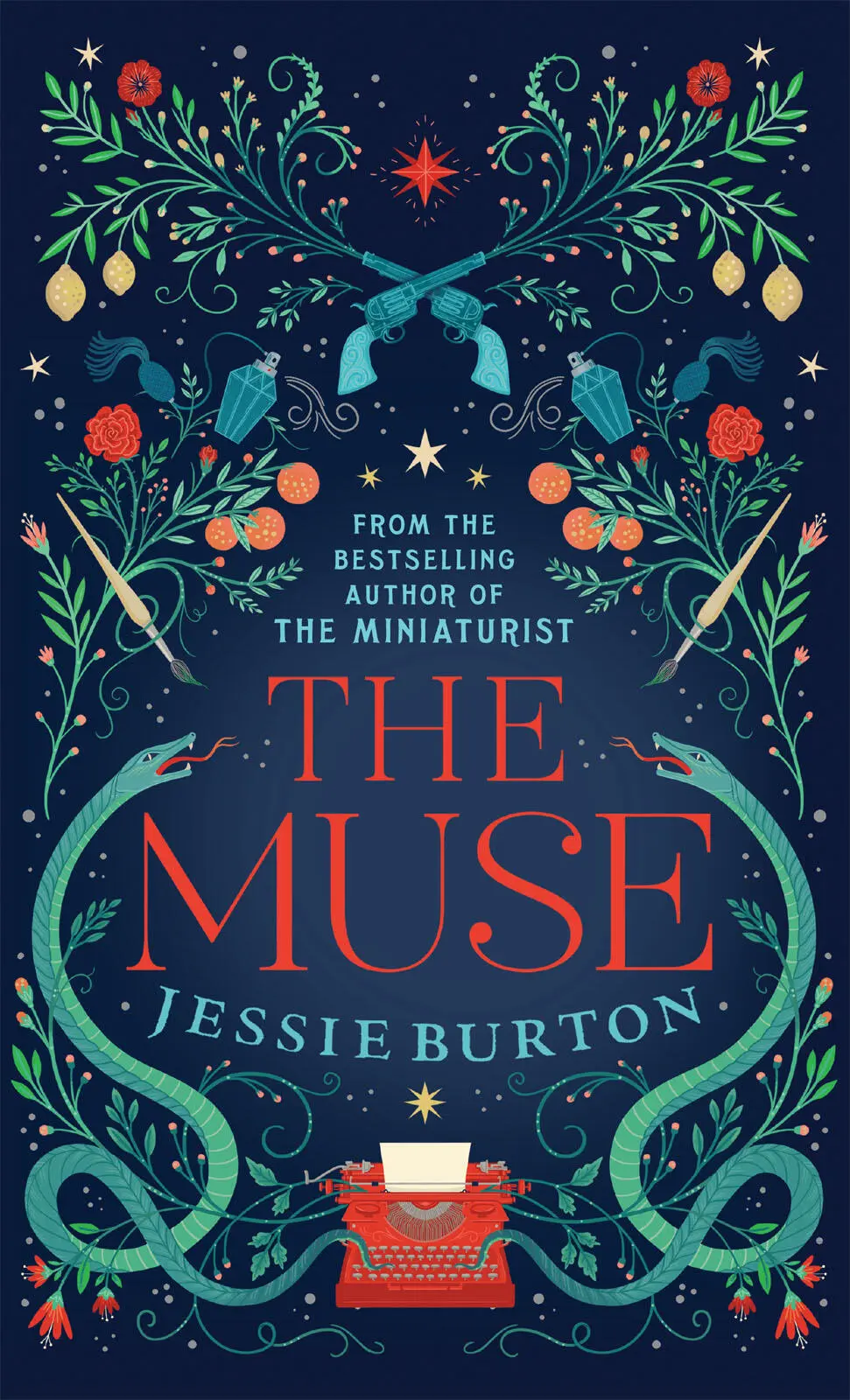
comes a captivating and brilliantly realized story of two young women — a Caribbean immigrant in 1960s London, and a bohemian woman in 1930s Spain — and the powerful mystery that ties them together.
England, 1967. Odelle Bastien is a Caribbean émigré trying to make her way in London. When she starts working at the prestigious Skelton Art Gallery, she discovers a painting rumored to be the work of Isaac Robles, a young artist of immense talent and vision whose mysterious death has confounded the art world for decades. The excitement over the painting is matched by the intrigue around the conflicting stories of its discovery. Drawn into a complex web of secrets and deceptions, Odelle does not know what to believe or who she can trust, including her mesmerizing colleague, Marjorie Quick.
Spain, 1937. Olive Schloss, the daughter of a Viennese Jewish art dealer and English heiress, follows her parents to Arazuelo, a poor, restless village on the southern coast. She grows close to Teresa, a young housekeeper, and her half-brother Isaac Robles, an idealistic and ambitious painter newly returned from the Barcelona salons. A dilettante buoyed by the revolutionary fervor that will soon erupt into civil war, Isaac dreams of being a painter as famous as his countryman, Picasso.
Raised in poverty, these illegitimate children of the local landowner revel in exploiting this wealthy Anglo-Austrian family. Insinuating themselves into the Schloss’s lives, Teresa and Isaac help Olive conceal her artistic talents with devastating consequences that will echo into the decades to come.
Rendered in exquisite detail,
is a passionate and enthralling tale of desire, ambition, and the ways in which the tides of history inevitably shape and define our lives.
The Muse — читать онлайн бесплатно полную книгу (весь текст) целиком
Ниже представлен текст книги, разбитый по страницам. Система сохранения места последней прочитанной страницы, позволяет с удобством читать онлайн бесплатно книгу «The Muse», без необходимости каждый раз заново искать на чём Вы остановились. Поставьте закладку, и сможете в любой момент перейти на страницу, на которой закончили чтение.
Интервал:
Закладка:
‘Well, she’s got the money,’ Olive retorted.
Guggenheim purchased Isaac Robles’s painting at a fairly high rate for an unknown; four hundred French francs. To Olive, the sale of the painting was glorious, hilarious: it made no sense, and yet it did. It was as if Women in the Wheatfield was a completely separate painting from Santa Justa in the Well , whilst remaining exactly the same thing. The image was identical, it just had a different title and had been made by a different artist. She was free of identity, yet what came from her was valued. She could create purely, and also bear witness to the muddier yet heady side; the selling of her art.
Having had her father unwittingly sell one of her paintings, Olive could admit to herself that part of her plan to attend the Slade had been solely to spite Harold, to show him what he had overlooked. But the Guggenheim purchase had eclipsed this desire; it was both a grander personal validation, and a much more wonderful joke.
*
Soon after Harold’s telegram arrived with the news, Teresa began to have a dream that was strange for someone who had always lived in such a dry part of the land. It was dusk, and she was on the veranda, and the body of the murdered boy, Adrián, was lying out in the orchard. She couldn’t see much beyond the small lamps she’d laid out along the ground, only the eerie glow of his body. In his tatters of flesh, he began to rise up and move towards her — and yet Teresa couldn’t, or wouldn’t, flee, despite knowing that to stay would be her end.
Beyond the boy’s body she sensed an ocean, wide and black and churning, and she noticed what he did not — that a huge wave was coming, a looming wall of water, ready to lay waste to his life for a second time, and to wash hers away with a biblical magnitude. She could almost taste the salt in the air. Olive was screaming somewhere, and Teresa called out to her, ‘ Tienes miedo? ’ Are you scared? And Olive’s voice came floating back over the trees: ‘I’m not scared. I just don’t like rats.’
Teresa would wake at this point, just as the wave took Adrián’s body away. She’d had the dream three times, and it disturbed her not only because of the content, but because she never normally remembered her dreams, and this one was so easy to recall. Once, she would have told Isaac about it, in order to laugh with him at her imagination, but she didn’t much feel like sharing with him these days.
Throughout the end of February and into March, Harold remained in Paris on business, and so the women were alone in the house. Teresa began to long for Harold to come back, if only to fill the place with noise, his heavy English, even his whispered German. Too much was happening elsewhere, out of Teresa’s control. It felt as if she and Olive were orbiting each other, like opposing moons. Olive would go upstairs, claiming a migraine, or women’s pains. Teresa hoped she would be painting, but often Olive was nowhere to be found, at hours that normally coincided with Isaac’s return from his job in Malaga.
If Sarah wondered about her daughter’s sudden ill-health, these domestic absences, she wasn’t saying anything. But Teresa could sense a change in the other girl; how she had become more sure of herself since the sale of the painting. Olive was crackling with energy, and the effect was remarkable. The idea that she was suffering headaches was idiotic. Teresa would watch Olive, leaning up to inhale the burgeoning jacaranda, the honeysuckle, the roses come in an early spring, her finger gripping the stems so hard that Teresa worried they were going to snap. Olive, for her part, looked through Teresa as if she was a ghost.
As far as Teresa saw it, Olive was pouring herself away into Isaac. She wondered if Olive believed that she was drawing power from pretending to be him. Teresa wanted to shake her and say, ‘ Wake up, what are you doing? ’ But it was Teresa, not Olive, who suffered the bad dreams and painful days. She began to regret ever swapping the painting. She’d made a gamble and failed, sacrificing the only friendship she’d ever had.
Teresa had never missed a person before. It revealed a dependency within herself which outraged her. Olive’s diverted attention was a pulsing wound, a peculiar type of torture; the loneliness hard to quantify when the source of it was before her, walking up and down the staircase, or round the orchard, out of the front door and away. Teresa never knew when the next pang of it was going to hit. And when it did, it was as if the floor had fallen away and her heart sprang into her mouth, stoppering her breath — and there was no one to catch her as she stumbled to a hidden corner of the finca to cry. What had happened to her?
Alone in the cottage at night, Teresa would sit up in bed and move through the pages of the old Vogue like a child with a storybook, savouring each image and paragraph, underlining with her nail the words she didn’t understand. She ran her finger down the side of the model’s face, before lifting her pillow and slipping the magazine under, a perpetual love note to no one but herself.
Since the sale of the painting, Sarah was gloomy, too. She would lie on her bed, not speaking, watching the blue smoke of her husband’s cigarettes disappear towards the ceiling. The telephone would ring and ring, and she would never answer it, and she wouldn’t let Teresa pick it up either. Teresa thought it odd that Sarah would not lift the receiver, to see if it was her husband. She wondered then if Sarah knew full well it would be a different voice entirely; a woman’s voice, whispering in timid German.
Teresa could now see Sarah’s fault lines — the telephone left ringing, the champagne bottles empty by three in the afternoon, the uncracked spines of discarded books, the dark roots growing from her blonde head. She stopped dismissing them as rich women’s problems, and to her surprise, in her own pitiful state, began to feel pity. Life was a series of opportunities to survive, and in order to survive you had to lie, constantly — to each other, and to yourself. Harold had the motor car, the business, the contacts, the cities and spaces he inhabited, manifold and varied. Sarah, despite her obvious wealth, had just this one bedroom and her beauty, a rigid mask that was setting her into an existential rot.
‘I was the one who discovered him,’ Sarah said to Teresa. It was a late night, and Olive was upstairs. They could hear her, pacing back and forth. Despite everything, Teresa longed to go up there, to knock and be admitted, to see what Olive was painting. Forcing herself to stay put, she picked another camisole from off the floor.
‘ I was the one who suggested Isaac painted us in the first place,’ Sarah went on. ‘And I get no thanks. Harold as usual takes the reins, riding off into the sunset. I don’t even get to keep the painting, because of course he has to go and sell it. He said, “Why would we keep it here, where only the chickens will see it?” Because it was a painting of me , for him , for Christ’s sake.’
Outside, the cicadas had started to rasp in concert, so aggressively that it sounded as if the grass was vibrating. Teresa marvelled that Sarah had managed to see herself in the images of Santa Justa in the Well . Couldn’t they all see that Olive’s painting was of the same woman, repeated twice, once in her glory and again in her despair? Perhaps, Teresa supposed, if you were determined to see yourself in a certain way, you would — however much the evidence presented otherwise.
‘It should have stayed with us,’ Sarah said. ‘It’s wonderful for your brother, of course, but it’s the principle of the thing. It was something he did for us. And Harold just hands it over to the highest bidder.’
Читать дальшеИнтервал:
Закладка:
Похожие книги на «The Muse»
Представляем Вашему вниманию похожие книги на «The Muse» списком для выбора. Мы отобрали схожую по названию и смыслу литературу в надежде предоставить читателям больше вариантов отыскать новые, интересные, ещё непрочитанные произведения.







Обсуждение, отзывы о книге «The Muse» и просто собственные мнения читателей. Оставьте ваши комментарии, напишите, что Вы думаете о произведении, его смысле или главных героях. Укажите что конкретно понравилось, а что нет, и почему Вы так считаете.