Anne Korkeakivi - Shining Sea
Здесь есть возможность читать онлайн «Anne Korkeakivi - Shining Sea» весь текст электронной книги совершенно бесплатно (целиком полную версию без сокращений). В некоторых случаях можно слушать аудио, скачать через торрент в формате fb2 и присутствует краткое содержание. Год выпуска: 2016, Издательство: Little, Brown and Company, Жанр: Современная проза, на английском языке. Описание произведения, (предисловие) а так же отзывы посетителей доступны на портале библиотеки ЛибКат.
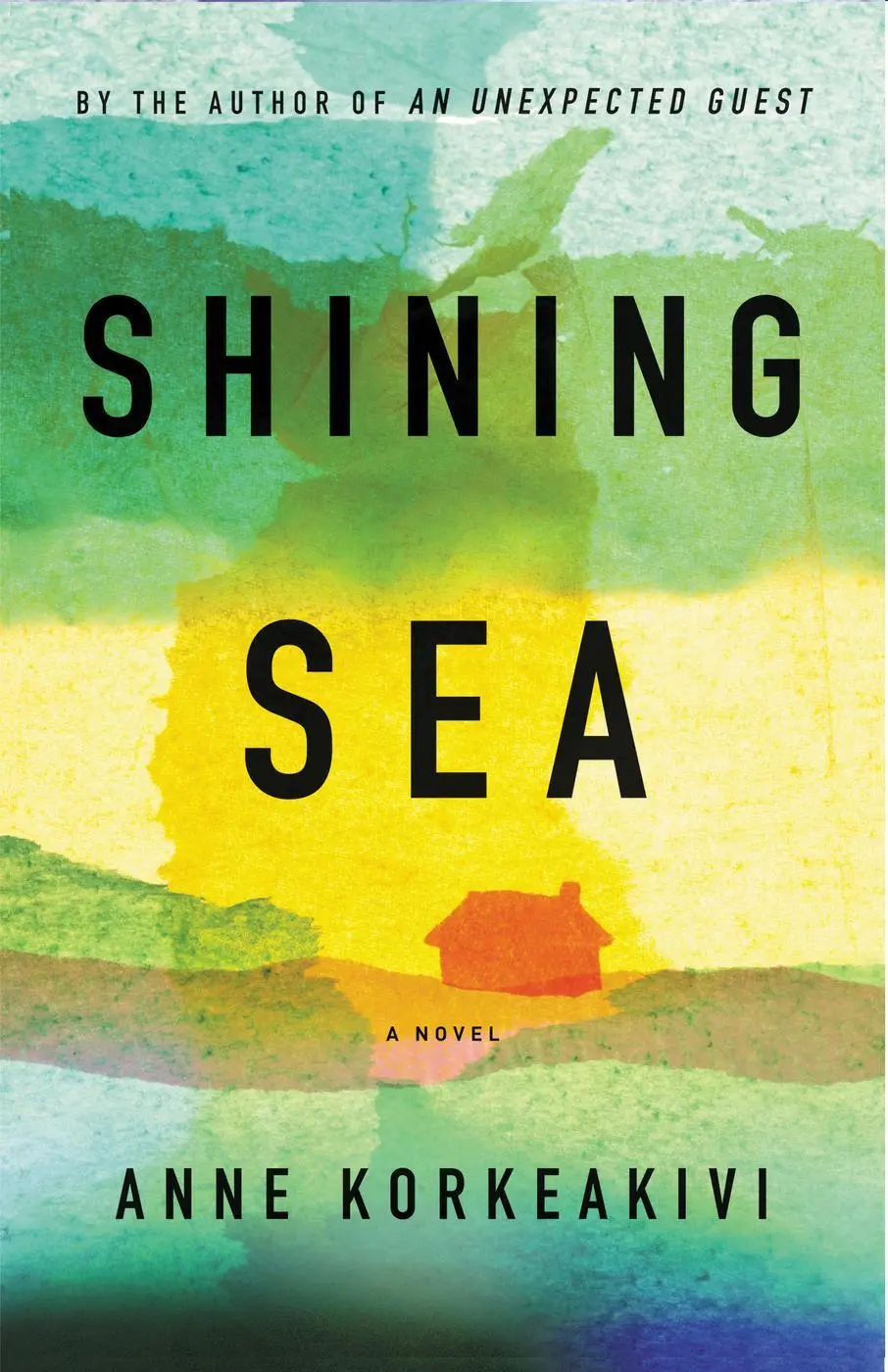
- Название:Shining Sea
- Автор:
- Издательство:Little, Brown and Company
- Жанр:
- Год:2016
- ISBN:нет данных
- Рейтинг книги:5 / 5. Голосов: 1
-
Избранное:Добавить в избранное
- Отзывы:
-
Ваша оценка:
Shining Sea: краткое содержание, описание и аннотация
Предлагаем к чтению аннотацию, описание, краткое содержание или предисловие (зависит от того, что написал сам автор книги «Shining Sea»). Если вы не нашли необходимую информацию о книге — напишите в комментариях, мы постараемся отыскать её.
Shining Sea — читать онлайн бесплатно полную книгу (весь текст) целиком
Ниже представлен текст книги, разбитый по страницам. Система сохранения места последней прочитанной страницы, позволяет с удобством читать онлайн бесплатно книгу «Shining Sea», без необходимости каждый раз заново искать на чём Вы остановились. Поставьте закладку, и сможете в любой момент перейти на страницу, на которой закончили чтение.
Интервал:
Закладка:
The old Dodge’s engine turns over, stalls, turns over, catches. A roar fills the air, and then quiet.
“I guess Daddy’s gone,” Kenny says. He turns over a card.
“Keep your eyes on your cards. Never mind about your father.”
“Mommy says we shouldn’t play war, anyhow. She says we should play peace instead and make it so whoever turns over the lowest card wins the pile.”
“Right. Well, never mind about your mother right now, either.”
Two, three, four minutes pass. The freckles on her grandson’s nose spill down its bridge and onto his wide cheekbones. His bright eyes become smaller with concentration.
The screen door slaps shut again. Patty Ann’s footsteps are heavy in the kitchen. She lays down her last card and loses it to Kenny.
“Well,” she says, “that’s that. Time to get started on lunch.”
* * *
Sunset spills Hi-C colors over the cracked backyard patio, warming the bland beige into something richer, almost rosy. She and Patty Ann sit on the two wooden garden chairs, towels thrown over the seats to keep splinters from entering their tushes, and sip burningly sweet lemonade mixed in the old white pitcher that once belonged to Michael’s parents. Patty Ann has slipped some vodka into her own, as though she won’t notice. The baby is down for the night, inside the house. The two boys — bathed and in clean pajamas-sit cross-legged on the scraggly lawn on a beach towel, eating Popsicles she walked across to the gas station to buy. It’s peaceful now, without any chance of Lee stumbling back in.
Maybe Patty Ann will finally explain the phone call and why she was summoned.
“Don’t drip on yourself,” she says to the boys.
“Oh, let them be, Mom.”
Kenny is licking the multicolored pop slowly, preciously, and the melting is getting the best of him. “There’s a fresh roll of paper towels on the kitchen counter,” she says.
Patty Ann waves her glass, creating an explosion of tinkling ice. “You see, that’s just so typical. First you give a treat. Then you spoil it by nagging.”
She takes a long drink. The air is soft and dry at this hour. Back in Phoenix, Ronnie will have his feet up on the footrest of the leather recliner, the remnants of dinner on a tray, a napkin neatly folded in his lap. Ronnie likes to eat in front of the television, a habit sprung probably from years as a bachelor. Sissy will be in her room, nose in a book or one of her journals.
Kenny looks up at her. A trembling Technicolor drop of liquid courses down a finger. “What did you say, Grandma?”
Patty Ann jingles her glass again. “You just can’t let sleeping dogs lie.”
“Okay, Patty Ann. That’s enough.”
She sets her glass down and goes into the kitchen for a paper towel. Kids have to learn to do stuff like this for themselves, but if Kenny comes in now, he’s sure to leave a sticky-sweet trail of melted Popsicle across the kitchen floor she washed yesterday. God knows when it will get washed again.
Patty Ann stands in the doorway. “When are you going to visit Luke?”
She tears a sheet from the roll of Scott Towels. She bought a double pack for the house on her way back from the cemetery this morning, along with the playing cards, a bunch of bananas, some sandwich fixings, the pork chops they just had for dinner, a few steaks, potatoes, frozen succotash, frozen lemonade, four sticks of butter, and two gallons of milk. Plus a box of Bisquick and bottle of Aunt Jemima syrup for pancakes. The boys gobbled that breakfast up like they’d never eaten before. She had to mix a second batch of batter.
“I already have.”
“Mom!” In the obscurity of dusk, the hostility dropped briefly from her expression, her older daughter looks for a moment like the woman Patty Ann might have become — maybe trained as a nurse, married to a nice doctor, living in a nice house with two cars in the driveway — if not for Lee. If not for everything. “I would have come with you.”
“You said you were done going with me to cemeteries.”
But Patty Ann isn’t that woman. Patty Ann’s a wreck of a young woman, dangling in the ramshackle doorway like a loose tooth in a swollen mouth after a brawl. Her husband has run off, who knows for how long or doing what, leaving her behind with no job and no money but three children.
“I don’t know why you left him to be all alone in Los Angeles,” Patty Ann says, her expression closing up again.
“Luke is not alone. He’s with your father.”
Is that what this trip is about? Did Patty Ann bring her all this way to argue about Luke yet again? She turns away to pour more lemonade. If Luke hadn’t run off with those hippies instead of going to college, he would have gotten a student deferment. He’d still have gotten called up — with number 013 in the lottery, that was for certain — but at a different time. Everything could have been different. She would have supported him in requesting a deferment: she’s a mother; she knows her kids. Francis would have done better than Luke over there. Patty Ann is better cut out for the army. And getting a deferment isn’t cheating. Just like it wasn’t cheating that Francis didn’t get sent over at all because he drew a high number. But Luke disappeared into the desert, and the army dragged him back out before she could. It’s awful, but that’s what happened.
She puts the pitcher of lemonade back in the fridge. “Also,” she says, “Luke has his big sister here. And Francis.”
“Francis is gone.”
Patty Ann steps back into the night. She follows her out and hands the boys each a paper towel. “What do you mean he’s gone? When’ll he be back?”
Patty Ann shrugs. “He split. After Eugene committed suicide.”
“After what? Eugene what?”
“Labor Day weekend. Eugene took a shotgun to his head.”
“What?” She puts a finger to her lips and nods meaningfully at the boys.
Patty Ann shrugs. “I don’t lie to my kids. They should know what war does to people.”
The boys don’t seem to be listening anyway, intent on the army of ants drawn by the sweet juice of the Popsicles spilling over the cracked cement. She says, in a lowered voice, “But why didn’t anyone tell me? Why didn’t you tell me?”
Patty Ann stares at her and again shrugs.
“Oh, for God’s sake. Why didn’t Francis tell me, then? That’s awful. Awful. ” Eugene? The story seems too strange to be possible. Granted, she hasn’t seen him in five — no, maybe six years; by Luke’s funeral, Eugene’d already been called up. There was a time he was almost her fourth son. But when kids move outside their family’s sphere, their friends move even further.
Still, Eugene was always the very spirit of optimism. What could possibly make a person change that much? “Maybe it was an accident. It must have been an accident. Was he drinking? Was he hunting? People said his dad used to go into the hills with a shotgun when they didn’t have anything for dinner.”
“He was sitting in his parents’ backyard. Maybe he used his father’s old gun. I don’t think anyone knows exactly why, except maybe Francis. But Francis isn’t telling anyone anything. After the funeral, he took off.”
She’s been trying to reach Francis ever since she got Patty Ann’s phone call, without success. This explains why. It hadn’t seemed strange; frustrating but not unusual. Francis is often difficult to get hold of. “You went to the funeral?”
“Yeah. Eugene’s father called me.”
“Eugene’s father? Not Francis?”
Eugene’s parents! His hapless father with the missing finger. His worried, bedraggled mother. How could Eugene do such a thing to them? And not just to them — to Francis?
Читать дальшеИнтервал:
Закладка:
Похожие книги на «Shining Sea»
Представляем Вашему вниманию похожие книги на «Shining Sea» списком для выбора. Мы отобрали схожую по названию и смыслу литературу в надежде предоставить читателям больше вариантов отыскать новые, интересные, ещё непрочитанные произведения.










Обсуждение, отзывы о книге «Shining Sea» и просто собственные мнения читателей. Оставьте ваши комментарии, напишите, что Вы думаете о произведении, его смысле или главных героях. Укажите что конкретно понравилось, а что нет, и почему Вы так считаете.