Tim Murphy - Christodora
Здесь есть возможность читать онлайн «Tim Murphy - Christodora» весь текст электронной книги совершенно бесплатно (целиком полную версию без сокращений). В некоторых случаях можно слушать аудио, скачать через торрент в формате fb2 и присутствует краткое содержание. Год выпуска: 2016, Издательство: Grove Press, Жанр: Современная проза, на английском языке. Описание произведения, (предисловие) а так же отзывы посетителей доступны на портале библиотеки ЛибКат.
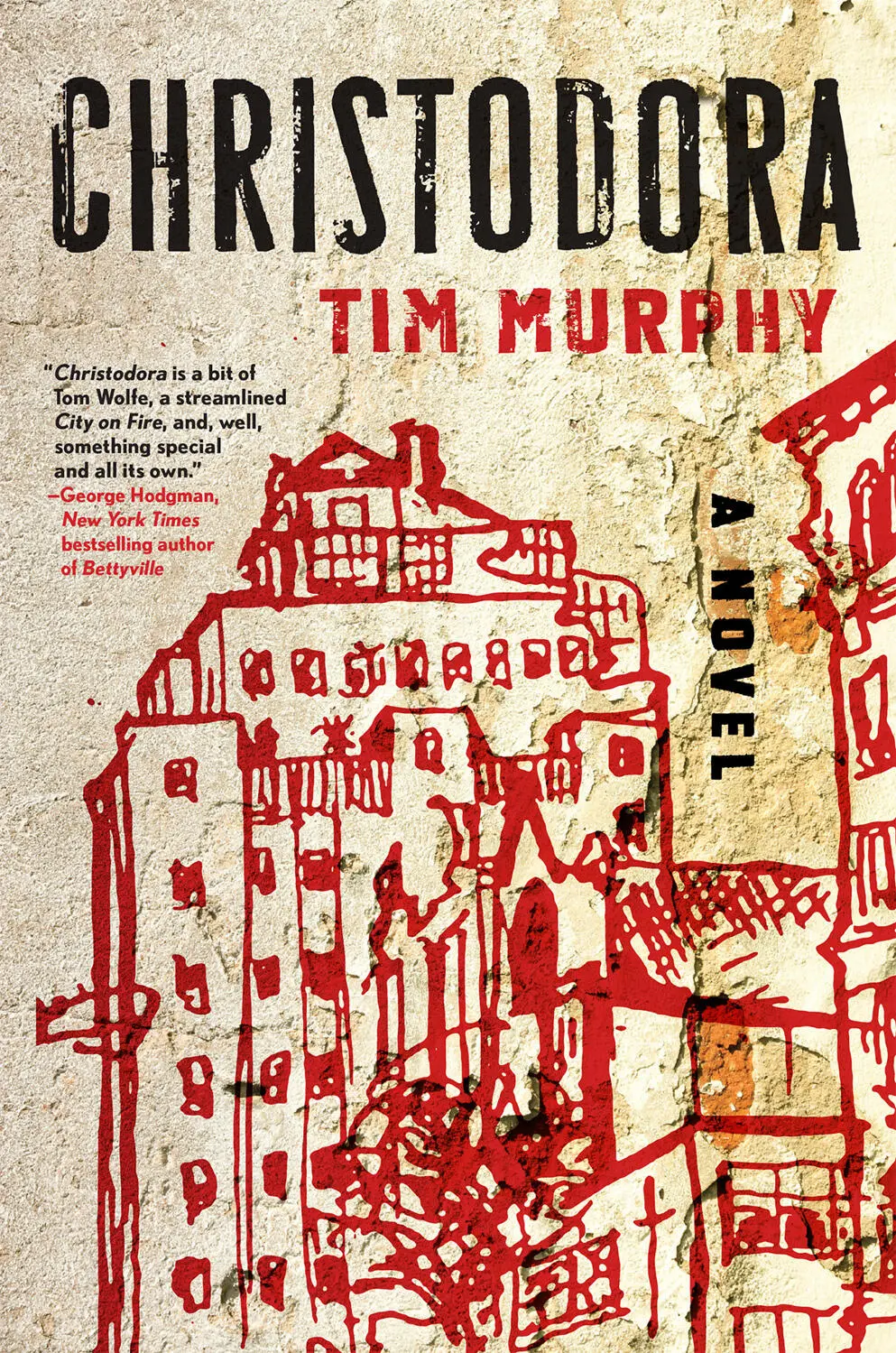
- Название:Christodora
- Автор:
- Издательство:Grove Press
- Жанр:
- Год:2016
- ISBN:нет данных
- Рейтинг книги:4 / 5. Голосов: 1
-
Избранное:Добавить в избранное
- Отзывы:
-
Ваша оценка:
Christodora: краткое содержание, описание и аннотация
Предлагаем к чтению аннотацию, описание, краткое содержание или предисловие (зависит от того, что написал сам автор книги «Christodora»). Если вы не нашли необходимую информацию о книге — напишите в комментариях, мы постараемся отыскать её.
recounts the heartbreak wrought by AIDS, illustrates the allure and destructive power of hard drugs, and brings to life the ever-changing city itself.
Christodora — читать онлайн бесплатно полную книгу (весь текст) целиком
Ниже представлен текст книги, разбитый по страницам. Система сохранения места последней прочитанной страницы, позволяет с удобством читать онлайн бесплатно книгу «Christodora», без необходимости каждый раз заново искать на чём Вы остановились. Поставьте закладку, и сможете в любой момент перейти на страницу, на которой закончили чтение.
Интервал:
Закладка:
“My advice would be to go about your business with the other boys and let him come to you.”
Milly did just that, happily lapping up Tranell’s affection. It was Mariano Rivera time again — this time Mariano Rivera holding hands with the Easter Bunny. When she looked up, Mateo was standing over her, looking impatient, paper in hand.
“I can’t do this,” he said.
“Do what?” Milly tried to sound casual, as though he hadn’t just frozen her out for a month.
“This.” He showed her a picture in a comic book of what looked like a Tyrannosaurus rex and a giant beetle with menacing antennae, locked in a complicated death grip. He was trying to copy it; she could see his paper with its tentative first lines, scribbled out in frustration.
“Give me a second to finish with Tranell and I’ll come over,” Milly said. She certainly couldn’t just drop everything because Mateo finally acknowledged her. That would send him the wrong message.
Mateo frowned and walked back to his self-appointed art table. Five minutes later, Milly came over.
“With a picture like this,” she told him, “you have to look at the primary lines, the major thick lines in the picture. See them?” She lightly traced over them with her finger. “Take a clean sheet and try to recreate those primary lines and I’ll do it alongside you, okay?”
They both began. Milly set to her sheet. At one point, she looked up and found him staring at her with what she thought actually looked like tenderness and some amusement. “What is it?” she asked.
“You still want me to come live with you?” he asked.
Inwardly, Milly took a deep breath, careful to modulate her joy. “The offer is still wide open if you want to come,” she said. She tried to sound not too desperate. But then she couldn’t help adding: “I think you’d like the East Village a lot. There’s a lot of artists and a lot of fun things to do.”
“Would you mind if I leave if my mother comes back?”
This caught Milly short. Had she assumed that in the intervening weeks he’d accepted the truth? She put her hand over his hand. “Of course you can leave if your mother comes back, sweetheart.”
He looked at her hand, then her face, then her hand. Slowly, he put his other hand on top of hers. He smiled at her, as though he had finally come to terms with a difficult decision. “Can I bring my paints with me?”
“You can bring your paints with you,” she said, her voice breaking. “You can have your own room and your own easel.”
“Why are you crying?” he asked her, a note of frowny disapproval in his voice.
Milly brushed away tears with the back of her hand, embarrassed. “Because I’m happy,” she said, all her defenses down.
He took back her hand and put it on his again and rubbed it in a curious, reassuring way. “You’re a nice lady,” he said.
She laughed, which, amid her tears, became a bit of a snort. “Thank you,” she said. “You’re a nice boy.”
For a few seconds, neither of them said anything.
“So,” Milly finally said, pulling herself together. “We’ll talk about it after with Sister Ellen, okay?” But he’d already gone back to his drawing.
In just one month, after an afternoon of good-byes at Sister Ellen’s where everyone was crying for one reason or another — the boys because Mateo was leaving them behind, Ellen because Mateo was leaving them behind, Milly a bit because the heartbreak of the scene was just too much for her, everyone, really, except for strong, dad-like Jared and curiously matter-of-fact Mateo, who exuded the cool, quiet entitlement of someone who was about to have his own room — they took him home on the subway, all his worldly possessions of his five years, including many, many drawings and paintings and a bit of clay sculpture, fitting in a duffel bag and a box.
He said absolutely nothing on the subway — he could have been riding alone, giving just perfunctory nods when Milly or Jared said something to him, such as how much they thought he was going to like the art supply store around the corner from them, or the great art teacher at the kindergarten he’d be going to. He said nothing to Ardit, the super, or the other building staffers at the Christodora, all of whom had been expecting his arrival for a month now. He said nothing in the elevator, nothing in the apartment, nothing even upon entering the former study/guest room they’d furnished into a boy’s bedroom, careful not to decorate or paint save for a few superhero posters, so Mateo could make all the decisions himself and create a room entirely his own.
“You can figure out how you want to make your room, my friend,” Jared said. “What colors, what pictures.”
Mateo sat down tentatively on the bed. Milly caught his hands trembling. “Can I take a nap?” he asked.
“Right now?” Milly asked. “Do you want to go see the neighborhood? It’s really nice outside.”
“I’m tired. I wanna take a nap first.”
“Take a nap,” said Jared. “Get comfortable in your new room.” Jared gently drew Milly out of the room.
“Can you please close the door?” Mateo asked.
“Sure,” Jared said. He closed it behind them, leaving it slightly ajar.
“All the way?” Mateo called back.
Milly and Jared looked at each other. Then Jared shrugged and fully closed the door. Milly put her arms around herself and walked, in a daze, to the kitchen, Jared following her. She sat down at the kitchen table and looked down six flights at the boys playing basketball in Tompkins Square Park. Jared brought them each a glass of water.
“He’s in shock,” Jared said quietly. “Give it time.”
“ I’m in shock,” Milly said.
They sat there, holding hands across the table. “We can’t leave our own house on a Saturday afternoon,” Jared said in a low voice full of amazed amusement. He started laughing quietly, gripped her hand. “What the fuck have we done?”
Milly smiled a little, shook her head. “I hope you don’t hate me for this.”
They heard a high, hiccup-y sound. Milly kicked off her shoes and, in stocking feet, padded to Mateo’s door, then padded back. She took Jared’s hand again. “He’s crying,” she whispered. “Really softly, like he doesn’t want us to hear him.”
Jared came around the table and raised her up, held her. “This is going to take time, Milly.”
All through 1998, with the whole soap opera of Monica Lewinsky in the news every day, Milly watched while Mateo glacially adjusted to his new life. Mateo made friends in kindergarten, at the playground. Mateo had playdates. Mateo had white friends, Mateo went with Milly and Jared to galleries and performances, Mateo went to Montauk and saw the beach for the first time and fell in love with the waves — and with crabs, just like the ones he’d drawn. (Real crabs didn’t smile, though.)
Milly and Jared would take Mateo back with them to Ellen’s home at first, and then after about six months, he said, with no fanfare, he didn’t want to go back anymore. Milly and Jared looked at each other, thought it best to leave it at that. Milly went back herself to do art with the boys a few more times, then finally had to tell Ellen she didn’t have the time anymore. She was now a mother, or some approximation of a mother, in a nuclear family, and she was feeling the closing in of priorities that all parents feel: that sense of letting go a bit of engagement with the broader, bigger issues of the world; that sense — which seems so solipsistic from the outside, but so utterly inevitable from the inside — that the world of the home was a crowded and challenging enough universe in and of itself.
One Sunday night, in the summer, they took a train back from Montauk. Milly and Jared carried Mateo upstairs in the elevator and put him to bed with sand in his hair, because he’d fallen asleep in the cab home from Penn Station. The next morning, Milly went to change the sheets in his little bed and she found, jammed between the mattress and the wall, a beat-up snapshot of a game-looking Latina with moussed hair and a leather jacket and a denim miniskirt, posing with some guy and a boom box.
Читать дальшеИнтервал:
Закладка:
Похожие книги на «Christodora»
Представляем Вашему вниманию похожие книги на «Christodora» списком для выбора. Мы отобрали схожую по названию и смыслу литературу в надежде предоставить читателям больше вариантов отыскать новые, интересные, ещё непрочитанные произведения.










Обсуждение, отзывы о книге «Christodora» и просто собственные мнения читателей. Оставьте ваши комментарии, напишите, что Вы думаете о произведении, его смысле или главных героях. Укажите что конкретно понравилось, а что нет, и почему Вы так считаете.