Tim Murphy - Christodora
Здесь есть возможность читать онлайн «Tim Murphy - Christodora» весь текст электронной книги совершенно бесплатно (целиком полную версию без сокращений). В некоторых случаях можно слушать аудио, скачать через торрент в формате fb2 и присутствует краткое содержание. Год выпуска: 2016, Издательство: Grove Press, Жанр: Современная проза, на английском языке. Описание произведения, (предисловие) а так же отзывы посетителей доступны на портале библиотеки ЛибКат.
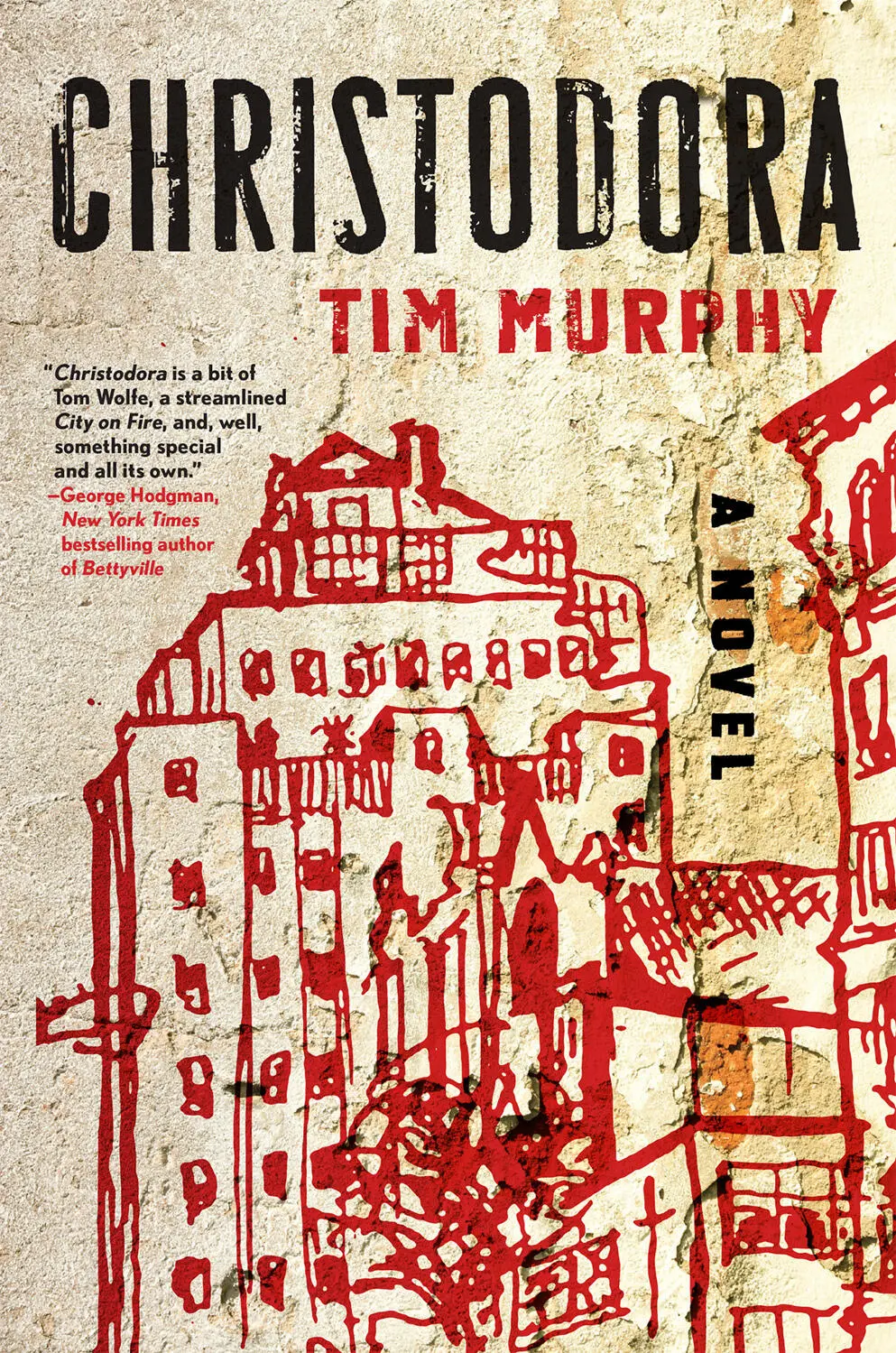
- Название:Christodora
- Автор:
- Издательство:Grove Press
- Жанр:
- Год:2016
- ISBN:нет данных
- Рейтинг книги:4 / 5. Голосов: 1
-
Избранное:Добавить в избранное
- Отзывы:
-
Ваша оценка:
Christodora: краткое содержание, описание и аннотация
Предлагаем к чтению аннотацию, описание, краткое содержание или предисловие (зависит от того, что написал сам автор книги «Christodora»). Если вы не нашли необходимую информацию о книге — напишите в комментариях, мы постараемся отыскать её.
recounts the heartbreak wrought by AIDS, illustrates the allure and destructive power of hard drugs, and brings to life the ever-changing city itself.
Christodora — читать онлайн бесплатно полную книгу (весь текст) целиком
Ниже представлен текст книги, разбитый по страницам. Система сохранения места последней прочитанной страницы, позволяет с удобством читать онлайн бесплатно книгу «Christodora», без необходимости каждый раз заново искать на чём Вы остановились. Поставьте закладку, и сможете в любой момент перейти на страницу, на которой закончили чтение.
Интервал:
Закладка:
“We’ll eat when you’re back, okay?” Millimom called to him.
He grunted, but he knew it wasn’t loud enough for them to hear. He didn’t mean to slam the door that loudly behind him, but he still kind of did. Downstairs, he lit a cigarette and pulled out his cell to check the text that Millimom had sent him with the guy’s address. He walked there, rang the buzzer, and was buzzed in to a waiting room with smart-people-type magazines and a few comfortable club chairs and a weird white machine in the corner that made a whirring noise that, he would later learn, was meant to muffle the conversation in the other room.
He was alone in the waiting room and he just sat there and his anger rose. There they were, the three of them, probably sitting there with their drinks talking about him and what a problem he was, and he. . why was he the one who had to come here? Why weren’t they here with him? Had he asked them to adopt him? No. And why had they, anyway? Why didn’t they have kids of their own? Oh, he knew the whole story by now. They’d told him when he was twelve. She’d died of AIDS. And Bubbe had known her, blah, blah, blah. Often, he felt that he hated her, his real mother, whoever she was, or had been. What a dumb spic slut to go and get AIDS! He hated everyone, pretty much, except Zoya from school, who he decided right there, on the spot, was actually his girlfriend after all, just like she’d wanted, and he pulled out his cell and started texting her: “Im at the fuckin shrinks office my parents sent me 2.”
And he had barely sent it when the door opened and a middle-aged white woman, very East Village with her chunky black square glasses, walked out and slipped away. A middle-aged, kind of chubby, sullen-faced Latin-looking guy with very neatly coiffed, short hair and a leather cell-phone holder on his waistband held out his hand and said, with a faint Puerto Rican accent, his name was Richard Gallegos.
“Mateo.”
“Come on in.”
The guy’s office was warm and small and all beigy-type inoffensive colors and smelled nice, like aromatherapy candles, and had two leather club-type chairs facing each other in the middle. There was some ethnic-type banana-lady art on the walls. The guy sat down and talked about some boring insurance stuff and about how Mateo would have to pay anyway if he missed an appointment or canceled later than twenty-four hours in advance. Then he said, “Okay. Okay, Mateo. So, not your idea to come here, right? Mom and Dad’s?”
I don’t call them that, he was about to say to him. But then he was gripped with such a ferocious anger — even hearing someone say “Mom and Dad” was more than he could take — that he did something very strange. He just looked at this Gallegos guy with more hatred and contempt than he thought he could possibly muster, then pulled his cap down over his face and curled up sideways in the chair, his own face smashed against the back. He knew this was kind of ridiculous and childish, but he just couldn’t deal, and he didn’t know what else to do.
Mateo waited for Gallegos to say something. For a long time, he didn’t. Then Gallegos said: “You know, whatever’s going on, you might find it a big relief to come here once a week and talk about it. I’m not your parents and you can tell me anything. I won’t judge you and you don’t have to even like me.”
Mateo stayed in his crouch facing away from him. He allowed himself to consider this idea. Maybe if he just didn’t look at him? He pulled his face away from the leather a bit.
“It’s just that I don’t really want to be here,” he started.
“That’s okay.”
“I wanna just go away. They’re not my real parents anyway. They probably told you that, right?”
“They’re your adoptive parents, right?”
“They’re not even really my parents. And it’s kind of fucked up that they even adopted me. Why didn’t they have their own kids?”
“Have you ever asked them?”
Mateo hadn’t. They had never touched on that, the three of them. “No,” he said.
“Why don’t you?”
This gave him pause. Would it be so wrong to ask them that? Maybe it would. Then he thought again of the three of them sitting there in the kitchen, talking about him, and his anger redoubled. “I don’t really fucking care why they didn’t,” he said, “I’m just kind of over it.”
“Well, we don’t have to talk about them now,” Gallegos said. “We can talk about anything.”
Mateo finally allowed himself to turn, still curled up, his high-tops hanging over the chair’s arm. He glanced at Gallegos, whose face was big, chubby cheeked, soft, feminine with its wire-framed glasses. At least it was brown, Mateo thought. That was kind of a relief amid his parents’ world of white people who thought they were so fucking liberal and multicultural. Gallegos kind of cocked his head and smiled at him a bit.
Mateo ended up going to him for almost two years, learning to make amiable chat about school and art and future plans, but, really, he never opened his heart to him. He would often look into Gallegos’s broad, caramel-colored face, with its soft, kind brown eyes, and feel strange and uncomfortable stirrings of grief and yearning. Once he’d found this so disconcerting that, right in the middle of Gallegos saying something to him, he had cut his eyes away, his face coloring.
Gallegos stopped, peered at him. “What just happened?” he asked.
I wondered for a second if you were my father, Mateo almost told him. That’s the thought that, unbidden, had floated into his head. But he didn’t tell Gallegos that. “I lost track of my thoughts,” he said instead.
For eighteen months, Gallegos helped Mateo focus on the future, so that by the time he graduated from high school, he was a bit of a star. He’d been able to quiet that bubbling resentment he’d felt toward Millimom and Jared-dad and live peaceably with them. That was the summer of ’09, after high-school graduation, when he knew he was bound for Pratt, when he parted ways amiably with Gallegos.
And that’s when that slow free fall into the drug H had begun — at Oscar’s party after the last day of school, then intermittently throughout that summer before college. Just when his life was more or less his for the making. He really didn’t understand it, how inevitable it felt that he’d go into that free fall. But he also didn’t want to understand it. It felt like a gift, a solution, beyond the need for understanding. It made him feel like he was finally where he’d wanted to be his whole life — very far away.
True, Hector had gotten him smoking the stuff — those long, infinitely serene sessions with Hector, the becalmed dog, the shadows of feet passing by the curtained window in the filthy basement apartment. And it was after the second or third smoking session with Hector that he started to feel truly dopesick for the first time, the onset of what felt like the flu from hell, a shaking, sweating fetal-position misery tinged with a panicked need to get more H to cut the sick. In one of those sick spells, not at Hector’s, who’d left town to spend the winter at some friend’s empty apartment in Palm Springs, but at a using friend of a using friend’s place in Jersey City, he’d let someone shoot him up for the first time — a fucking pimply New Jersey high-school kid named Eddie! — and in that moment, he relinquished that bit of mental dignity of the user who tells himself that he can control things, that there is a line he hasn’t crossed. I’m a slave to this, he thought, not with horror but relief. Now he could simply go there. When he closed his eyes now, needles, syringes, ties, and fat, willing veins danced in his head.
At noon on a Tuesday, returning dopesick to the Christodora, relieved to know that the Parentals were at work, he waited for the elevator in the empty lobby — Ardit had stepped away from the desk, where a game show murmured on his tiny portable TV. Before the elevator arrived, he heard a clambering down the stairs around the corner — footsteps, but also dog steps, the rattle of a dog leash.
Читать дальшеИнтервал:
Закладка:
Похожие книги на «Christodora»
Представляем Вашему вниманию похожие книги на «Christodora» списком для выбора. Мы отобрали схожую по названию и смыслу литературу в надежде предоставить читателям больше вариантов отыскать новые, интересные, ещё непрочитанные произведения.









Обсуждение, отзывы о книге «Christodora» и просто собственные мнения читателей. Оставьте ваши комментарии, напишите, что Вы думаете о произведении, его смысле или главных героях. Укажите что конкретно понравилось, а что нет, и почему Вы так считаете.