Tim Murphy - Christodora
Здесь есть возможность читать онлайн «Tim Murphy - Christodora» весь текст электронной книги совершенно бесплатно (целиком полную версию без сокращений). В некоторых случаях можно слушать аудио, скачать через торрент в формате fb2 и присутствует краткое содержание. Год выпуска: 2016, Издательство: Grove Press, Жанр: Современная проза, на английском языке. Описание произведения, (предисловие) а так же отзывы посетителей доступны на портале библиотеки ЛибКат.
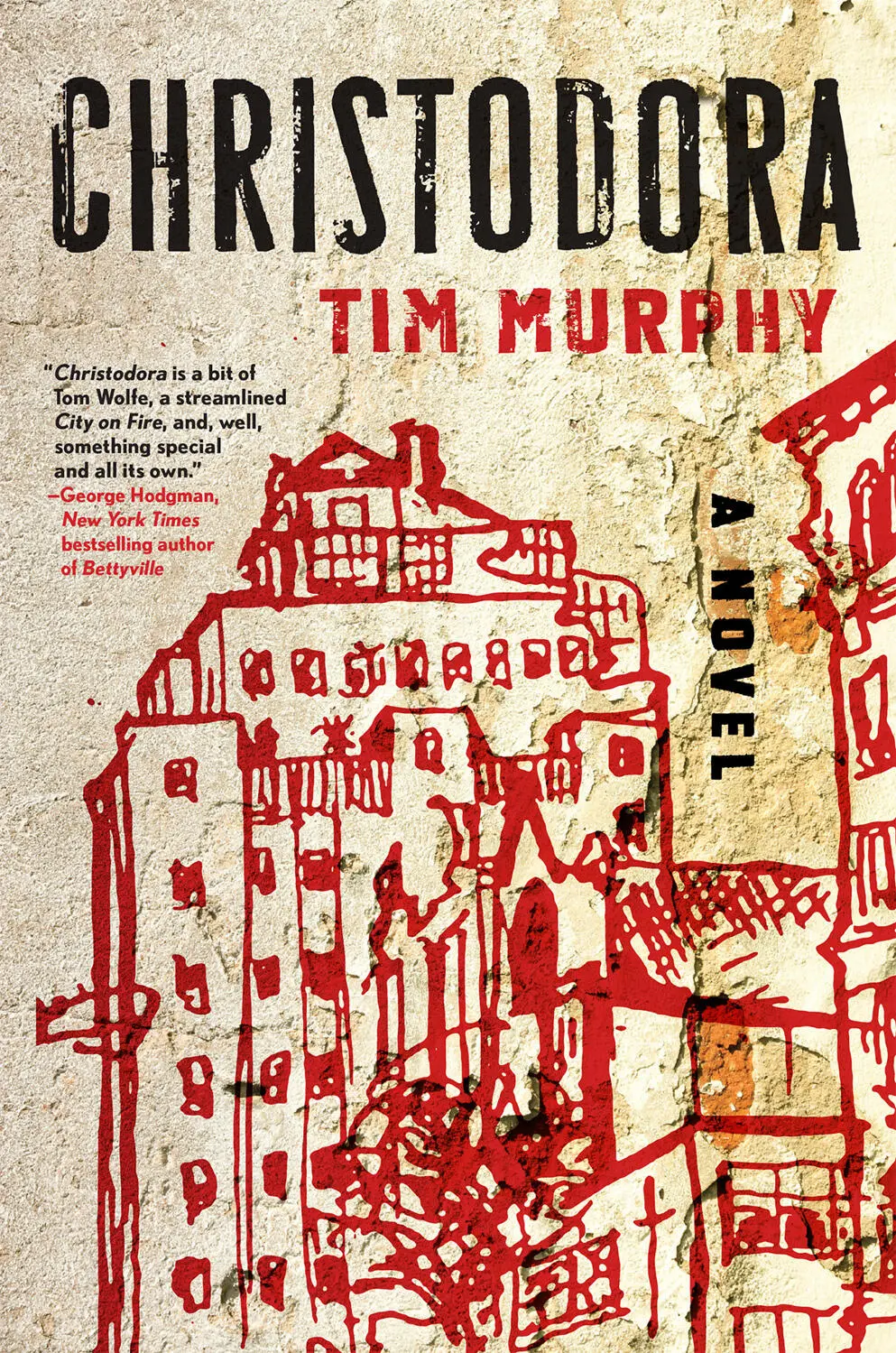
- Название:Christodora
- Автор:
- Издательство:Grove Press
- Жанр:
- Год:2016
- ISBN:нет данных
- Рейтинг книги:4 / 5. Голосов: 1
-
Избранное:Добавить в избранное
- Отзывы:
-
Ваша оценка:
Christodora: краткое содержание, описание и аннотация
Предлагаем к чтению аннотацию, описание, краткое содержание или предисловие (зависит от того, что написал сам автор книги «Christodora»). Если вы не нашли необходимую информацию о книге — напишите в комментариях, мы постараемся отыскать её.
recounts the heartbreak wrought by AIDS, illustrates the allure and destructive power of hard drugs, and brings to life the ever-changing city itself.
Christodora — читать онлайн бесплатно полную книгу (весь текст) целиком
Ниже представлен текст книги, разбитый по страницам. Система сохранения места последней прочитанной страницы, позволяет с удобством читать онлайн бесплатно книгу «Christodora», без необходимости каждый раз заново искать на чём Вы остановились. Поставьте закладку, и сможете в любой момент перейти на страницу, на которой закончили чтение.
Интервал:
Закладка:
“I love you, I love you, I love you,” Drew would say, tearing her hands through the floppy hair she adored, and then they’d go home and have sex in the living room and lie on the floor with the dog listening to Arcade Fire, and Drew would sigh on Christian’s pale chest and say, “I am so grateful to be back in my own life.”
“It’s very odd how you go and live in somebody else’s life for a week,” Christian would remark. And Drew would nod and say, slowly, “Mm-hmm.” But this was how Drew had ended up making a living. After Learning to Breathe , about her drug addiction and getting sober, became a reasonable success in 1994, she realized that she didn’t have enough life experience beyond the timeline of the book to really write another memoir, but also that she had no idea what to write a novel about. And at the time she was watching Hillary Clinton tank because of how she’d handled the health-care thing — even after all those men in Congress had stood up and applauded her because she seemed so smart!
The whole thing gave her an idea. It was called When You Have the Ball: How Women Handle Power . And Drew had politely reached out to a half-dozen powerful women around the world and asked if she could come spend time with them, and thus followed her second fairly successful book. Drew proved she was not only a talented memoirist but a journalist, too. Then came Soft Power: How Men Are Changing , sort of the same book, but with men. (Secretly, Drew didn’t feel that men had really changed — the crunchy environmentalist leader she had spent time with was the biggest blowhard of all, she thought — but she hadn’t come up with the title anyway — her editor’s assistant had.) Books two and three had even been optioned by an emerging network for a sitcom that never happened, but at least Drew had made a nice extra chunk of change from the deal.
So all this had brought her to the latest book, and today she was banging out a sort of promo piece for it to run in Cosmopolitan . “The Secrets to Successful Couples: What I Learned.” This is what Drew worked on for two hours, which, because she was an extremely efficient writer, she felt was far too long for such a puff piece. The gist of the piece was that successful couples communicated ruthlessly and constantly allowed each other, and the contours of the relationship, to change and grow.
Trying to live by her research, she’d even suggested to Christian that they devote Tuesday nights to having a “ruthlessly honest” conversation about their relationship. He’d sighingly agreed to that, and they’d even dutifully done as much for a few weeks — but Drew had to admit privately that she was relieved upon realizing later that an entire month had passed and they’d both forgotten about the rather tiresome pact.
So that was that for the afternoon. She could finally leave the house and get some fresh air. She put Lewy on a leash — you could bring your dog to this meeting as long as the dog didn’t bark, pee, or poop inside, and Lewy had done the last only once, when Drew was almost certain he had had a stomach bug, but, smartly, Drew had some plastic bags in her purse so the cleanup wasn’t so bad.
She got to the meeting, in the back room of an old café on the corner of Sunset, a few minutes early and chatted with the regular crowd. There was Boaz, a former daily pothead and children’s TV producer whose wife was going through breast-cancer treatment; each time it seemed he was about to cry, he would sort of pull himself together, something Drew thought was very sexy and reassuring in a very traditionally male way, even though she never would have said that, because you were certainly allowed, even encouraged, to come here and cry, rail, swear, curse out the room, whatever it took to keep you from taking your out-of-control feelings out into your life and, God forbid, picking up alcohol or drugs. There was Justin — the broad-chested, ginger-bearded gay TV-commercial actor who was trying to get a stage musical about Susan B. Anthony off the ground with his husband, Doar, with whom he was raising two foster kids from Compton. Justin had no problem crying in the meetings and did so frequently. Drew loved Justin — they’d often go out for tacos together after meetings — but she always cringed just a little bit when he would raise his hand and say, in a sort of high, inquiring voice, “Justin, addict, alcoholic?” and then simply gulp for words and not say anything.
They all knew what was coming. Justin would softly, mournfully cry for up to sixty excruciating seconds — inevitably, whoever was sitting next to him would put an arm around him and stroke his back — before talking, and sometimes he wouldn’t say more than, “It’s just so hard, that’s all. It’s really hard today. But I’m grateful to be here. Thanks.”
Drew sometimes wished he’d say more than that and give everyone something to work with. But then again, having gone to meetings for nearly twenty years now, she’d mostly learned to accept people on their own terms.
Well, probably except for Susannah. Beautiful, raven-haired Susannah reminded Drew of Milly if Milly, rather than being too awkward to make a self-sealed temple of her beauty, had simply run with it and lived in a bubble of navel-gazing self-regard. Susannah would say things like, “I mean, honestly, I don’t think I’m built for this industry, I’m too raw , unfortunately I feel too much.” But that rawness hadn’t kept Susannah from being a super-successful writer of about every other original movie on Lifetime — she was writing the scripted TV-dreck equivalent of the real-life women’s stories that Drew actually went and lived in a trailer park for a week to find. At least, Drew’s sponsor pointed out to her, a fearless moral self-inventory had given Drew the self-awareness to realize that some of her dislike for Susannah was competitive, and, in knowing that she was driven by selfish fear, she could pray to a (non-gendered, faceless, non-anthropomorphized) G-d of her understanding to remove that shortcoming from within her. And Drew had several years ago stopped wearing the ankh pendant that had so disconcerted Milly upon spying it, but Drew was still quite spiritual and spent her first twenty minutes upon waking in meditation, even though usually her focused inner mantra would stray off into to-do lists and various petty, nagging resentments, such as irritation at her gardener for leaving the sprinkler on in the middle of a summer drought.
Once at the meeting, Drew made herself a cup of tea in a Styrofoam cup and chatted with Boaz, who’d spent the morning in bed watching DVR’d episodes of The View and Ellen with his wife after they got back from chemo at City of Hope.
“I mean”—he shrugged—“it was a blessing that I just wrapped a show and I have that kind of time to spend with her when she’s going through this.”
Drew lightly put a hand on his arm. “Boaz,” she said, “you know you’d find a way to be with her even if you were in production.”
She’d mastered this gesture, the light touch on the arm, along with the remark that reminded people they were better than they thought they were. About three years into meetings, she’d realized what she had slowly, inadvertently become: the cool, good-looking, smartly self-knowing successful woman with a very good haircut who served as an example to smart, pretty young women who were coming into the meetings, with all their self-conscious hair-flicking, face-picking tics, because they’d messed up their lives just like Drew had, probably because of some terrible father relationship or a mother who subtly had always told them that they had to be pretty and speak in a high, questioning voice and put their own needs behind those of others and never, never show anger. Drew had sponsored dozens of girls like this. She even called them “my girls,” and, because she had a formidable Jewish-mother streak (something she’d come to realize and embrace about herself in sobriety, which had led her to explore the more intellectual, dialectical side of Judaism), these girls were almost a salve as she realized that she and Christian probably would not have kids. They were — they could admit, laughingly—“just too selfish and devoted to Lewy,” their bulldog, to take that on.
Читать дальшеИнтервал:
Закладка:
Похожие книги на «Christodora»
Представляем Вашему вниманию похожие книги на «Christodora» списком для выбора. Мы отобрали схожую по названию и смыслу литературу в надежде предоставить читателям больше вариантов отыскать новые, интересные, ещё непрочитанные произведения.







Обсуждение, отзывы о книге «Christodora» и просто собственные мнения читателей. Оставьте ваши комментарии, напишите, что Вы думаете о произведении, его смысле или главных героях. Укажите что конкретно понравилось, а что нет, и почему Вы так считаете.