Tim Murphy - Christodora
Здесь есть возможность читать онлайн «Tim Murphy - Christodora» весь текст электронной книги совершенно бесплатно (целиком полную версию без сокращений). В некоторых случаях можно слушать аудио, скачать через торрент в формате fb2 и присутствует краткое содержание. Год выпуска: 2016, Издательство: Grove Press, Жанр: Современная проза, на английском языке. Описание произведения, (предисловие) а так же отзывы посетителей доступны на портале библиотеки ЛибКат.
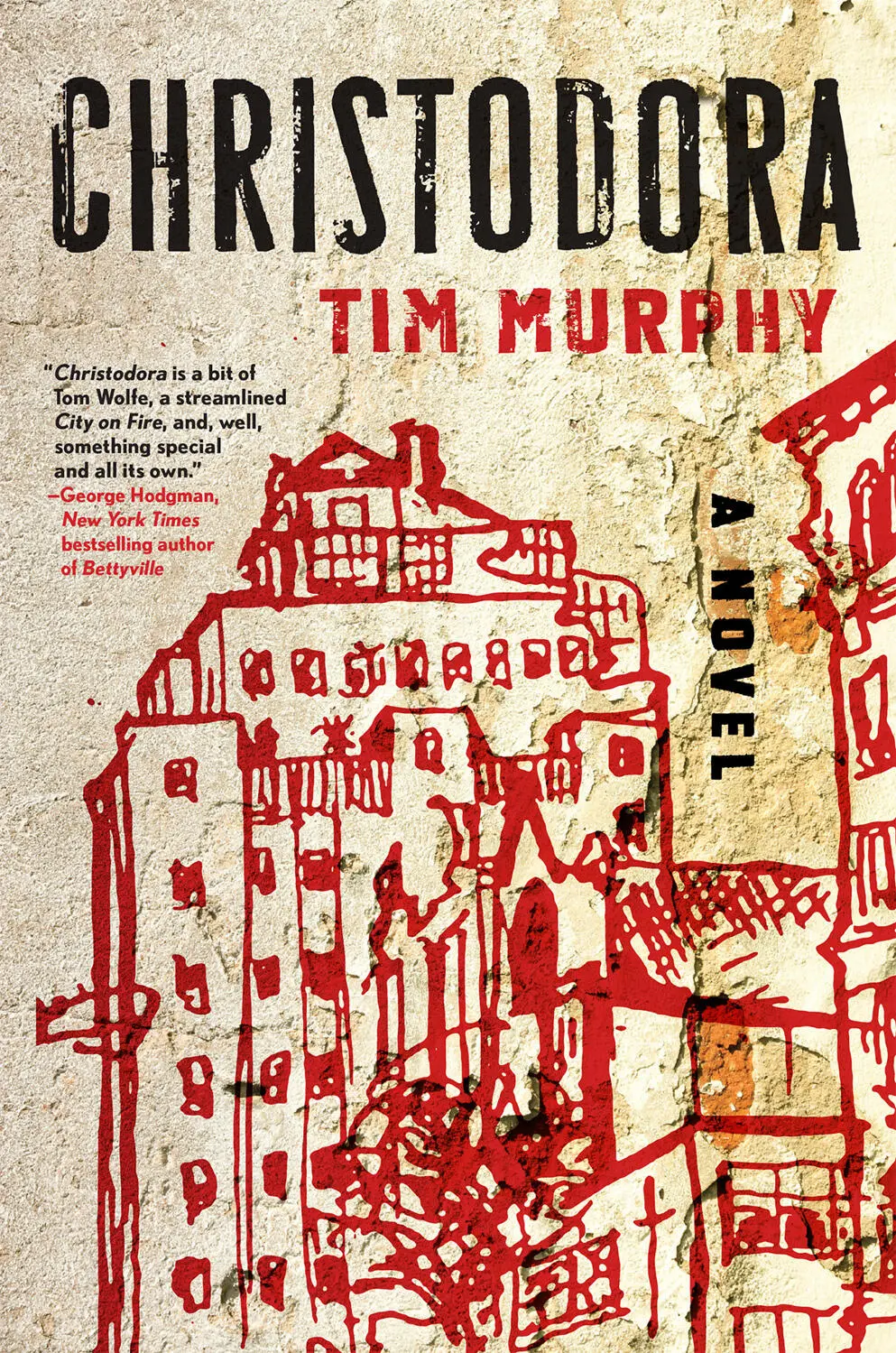
- Название:Christodora
- Автор:
- Издательство:Grove Press
- Жанр:
- Год:2016
- ISBN:нет данных
- Рейтинг книги:4 / 5. Голосов: 1
-
Избранное:Добавить в избранное
- Отзывы:
-
Ваша оценка:
Christodora: краткое содержание, описание и аннотация
Предлагаем к чтению аннотацию, описание, краткое содержание или предисловие (зависит от того, что написал сам автор книги «Christodora»). Если вы не нашли необходимую информацию о книге — напишите в комментариях, мы постараемся отыскать её.
recounts the heartbreak wrought by AIDS, illustrates the allure and destructive power of hard drugs, and brings to life the ever-changing city itself.
Christodora — читать онлайн бесплатно полную книгу (весь текст) целиком
Ниже представлен текст книги, разбитый по страницам. Система сохранения места последней прочитанной страницы, позволяет с удобством читать онлайн бесплатно книгу «Christodora», без необходимости каждый раз заново искать на чём Вы остановились. Поставьте закладку, и сможете в любой момент перейти на страницу, на которой закончили чтение.
Интервал:
Закладка:
“Aww,” drawled Elayne into her microphone. “Look at you two! You two kids look like you want to know what love is. Do you want to know what love is? I know I do. Don’t you, Marty?”
“I sure do,” Marty said into his mic. “I think I already know.”
Marty and Elayne then began their inevitable lounge version of the Foreigner song. Milly and Jared got back to the banquette. Drew looked up at Milly’s blotchy face.
“Did you request the song, too, just to put a cherry on it?” Milly asked Drew.
Drew gasped. “You’re so paranoid , Millicent Heyman! You are crazy, you know that, right?”
She and Drew exploded in laughter. “You are crazy, Drew Forman!” Milly cried. “Learning to breathe! I’ll show you how to breathe!”
Milly lunged at Drew, wrapped her arms around her. “You’re crazy, you’re crazy!” Drew shrieked, cackling madly. The boys and everyone else leaned back, like, Uh, what the fuck just happened? And Milly didn’t quite understand herself, except that it was the first time in a long time she felt full of joy.
Seven. Portrait of the Artist (2010)
Mateo has grown. He thinks back bemusedly on his high-school persona, M-Dreem, just over a year ago, so fly in his high-tops and massive T-shirts, the little prince of Art and Design High School. Well, he’s moved on. At Pratt, there are these slightly older kids — the steampunk kids, they’re called — who wear only vintage lace-up boots, tight trousers, vests, old watches on chains, and black hats or slouchy old newsboy hats, and Mateo has become sort of enamored of them, hanging out with them — and they, all being from way upstate or New Jersey, love him because he is “New York” and “real” to them.
He affects some of their look, spending a lot of time when he’s not on campus cruising around thrift stores in the East Village, where he still lives with Millimom and Jared-dad, buying anything black or old looking. The big ’fro now goes in pigtails underneath a bowler, for example, and the fat red-and-black Airs perhaps with knee stockings and twill breeches. He likes the look — he’s mixing genres, listening to less Outkast and more old Josephine Baker and early Cure. And his art: What the F was he thinking back in high school with that glorified notebook doodling? He laughs at it now. As soon as he started seeing more work, hitting the New Museum and the Chelsea and Lower East Side galleries, he changed up his game, became much more minimal, abstract. For the final project of his foundation drawing class, he was taking details from these old Josephine Baker photos — one eye, her feet, her breasts — and drawing them into planes of endlessly repeating water drops, food blobs, or strange, jellylike swirls. He inwardly cringes when he remembers that spider thing he did for his final high-school project. What had he been thinking?
Today, mid-April, it’s the first warm spring day. Everyone’s lying out on campus, shoes off, portfolio cases cast aside, Lady Gaga coming out of the dorm windows. He’s hanging out with Keiko, a sculptor from L.A. who dresses like a Tokyo Harajuku girl (schoolgirl kilts, combat boots, shock of purple in her black hair), whom he’s made out with at a few parties, and with Fenimore, whose real name is Carl, from Rochester, one of the steampunk guys. Keiko’s talking about the Marina Abramovic´ show at MoMA, where Marina just sits there and a visitor sits across from her and they stare at each other for as long as the visitor wants. Keiko went and waited in line for six hours.
“So I finally sit down across from her,” Keiko says, “and it’s amazing, she is almost like a wax sculpture except that she allows herself to blink, and I can see her chest move up and down breathing.”
“But she doesn’t talk, right?” asks Fenimore.
“Nooo,” says Keiko. “And you’re not allowed to make any sort of faces at her or say anything, you just stare and see where your mind goes.”
Mateo ponders this for a second. “That is so intense,” he says, because, after thinking about it, he feels that it is. He’d like to go. But it also sounds kind of scary to him.
“It is soooo intense,” says Keiko. She lies down in the grass, puts her head in Mateo’s lap and starts lacing his fingers in her own. Mateo glances at Fenimore, who’s looking away behind his sunglasses, as though he’s lost in thought. Is he jealous? He’d said the other day he thought Keiko was hot. But then there’s his whole obsession with My Own Private Idaho , so Mateo thinks he might really be gay, or at least bi.
“Sooo intense,” Keiko says again. “So at first it was awkward — I was thinking, Why am I sitting across from you and staring at you? I don’t even know you. Then your mind starts to wander. You’re still staring at her face, but your mind wanders, like I started thinking about my grandmother.” Keiko’s grandmother, in San Francisco, had died six months ago. “And before you know it, I’m crying! I’m welling up. And then — and this is the part nobody believes—”
“She hands you a tissue?” Mateo asks. Fenimore laughs. Mateo would never want to admit it, but he always thrills a little when Fenimore laughs at his cracks.
“No!” goes Keiko. “I swear, even though she’s not supposed to talk or make faces, I swear I see her mouth the word no . As in, Don’t cry . And I stopped short. I was horrified! Had that just happened? Then I was, like, confused, like had I imagined it, like at my grandmother’s funeral when I thought my mother said to me, Stop crying, Keiko, you’re embarrassing me . It was so humiliating. Where was I? But she — um, Marina Abramović—was just like a blank slate. Suddenly I thought I’d imagined it. I’m like the 450th person she’s sat across from now for, like, six weeks — she could care less if I cry or what I do. And that kind of killed it for me, so I got up and left.”
“How long were you there for?” Mateo asks. He’s heard people wait hours in line to sit across from her and then some of them sit there for hours, which they’re allowed to. They can stay as long as they want, until the museum closes.
Keiko considers. “Probably twenty, twenty-five minutes in all. I don’t know how some people stay for two hours and just ignore all the people waiting in line behind them.”
“The people waiting in line,” Fenimore says, “are part of the show.”
Keiko takes Mateo’s hand again, plays with his fingers. “I guess so,” she says uncertainly. “I still can’t do that, though.” When her hand goes into Mateo’s, he feels a warm rush, and it reminds him about the baggie in his pocket, which gives him a double warm rush in his stomach, that recall. Ever since that party at Oscar’s last year, he’s been snorting heroin once or twice a month — not more than that, and never more than snorting it, which is way less hard-core than smoking or shooting it. Nobody knows except a few guys on the Lower East Side whom he buys it from and does it with. The fact that he has been able to control it and to keep his occasional mild dopesickness from Millimom and Jared-dad is a point of pride with him. (That morning after Oscar’s party, they thought he was merely drunk.)
He has no one in his life to ask him why he snorts heroin. But if he did, and if he were even able to articulate this, he might say something like: ever since he was twelve, when Millimom and Jared-dad finally sat him down and explained to him that his mother, that woman in the snapshot dated 04/14/1984, had died of AIDS when he was just a baby and left him in the legal guardianship of his bubbe , Ava, and that’s why Millimom and Jared-dad had taken him in as a foster child and then adopted him — well, ever since then, and more every year through his teens, he had felt increasingly disconnected from the world he was being raised in. It felt like a shadow world, a fraud world, the second-best fake version of the world he’d have grown up in if the woman in the snapshot hadn’t disappeared, and if he’d lived with her and with his father. Then he’d have grown up in the world he was supposed to grow up in. As it was, nobody knew who his father was. His real mother, a woman named Ysabel Mendes, had apparently claimed she didn’t know who the father was, which, as Mateo aged and wised up, left him only with the angry, bad feeling that his mother, so sassy and fun-looking in that photo, had been a slut who couldn’t even keep track of her sexual encounters. Often, Mateo fantasized about seeking out her family somewhere in Queens, showing up on their doorstep in some neighborhood an hour’s subway ride from the East Village, with that snapshot in his hand, and saying, Hey, I’m your nephew, or your grandson, or your cousin, and Hey, come on, I want to know my real family .
Читать дальшеИнтервал:
Закладка:
Похожие книги на «Christodora»
Представляем Вашему вниманию похожие книги на «Christodora» списком для выбора. Мы отобрали схожую по названию и смыслу литературу в надежде предоставить читателям больше вариантов отыскать новые, интересные, ещё непрочитанные произведения.









Обсуждение, отзывы о книге «Christodora» и просто собственные мнения читателей. Оставьте ваши комментарии, напишите, что Вы думаете о произведении, его смысле или главных героях. Укажите что конкретно понравилось, а что нет, и почему Вы так считаете.