Paul Beatty - The White Boy Shuffle
Здесь есть возможность читать онлайн «Paul Beatty - The White Boy Shuffle» весь текст электронной книги совершенно бесплатно (целиком полную версию без сокращений). В некоторых случаях можно слушать аудио, скачать через торрент в формате fb2 и присутствует краткое содержание. Год выпуска: 2001, Издательство: Picador, Жанр: Современная проза, на английском языке. Описание произведения, (предисловие) а так же отзывы посетителей доступны на портале библиотеки ЛибКат.
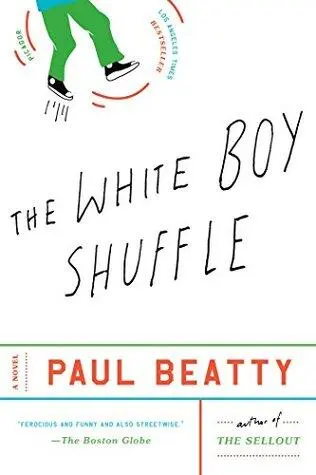
- Название:The White Boy Shuffle
- Автор:
- Издательство:Picador
- Жанр:
- Год:2001
- ISBN:нет данных
- Рейтинг книги:3 / 5. Голосов: 1
-
Избранное:Добавить в избранное
- Отзывы:
-
Ваша оценка:
The White Boy Shuffle: краткое содержание, описание и аннотация
Предлагаем к чтению аннотацию, описание, краткое содержание или предисловие (зависит от того, что написал сам автор книги «The White Boy Shuffle»). Если вы не нашли необходимую информацию о книге — напишите в комментариях, мы постараемся отыскать её.
The White Boy Shuffle — читать онлайн бесплатно полную книгу (весь текст) целиком
Ниже представлен текст книги, разбитый по страницам. Система сохранения места последней прочитанной страницы, позволяет с удобством читать онлайн бесплатно книгу «The White Boy Shuffle», без необходимости каждый раз заново искать на чём Вы остановились. Поставьте закладку, и сможете в любой момент перейти на страницу, на которой закончили чтение.
Интервал:
Закладка:
“Close enough. Remember that definition, you soon-to-be revolutionaries.” With that, Coach dismissed us into a cool late April afternoon.
On the way home I was wondering what Coach meant by “soon-to-be revolutionaries” when I noticed a distant column of black smoke billowing into the dusk like a tornado too tired to move. “What’s that?” I asked Scoby. “Eric Dolphy,” he replied, referring to the stop-and-go shrieking that was escaping from his boom box. “No, I mean that,” I said, pointing to the noxious-looking cloud. Scoby didn’t know, but he was more than willing to make up for his ignorance in smoke formations by lecturing me on the relevance of Dolphy’s sonic turmoil to teenage Negromites like ourselves.
Midway through the seminar in music appreciation another silo of smoke twisted into the dusk, this one closer to us. The driver of a rundown Nova sped down Sawyer Drive, leaning on her high-pitched horn for no apparent reason. Scoby turned up the volume on the tape deck just a bit. Another car flew through a stop sign, then reversed its direction. When the car drew parallel to us, the driver flashed a gap-toothed smile, then shot a raised fist out the window and raced away. Soon every driver that passed was joyriding through the streets, honking the horn and violating the traffic laws like a Hollywood stunt driver in the big chase scene. The driver of a Wonder Bread delivery truck pulled a B-movie U-turn, hopped on the sidewalk, then peeled out down an alley. Dolphy’s horn matched the curbside cacophony flutter for flutter, screech for screech.
“How does the music make you feel, man?”
“I feel like I’m dry heaving while free-falling from fifteen thousand feet.”
“That’s it, man, you getting it. Feel, Gunnar, feel. Let the jazz seep into your pores.”
People began spilling from their homes. They paced up and down the sidewalks, looking tense and unaware they’d left their front doors wide open. Something was wrong; no Angeleno ever leaves the door open. I caught the eye of a middle-aged man wearing white patent leather shoes, ochre-colored polyester pants, and a Panama hat and standing on his front porch looking desperate for someone to talk to. “What’s happening?” I asked.
“Them cracker motherfuckers did it again.” The Rodney King verdict; I’d completely forgotten. “They let them racists go. I’m surprised the judge didn’t reprimand the peckerwood so-called peace officers for not finishing the job.”
Let go? What did that mean? The officers had to be found guilty of something — obstruction of traffic, at least. I doubted the man in the patent leather shoes’ version. I could hear the TV in his living room, and I peeped through his doorway. The smirk on the reporter’s face told me the man was right, even before I heard her say, “Not guilty on all charges.”
I never felt so worthless in my life. Uninvited, Scoby and I walked into the man’s living room, set our bookbags on his coffee table, and sat on the couch. I looked out the window and saw a store owner spray-paint BLACK OWNED across her boarded-up beauty salon. I wanted to dig out my heart and have her do the same to it, certifying my identity in big block letters across both ventricles. I suddenly understood why my father wore his badge so proudly. The badge protected him; in uniform he was safe.
Sitting on that couch watching the announcer gloat, my pacifist Negro chrysalis peeled away, and a glistening anger began to test its wings. A rage that couldn’t be dealt with in a poem or soothed with the glass of milk and glazed doughnut offered by our kind host.
“There’s a poem in there somewhere,” the man said. He and Scoby must have been talking about me. I wanted to slap Scoby; he sat there giggling, egging the man on with a fling of his hand. “What do you write about?” the man asked.
“I write about whatever.” I envied Psycho Loco. Strangers never asked him, “What kind of people do you kill? Could you do a little killing right now, just for me?” Psycho Loco dealt with his rage by blaming and lashing out; there was no pretense of fairness and justice, due process was whatever mood he was in, clemency was his running out of bullets while shooting at you.
“Have you ever published anything?”
“Yeah, back in Hillside he writes his poems on the wall.”
“I been published in a few magazines too. There’s a company in New York that wants to publish a book of my shit.”
Even at its most reflective or its angriest, my poetry was little more than an opiate devoted to pacifying my cynicism. Poetry was a sixteen-year-old’s Valium: write a couple of haikus and stay away from fatty foods. I now know that Psycho Loco’s violence was no less a psychological placebo than my poetry, but watching the acquitted officers shake hands with their attorneys and stroll triumphantly into the April sun, I saw his brutality as a powerful vitriolic stimulant. I wanted to sip this effervescent bromo that cleared one’s head and numbed the aches and pains of oppression. Psycho Loco had the satisfaction of standing up to his enemies and listening to them scream, watching them close their eyes for the last time. Psycho Loco had a semblance of closure and accomplishment. He was threat. The American poet was a tattletale, a whiner, at best an instigator. You write about blowing up the White House and they tap your phone, but only when you buy some dynamite will they tap you on the shoulder and say, “Come with me.”
“Nigger, you ain’t never said nothing about no book.”
“Nigger, you ain’t never asked.”
I wanted to taste immediate vindication, experience the rush of spitting in somebody’s, anybody’s, face. The day of the L.A. riots I learned that it meant nothing to be a poet. One had to be a poet and a farmer, a poet and a roustabout, a poet and a soon-to-be revolutionary.
I looked at Scoby and said, “Let’s break.” We gathered our things, thanked the man for his kindness, and prepared to leave. We spent an awkward moment in silence till the man asked, “Is that Dolphy?” Scoby nodded, and we made our way toward the commotion, listening to Dolphy play his horn like he was wringing a washrag. I couldn’t decide whether the music sounded like a death knell or the cavalry charge for a ragtag army. We turned the corner onto Hoover and Alvarado and walked into Carnaval, poor people’s style. The niggers and spics had decided to secede from the union, armed with rifles, slingshots, bottles, camcorders, and songs of freedom. Problem was, nobody knew where Fort Sumter was.
In the middle of the intersection, the Wonder Bread truck we’d seen before was careening in circles, trying to find a path through the labyrinth of flaming dumpsters and rioters. Another stranded teamster in a beer truck crashed into a barrier and broadsided the Wonder Bread man, sending both vehicles sprawling on their sides. The Wonder Bread truck slid to a stop ten feet in front of Scoby and me like a huge shuffleboard disk, its engine sputtering and wheels spinning. The driver scrambled out of the cab. Before he could bolt into the street, I slammed him against the side of the truck. Bug-eyed with fear, he babbled something about having “never done nothing to nobody.” I’d never seen anyone afraid of me. I wondered what my face looked like. Were my nostrils flaring, my eyes pulsing red? I was about to shout “Ooga-booga” and give the guy a heart attack when Scoby clambered from the rear of the truck, chewing on a cupcake and holding loaves of bread. Our captive dropped to his knees, begging for mercy. He took out his wallet and showed us pictures of his kids, as if they were for sale. I took a doughy satchel and swung it at his face, striking him solidly in the cheek. I know it didn’t hurt, but the man whimpered in shame and resigned himself to the beating. Nicholas and I pummeled him silly with pillows of white bread until it snowed breadcrumbs.
Читать дальшеИнтервал:
Закладка:
Похожие книги на «The White Boy Shuffle»
Представляем Вашему вниманию похожие книги на «The White Boy Shuffle» списком для выбора. Мы отобрали схожую по названию и смыслу литературу в надежде предоставить читателям больше вариантов отыскать новые, интересные, ещё непрочитанные произведения.






Обсуждение, отзывы о книге «The White Boy Shuffle» и просто собственные мнения читателей. Оставьте ваши комментарии, напишите, что Вы думаете о произведении, его смысле или главных героях. Укажите что конкретно понравилось, а что нет, и почему Вы так считаете.