Paul Beatty - The White Boy Shuffle
Здесь есть возможность читать онлайн «Paul Beatty - The White Boy Shuffle» весь текст электронной книги совершенно бесплатно (целиком полную версию без сокращений). В некоторых случаях можно слушать аудио, скачать через торрент в формате fb2 и присутствует краткое содержание. Год выпуска: 2001, Издательство: Picador, Жанр: Современная проза, на английском языке. Описание произведения, (предисловие) а так же отзывы посетителей доступны на портале библиотеки ЛибКат.
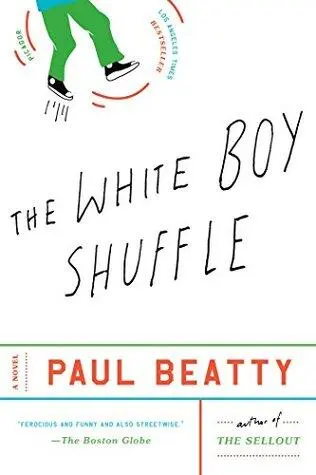
- Название:The White Boy Shuffle
- Автор:
- Издательство:Picador
- Жанр:
- Год:2001
- ISBN:нет данных
- Рейтинг книги:3 / 5. Голосов: 1
-
Избранное:Добавить в избранное
- Отзывы:
-
Ваша оценка:
The White Boy Shuffle: краткое содержание, описание и аннотация
Предлагаем к чтению аннотацию, описание, краткое содержание или предисловие (зависит от того, что написал сам автор книги «The White Boy Shuffle»). Если вы не нашли необходимую информацию о книге — напишите в комментариях, мы постараемся отыскать её.
The White Boy Shuffle — читать онлайн бесплатно полную книгу (весь текст) целиком
Ниже представлен текст книги, разбитый по страницам. Система сохранения места последней прочитанной страницы, позволяет с удобством читать онлайн бесплатно книгу «The White Boy Shuffle», без необходимости каждый раз заново искать на чём Вы остановились. Поставьте закладку, и сможете в любой момент перейти на страницу, на которой закончили чтение.
Интервал:
Закладка:
“Raise your hand if
… you are on welfare.
… you don’t live with your parents.
… you’re a father.
… you’ve ever been handcuffed.”
I raised my hand, much to everyone’s surprise, especially that of Ms. Newcombe, who invited me to tell my story. “You all see how any colored boy, no matter how academically and athletically gifted, is a target? What happened, child?”
I was reluctant to testify, so Principal Newcombe prompted me in her gentle manner. “How old were you when the white man shackled you like a captured African animal?”
“Eight.”
“You got arrested at age eight?”
“Well, I wasn’t exactly arrested. When I was in third grade, this cop visited our class to talk about his job and shit.”
“Young man!”
“Sorry. Then he started explaining what each item on his belt was for. When he gets to the handcuffs, he asks for a volunteer to help demonstrate how they work and chooses me, although I didn’t have my hand raised. Anyway, the cop asks me to pretend I’m the bad guy and he handcuffs me, both hands. In the middle of reading me my rights, he asks me if I can get out of the handcuffs. I was so skinny I lowered my arms and the cuffs slid to the floor. The whole class is laughing. Then the cop says, ‘Don’t worry, in a few years they’ll stay on.’”
Principal Newcombe nodded compassionately. “See how they do a young nigger? Now I’d like to introduce this month’s distinguished speaker.”
The monthly orator was usually a local businessman, community activist, obscure athlete, or ex-con. He’d bound up onstage with lots of nervous energy, wave, and say a hearty “Wassup, fellas?” to prove he was hip and could speak our language. Some speakers tried to rouse us with scare tactics. The ex-con showed off his scars and told butt-fucking stories. During the question-and-answer session the kids only wanted to know how many bodies did he have, did the tattoos hurt, and did he know so-and-so’s brother. The mortician from Greystone Bros. spoke about how business was good and asked us if we could kill a few more niggers this week because his twins were starting college in the fall. Other community leaders tried to sway our self-destructive sensibilities with the flashy, superbad, black businessman-pimp approach to empowerment. Great Nate Shaw, who owned Great Nate’s Veal ’n’ French Toast over on Centinela, made a grand entrance in a purple stretch limousine. Dressed in a tuxedo, cape, and top hat, twirling a pearl-handled walking stick, Great Nate strode down the auditorium’s center aisle looking like a lost member of the Darktown Follies just bursting to sing “That Ol’ Black Magic.” His chauffeur trailed obediently behind him, carrying the shoeshine box that had catapulted “the black Ronald McDonald” to tacky affluence. Two weeks later some boys from Wheatley High in cahoots with his chauffeur followed Great Nate home, robbed his house, and kidnapped his wife. I heard they got more money from the Hollywood wardrobe agency they sold his clothes to than from the ransom Nate paid for his wife. The ex — football player scored points by passing around pictures of himself arm in arm on Caribbean beaches with bikini-clad white women. After his presentation, hands shot up, and Principal Newcombe looked so pleased, figuring she’d finally made a breakthrough. The first boy held up a Polaroid and asked the former jock, “Did you fuck this one?”
No matter who the delivery boy, the message was always the same. Stay in school. Don’t do drugs. Treat our black queens with respect. I made decent money taking bets on whether the distinguished speaker-of-the-month would say, “Each one, teach one” first or “There’s an old African saying, ‘It takes an entire village to raise one child.’”
I suppose I could afford to be snide. I had a personal motivational speaker, Coach Motome Chijiiwa Shimimoto. The stereotype is that most successful black men raised by single mothers had a surrogate father figure who turned their lives around. A man who “saw their potential,” looked after them, taught them the value of virtuous living, and sent them out on the path to glory with a resounding slap on the butt. Coach Shimimoto didn’t do any of those things. He just paid attention to me. The only time he ever told me what to do with my life was during basketball practice. There he constantly pulled and pushed me around the court. I was a skinny six-foot-four-inch pawn in the chess game unfolding inside his head. “Kaufman, where are you supposed to be?” Looking into his small hamster-brown eyes, which through his thick Buddy Holly glasses looked absolutely minuscule, I’d say, “I don’t know, Coach.” Coach Shimimoto, his face covered in perspiration, would snatch the bottom of my shorts and drag me to wherever it was I was supposed to be, droplets of sweat dripping off his nose and trailing behind us. “You’re here, Gunnar,” raising his hands and demonstrating the proper technique for denying the basketball. “If Roderick Overton gets the ball on the box, we lose, weak-side help. Comprende, stupido?” I can’t say that I learned any valuable lessons from Coach Shimimoto. He never gave me any clichéed phrases to be repeated in times of need, never showed me pictures of crippled kids to remind me how lucky I was. The only thing I remember him teaching me was that as a left-hander I’d have to draw from right to left to keep my charcoals from streaking. Coach Shimimoto was also my art teacher, and even there he was always looking over my shoulder, beads of his sweat splattering my watercolors.
Other than Scoby, there was no one I talked to more than Coach. After practice he’d try to fatten me up on churritos and chimichangas, while he told stories of how the GIs had taught him to play ball in the internment camp during World War II. He was never very good, but he was a hustler. It was his pluckiness and a front line comprising the Asazawa triplets, Ruth, Ruby, and Roy, that enabled his team to win the Internment Youth Championships in 1945. The prize was the team’s picture in the camp newspaper and a Caesar salad made with lettuce picked from his family’s repossessed farm.
Coach Shimimoto loved the “purity” of athletics, but the provincial protocol made him uncomfortable. Being a coach was tantamount to being knighted or elected president; the appellation and its circumscriptions stuck with you for life. Even Shimimoto’s wife called him Coach. Shimimoto often pleaded with me to call him something else. “Gunnar, we’re friends. Come up with a clever nickname for me, like Chi-whiz or Moto-scooter.”
“Coach, if you’re going to be an authority figure, you’ve got to live with the dehumanizing consequences.”
I often think the real reason Coach Shimimoto feted me was to get inside Nicholas’s head through me. Nicholas was his prize student, his ticket to high school coaching fame. Shimimoto knew that in thirty years reporters would call him at home and ask what it was like to coach, if not the greatest, the most unique basketball player in the world. Coach had his answer all prepared; he would tell them, “Nicholas doesn’t understand the game, but the game understands him.”
Both Nicholas and I entered tenth grade with solid basketball reputations. Nick was the wizard and I the sorcerer’s apprentice. My duties were to get Scoby the ball so he could score, play tough defense so the other team wouldn’t score, and bow reverentially after each dazzling feat. The first game went as expected. We played our archrivals, the Aeronautic High Wind Shears, in our first home game of the season. Aeronautic ranked fifth in the city, but Scoby made seventeen straight baskets to lead the Phillis Wheatley Mythopoets to their first basketball victory in four years. He made shots from all over the floor. He kissed one thirty-five-foot bank shot off the glass so sweetly that the shot left lip prints on the backboard. After each successive basket, the legend of Nicholas Scoby documented itself shot by improbable shot; what was once urban lore was now irrefutable public knowledge.
Читать дальшеИнтервал:
Закладка:
Похожие книги на «The White Boy Shuffle»
Представляем Вашему вниманию похожие книги на «The White Boy Shuffle» списком для выбора. Мы отобрали схожую по названию и смыслу литературу в надежде предоставить читателям больше вариантов отыскать новые, интересные, ещё непрочитанные произведения.










Обсуждение, отзывы о книге «The White Boy Shuffle» и просто собственные мнения читателей. Оставьте ваши комментарии, напишите, что Вы думаете о произведении, его смысле или главных героях. Укажите что конкретно понравилось, а что нет, и почему Вы так считаете.