Elin Hilderbrand - The Island
Здесь есть возможность читать онлайн «Elin Hilderbrand - The Island» весь текст электронной книги совершенно бесплатно (целиком полную версию без сокращений). В некоторых случаях можно слушать аудио, скачать через торрент в формате fb2 и присутствует краткое содержание. Жанр: Современная проза, на английском языке. Описание произведения, (предисловие) а так же отзывы посетителей доступны на портале библиотеки ЛибКат.
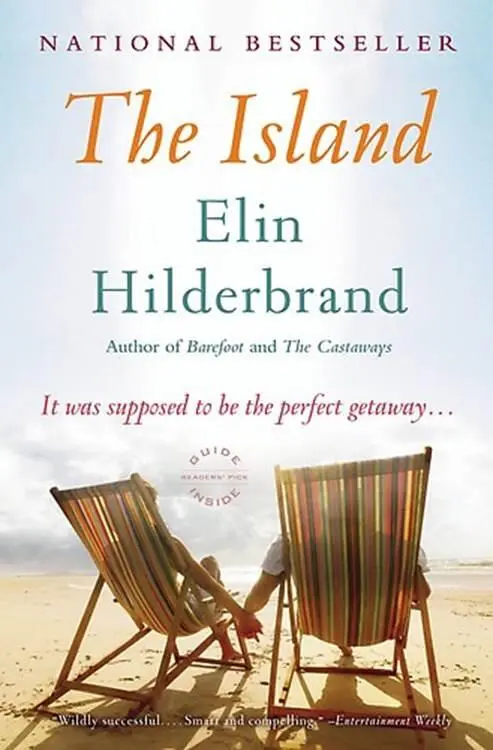
- Название:The Island
- Автор:
- Жанр:
- Год:неизвестен
- ISBN:нет данных
- Рейтинг книги:3 / 5. Голосов: 1
-
Избранное:Добавить в избранное
- Отзывы:
-
Ваша оценка:
The Island: краткое содержание, описание и аннотация
Предлагаем к чтению аннотацию, описание, краткое содержание или предисловие (зависит от того, что написал сам автор книги «The Island»). Если вы не нашли необходимую информацию о книге — напишите в комментариях, мы постараемся отыскать её.
It's only the first hint of what will be a summer of upheavals and revelations. Before the dust has even begun to settle, far worse news arrives, sending Chess into a tailspin of despair. Reluctantly taking a break from the first new romance she's embarked on since the recent end of her 30-year marriage, Birdie circles the wagons and enlists the help of her younger daughter Tate and her own sister India. Soon all four are headed for beautiful, rustic Tuckernuck Island, off the coast of Nantucket, where their family has summered for generations. No phones, no television, no grocery store – a place without distractions where they can escape their troubles.
But throw sisters, daughters, ex-lovers, and long-kept secrets onto a remote island, and what might sound like a peaceful getaway becomes much more. Before summer has ended, dramatic truths are uncovered, old loves are rekindled, and new loves make themselves known. It's a summertime story only Elin Hilderbrand can tell, filled with the heartache, laughter, and surprises that have made her page-turning, bestselling novels as much a part of summer as a long afternoon on a sunny beach.
The Island — читать онлайн бесплатно полную книгу (весь текст) целиком
Ниже представлен текст книги, разбитый по страницам. Система сохранения места последней прочитанной страницы, позволяет с удобством читать онлайн бесплатно книгу «The Island», без необходимости каждый раз заново искать на чём Вы остановились. Поставьте закладку, и сможете в любой момент перейти на страницу, на которой закончили чтение.
Интервал:
Закладка:
“Roger,” Tate said. Then she felt like she’d betrayed a confidence.
Anita slid the phone back into her pocket. “I’d like to buy Roger,” she said.
“He’s not for sale.”
“I’ll give you fifty thousand dollars.”
“You can ask my aunt, but she’ll tell you he’s not for sale.”
Barrett looked squeamish. He said, “Anita, would you like to see the attic?”
“The attic?” Anita wrinkled her nose. “Are there more Bishops hiding up there?”
“No,” Tate said.
“Then no, I don’t think so,” Anita said.
Tate was offended. To her, the attic was the best part of the house, but only because it was her part. What would it seem to Anita Fullin but a hot, square room filled with beds and shadowy corners? Plus, Tate wanted Anita Fullin out of the house, off their property, off their island. Tuckernuck was unspoiled paradise primarily because there were no people to ruin it.
They descended to the first floor, where the flowers had been set around the house. Birdie, India, and Chess sat at the picnic table, waiting. They hadn’t opened wine. Tate was relieved. If there was wine, they would have to offer Anita Fullin a glass. As it was, Anita could just go.
But she stopped at the table. Her eyes flicked between Birdie and India as if trying to figure out which one would be Bill Bishop’s widow.
Anita said, “Your house is so authentic. It’s redolent of summers well lived.”
Birdie nodded. “Thank you. We’re very happy here.”
Chess rubbed at her tiny red eyes, the picture of happy.
Anita Fullin said, looking at India, “I noticed the sculpture upstairs. The little man?”
“Oh,” India said, clearly taken off-guard. “Roger?”
“Yes,” Anita said. “Roger.” She said his name with such affection and reverence, he might have been a friend of hers. “I’d like to talk to you about Roger sometime.”
India’s eyes widened.
“But not right now,” Anita said. “I can see you’re busy.”
Busy? thought Tate.
“And Barrett has to get me back to the big island,” Anita said. “It was lovely meeting all of you.”
“Good-bye,” Birdie said.
“Good-bye,” India said.
Good-bye, so long, thanks for coming! Tate was the most vocal of the four of them in bidding Anita Fullin adieu, and yet as she watched Barrett and Anita Fullin stroll toward the beach stairs, she couldn’t believe she was letting Barrett slip away. She wanted to call him back, demand a private audience; she wanted to know exactly what was going on. Why had he rebuffed her the night before, and why had he not shown up this morning? What was the deal with Anita Fullin? Tate had thought she and Barrett were falling in love.
Had she been dreaming?
INDIA
She hadn’t responded to Lula’s letter. She couldn’t afford to put anything in writing; Lula might hold it up as some kind of evidence. India was thinking as though a crime had been committed, and she was forced to reassure herself. There had been feelings, yes; there had been innuendo, yes; but India hadn’t taken action, she hadn’t crossed any boundaries. She hadn’t transgressed. She couldn’t be held accountable for wrongdoing, disciplined for wrongdoing, or, God forbid, fired for any wrongdoing. India had been careful. She had backed away from the fire at the final moment.
She didn’t answer the letter.
What could she possibly say?
In response to India’s silence came another letter. India saw the letter lying on the dining room table, left there by Barrett, and her breath quickened. Blood flooded her face. This reaction in and of itself told India there was something between her and Tallulah Simpson beyond the usual collegial relationship. But what was it between them? Jealousy? Sexual tension? Love?
India wanted to rip the envelope open, but instead she saved it for a quiet moment in her bedroom. India had a glass of wine and a cigarette; Birdie was downstairs fixing dinner. The window of India’s bedroom was open; a breeze lifted the strands of Roger’s seaweed hair.
Carefully, she slit the end of the envelope with her fingernail. She opened the letter, read the one line. Shut her eyes.
What do I have to do?
The nineties had not been kind to Bill Bishop. There was a sense in which he had fallen out of fashion and out of grace. It was a slow, almost imperceptible decline, which had begun back in 1985 with that piss-poor review of the sculpture in New Orleans. Bill’s sculptures were copper and glass, blocky, abstract, funky but industrial. They were part of an era that included pin-striped suits, Wall Street moguls, Ronald Reagan, three-martini lunches. Bill knew nothing of the computer or the Internet; he didn’t give a shit about the environment. And so he found his work becoming stodgy and outdated. Someone from the Art Institute of Chicago approached Bill about a retrospective pulled together for the year 1996 to mark the twenty-fifth anniversary of his first installation-which had been there, on Navy Pier.
A retrospective? Bill said. That means you’re dead, washed up. It’s like a greatest-hits album. It means there isn’t any new work, or the new work is irrelevant.
Problems with his work tended to drive Bill’s depression. Bill the sculptor and Bill the person were hard to separate from each other. And yet, India didn’t wholly blame Bill’s rapidly deteriorating mental state on his declining popularity. She was pretty sure he would have broken down even if work had been booming. His depression was chemical, she believed, and not situational. In the nineties, the boys were teenagers. The testosterone level in the house was high; they all lived in a fug of aggression and sexual drive. The four males were jockeying for position. Billy and Teddy battled nearly every day; there were fistfights, black eyes, bloody noses. India couldn’t deal with it; she handed it over to Bill, which was a mistake, because Bill’s anger was more formidable than ten Billys or twenty Teddys. He led by very poor example-screaming and yelling and throwing things against the wall, ripping up their homework, handing them coat hangers and saying, “You want to kill each other? Go ahead and kill each other.”
India put Band-Aids on the cuts and ice packs on the bruises; she made pots of spaghetti and meatballs to feed the voracious appetites; she played classical music and took baths and read Jane Austen novels and refused to get involved. She could see the whole thing headed for disaster, but she followed a policy of nonintervention. Why? she wondered now. Anyone in the world could see that Bill was sick, that he needed a shrink and meds, and that the whole family needed counseling. What was keeping India from getting help? It was the Main Line, things were genteel and lovely-dogwoods flowering and croquet on close-cut lawns-but despite appearances, India knew other families who had hit rough patches. She could easily have found support. Was it inertia? Eternal optimism? Fear? Looking back, India believed that what she was suffering from in those days was apathy. She didn’t care enough to step in. She wasn’t motivated to save her husband. Was this possible? India had loved Bill with ridiculous ardor. He was her sun, her first thought in the morning, her last at night. But it was safe to say that by 1993 or 1994, she was worn down. The kids were giant, alien creatures who drank milk straight from the container and masturbated all over the sheets without bothering to hide it or clean it up; they watched horror movies and played lacrosse and fielded long, secret phone calls from girls they met while prowling the punk shops on South Street. And rather than get caught up in the who, where, when, how, and why, India took a step back.
Читать дальшеИнтервал:
Закладка:
Похожие книги на «The Island»
Представляем Вашему вниманию похожие книги на «The Island» списком для выбора. Мы отобрали схожую по названию и смыслу литературу в надежде предоставить читателям больше вариантов отыскать новые, интересные, ещё непрочитанные произведения.




Обсуждение, отзывы о книге «The Island» и просто собственные мнения читателей. Оставьте ваши комментарии, напишите, что Вы думаете о произведении, его смысле или главных героях. Укажите что конкретно понравилось, а что нет, и почему Вы так считаете.