Margaret Millar - Wives and Lovers
Здесь есть возможность читать онлайн «Margaret Millar - Wives and Lovers» весь текст электронной книги совершенно бесплатно (целиком полную версию без сокращений). В некоторых случаях можно слушать аудио, скачать через торрент в формате fb2 и присутствует краткое содержание. Город: New York, Год выпуска: 1954, Издательство: Random House, Жанр: Современная проза, Современные любовные романы, на английском языке. Описание произведения, (предисловие) а так же отзывы посетителей доступны на портале библиотеки ЛибКат.
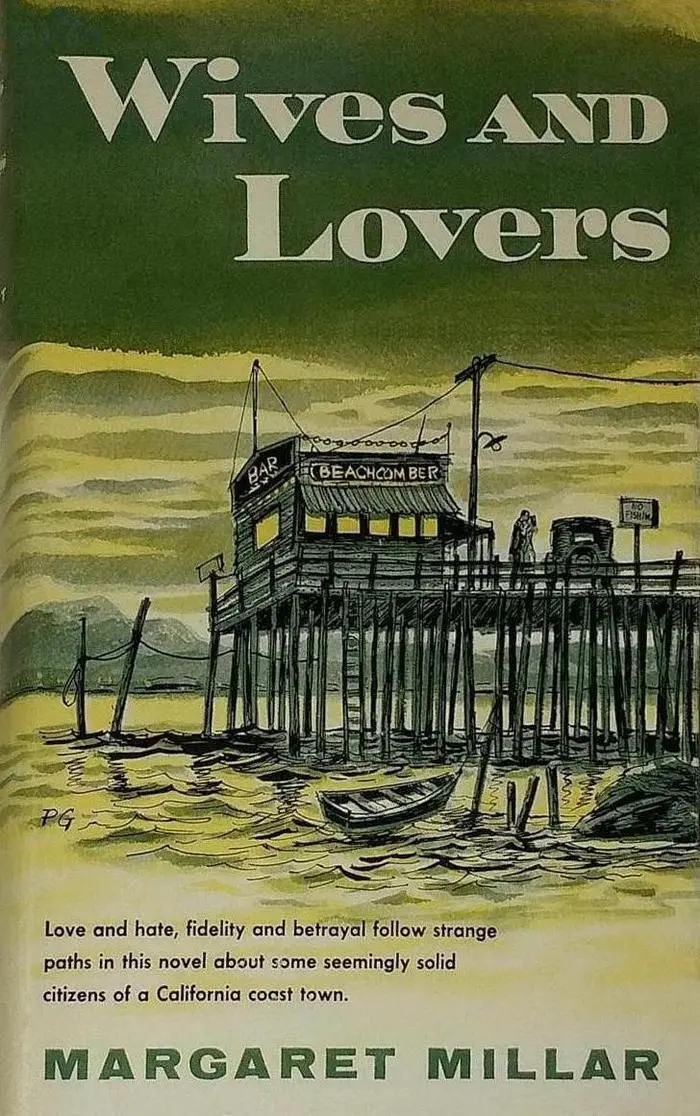
- Название:Wives and Lovers
- Автор:
- Издательство:Random House
- Жанр:
- Год:1954
- Город:New York
- ISBN:нет данных
- Рейтинг книги:3 / 5. Голосов: 1
-
Избранное:Добавить в избранное
- Отзывы:
-
Ваша оценка:
Wives and Lovers: краткое содержание, описание и аннотация
Предлагаем к чтению аннотацию, описание, краткое содержание или предисловие (зависит от того, что написал сам автор книги «Wives and Lovers»). Если вы не нашли необходимую информацию о книге — напишите в комментариях, мы постараемся отыскать её.
In a matter of weeks the girl Ruby followed Gordon home to Channel City and injected a somewhat discordant note into his otherwise peaceful marriage. Gordon’s wife, a fiercely virtuous woman, fought all through the hot summer to hold her husband, while most of the rest of Channel City lay prostrate under the burning coastal sun.
Yet Ruby’s all but hopeless love for Gordon is paralleled by other loves, equally poignant, equally real. Mrs. Millar’s novel shows, sometimes with biting humor, sometimes with warm compassion, how extraordinary the lives and loves of those around us can be.
Since her writing debut fourteen years ago, Margaret Millar has had a brilliant and variegated career as a mystery writer, as a humorist and as a serious novelist. For nearly half of those fourteen years she has been working on
It is her first major attempt to deal with the lives and loves of “ordinary” middle-class people in contemporary society.
Wives and Lovers — читать онлайн бесплатно полную книгу (весь текст) целиком
Ниже представлен текст книги, разбитый по страницам. Система сохранения места последней прочитанной страницы, позволяет с удобством читать онлайн бесплатно книгу «Wives and Lovers», без необходимости каждый раз заново искать на чём Вы остановились. Поставьте закладку, и сможете в любой момент перейти на страницу, на которой закончили чтение.
Интервал:
Закладка:
“No.”
“It sounds like this — chmm — there. Very dry. It could be anything. What do you suppose it is, Gordon?”
“Phlegm.”
“That’s no answer. Why do you suppose I have phlegm?”
“I don’t know.”
“Well, there you are,” Bowridge said with gloomy satisfaction. “You don’t know and I don’t know.”
Gordon frowned. “I don’t get that about boiling the issues.”
“Ah, well, you boil off the extraneous matter, you vaporize the irrelevancies, and then what have you got? Nothing. It’s very clear, a child could understand. For a child there are no irrelevancies, everything is equally important, a fire, a bowel movement, a caterpillar on a leaf, the pattern of a print, a kiss, a bruise, a passing motor scooter, the smell of a certain cake of soap. I have no children, I am only making this up by the method of contrasts. I’m old. I’m too tired to be interested in fires or caterpillars. I don’t notice prints. My sense of smell is feeble, my bowel movements difficult. No one has kissed me for years. I hate the noise of motor scooters. You see?”
“I don’t know.”
“Ah, even a child can understand, it’s very clear.” The judge coughed twice, chmm, chmm , very dry. Then he put his glass down, took off his spectacles again and cleaned them, blowing on them, ha! ha! ha! and wiping the mist off with his handkerchief. He began to hum with the orchestra. “Catchy tune that. Spirited.” Escalante sang “Chuy, chuy,” and the Judge sang too, “Chewy, chewy, chewy chewy!”
“I feel,” Bowridge said, “that I’m getting into the spirit of things.”
Gordon took off his hat and put it on the floor. “It’s getting warm in here.”
“I like warmth. You and I could sing a duet, Gordon. That fellow up there can’t sing. Who ever told him he could sing? Someone should apprise him of the true facts. Come along, come along, you and I will sing a duet.”
“I don’t know the words.”
“They’re very simple, just chewy chewy, chewy chewy.”
“I don’t know the music either.”
“No matter. Just follow me.”
Gordon looked around for Elaine, but there were too many people on the dance floor and they all looked rather vague and trivial.
Gordon and the judge raised their voices in song.
10
Gordon hung onto the palm tree with both his hands. The tree was swaying, so he knew there must be a high wind. Against his forehead the bark of the tree felt harsh and dry, like the skin of a very old man. He decided to sit down under this tree and rest.
“Get up,” Elaine said.
“I lost my hat.”
“Get up. I’m warning you, Gordon.”
“A little rest, that’s all.”
“You disgusting fool, humiliating me in front of all those people. Get up, we’re going home. After the exhibition you’ve made of yourself you’d think you’d want to go home. Do you hear me, Gordon?”
He heard her, of course, but he was listening to other things as well, trying to give them equal importance as the judge said. He heard the engine of a car starting, za za za za za oom, and the faint click of heels on the distant sidewalk. He heard Miguel Escalante and his Latin American Rhythms, and the noise of the palm tree. It didn’t make the same kind of noise as other trees did. It crackled an incantation, waving its arms in grandiose sweeps like a demented evangelist. What a remarkable woman Elaine was — the wind that swayed the tree left her untouched.
“I lost my hat,” Gordon said.
“I have it. Can’t you even see? ”
He peered up at her very earnestly, and of course she had the hat. Elaine never forgot such things. She would, after the Fiesta was over, pack the hat away in mothballs until the next Fiesta. It was a way of measuring time, counting Fiestas instead of birthdays. Next Fiesta he would be one year, three pounds and two moth holes older. I’m old, the judge said. My sense of smell is feeble — I’m too tired — I don’t notice — I hate — no one has kissed me—
“Are you going to sit there all night?” Elaine said.
“A little rest. You could rest too, Elaine. The grass is damp but it’s not very damp.”
“Thanks. I’ll stand up.” She took a step nearer to him and leaned over, staring at him. Her face was white and furious. “All my life I’ve had to apologize for you and make excuses for you, and I’m sick of it, do you hear? I’m sick of it! I’ve apologized to the children because they’ve never had a decent father to play games with them or spend some time with them. I’ve apologized to my friends because every time we go out together you sit in the corner like a lump of lead, and don’t open your mouth. I swear, sometimes you act half-witted. Well, the great silent act wasn’t enough, oh no! Tonight you have to put on another one. You get drunk as a lord and sing, sing, mind you, in front of all those people. Out of tune, too.”
“I didn’t know the tune, I had to make it up.”
“That’s lovely! That makes everything all right, I suppose. Yes, and I’ve had to apologize to my mother, too. Little did she think that I’d be living from hand to mouth, without a maid or a car of my own. She thought you’d have enough gumption to go out and make some money the way other men do.” She took a deep breath. “Look, I’m trying to be reasonable, I’m trying to control myself, but there are limits. You just don’t seem to have any character, Gordon. You can’t resist things, you have no will power.”
Answers formed in his mind, rather cleverly, but he remained silent. Whatever he said, she could say more. It could go on all night and all tomorrow, it could go on until one of them died. Gordon, beloved husband of Elaine—
The thing to do was to attach equal importance to all sounds, the car, the heels on the sidewalk, the music, the mad tree. But the car had gone, the heels were silent, the tree drowsed. The music that seeped out of the windows was melancholy and sensuous. It whispered of love and betrayal, Perfidia. The notes ground into his wounds like salt. He thought of Ruby, and the tears welled in his eyes.
Elaine went on talking. She hadn’t raised her voice, it was flat, controlled, reasonable: now let us both admit, calmly, that you lack character, will power, earning power, social graces and fatherly instincts; in brief, let us admit that you bear no resemblance to a man.
“There’s one more thing,” Elaine said. “I swore for the sake of my own pride that I’d never discuss this with you. But I haven’t got any pride left any more. You managed that, all right. You were with your girlfriend this afternoon, weren’t you?”
Gordon shook his bowed head, not trusting himself to speak for fear Elaine might hear the tears in his voice.
“So you’re still going to lie about it, are you? I suppose you’re even going to deny that you have a girlfriend.”
Gordon shook his head again.
“They say a wife is always the last to know about it. But I wasn’t, I was one of the first. How you could hope to get away with it, in a town like this where everybody knows you — you, a man your age, with three children— Everyone’s laughing at you. Not at me , because they know I know. If they don’t know, I tell them. Everyone was laughing, and it was a case of me joining in the laughs or getting laughed at along with you. So I joined in.”
Gordon looked up at her, his mouth open with shock. No matter what happened to him she would always be on the opposite side, joining in the laughs.
“Surprised, aren’t you?” Elaine said harshly. “You didn’t think I’d do it, did you? I laughed with the rest of them. Yes, and if they didn’t know what the joke was, I’d tell them! I’d say, ‘Gordon? Oh, Gordon’s fine. Of course I don’t see much of him any more, he’s got a new interest in life.’ Then I’d smile, like this. You aren’t watching me, Gordon, don’t you want to see how I’d smile?”
Читать дальшеИнтервал:
Закладка:
Похожие книги на «Wives and Lovers»
Представляем Вашему вниманию похожие книги на «Wives and Lovers» списком для выбора. Мы отобрали схожую по названию и смыслу литературу в надежде предоставить читателям больше вариантов отыскать новые, интересные, ещё непрочитанные произведения.






Обсуждение, отзывы о книге «Wives and Lovers» и просто собственные мнения читателей. Оставьте ваши комментарии, напишите, что Вы думаете о произведении, его смысле или главных героях. Укажите что конкретно понравилось, а что нет, и почему Вы так считаете.