Margaret Millar - Wives and Lovers
Здесь есть возможность читать онлайн «Margaret Millar - Wives and Lovers» весь текст электронной книги совершенно бесплатно (целиком полную версию без сокращений). В некоторых случаях можно слушать аудио, скачать через торрент в формате fb2 и присутствует краткое содержание. Город: New York, Год выпуска: 1954, Издательство: Random House, Жанр: Современная проза, Современные любовные романы, на английском языке. Описание произведения, (предисловие) а так же отзывы посетителей доступны на портале библиотеки ЛибКат.
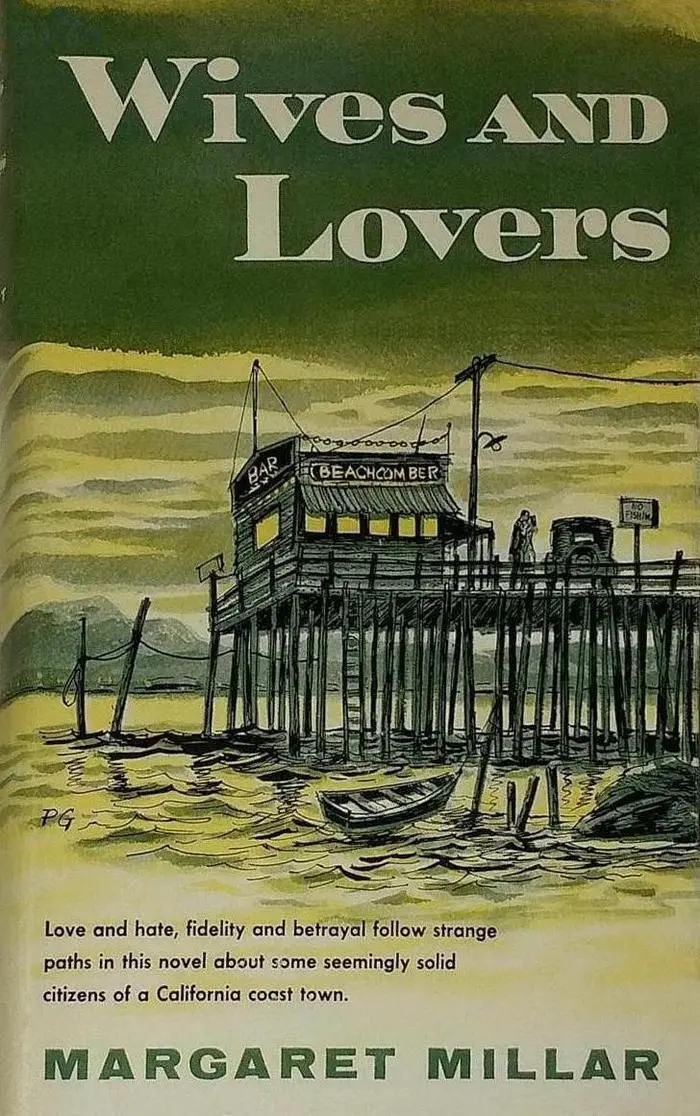
- Название:Wives and Lovers
- Автор:
- Издательство:Random House
- Жанр:
- Год:1954
- Город:New York
- ISBN:нет данных
- Рейтинг книги:3 / 5. Голосов: 1
-
Избранное:Добавить в избранное
- Отзывы:
-
Ваша оценка:
Wives and Lovers: краткое содержание, описание и аннотация
Предлагаем к чтению аннотацию, описание, краткое содержание или предисловие (зависит от того, что написал сам автор книги «Wives and Lovers»). Если вы не нашли необходимую информацию о книге — напишите в комментариях, мы постараемся отыскать её.
In a matter of weeks the girl Ruby followed Gordon home to Channel City and injected a somewhat discordant note into his otherwise peaceful marriage. Gordon’s wife, a fiercely virtuous woman, fought all through the hot summer to hold her husband, while most of the rest of Channel City lay prostrate under the burning coastal sun.
Yet Ruby’s all but hopeless love for Gordon is paralleled by other loves, equally poignant, equally real. Mrs. Millar’s novel shows, sometimes with biting humor, sometimes with warm compassion, how extraordinary the lives and loves of those around us can be.
Since her writing debut fourteen years ago, Margaret Millar has had a brilliant and variegated career as a mystery writer, as a humorist and as a serious novelist. For nearly half of those fourteen years she has been working on
It is her first major attempt to deal with the lives and loves of “ordinary” middle-class people in contemporary society.
Wives and Lovers — читать онлайн бесплатно полную книгу (весь текст) целиком
Ниже представлен текст книги, разбитый по страницам. Система сохранения места последней прочитанной страницы, позволяет с удобством читать онлайн бесплатно книгу «Wives and Lovers», без необходимости каждый раз заново искать на чём Вы остановились. Поставьте закладку, и сможете в любой момент перейти на страницу, на которой закончили чтение.
Интервал:
Закладка:
Ruby merely stared at her woodenly.
Mrs. Freeman said, offended, “It’s none of my business, but I can’t help taking an interest and when I see a nice-looking man obviously all gone on a girl — and what with the war and so many young men being killed, girls can’t afford to be too choosy.”
“I’m not looking for a young man.”
“Even so, you should be sensible. You can’t have too many irons in the fire.” Mrs. Freeman shook her head in sincere bewilderment. “Here is this man, putting himself out to get you a job and you won’t even call him, no, he makes you feel crawly, you put on an emotional display.”
Some of the bitter resentment Ruby felt against Gordon spilled over on Mrs. Freeman and George. “I know it’s none of your business, but I don’t like him and I don’t like the way he looks at me. Also he’s too fat and his face is too pink and shaved-looking. And I don’t like the way he talks to me as if I was a worm.”
“Even so,” Mrs. Freeman said helplessly. “Even so.”
She had no daughters of her own and so she had developed a proprietary interest in the young unmarried women who came to her house. Her chief concern was to get them married. In spite of her own experience, she still believed that marriage had curative qualities and that a bad husband was better than no husband at all. She was worried by the fact that most of the girls she knew were like Ruby. They had left their homes in search of romance, and overweight pink-faced men didn’t belong in their dreams.
Mrs. Freeman read the Vital Statistics in the paper every night and she was shocked by the number of divorces in the town. She blamed it partly on the town itself. People who saw it for the first time believed that they had reached the end of the rainbow, here between the violet mountains and the jeweled sea. And it was the end of the rainbow, Mrs. Freeman knew that; but she knew, too, how difficult it was to live there. The romantic postcard perfection of nature contrasted too sharply with the ordinary human existence. The stretches of beach, the parks, the bridle paths, the mountain trails — they were there, free for everybody, except the girls like Ruby who worked all week and washed and ironed their clothes on Sunday. Living beside a subway in Flatbush or in a small flat town in Kansas, they could have held on to their dreams of traveling some day to a tropical Eden. Now that they had reached Eden they were all the more discontented to find themselves leading the same old lives. The end of the rainbow was no longer around the corner; it was six miles north to the mountains and nineteen blocks south to the sea. Yet these blocks were more difficult to travel than three thousand miles across the country.
“I don’t know,” Mrs. Freeman said, still with her air of helplessness. “Maybe it’s true about every place, but here it’s very true, people expect too much.”
“I expect nothing,” Ruby said.
“I remember once when I first came here years ago. It was in the spring and I was standing out in the yard at night. The acacia tree was in bloom and the moon was so bright that the shadows were as sharp as sun shadows and I could see the little yellow acacia blossoms like chenille. I picked a sprig and held it against my face, so soft, like a baby’s fingers. The sky was full of stars, and the air wasn’t just air, it was rich and thick and cold, I can’t describe it. There was a bird at the top of the tree making a funny little noise, a mockingbird perhaps. I had such an odd feeling, standing there, as if anything might happen in the midst of all this beauty, something wonderful. I saw Robert’s shadow against the kitchen blind, this very kitchen, and he looked as handsome as a god. Oh, the feeling I had.”
She paused, twisting the wedding ring round and round her finger.
“Well?” Ruby said.
“Well, then Robert flung open the kitchen window, and told me to come in, he was hungry and wanted a grilled-cheese sandwich.” She added, very earnestly, “I’m glad he did. It was a good lesson for me. Acacia doesn’t last long after it’s picked. I put it in water but the blossoms got smaller and smaller and finally they fell off.”
The doorbell pealed. Smoothing down her dress and adjusting her face into an expression of amiability, just in case, Mrs. Freeman answered the door.
She was agreeably surprised to see George, who was not too pink-faced or fat, merely a sturdy, healthy-looking man.
“She just came in,” Mrs. Freeman said. “Ruby, here’s Mr. Anderson.”
Ruby came down the stairs slowly.
“I left my number for you to call,” George said.
“I just got home.”
“I thought you might like to go for a drive or something.”
“It’s a nice evening,” Mrs. Freeman said. “And too late in the year for acacia.”
She returned to her letters.
“What’d she mean by that?” George said.
“I don’t know.”
“You look tired, Ruby.”
“You’re always telling me that.”
“Am I? I’m sorry. I can’t help paying attention to how you look. It’s getting to be a habit, I guess. Will you be warm enough in that suit?”
“It’s getting late—”
“You can’t turn me down all the time. Anyway, it’s Saturday night, and everybody celebrates on Saturday night.”
“What do they celebrate?” Ruby said dully.
“Anything.” He held the screen door open and she went out on the porch. “Are you going to be warm enough? Maybe you’d better get a coat.”
“No, I’ll be all right.”
He put his hand on her elbow, and guided her down the porch steps and across the clay path that substituted for a sidewalk. She didn’t shrink away from him as she usually did. She felt too remote to bother about it, as if she had had a great deal to drink and while she was still conscious of what was happening to her she had no interest in it.
George started the car. “Is there any special place you’d like to go?”
“No.”
“We’ll just drive around then.”
“Where’s Garcia Road?”
“What number?”
“Twenty-three hundred.”
“That’d be up in the hills. Why?”
“Nothing. I just overheard a — a customer say he lived there, that’s all. I wondered what it was like.”
“We’ll go and find out,” George said cheerfully. “Got to check up on our customers, see that they come from the right kind of houses.”
“No — no, I’d just as soon not. I’d just as soon drive along the beach.”
“All right.” He sent her a quick, puzzled glance. Her evasions irritated him. She had no reason to treat him as if he were a district attorney and she was accused of a crime. Yet this was actually how he felt about her. He wanted to put her on a spot and question her about herself, find out a few things about her. Her face rarely revealed anything but a kind of resigned unhappiness, and it was this expression of hers that agitated him. If she had cause for her unhappiness — money troubles? sickness in the family? loneliness? — he wanted her to break down and tell him, to bawl on his shoulder the way Hazel used to do.
They drove along toward the Mesa and George thought about Hazel and the night she had said out of a blue sky, “Jesus, I feel just like bawling the house down.” And bawl the house down she did, for a solid hour, until the police drove up to the front of the house, summoned by a neighbor to stop George from beating his wife. Hazel was delighted and she brought out two quarts of beer to celebrate the unexpected company. Neither of the two policemen could drink anything, since they were on duty, but Hazel invited them to come back during their off hours. They came back every now and then, bringing a friend or two, until eventually Hazel knew the whole police department.
Читать дальшеИнтервал:
Закладка:
Похожие книги на «Wives and Lovers»
Представляем Вашему вниманию похожие книги на «Wives and Lovers» списком для выбора. Мы отобрали схожую по названию и смыслу литературу в надежде предоставить читателям больше вариантов отыскать новые, интересные, ещё непрочитанные произведения.


Обсуждение, отзывы о книге «Wives and Lovers» и просто собственные мнения читателей. Оставьте ваши комментарии, напишите, что Вы думаете о произведении, его смысле или главных героях. Укажите что конкретно понравилось, а что нет, и почему Вы так считаете.