Keith Gessen - A Terrible Country
Здесь есть возможность читать онлайн «Keith Gessen - A Terrible Country» весь текст электронной книги совершенно бесплатно (целиком полную версию без сокращений). В некоторых случаях можно слушать аудио, скачать через торрент в формате fb2 и присутствует краткое содержание. Город: New York, Год выпуска: 2018, ISBN: 2018, Издательство: Viking, Жанр: Современная проза, на английском языке. Описание произведения, (предисловие) а так же отзывы посетителей доступны на портале библиотеки ЛибКат.
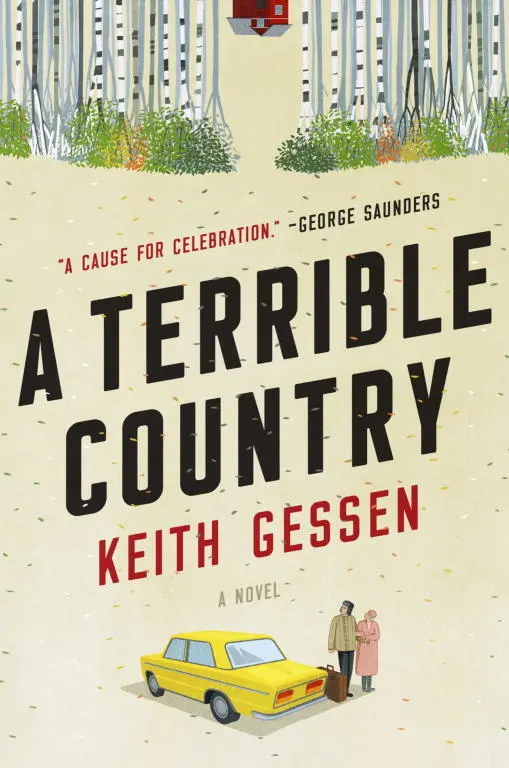
- Название:A Terrible Country
- Автор:
- Издательство:Viking
- Жанр:
- Год:2018
- Город:New York
- ISBN:978-0-735-22131-4
- Рейтинг книги:3 / 5. Голосов: 1
-
Избранное:Добавить в избранное
- Отзывы:
-
Ваша оценка:
A Terrible Country: краткое содержание, описание и аннотация
Предлагаем к чтению аннотацию, описание, краткое содержание или предисловие (зависит от того, что написал сам автор книги «A Terrible Country»). Если вы не нашли необходимую информацию о книге — напишите в комментариях, мы постараемся отыскать её.
A Terrible Country — читать онлайн бесплатно полную книгу (весь текст) целиком
Ниже представлен текст книги, разбитый по страницам. Система сохранения места последней прочитанной страницы, позволяет с удобством читать онлайн бесплатно книгу «A Terrible Country», без необходимости каждый раз заново искать на чём Вы остановились. Поставьте закладку, и сможете в любой момент перейти на страницу, на которой закончили чтение.
Интервал:
Закладка:
“Not exactly,” said Oleg. It turned out they were a criminal outfit. When Tolya wondered aloud if this was wise, Oleg laughed. “I’m not going into business with them,” he said, “just renting them a space.” He seemed giddy with the news, as if he’d once again managed to pull a great trick on the world, and I realized then that Oleg was less careful, less reserved, than the other guys we played with. It was part of his charm, but I could see that the guys were worried about him.
Sergei had a boxy old Lada and we loaded our stuff in the back. If I was worried about striking up a conversation with him, I need not have been. He seemed happy to basically continue his talk from the night before.
“One of the important political events of my life was the Iraq War,” he said. “Or, rather, watching the reaction to it inside Russia. I saw people who opposed Putin, which I instinctively agreed with, supporting the Iraq War, which I instinctively disagreed with. So either my instincts were wrong, or there was something the matter here.
“Until then I’d been a fairly standard liberal. I voted for Yeltsin. But I started thinking about my parents and grandparents. They were good people, hardworking people. And they had been totally decimated by the reforms. I started looking into it. I studied literature, like you. I wrote my thesis on late Soviet nonconformist poetry. But I started reading about politics, world politics and Russian politics. And the more I read, the more I understood that it wasn’t my parents who were the problem, it was the reforms that were the problem, it was capitalism that was the problem, and Putin was a particular kind of capitalist. Once I saw that, I saw a lot of things.”
By now we’d reached Trubnaya Square; Sergei pulled over next to one of the big construction sites.
A few years ago, he said, he and some friends had started a political group called October. It was still small, like twenty people small, but it was growing.
“And Yulia?” I couldn’t help but ask.
“Yulia joined the group with her husband, Petya Shipalkin, a year ago. But then they broke up. We kept Yulia, and Shipalkin joined the anarchists.” Sergei laughed. “Yulia’s a very good organizer,” he added.
It was the first I’d heard about a husband, but he was now an ex-husband, and I had a more immediate question, about Fishman.
Sergei was surprised. “Sasha Fishman? You know him?”
“Yeah, he was in my department.”
“Well.” Sergei laughed again. “Fishman is Fishman. A little sneak. He’s a friend of Shipalkin’s, but now that they’ve split up he calls Yulia when he comes to Moscow.”
“Ah.”
“Yeah,” said Sergei. “That’s Fishman.”
“There’s another group,” I said, “called September?”
“Oh, that’s us. I mean, it used to be us. It was like, the revolution is in October, and we were in the month before the revolution.”
“And now the revolution is closer?”
“Well, no, we just decided it was a stupid name.”
“Did you guys do that protest against the Moscow–Petersburg highway?”
“Yes.”
“My brother is Dima Kaplan. People accused him of being involved in that.”
“That’s your brother?” Sergei was amused. “No, we had nothing to do with him, nor would we ever. He’s a capitalist snake. No offense.”
None taken. I thanked Sergei for the ride and retrieved my stuff from the trunk.
“I’ll see you next week,” said Sergei, before driving off.
I had finally found some people I could talk to.
5.
I GET SICK
IDID NOT SEE Sergei the next week because that weekend I got sick. I had somewhat miraculously avoided getting sick before now, but it began with a scratchy throat and before I knew it I had a fever. It was still winter break, so I could stay in bed for a few days.
As I lay there, I thought about my grandmother, who came and checked on me heroically every five minutes. She had been robbed by capitalism, I now saw. Or an accidental conspiracy between capitalism and Communism. Communism had nationalized the country’s resources: all the oil that Uncle Lev found was owned by the state. When that state collapsed, it sold control of the oil for a pittance to a few well-connected men. It was in fact the explicit policy of the Russian reformers to create megacapitalists—the oligarchs, as they eventually came to be called—who would modernize the Russian economy and drag the country into the future. “People who grew up under Communism have a slave mentality,” Dima told me the first time I visited him in the 1990s. “They don’t do anything on their own. You have to make them. And, yes, it’s going to be ugly sometimes. You can’t build a capitalism omelet without breaking some eggs!” It was people like this, with ideas like this, who formed the conditions under which my poor grandmother lost her dacha and Uncle Lev had a stroke.
I had never been a socialist. In fact I’d been an anti-socialist. It was how I was raised. We had escaped the Soviet Union, where you weren’t allowed to keep anything you made or earned, and had come to America and changed our lives. My father had voted Republican in every election since they’d let him start. Under the influence of college and grad school, I had moved to the left and become a liberal, but at the word “socialism” I drew the line. It just struck me as one of those things my otherwise intelligent American friends were stupid or naïve about, like iPods. A person did not need an iPod, in my opinion, when he could get music on the radio for free. And likewise we did not need socialism when democratic capitalism was working just fine.
“These people think Karl Marx is a nice old man with a beard,” my adviser once said to me when a group of grad students demanding a union took over one of our campus cafeterias. This annoyed my adviser on a number of levels, not least of which being that this cafeteria made his favorite chicken parm sandwich. “They think he’s Santa Claus!” he said, of the grad students. “I’d like to plunk these friends of the working class down in Petrograd in 1917. See how long they’d last.”
Over in the Slavic department, we’d all read Mandelshtam, Akhmatova, Mandelshtam’s widow, Grossman, Solzhenitsyn, Brodsky… . We were steeped in memories of the violent Revolution and its even more violent Stalinist sequel. Whenever some bright-eyed grad student from the English department said “socialism,” we reached for our bookshelves. “We live without feeling the ground beneath our feet / from a few steps away you can’t hear us speak. / Though if someone does begin talking / we know that the man in the Kremlin is watching.” The Stalin epigram by Mandelshtam. Any questions?
But Russian socialists? That was different. That was interesting. From listening to Sergei I could tell that he did not need any lessons from me in Soviet history. He knew about the camps, the purges, the lies. But there was more to socialism, he seemed to be saying. It wasn’t just camps and insane asylums. And what replaced it—“the reforms”—had not made things any better.
At the height of my fever I had a dream about my mother. She was not dead, it turned out; she had merely gone away for a while, and now she was back. We were in Newton, in our old house. My father still lived there. “I’m living with Baba Seva,” I told my mother. “I know,” she said. “I’m hoping to get a job teaching soon,” I half lied. “I know,” she said. “I don’t have any children,” I said, because my mom loved children. “That’s OK,” she said. “It’s not too late.” I wanted to tell her that we had thought she was dead, but it was a misunderstanding, and I was so happy that she was still alive. But in the dream I wasn’t able to tell her these things. I woke up with a profound warmness running through my body, and soon I was feeling better again.
Читать дальшеИнтервал:
Закладка:
Похожие книги на «A Terrible Country»
Представляем Вашему вниманию похожие книги на «A Terrible Country» списком для выбора. Мы отобрали схожую по названию и смыслу литературу в надежде предоставить читателям больше вариантов отыскать новые, интересные, ещё непрочитанные произведения.









Обсуждение, отзывы о книге «A Terrible Country» и просто собственные мнения читателей. Оставьте ваши комментарии, напишите, что Вы думаете о произведении, его смысле или главных героях. Укажите что конкретно понравилось, а что нет, и почему Вы так считаете.