Keith Gessen - A Terrible Country
Здесь есть возможность читать онлайн «Keith Gessen - A Terrible Country» весь текст электронной книги совершенно бесплатно (целиком полную версию без сокращений). В некоторых случаях можно слушать аудио, скачать через торрент в формате fb2 и присутствует краткое содержание. Город: New York, Год выпуска: 2018, ISBN: 2018, Издательство: Viking, Жанр: Современная проза, на английском языке. Описание произведения, (предисловие) а так же отзывы посетителей доступны на портале библиотеки ЛибКат.
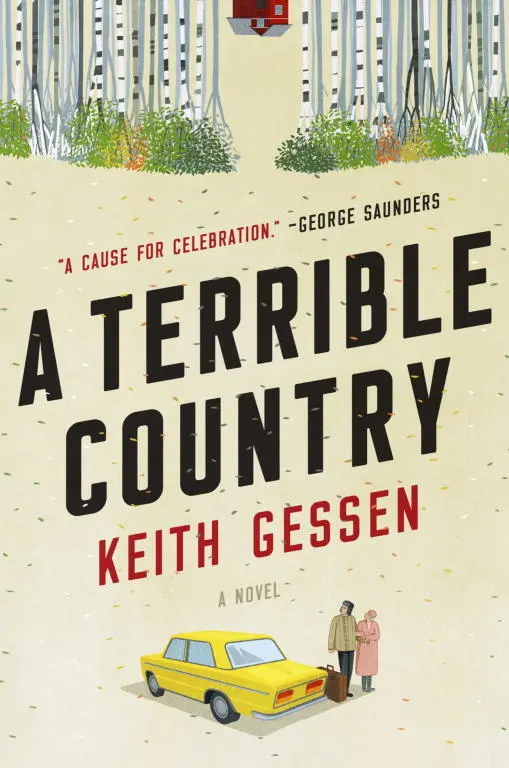
- Название:A Terrible Country
- Автор:
- Издательство:Viking
- Жанр:
- Год:2018
- Город:New York
- ISBN:978-0-735-22131-4
- Рейтинг книги:3 / 5. Голосов: 1
-
Избранное:Добавить в избранное
- Отзывы:
-
Ваша оценка:
A Terrible Country: краткое содержание, описание и аннотация
Предлагаем к чтению аннотацию, описание, краткое содержание или предисловие (зависит от того, что написал сам автор книги «A Terrible Country»). Если вы не нашли необходимую информацию о книге — напишите в комментариях, мы постараемся отыскать её.
A Terrible Country — читать онлайн бесплатно полную книгу (весь текст) целиком
Ниже представлен текст книги, разбитый по страницам. Система сохранения места последней прочитанной страницы, позволяет с удобством читать онлайн бесплатно книгу «A Terrible Country», без необходимости каждый раз заново искать на чём Вы остановились. Поставьте закладку, и сможете в любой момент перейти на страницу, на которой закончили чтение.
Интервал:
Закладка:
Still, I noticed that my linemates, Anton and Oleg, had begun staying in the locker room later and later, taking their time and chatting after getting dressed. They were funny guys. Anton was probably the worst player on our team—a poor skater, he also had a shoulder injury that caused him to keep only one hand on his stick most of the time—but he was a garrulous presence in the locker room and had been on the team a long time. He drove a large black Mercedes to the arena. Oleg was a different story: he was a talented player, tall and rangy, with a terrific slap shot. But he was lazy. If the puck wasn’t right there for him, he declined to skate for it; then he would come to the bench to complain. This was not my brand of hockey. And it was possible that I had been put on a line with Anton and Oleg because no one else wanted to play with them. In any case, my line it was.
I gradually learned their stories. Anton was just under forty. He had a math degree from one of the top Moscow universities; if he’d graduated a few years earlier, he’d have gone into one of the research institutes, like Uncle Lev, and then spent years trying to figure out how to escape. Instead he went straight into business. He and some programmer friends created a piece of workflow software they thought might be useful for human resources departments, but this went nowhere; then they made a video game, which went better. The legal environment for Russian business in the 1990s was so complex that Anton started taking law classes at night, in part to keep himself and his partners out of trouble. Eventually he had enough credits for a law degree, and with his help the company pivoted out of the volatile (and dangerous, even in video games) retail environment and into legal services. For over a decade now he’d been making a good living providing legal advice to new Russian businesses; one of their most popular services was setting up offshore shell companies to avoid onerous (or any) Russian taxes.
Oleg had a more exciting history. He was a few years younger than Anton and was from a humbler background, so had not had the wherewithal to avoid the army; as a fairly bright young man, though, he’d done his service in the Far East as a radar operator, monitoring American signals traffic. This was considered prestigious and intellectual, and when he got out he was offered work at the KGB and a spot at a top university for diplomats (with ties to the KGB). That wasn’t Oleg’s bag, and he decided instead to go into business. His first scheme was to arbitrage the limited hours that liquor stores were open during Gorbachev’s anti-alcohol campaign. Young Oleg bought up cheap wine at the liquor store in the evening and then headed to the same store early in the morning the next day to sell it at a markup to winos who were already in line, waiting for the store to open. Having thus accumulated some capital, he invested it, after the USSR collapsed, in an old car that he drove to Ukraine to buy cheap cigarettes, which he brought back to Moscow to sell. He’d fill the entire trunk, then sell them on the street or to middlemen, all the while hoping he didn’t get pulled over by the police, who would need to be bribed. This was hard work, but it paid well and eventually Oleg had enough money and contacts to buy, very cheaply, ninety-nine-year leases on two commercial properties in central Moscow. Now he rented them out to foreign banks—a European bank on Tverskaya and, incredibly, the HSBC where my grandmother and I deposited the soldiers’ rent. He had revenue of about $25,000 a month and very few expenses and basically just hung out all day and took people to lunch.
Oleg and his wife and young son lived on the Rublevka highway, an elite section on the outskirts of the city where a lot of government officials, including Putin, also lived, mostly in large houses. Anton lived with his father and a teenage son in the old family apartment near Moscow University. He had another son, who lived with the son’s mother in Spain; he visited them frequently. Oleg had a summer house in Spain. They often talked about how they would figure out a way to see each other over the summer, when they both planned on being in Spain.
Oleg was very nervous about the financial crisis, and occasionally asked me if I had any insight into how his bank tenants were viewed in the West. “Are people saying they’ll pull through this thing?” he would ask, to which I would say, “I have no idea,” and he would nod ruefully, as if, yes, I was right, no one really had any idea.
One night after hockey, Oleg suggested the three of us go out. I immediately agreed. I thought we’d go somewhere and have some beers finally, but instead we went to one of the expensive cafés along Sretenka and Anton and Oleg both ordered fruit juices. It turned out the reason no one ever had any beers was that there was a de facto zero tolerance policy for drunk driving. If you had even the bare minimum of a whiff of beer on your breath, you’d get shaken down for a serious fine. But also, these guys, when they drank, they drank a lot. “When I drink,” said Oleg, “I tend to drink for several days. So I try not to drink.”
But mostly, of course, we talked about money. “So listen,” said Oleg. “How much is a house in America?”
I told him it depended on the location.
“Could I get something nice for a lemon?” A “lemon” was a million dollars.
“Yes,” I said. “Definitely.”
This pleased Oleg.
“You know what I’d do?” said Anton. “I’d get a small house in a small town and use it as a base and just go everywhere on my motorcycle.” Anton, it turned out, loved traveling by motorcycle. He’d traversed all of Europe and parts of South America on one. “I’d come back to the house, get some sleep, and then go out again,” he said.
“So how much is a little house?” Oleg asked me.
“It depends.”
“Could Anton get one for fifty things?” A “thing” was a thousand dollars.
“No,” I said. “But he could get something for one hundred fifty.”
“How about New York?” said Oleg. “What’s commercial property like?”
“Expensive,” I said, guessing.
“What if I wanted to buy a ground floor to rent it out?” asked Oleg.
“Like your banks?”
“Yes.”
“I don’t know.” I had no idea. “We could look it up. But in Manhattan, my guess would be five million.”
“For just the ground floor?”
“I don’t know if you could buy only the ground floor. But if you could, then yes, something like that.”
“Even now?” He meant with the financial crisis.
“Even now,” I said. To the best of my knowledge, Manhattan was still expensive.
Oleg took this in. Five million was clearly more money than he had. And it turned out there was a deeper reason he was asking these questions. “Motherfucker,” he said now. “My Europeans said they’re leaving.” HSBC was staying but the European bank on Tverskaya was pulling up stakes. Oleg was in the process of searching for a new tenant. “If I don’t find another tenant soon,” he said, “I’ll be cunted.”
“Don’t worry,” said Anton. “Something will turn up.”
“Yeah, probably,” said Oleg, though he looked worried.
The guys had another round of fruit juices, and then we headed home.
We were getting into December and the semester was winding down. Jeff, the professor, liked to add a book at the end of the syllabus that was from the twentieth century or later, to try to bring things into the modern era. For this semester he assigned Shalamov’s Kolyma Tales .
I had not read them. I had taken an entire seminar on Solzhenitsyn in grad school and by the end of it I had had my fill of the camps. It was as much a reaction to my fellow students, who became so melodramatic when discussing the Gulag, as it was to Solzhenitsyn, who seemed to be yelling all the time. I couldn’t take either of them.
Читать дальшеИнтервал:
Закладка:
Похожие книги на «A Terrible Country»
Представляем Вашему вниманию похожие книги на «A Terrible Country» списком для выбора. Мы отобрали схожую по названию и смыслу литературу в надежде предоставить читателям больше вариантов отыскать новые, интересные, ещё непрочитанные произведения.









Обсуждение, отзывы о книге «A Terrible Country» и просто собственные мнения читателей. Оставьте ваши комментарии, напишите, что Вы думаете о произведении, его смысле или главных героях. Укажите что конкретно понравилось, а что нет, и почему Вы так считаете.