O Chin - Now That It's Over
Здесь есть возможность читать онлайн «O Chin - Now That It's Over» весь текст электронной книги совершенно бесплатно (целиком полную версию без сокращений). В некоторых случаях можно слушать аудио, скачать через торрент в формате fb2 и присутствует краткое содержание. Город: Singapore, Год выпуска: 2016, ISBN: 2016, Издательство: Epigram Books, Жанр: Современная проза, на английском языке. Описание произведения, (предисловие) а так же отзывы посетителей доступны на портале библиотеки ЛибКат.
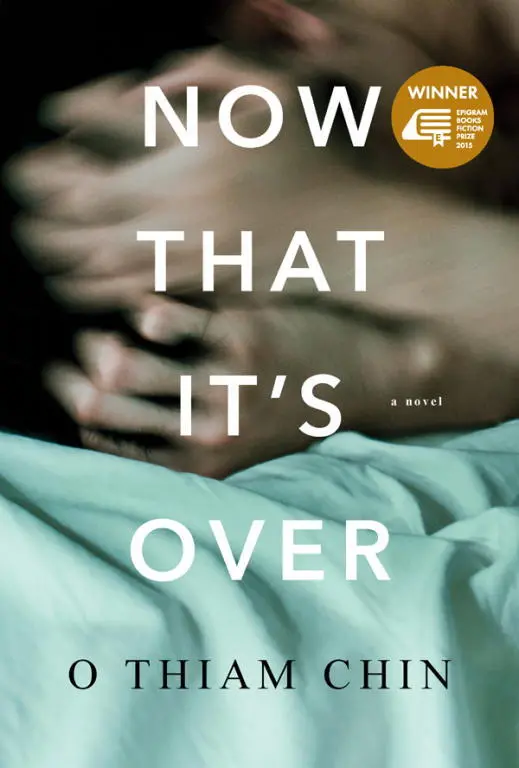
- Название:Now That It's Over
- Автор:
- Издательство:Epigram Books
- Жанр:
- Год:2016
- Город:Singapore
- ISBN:978-981-4757-28-7
- Рейтинг книги:4 / 5. Голосов: 1
-
Избранное:Добавить в избранное
- Отзывы:
-
Ваша оценка:
Now That It's Over: краткое содержание, описание и аннотация
Предлагаем к чтению аннотацию, описание, краткое содержание или предисловие (зависит от того, что написал сам автор книги «Now That It's Over»). Если вы не нашли необходимую информацию о книге — напишите в комментариях, мы постараемся отыскать её.
Winner of the 2017 Singapore Book Award for Fiction
During the Christmas holidays in 2004, an earthquake in the Indian Ocean triggers a tsunami that devastates fourteen countries. Two couples from Singapore are vacationing in Phuket when the tsunami strikes. Alternating between the aftermath of the catastrophe and past events that led these characters to that fateful moment, Now That It’s Over weaves a tapestry of causality and regret, and chronicles the physical and emotional wreckage wrought by natural and manmade disasters.
Now That It's Over — читать онлайн бесплатно полную книгу (весь текст) целиком
Ниже представлен текст книги, разбитый по страницам. Система сохранения места последней прочитанной страницы, позволяет с удобством читать онлайн бесплатно книгу «Now That It's Over», без необходимости каждый раз заново искать на чём Вы остановились. Поставьте закладку, и сможете в любой момент перейти на страницу, на которой закончили чтение.
Интервал:
Закладка:
26
WEI XIANG
Awake and lying in bed, Wei Xiang stares at the dusty shafts of light streaming through the curtains, and listens to the filtered sounds of shouting coming from the streets below. He recalls the boy and several scenes from their forages through Phuket over the past few days, how the boy led him through the torn landscape, taken him to the edge of the sea and brought up the ring from the depths. Even as Wei Xiang tries to conjure up the boy’s face from memory—a face that can never seem to settle into any set features—he still can’t get a full image in his head, only bits and fragments, the deep scar across his left eye. He shoots a glance at the side table where he sees Ai Ling’s wedding ring and reaches for it. This is just not possible, yet here it is, the proof right in his hand, irrefutable.
Wei Xiang gets out of bed, refusing to give in to the downward spiral of thoughts that threatens to cripple him into paralysis. Action is better, and to keep in motion—that is the thing he should do. No point thinking about things that lead nowhere. He steadies himself with the thought as he runs through the few places in his head—emergency centres, makeshift hospitals, schools—where he has been the last few days. He was told that there are two new emergency centres, which also serve as drop-off points for dead bodies, located at Phuket Town. After changing into a new set of clothes and gathering up his watch and the well-worn map, Wei Xiang charges out of the room.
As is his habit now, he makes it a point to stop at Chee Seng and Cody’s room. He knocks on the door a few times and listens to movements behind the door. No sounds. The day after the flood, Wei Xiang heard a feeble voice when he knocked on the door: Cody. So he’s in there; but why is he hiding? And where is Chee Seng? Whatever the case, Wei Xiang is at a loss at what to do with Cody. Isn’t he worried about Chee Seng? Shouldn’t he be doing something instead of locking himself in the room? Even if he should barge in and force him to come out, Wei Xiang knows it would be pointless if Cody lacks the will or wherewithal to deal with what has happened. And if this is what he has chosen—to hide in the room—there is nothing much Wei Xiang can do. He knocks a couple more times, and when he hears a faint sound from inside, he turns and walks away, ready to begin his day. He stops by the front desk for directions—it will take about an hour to walk to the new, and nearest, emergency centre—and steps out into the noisy street.
The situation in Patong has changed little, even though it has been four days since the tsunami. While the water in many parts of town has subsided, only calf-high at places nearer to the sea, many roads are still blocked by the debris of fallen huts and shops. The decomposing bodies that littered the waterlogged streets are slowly disappearing, having been picked up by teams made up of local and foreign volunteers, as well as by residents looking for their lost kin. Yet the stench of death has stayed in the air, like an invisible, malodorous blanket settling over the entire town, and worsens during the long afternoons when the sun bakes everything in sight. Wei Xiang holds his breath when he moves through certain streets, the foul, dank smell of decomposition coming from haphazard piles of rubble. Once, he steps on a severed hand with loose red strips of flesh trailing from its end, and quickly kicks it aside. By refusing to acknowledge what he’s seeing, disconnecting the object from its association, he is able to control his stomach from churning; it’s something he has to put into practice at every turn, a survival tactic.
With the morning still young, the air is cool, sunlight scattered across the puddles along Bangla Road. Already, people are thronging the main road of the town—lines of rescue workers clearing the collapsed walls of a shophouse, while a demolition crew drills the large sections of the broken structure into smaller, manageable chunks; scattered groups of locals searching under the rubble, still hopeful; ragtag gangs of children running from site to site, curious, craning their necks to see what has been uncovered, shouting lustily. Whenever another body is discovered, Wei Xiang rushes towards it, his heart sick with anticipation and fear. But none of the bodies he has seen so far is Ai Ling.
The new emergency centre, which Wei Xiang took two detours to locate, is manned by the locals, and try as he might, he can’t convey what he wants, but they do not stop him when he goes into the different tents, lifting up the flaps and checking the occupants inside. Once Wei Xiang has exhausted his search among the injured in these tents, he heads for the open compound where there is a long line of bodies enclosed in thick bags of varying size. When he attempts to unwrap one of the bags, a matronly woman with short cropped hair stops him with a raised voice and a stern stare. Wei Xiang tries to explain what he’s doing, but the woman shakes her head and points to a notice board where they have taken photographs of the deceased and pinned them up. Scanning the photographs with as much detachment as he can muster, Wei Xiang finds himself holding his breath every time he comes across a grainy photograph of a woman, trying to see beyond the death mask for any familiar features he might recognise. But Ai Ling is not in any of the photographs, a fact that gives Wei Xiang the barest of hope.
Leaving the centre, he checks his map and looks around the street for a prominent landmark from which he can orientate himself, and catches a glance of a man standing in the midst of a crowd, his movements slow, hesitant. Chee Seng. Wei Xiang leaps at the recognition and rushes towards him, shouldering his way through the thick crowd. When he places a hand on Chee Seng’s back, the latter whips around, a flash of tense alarm sweeping across his face. Looking at him, Wei Xiang can sense Chee Seng trying to pull something out of his memory, his eyes blank and uncomprehending. He waits for him to break out of his daze, but Chee Seng remains rigidly impassive. Wei Xiang grows exasperated; he pulls him aside, to a less crowded part of the street, where only the facade of a row of shophouses stands; a half-destroyed wall displays a faded monochrome photograph of a young couple in traditional tribal garb, a metal holder nailed under it, filled with the scrawny burnt ends of joss-sticks.
“Chee Seng, are you okay? Where have you been?” Wei Xiang’s words trigger no reply. Noticing Chee Seng’s cracked lips, Wei Xiang grips his shoulders, speaking firmly into his face, “Wait for me here. Wait here. Don’t go anywhere, you hear? I’ll be back.”
When he returns with the bottle of mineral water, which he has taken from the emergency centre, Chee Seng is still standing in the same spot. He shoves the bottle at him and watches him drink. Apart from a few scars and dark bruises on his face, Chee Seng seems relatively unscathed, at least from what he can see. Where has he been the past few days?
“Where’s Ai Ling?” Chee Seng mumbles.
“I don’t know. I can’t find her.”
“What about Cody? Is he with you?”
“He’s okay. He’s at the hotel.”
“Is he injured? Did anything happen to him?”
“He hasn’t left the hotel room at all.”
“What do you mean?”
“He locked himself in the room on the day of the tsunami, and has not come out at all. But I could still hear him from behind the door this morning. Come, let’s go back. You’ll see,” Wei Xiang says, motioning to Chee Seng to follow him.
It takes almost an hour to reach the hotel; they have to stop a few times so that Chee Seng can rest. Arriving at the hotel, Wei Xiang sees a porter cleaning the front steps, sweeping up the hardened clumps of soil and debris with a bamboo stick broom, and depositing them into black rubbish bags. The man glances up warily, then recognises Wei Xiang and presses his hands together in a greeting. Wei Xiang smiles and enters the hotel with Chee Seng, walking past a group of Japanese tourists standing around in the lobby, engaged in solemn conversation.
Читать дальшеИнтервал:
Закладка:
Похожие книги на «Now That It's Over»
Представляем Вашему вниманию похожие книги на «Now That It's Over» списком для выбора. Мы отобрали схожую по названию и смыслу литературу в надежде предоставить читателям больше вариантов отыскать новые, интересные, ещё непрочитанные произведения.










Обсуждение, отзывы о книге «Now That It's Over» и просто собственные мнения читателей. Оставьте ваши комментарии, напишите, что Вы думаете о произведении, его смысле или главных героях. Укажите что конкретно понравилось, а что нет, и почему Вы так считаете.