O Chin - Now That It's Over
Здесь есть возможность читать онлайн «O Chin - Now That It's Over» весь текст электронной книги совершенно бесплатно (целиком полную версию без сокращений). В некоторых случаях можно слушать аудио, скачать через торрент в формате fb2 и присутствует краткое содержание. Город: Singapore, Год выпуска: 2016, ISBN: 2016, Издательство: Epigram Books, Жанр: Современная проза, на английском языке. Описание произведения, (предисловие) а так же отзывы посетителей доступны на портале библиотеки ЛибКат.
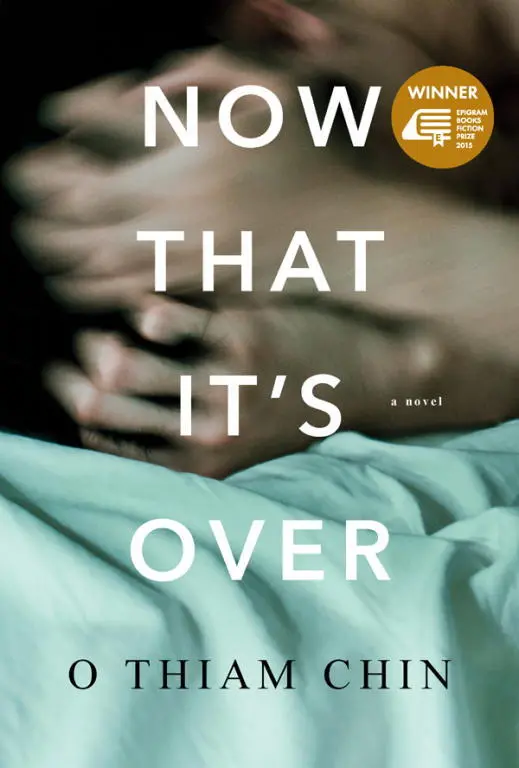
- Название:Now That It's Over
- Автор:
- Издательство:Epigram Books
- Жанр:
- Год:2016
- Город:Singapore
- ISBN:978-981-4757-28-7
- Рейтинг книги:4 / 5. Голосов: 1
-
Избранное:Добавить в избранное
- Отзывы:
-
Ваша оценка:
Now That It's Over: краткое содержание, описание и аннотация
Предлагаем к чтению аннотацию, описание, краткое содержание или предисловие (зависит от того, что написал сам автор книги «Now That It's Over»). Если вы не нашли необходимую информацию о книге — напишите в комментариях, мы постараемся отыскать её.
Winner of the 2017 Singapore Book Award for Fiction
During the Christmas holidays in 2004, an earthquake in the Indian Ocean triggers a tsunami that devastates fourteen countries. Two couples from Singapore are vacationing in Phuket when the tsunami strikes. Alternating between the aftermath of the catastrophe and past events that led these characters to that fateful moment, Now That It’s Over weaves a tapestry of causality and regret, and chronicles the physical and emotional wreckage wrought by natural and manmade disasters.
Now That It's Over — читать онлайн бесплатно полную книгу (весь текст) целиком
Ниже представлен текст книги, разбитый по страницам. Система сохранения места последней прочитанной страницы, позволяет с удобством читать онлайн бесплатно книгу «Now That It's Over», без необходимости каждый раз заново искать на чём Вы остановились. Поставьте закладку, и сможете в любой момент перейти на страницу, на которой закончили чтение.
Интервал:
Закладка:
“When she was younger, when we were still living in the kampong, she never wanted to stay indoors for long, always clamouring to go out, to the vegetable fields where my father and uncles worked, to the stream where she would catch tadpoles and small fish. Nobody could stop her. She was very stubborn.”
“Really? But she always seems so agreeable.”
“Don’t be fooled.” Ai Ling’s mother smiled and glanced at her sister before turning back to what was outside the window. “She hurt herself badly one time, but never told anyone. Got her foot cut by a nail. Didn’t once mention it to anyone, until she started limping the next day. The infection was really bad, took almost a week to heal properly. It was just like her to keep everything to herself until it got worse.”
Ai Ling’s mother moved nearer to the bed. She tucked her sister’s hand under the blanket, patted it over the covers. “Why are hospitals always so cold?”
“I’ll raise the temperature.”
Ai Ling got up from her chair and adjusted the thermostat with the remote control. The air-con, perched over the bed, beeped once and lowered its louvres. Silence descended on the room, making it feel more confined.
“She will come around soon.”
The crack in Ai Ling’s mother’s voice was magnified in the quietness of the room, and Ai Ling started to cry, holding her hands up to her face, unable to halt the rapid transition from sobbing to wailing. She could feel her mother’s hand on her shoulder, light and steady, an anchor keeping her still. Her mother did not say anything, but waited till Ai Ling had finally finished before withdrawing her hand. She then left the room, leaving Ai Ling alone with her aunt.

“Let’s go home,” Wei Xiang said later that day. He had stayed by Ai Ling’s side from the moment he stepped into the room. From time to time, he would bring Ai Ling a cup of coffee or massage her shoulders or go to the nurses with minor requests. Ai Ling would smile at him, to acknowledge what he was doing.
“Yes, go home and rest, I’m here,” Ai Ling’s mother said. “If there’s anything, I’ll call you.”
While walking through the hospital ward, Ai Ling peeked into some of the rooms and glanced at the faces of the relatives of the other patients. While most were serious and glum, there was sometimes laughter from a few, a snatch of cheerful dialogue or conversation. Evening was approaching fast, as the exhausted daylight slowly extinguished over the horizon. Crossing the garden compound to the hospital entrance, Ai Ling could smell the sweet leafy scent coming from the recently watered patch of grass. She found herself taking deep, long breaths, as if she had been barely able to breathe while she was in the room with her aunt.
“She’ll be all right, the doctor said so,” said Wei Xiang.
“I don’t know. What will she do when she hears the news, when she wakes up?”
“One step at a time. First she needs to recover, and then you can break the news to her. It’ll take a long time for her to accept this.” In his voice, Ai Ling could sense Wei Xiang’s optimism. He had always believed in keeping his hopes up, especially when things were going wrong. Ai Ling had never had what came so naturally to Wei Xiang: an easy, buoyant sanguinity.
“What would you do if I died?” Ai Ling asked.
“Statistically, I’ll die before you, husbands going before wives…”
“No, I’m serious. What would you do?”
Wei Xiang stopped in his tracks and turned to Ai Ling.
“I wouldn’t know what to do,” he finally said.
That night, Ai Ling woke from a long dream in a state of panic, gripping the sheet in fistfuls. In the dream, she had been held down by something huge that loomed darkly over her, a force that broke down all her defences, despite her fight to break through. The stretch of thin light that arched over her, hovering above the darkness, was out of reach, holding out a promise—of what? salvation? survival?—something she could never come near to. When the fingers of the surrounding cold crept into her, she had let go—and only then was she able to break out of her dream and wake in her bed. She steadied her breathing until it was manageable, then got up, went to the wardrobe and changed into a new T-shirt, throwing aside the drenched one. In the kitchen, she drank two full glasses of cold water. Her mind was alert to her surroundings; the milky shafts of moonlight coming through the windows offered little illumination. Ai Ling felt a deep relief, as if she had survived some sort of test.
Finding herself unable to sleep, Ai Ling sat on the sofa in the living room for some time. Then she went into the study and searched through the cabinet where she kept all the important documents; near the bottom, she found what she was looking for: the marriage certificate, in a cylindrical container. Unrolling the certificate, stiff and resistant with age, she noted the date and signatures, before putting it back.
Ai Ling thought about her marriage to Wei Xiang and was reminded again by how short it was compared to her aunt’s—how little she knew about living with Wei Xiang, despite their similarities and compromises. She knew, of course, that life was fickle and irrational, that whatever one built was subject to the pulverizing effects of time. Yet the knowledge brought little comfort. No matter how much she fretted about the future—about Wei Xiang, or her aunt—she could only live one moment at a time, one day followed by another. And Ai Ling suddenly felt terribly weighed down by it all.
She knew there was no comparison between her marriage and her aunt’s. She and Wei Xiang had only been married for five years, while her aunt and her late uncle had spent over forty years together. Those decades made all the difference: their history, seasoned with joys and miseries, hopes and wasted opportunities; the years had borne them along, carried them through, and now this, a rupture, a death. How was one supposed to deal with the fact of death? It cast a long, unwavering shadow over everything, and Ai Ling had felt its hand on her in her dream, scorching the edges of her self.
She looked at the framed portrait of her wedding photograph on a long wooden shelf beside the study table. For the shoot, they had opted for a dressed-down, everyday look: a light blue tailored shirt and dark pleated pants for Wei Xiang, and a red floral dress with an empire waistline for Ai Ling. Their faces were beaming with happiness. Ai Ling stared at her own face in the photograph, trying to bridge who she was at that moment with the woman she was now, the divide invisible but deep. What had she been thinking then? She tried to extract the memory, but could only recall the flashes of the camera, the encouraging instructions of the photographer to smile brighter. Remember, you’re happy, so must smile more! She had quietly and obediently done what she was told.
Standing in the study, Ai Ling did not know how to make sense of the happiness she had once felt. She shook her head, then turned off the light and stood in the dark for a long time.
The next morning, Ai Ling was reading a magazine in her aunt’s hospital room, seated on a chair facing the room’s entrance, and when she glanced up, she saw her aunt’s eyes wide open, staring at her. Ai Ling jolted up out of the chair, tossed down the magazine, and rushed to the bed, careful not to touch the tubes when she held her aunt’s hands. Her aunt smiled weakly, but did not say anything.
Barely an hour after she called her parents to inform them about the news, they were there beside her aunt’s bed, attending to her needs, and skirting the growing puzzlement gnawing at her features. Ai Ling’s mother gently hushed her with admonishment to rest, to have some food, a hot Milo drink. A few times, her aunt looked at Ai Ling for answers, but she was quick to avert her stares. The following afternoon, Ai Ling’s mother told her aunt about the death of her husband in a truncated account of the accident. By the end of that day, her aunt was ready to leave the hospital. Ai Ling and her mother made the arrangements to take her back to her parents’ place, where she would stay until she was well enough to return home. Her aunt did not offer any protest. “She’s still in shock,” her mother said.
Читать дальшеИнтервал:
Закладка:
Похожие книги на «Now That It's Over»
Представляем Вашему вниманию похожие книги на «Now That It's Over» списком для выбора. Мы отобрали схожую по названию и смыслу литературу в надежде предоставить читателям больше вариантов отыскать новые, интересные, ещё непрочитанные произведения.








Обсуждение, отзывы о книге «Now That It's Over» и просто собственные мнения читателей. Оставьте ваши комментарии, напишите, что Вы думаете о произведении, его смысле или главных героях. Укажите что конкретно понравилось, а что нет, и почему Вы так считаете.