O Chin - Now That It's Over
Здесь есть возможность читать онлайн «O Chin - Now That It's Over» весь текст электронной книги совершенно бесплатно (целиком полную версию без сокращений). В некоторых случаях можно слушать аудио, скачать через торрент в формате fb2 и присутствует краткое содержание. Город: Singapore, Год выпуска: 2016, ISBN: 2016, Издательство: Epigram Books, Жанр: Современная проза, на английском языке. Описание произведения, (предисловие) а так же отзывы посетителей доступны на портале библиотеки ЛибКат.
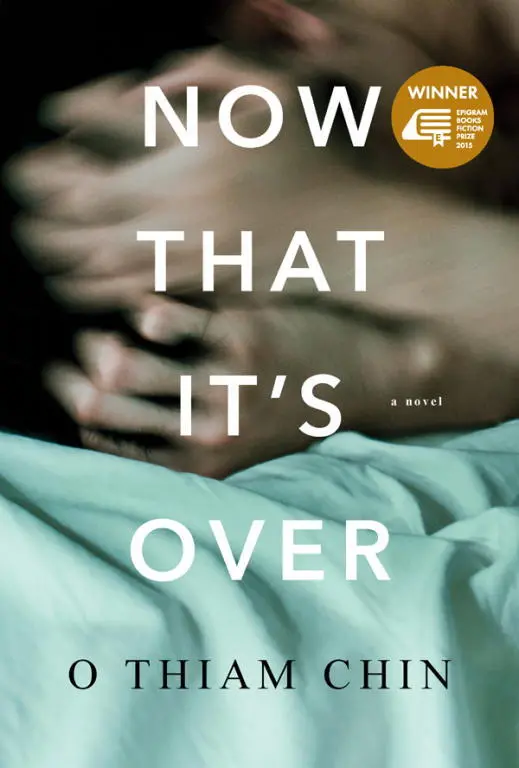
- Название:Now That It's Over
- Автор:
- Издательство:Epigram Books
- Жанр:
- Год:2016
- Город:Singapore
- ISBN:978-981-4757-28-7
- Рейтинг книги:4 / 5. Голосов: 1
-
Избранное:Добавить в избранное
- Отзывы:
-
Ваша оценка:
Now That It's Over: краткое содержание, описание и аннотация
Предлагаем к чтению аннотацию, описание, краткое содержание или предисловие (зависит от того, что написал сам автор книги «Now That It's Over»). Если вы не нашли необходимую информацию о книге — напишите в комментариях, мы постараемся отыскать её.
Winner of the 2017 Singapore Book Award for Fiction
During the Christmas holidays in 2004, an earthquake in the Indian Ocean triggers a tsunami that devastates fourteen countries. Two couples from Singapore are vacationing in Phuket when the tsunami strikes. Alternating between the aftermath of the catastrophe and past events that led these characters to that fateful moment, Now That It’s Over weaves a tapestry of causality and regret, and chronicles the physical and emotional wreckage wrought by natural and manmade disasters.
Now That It's Over — читать онлайн бесплатно полную книгу (весь текст) целиком
Ниже представлен текст книги, разбитый по страницам. Система сохранения места последней прочитанной страницы, позволяет с удобством читать онлайн бесплатно книгу «Now That It's Over», без необходимости каждый раз заново искать на чём Вы остановились. Поставьте закладку, и сможете в любой момент перейти на страницу, на которой закончили чтение.
Интервал:
Закладка:
After crossing the threshold and entering the hut, it takes me a few moments to adjust to the dimness of the room. The smell of paraffin oil fumes from the lamp hangs heavily in the air, and, along with it, I detect the faint burning of dry wood. The old woman is at the brick stove, setting a kettle to boil, fanning the flames. The red-orange glow casts a halo of soft amber light around her, agitating her shadows on the wall. She takes up a flask and puts some dry leaves—tea? herbs?—into it.
I sit on the wooden bench and lower my head onto the table, burying my face in the crook of my arm. I can feel my body losing its tension, unwinding; a numbing fatigue soon takes hold, spreading across my body. Draining slowly of energy, I can’t keep my eyes open, though my thoughts are creating a racket in my head. The old woman sets a bowl before me. The soothing scent of jasmine fills my nose, and I take a few sips. She sits beside me and watches me drink. With the shadows flickering on her face, her eyes seem like empty pits that draw me into them—a deathly calm, the gravity of darkness.
It would be easier to stay where I am, somewhere up in the hills with the old woman, distanced from the rest of the world. Nobody knows whether I’m dead or alive, and this realisation is harsh but sobering. I could live like this for as long as I want. Maybe in some ways, I’m avoiding the need to take the next step; maybe I’m hoping to delay the decision to head back, to return to where I’m expected. Nobody can stay still, or hidden, for long; life always demands action, movement, choices, a nudge to take the next step.
In the days I have spent in the hut, recovering under the care of the old woman, I think about the life I used to have, about Ai Ling and Wei Xiang, and of course Cody. They are the people I care about and love the most, but now, after all that has happened, I can’t summon anything in me to feel for them. They have become, over the last few days, immaterial, mere shadows from the past, stripped of any history or connection to the reality of my current existence. It’s as if I have conjured them up from my own imagination, from different fragments of other people I have known—wisps of smoke rising into the air, fading into nothing. I have almost no desire to return to them, or to whatever is waiting for me.
The old woman, on the other hand, is already preparing for my eventual departure. She feeds me another round of the bitter brew, changes the wound dressings, and mends the rips in my clothes, going about these tasks with her usual efficiency and silence. From time to time, she checks on me, putting her hand to my forehead or applying a lotion to my bruises. She takes out a cloth bag from the larder and puts in a few vegetable buns that she has prepared, a bottle of water and a small jar of medicinal lotion. She secures the opening of the cloth bag with a piece of rattan string and leaves it at the foot of the bed.
Watching her move about in the small, dimly lit hut with a single-minded focus stirs up memories of my maternal grandmother who passed away six years ago. She was the one who took care of my siblings and me when my mother was holding down two jobs, after she and my father were divorced. Every day after school, my grandmother would keep me in the kitchen for hours, seated at the dining table to have my meals or work on my homework, as she busied herself with the scrubbing of pots and pans, preparing the spices for her special bak kut teh soup, or cleaning out the fridge, which was always packed to the gills with plastic bags of varying size and colour, the contents known only by my grandmother. She never wasted or threw away food, even when it was past the expiry date. For snacks, she would give me stale cream crackers that tasted like dry cardboard, which she kept in a large tin can. The day after she died of a sudden stroke, I peeked into the fridge and saw that it was as full as it had always been.
In my dreams—sleeping and waking in an unending cycle—I sometimes confuse what is there with what isn’t—my long-gone past and the elusive present, the old woman and my dead grandmother. At one point, when the old woman put her hand on my forehead, and I opened my eyes, I could see my grandmother’s features superimposed on her face—the scattering of age spots on her cheeks, the sharp creases around her eyes and mouth like knife cuts, her perceptive stare. Words came pouring from me in a jumble of hard consonants as if I were learning to speak in tongues, harsh and guttural. And always, a presence hovering near me, a shadow cast over the wavy landscape of my dreams.
Towards evening, when the light outside the hut has gradually turned mellow, easing from a fiery red to a deepening shade of blue, I finally wake up from my spot at the table. My mind feels empty, my body light and incorporeal. From where I sit, I watch the changing sky through the doorway, and beyond the sweep of the trees, the satiny cloak of the dark sea. When dinner is ready, the old woman motions to me to join her. We eat in silence, and by the time we are done, night has fully descended, the lamps in the hut providing our only illumination.
Once the old woman has washed the dishes and put them away, she comes over to me, reaching into the side pocket of her threadbare shirt to pull out a ring. It catches the light from the lamp. It’s a simple, unadorned ring, perhaps a wedding band—where did she find it? Putting it in my palm, the old woman looks at me, pats my wrist once, and turns away. I try on the ring, but it can’t fit any of my fingers except the last one on my right hand. Whoever owned the ring must have had slim fingers, and it occurs to me that perhaps it belonged to a woman. I wrap it in a torn rag and put it in the pocket of my jeans.

For our fifth anniversary, Cody bought me a ring and hid it between the pages of a book that I was reading. That night, as I was picking up the book, a collection of stories by Alice Munro, the ring fell into my lap. For a while, holding the ring between my fingers, I wondered whether the ring was Cody’s, that perhaps he had misplaced it. From across the bed, Cody grabbed my hand.
“Happy anniversary,” he said.
“Happy anniversary. What is this?”
“A ring.”
“Yes, I know that. Why did you buy me a ring? So tacky.”
“No, it’s actually quite nice. Don’t you like it?”
“Yes, but still. A ring. You want to propose to me?”
“Yes, but only if you want to marry me.”
“No, take it back. I don’t want to marry you.”
“Why not? I know you want to.” Cody pressed closer to me, took the ring and slipped it on my index finger.
“Okay, now you are married. To me,” he said. “You can kiss the groom.”
I wore the ring whenever I was with Cody, so he could see it. But I was never interested in accessories; maybe a watch, but only because I needed it to time my regular runs, and even then it was a cheap, plastic Casio. And if I received gifts from friends—a chain, bracelet, leather wristband—I would put them aside for re-gifting, and if they started to clutter up the drawer, I would put them all in a box and give them away to the Salvation Army. Occasionally, when Cody saw a piece he liked, I would give it to him.
But the ring that Cody bought was a different thing altogether. It had meant something, at least to Cody, a commitment of sorts, a symbol of the years we had been together; but for me, it was nothing more than an inanimate object made to embody some significance that existed only in the mind of the giver, and divorced from this, it was nothing more than a piece of metal. So to counter my initial reluctance, and mostly for Cody’s sake, I wore it as if it really mattered, as if it were something that carried the weight of importance for both of us. I wore it when I went to bed, when we had breakfast, when we went out with friends, when we had sex. But when Cody was not around, or when I had to go for my runs, I would take it off and leave it in the drawer. By then the ring had already left its mark on me, the slight indent that went around the base of my finger, the skin a tone lighter as if drained of blood.
Читать дальшеИнтервал:
Закладка:
Похожие книги на «Now That It's Over»
Представляем Вашему вниманию похожие книги на «Now That It's Over» списком для выбора. Мы отобрали схожую по названию и смыслу литературу в надежде предоставить читателям больше вариантов отыскать новые, интересные, ещё непрочитанные произведения.




Обсуждение, отзывы о книге «Now That It's Over» и просто собственные мнения читателей. Оставьте ваши комментарии, напишите, что Вы думаете о произведении, его смысле или главных героях. Укажите что конкретно понравилось, а что нет, и почему Вы так считаете.