O Chin - Now That It's Over
Здесь есть возможность читать онлайн «O Chin - Now That It's Over» весь текст электронной книги совершенно бесплатно (целиком полную версию без сокращений). В некоторых случаях можно слушать аудио, скачать через торрент в формате fb2 и присутствует краткое содержание. Город: Singapore, Год выпуска: 2016, ISBN: 2016, Издательство: Epigram Books, Жанр: Современная проза, на английском языке. Описание произведения, (предисловие) а так же отзывы посетителей доступны на портале библиотеки ЛибКат.
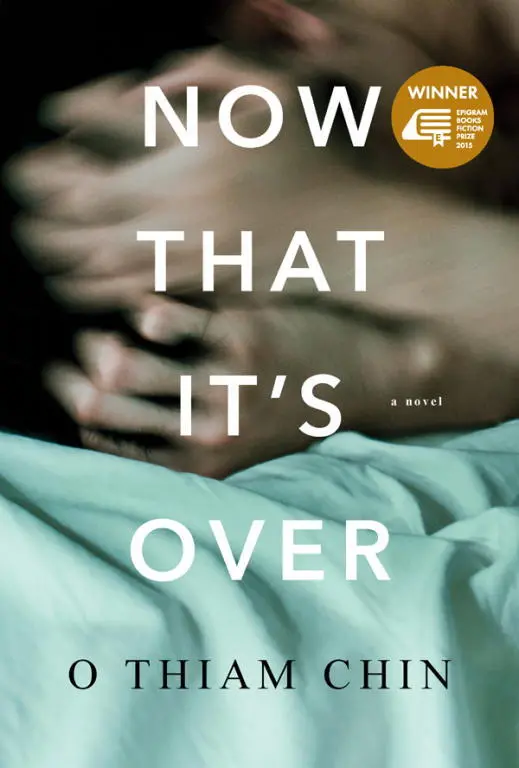
- Название:Now That It's Over
- Автор:
- Издательство:Epigram Books
- Жанр:
- Год:2016
- Город:Singapore
- ISBN:978-981-4757-28-7
- Рейтинг книги:4 / 5. Голосов: 1
-
Избранное:Добавить в избранное
- Отзывы:
-
Ваша оценка:
Now That It's Over: краткое содержание, описание и аннотация
Предлагаем к чтению аннотацию, описание, краткое содержание или предисловие (зависит от того, что написал сам автор книги «Now That It's Over»). Если вы не нашли необходимую информацию о книге — напишите в комментариях, мы постараемся отыскать её.
Winner of the 2017 Singapore Book Award for Fiction
During the Christmas holidays in 2004, an earthquake in the Indian Ocean triggers a tsunami that devastates fourteen countries. Two couples from Singapore are vacationing in Phuket when the tsunami strikes. Alternating between the aftermath of the catastrophe and past events that led these characters to that fateful moment, Now That It’s Over weaves a tapestry of causality and regret, and chronicles the physical and emotional wreckage wrought by natural and manmade disasters.
Now That It's Over — читать онлайн бесплатно полную книгу (весь текст) целиком
Ниже представлен текст книги, разбитый по страницам. Система сохранения места последней прочитанной страницы, позволяет с удобством читать онлайн бесплатно книгу «Now That It's Over», без необходимости каждый раз заново искать на чём Вы остановились. Поставьте закладку, и сможете в любой момент перейти на страницу, на которой закончили чтение.
Интервал:
Закладка:
At midday, we have a meal of gruel, stir-fried long beans and salted cabbage. Then we are back in the garden again, picking up where we left off. Working silently, we manage to complete all the tasks by mid-afternoon. The old woman fetches a pail of water from the well, and we wash our hands and feet as best as we can—the dirt is encrusted under my nails, and has made its way into some of my wounds. The old woman gestures at me to take a break, and I retreat to the shade under the eaves of the hut. Even after the hours of labour, the old woman does not display any sign of fatigue as she starts cleaning out the coops, feeding the chickens and sweeping up their faeces. The chickens, alert to the scattering of dry feed on the ground, come rushing to the old woman’s feet. She reaches down and, in one fluid motion, grabs the chicken nearest to her. The other chickens go about their business, nonchalant, unbothered by the slight disturbance.
After walking back to the hut, the old woman takes out a large carving knife and a wooden chopping board and puts them on the ground, while holding firmly onto the struggling chicken with her other hand. Positioning the slender neck of the chicken between her hands, she gives it a quick wring, and the chicken stops moving, its body suddenly slack. She slits the throat and drains the blood into a small urn, filling it to the brim, before putting the lifeless body of the chicken away. Then she covers the urn with a lid and walks over to the shed, nodding at me to follow. In the dusty semidarkness of the shed, she removes the blanket from the boy and motions for me to carry the body. In the cradle of my arms, the boy’s body is solid and unremitting, heavy with death. I hold him close, feeling his weight against me. The sweet, cloying smell of the oils wafts up from the body.
Leading us out of the shed, the old woman picks up the urn of chicken blood and a hoe from a display of gardening tools, and walks behind the main hut. The thick, untamed foliage all around presses in tight around us; a narrow dirt path provides a route between the hut and the forest behind it.
A short distance away, about a hundred metres from the hut, we come to a rise in the land, a mound of red earth that rises up to a plateau, resembling the arched, muscled back of a huge sleeping bear. Climbing a dozen hardened-mud steps, we come to flat ground, where several piles of stones are stacked together, spaced unevenly apart. With a gesture from the old woman, I lower the body to the ground, and glance at the boy’s face, half-expecting him to open his eyes. Using the hoe, the old woman marks out a hole in the ground, then passes it to me. I begin to dig slowly. The old woman stands back to assess the hole after I have been digging for some time, and kneels down beside the dead boy. She takes his hand and pats it, then nods at me. I place the body gently into the grave.
Against the damp, reddish soil, the dead boy looks preternaturally radiant, serene in repose. The old woman throws in the first handful of earth, which lands on the boy’s chest, spattering outward in a firework of blood-coloured dirt. As we cover him with the soil, and he slowly disappears into the ground, something makes me stop for a moment and choke up; tremors go through me like an electric charge, stinging my eyes. When the boy is completely buried, the old woman pours the urn of blood on the small mound of soil, from one end to the other, staining it in dark streaks. The blood is swiftly absorbed into the earth.
The old woman looks out over the lush sweep of trees that stretches into the distance, to the ridge of hills that serrates the skyline like the teeth of a chainsaw. Then she begins to sing the prayer-chant I heard the night before. The soft cadence of her voice carries through the still, silent air, a sorrowful, primordial sound that seems to rise from the dark heart of the earth.
I close my eyes and listen; the song fills me completely, just as the soil swallowed the boy whole. It feels as if the song will never end, as if it will continue until the end of the world, but it does end, eventually. Even so, I can still hear the old woman’s voice in my head as I sit on the ground beside the boy’s grave, weeping inconsolably.
14
CODY
Growing up, Cody was often left alone, even though he had two elder sisters who doted on him. They were eight and ten years older, already in adolescence, when he started school. Distracted with other things—boys, make-up, clothes, exams, extra-curricular activities in school—they did not pay much attention to him. But Cody had not minded, as he was preoccupied with his green toy soldiers, paper planes, and Old Master Q comics. To him, his sisters were like the creatures he sometimes read about in his storybooks, aliens from another planet who looked human but had blue blood flowing under their skin.
Because their parents were often busy at the wet market, where they were fishmongers, they left him in the care of his two sisters, who had to make him breakfast every day before school and make sure he got to school on time. Their parents were out of the house by three in the morning and usually did not return until late morning after they had closed their stall. Given their profession, the fridge was well stocked with all types of fish and seafood: sea bass, red snapper, garoupas, tiger prawns, stingrays. They usually had a steamed or fried fish for lunch and dinner, and while Cody never grew sick of eating it, his two sisters were always complaining about eating the same thing. Their father would ignore them, but their mother would silence them with a stern, disapproving stare.
Because of the age gap, Cody was left by himself most of the time while at home, since his sisters were either still in school or out with their friends. His father had given him a key, which he wore around his neck in Primary Three, and his parents did not track his whereabouts, unlike his classmates who had to report their every movement to their parents at all times. When he came home from school at one-thirty in the afternoon, his parents would both be taking their naps, and his mother would tell him to eat whatever was left on the stove or dining table—a meal of sweet potato porridge or rice with stir-fried vegetables, braised egg or fish. When he was done with lunch, he would wash the plate and utensils, and lie on the sofa and read comics until his parents woke up, and then he would start on homework.
In school, Cody had friends, though there was nobody whom he was particularly close to. During recess, he would play with a group of boys from his class, usually football on the school pitch—he always played the defender role, since being a striker or midfielder was too strenuous, involving a lot of running and aggressive body contact, which he was not comfortable with—or a game of catching around the canteen and assembly area. Because of his small build, he was often chosen last, or second to last, when the bigger boys picked players. Standing in the dwindling group, he would look at his feet, pretending not to care, even while he could feel himself shrinking inside, diminishing into something insubstantial. Sometimes, he would look at the boys who were chosen after him, or at the boys who stood at the fringe of the school pitch, who, for one reason or another, did not want to play football or preferred to play zero-point or five stones with the girls. Sometimes, the boys who played football would point out this group of boys and laugh openly at them and call them names, and Cody would join in. Though he longed to be part of this clique of boys who was sporty and popular and interesting, his position in the hierarchy was often at the bottom; it was all too easy to be left out, and this fear—felt rather than spoken—was what kept him in line, constantly seeking the approval of those higher up.
Читать дальшеИнтервал:
Закладка:
Похожие книги на «Now That It's Over»
Представляем Вашему вниманию похожие книги на «Now That It's Over» списком для выбора. Мы отобрали схожую по названию и смыслу литературу в надежде предоставить читателям больше вариантов отыскать новые, интересные, ещё непрочитанные произведения.











Обсуждение, отзывы о книге «Now That It's Over» и просто собственные мнения читателей. Оставьте ваши комментарии, напишите, что Вы думаете о произведении, его смысле или главных героях. Укажите что конкретно понравилось, а что нет, и почему Вы так считаете.