William McGivern - Savage Streets
Здесь есть возможность читать онлайн «William McGivern - Savage Streets» весь текст электронной книги совершенно бесплатно (целиком полную версию без сокращений). В некоторых случаях можно слушать аудио, скачать через торрент в формате fb2 и присутствует краткое содержание. Город: New York, Год выпуска: 1959, ISBN: 1959, Издательство: Dodd, Mead & Company, Жанр: Современная проза, на английском языке. Описание произведения, (предисловие) а так же отзывы посетителей доступны на портале библиотеки ЛибКат.
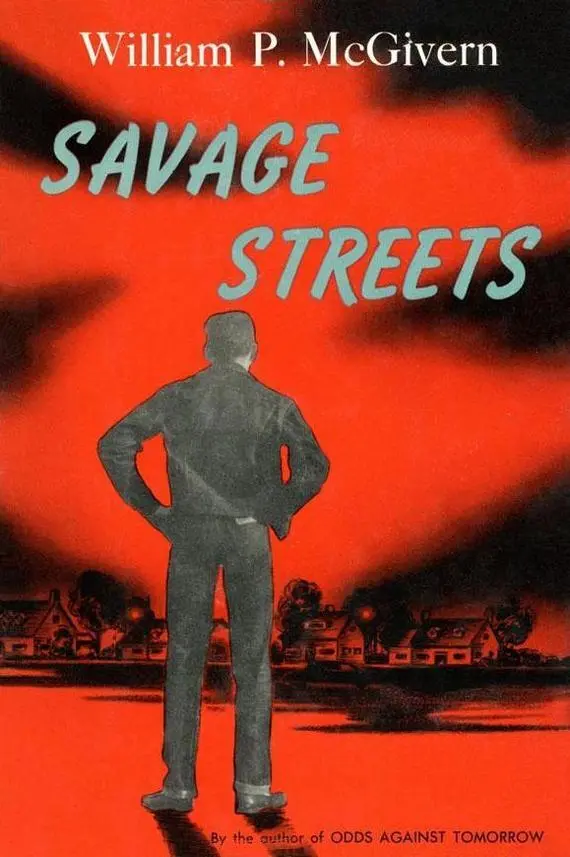
- Название:Savage Streets
- Автор:
- Издательство:Dodd, Mead & Company
- Жанр:
- Год:1959
- Город:New York
- ISBN:978-1-125-15174-7
- Рейтинг книги:4 / 5. Голосов: 1
-
Избранное:Добавить в избранное
- Отзывы:
-
Ваша оценка:
Savage Streets: краткое содержание, описание и аннотация
Предлагаем к чтению аннотацию, описание, краткое содержание или предисловие (зависит от того, что написал сам автор книги «Savage Streets»). Если вы не нашли необходимую информацию о книге — напишите в комментариях, мы постараемся отыскать её.
The adults recognized the danger signals. It was obvious their children’s values and safety were being threatened. This was a time for calmness, for issues to be clearly defined. But the parents failed to realize that their own values were also put to test in this explosive situation. A conviction of righteousness swept through the community like a grass fire, and with it an impatience with the law and a disregard for the rights of anyone beyond the threatened portals of Faircrest. What man, what individual life is ever strong enough to survive such a spell of riot?
Here, in a tense and unusual book, is a sobering picture of what could happen in any modern American community.
Savage Streets — читать онлайн бесплатно полную книгу (весь текст) целиком
Ниже представлен текст книги, разбитый по страницам. Система сохранения места последней прочитанной страницы, позволяет с удобством читать онлайн бесплатно книгу «Savage Streets», без необходимости каждый раз заново искать на чём Вы остановились. Поставьте закладку, и сможете в любой момент перейти на страницу, на которой закончили чтение.
Интервал:
Закладка:
“Get out of here!” she cried, and even in her fear she was humiliated at the entreaty in her voice. “Get out, get out, please.”
“Sure, sure,” Duke said. He made a placating gesture with his hand. “There’s nothing to be upset about.”
They had made her cringe, she realized; that was what they must have wanted. This was what they had done to Jimmy.
“Get out of here,” she said bitterly, close to tears now. But she wasn’t frightened any more. “Get out,” she cried in sudden fury. “Get out.”
“Come on, Jerry,” Duke said. “This is what you get for trying to help out these rich mixed-up people.” At the door he turned and looked at Barbara. “What you’re afraid of is in your head, not mine. And one other thing: if you call the cops what will you tell them? That we stopped by to see what your husband wanted to talk to us about? Come on, Jerry. Let’s drift.”
When the door closed Barbara ran across the room and slipped the burglar chain into its metal runners. She leaned against the door then, breathing unevenly, listening to the rapid stroke of her heart. She resisted an impulse to run to the phone. She waited a full minute, getting control of herself. Then she walked across the room and called her husband’s office.
Chapter Seven
Ат seven o’clock that night Farrell pulled up and parked in front of the Chiefs’ clubhouse on Matt Street. He went down the short flight of stone steps and knocked on the door. From inside he heard music, a big hysterical trumpet weaving above an insistent drumbeat. Farrell knocked again, pounding on the door with his fist. A latch clicked and Enrique looked up at him. “All right, don’ break it down,” he said.
Farrell pushed the door open with the flat of his hand. The room was filled with cigarette smoke, vibrating with the crash of music. In the rear Duke and Jerry were playing cards, the chips and silver gleaming on the green felt surface of the poker table. The winos were not in sight, but Cleo sat cross-legged on a bar stool behind Jerry. She wore thick white ankle socks with tiny bells sewn to them, and as she swung her foot the bells made a tiny sound under the strident jazz beat.
Duke looked up as Farrell came toward him. He glanced without expression at Jerry and called to Enrique. “Turn down that music. We got company.”
The music faded to a miniature squeal.
Farrell stared down at their wise, expectant little smiles. They didn’t take this seriously, he knew; he represented nothing but a diversion to them, a prospect of fun to brighten a dull evening. His temper was dangerously short, but he hadn’t come here to indulge his temper. He pulled an empty chair to the table and sat down. In the silence the little bells on Cleo’s socks sounded clearly, insistently.
Farrell said drily, “Who’s the big winner?”
Duke laughed and the sound of it was a dismissal of banalities. “The big brother bit, eh? One of the boys. You sound like a guy we know. Father Martin from St. Ann’s. Ain’t that right, Jerry?”
Jerry nodded, watching Farrell with a little grin. “That’s right, Duke. Father Martin always asks who’s the big winner. He hands around cigarettes and talks about baseball. He even kids us about girls.”
Duke pushed a poker chip around in a circle. “He wants to understand us,” he said drily. “He wants to be a buddy.”
“He’s the swinging end,” Jerry said. “Sixty years old, bald as an egg, and he wants to be a buddy. Always pitching up gags and wisecracks. He don’t act like a priest at all.”
“So we don’t treat him like one,” Duke said, a flick of contempt in his voice. “That’s fair enough, isn’t it?” He stared with bitter challenge at Farrell, the overhead light shadowing his lean arrogant features. “So let’s cut the buddy-buddy crap. What do you want?”
“I want you to keep far away from me,” Farrell said slowly and deliberately. “Away from my kids, away from my home. Is that clear enough?”
“I could say the same thing to you,” Duke said, and blew a lazy stream of smoke toward the electric light bulb hanging above the table. “Why don’t you stay away from me? What did you learn from talking to my old man, by the way? Did he give you a lot of jazz about the good old days on the railroad? Did that help you understand me?”
“You think I want to understand you?” Farrell said quietly.
“Then you stopped in here,” Duke went on, his voice sharpening. “You met Cleo. And Enrique. And my drunken pets. Did that explain why I’m all mixed up? Why I’m a no-good bum?” The light flickered in his dark eyes. “Why I’m a delinquent slob going to hell in a hand-basket?”
Farrell put his hands flat on the table. “Now get this straight,” he said, glancing from Duke to Jerry. “I don’t give one good goddamn about understanding either of you. You think you’re interesting. Problem kids. Someone everybody is concerned about helping and straightening out. Well, you’re not interesting to me. Go to hell in a hand-basket if you want to, it’s not my affair. But let me tell you one thing: there’s nothing spectacular about you. You’re going to get older and make a living washing cars or running a freight elevator or sweeping out basements. And you’ll bore hell out of everybody whining how you never got any breaks. You might have got through college on football. That’s how I made it. But if you’re too dumb and lazy to give it a whirl, that’s fine with me. Do whatever the hell you want. I don’t see you as a national waste. Or as valuable raw material that’s being neglected. In my book...”
Duke yawned elaborately and said, “Let’s play cards, eh?” He grinned at Jerry. “The radio seemed awful loud for a while, didn’t it?”
“A guy could hardly think,” Jerry said.
Farrell stood up and slapped the cards from the table. The two boys stared at him, caught and held by the anger in his face, and Farrell said softly, “In my book you’re gutless bums. You hounded my son into stealing, you broke into my house to scare my wife. You’re great with women and kids, aren’t you? With a gang at your back.”
Cleo said anxiously, “They didn’t mean...” but Duke cut her off with a quick, furious glance. Jerry was watching Duke like a dog awaiting commands, alert but uncertain; he was rubbing his big hands together, a frown clouding his broad features. Duke turned to Farrell and started to speak; but he changed his mind and his eyes slid away from the anger in Farrell’s face. He began to move poker chips about in a nervous circle. “All right, you made a deal,” he said, in a high, bitter voice. He suddenly met Farrell’s eyes. “But you’re part of a gang too, you and your big-shot friends, the Faircrest Squares, that’s who you are. You fight together and stick together the same as we do. But that’s fine. Nobody blames you for it. Something you don’t like, you get up a committee and get the cops to fix it for you.” He stood up and leaned toward Farrell. “All right, you heard me,” he yelled. “It’s a deal.”
Farrell stared at him and said nothing. He waited until the anger drained from Duke’s face. He waited as the silence stretched out tightly between them, waited until Duke finally looked down at the table and ran a hand across his forehead. Then Farrell said: “It’s a deal. Don’t forget it,” and walked toward the door. Enrique turned up the record player and as Farrell went up the stone steps to the street he could hear the blast of the music behind him, the hard jazz pushing angrily at his back.
There was a pleasurable stir of excitement in Farrell’s office the following morning. Weinberg’s thinking on Atlas refrigerators had struck a spark of interest from the client. The idea had been pitched up in a casual-seeming memo which had been chiseled out with great care by Sam Mellon, the agency’s copy chief — a memo suggesting merely that the idea was worth exploring. The advertising director at Atlas had agreed, and the wheels were turning. There were prospects of additional billing, and the smell of money mingled inevitably with the aroma of sour grapes.
Читать дальшеИнтервал:
Закладка:
Похожие книги на «Savage Streets»
Представляем Вашему вниманию похожие книги на «Savage Streets» списком для выбора. Мы отобрали схожую по названию и смыслу литературу в надежде предоставить читателям больше вариантов отыскать новые, интересные, ещё непрочитанные произведения.





Обсуждение, отзывы о книге «Savage Streets» и просто собственные мнения читателей. Оставьте ваши комментарии, напишите, что Вы думаете о произведении, его смысле или главных героях. Укажите что конкретно понравилось, а что нет, и почему Вы так считаете.