Лидия Юкнавич - Verge - Stories
Здесь есть возможность читать онлайн «Лидия Юкнавич - Verge - Stories» весь текст электронной книги совершенно бесплатно (целиком полную версию без сокращений). В некоторых случаях можно слушать аудио, скачать через торрент в формате fb2 и присутствует краткое содержание. Город: New York, Год выпуска: 2020, ISBN: 2020, Издательство: Riverhead Books, Жанр: Современная проза, на английском языке. Описание произведения, (предисловие) а так же отзывы посетителей доступны на портале библиотеки ЛибКат.
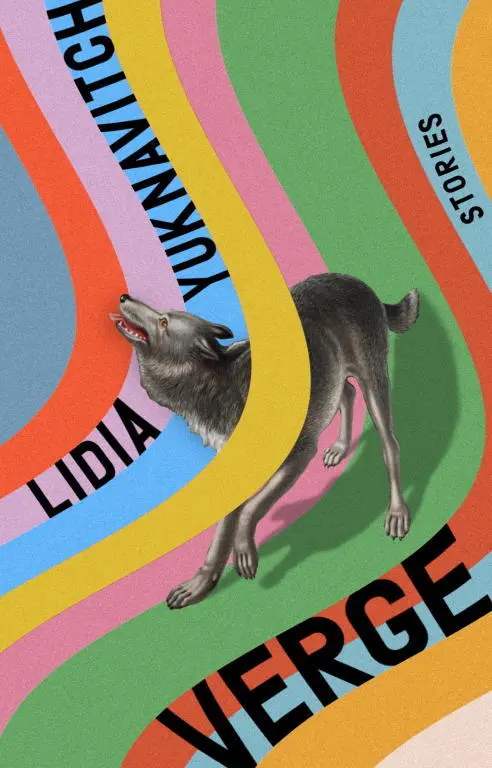
- Название:Verge: Stories
- Автор:
- Издательство:Riverhead Books
- Жанр:
- Год:2020
- Город:New York
- ISBN:978-0-52553-487-7
- Рейтинг книги:4 / 5. Голосов: 1
-
Избранное:Добавить в избранное
- Отзывы:
-
Ваша оценка:
Verge: Stories: краткое содержание, описание и аннотация
Предлагаем к чтению аннотацию, описание, краткое содержание или предисловие (зависит от того, что написал сам автор книги «Verge: Stories»). Если вы не нашли необходимую информацию о книге — напишите в комментариях, мы постараемся отыскать её.
A fiercely empathetic group portrait of the marginalized and outcast in moments of crisis, from one of the most galvanizing voices in American fiction. cite
Verge: Stories — читать онлайн бесплатно полную книгу (весь текст) целиком
Ниже представлен текст книги, разбитый по страницам. Система сохранения места последней прочитанной страницы, позволяет с удобством читать онлайн бесплатно книгу «Verge: Stories», без необходимости каждый раз заново искать на чём Вы остановились. Поставьте закладку, и сможете в любой момент перейти на страницу, на которой закончили чтение.
Интервал:
Закладка:
Outside in the gray, he works out. Boxing. Short pulses. He faces off against what is called a body opponent bag. It is in the shape of a man’s torso. The man’s face has the look of an aggressor. He hits. The blows land in the head, the chest.
In his mind ideas seize, recede, then again raise and rise. Fisted speed dug deep and jab extended until it is shot strung back to the shoulder. His thoughts a never-ending drive and end, and end, and end, and end.
INSIDE THE HOUSE, where it’s light, he wraps those same hands around a bow and strings and plays. His hands change shape holding the cello, like birds moving from the dull land to the winged sky. A metronome marks time with ticks, with rocking, with regular, adjustable intervals. Its measures and rules give meaning, sense, divisions, and designs to sound. The metronome unvaryingly regular, undergirding the music, with its variable rhythms, melodies, harmonies, and counterrhythms. His hands cup the instrument. His fingers carry the crouch of a dream in which chaos orders and slows and sings. The strings as thick as the bones of a hand. The reverberation bellows up through his wrists, forearms, shoulders, into his spine.
In winter, even the trees are beaten. Gray of asphalt to gray of fence post to gray of field of dormant growings. Gray of the tips of branches and trunks, gray of the hills’ hues dulling over, gray of the edges of things against the gray-white sky. Like color is bruised, bludgeoned, dead.
Up close, his fingers on the strings look like something out of a dream. Suddenly the knuckles are fluid and seemingly without joints. The fingertips ride hard and wide; they tremble, then go taut. The white skin stretching between fingers seems more like an infant’s than a man’s. And when the strings pulse and reverb, it is as if the instrument is of the body, not a wooden, hollowed-out object. Between his legs its singing rises. From his spine the tones pull up and out. Against his chest the neck presses; even his teeth resonate. The wood grain as deeply brown as his eyes. The notes rebody a body. You must close your eyes.
Cadence—any cadence—is what saves him. A rhythmic flow, as in poetry, as in the measured beat of movement, in dance, in the inflections of a voice—all modulations and progressions, moving through a point beyond sight, sound, vision, being. To fall, in winter, without ending.
THE MIDDLE OF THE NIGHT. He is thirty years old. He gets up to pee, then crashes to the floor in the bathroom. His wife finds him. He is having a seizure. He is not conscious, though his eyes are open. She lifts his feet slightly even in her fear, holds his head in her lap and says his name and says his name and says his name until his eyes flutter open, like a fighter coming to. That’s how his life became this fight. That’s how his fighting became him. When he works out now, you see the fighter taking form. His fight is with his father. His fight is with himself. His fighting so familiar he cannot recognize it, like a face in the mirror after shocking news.
His wife—what is her part? She thinks of all the men in her life. Her father, heart disease. Her first husband, heart murmur. Her second husband, liver and heart disease. Her first husband’s father, heart failure. Her second husband’s father, heart attack. Her father’s father, heart attack. Everyone has seen this movie. Any movie today must take what has been told a thousand times and give it a form no one expects.
She is a decade older than he is. She had thought of herself as the one closer to the far edge of life, closer to genetic undoing. But it is now that she sees the death in all of us. What she has begun to see is that we are all an audience watching the image of someone fighting. What she has begun to learn is the black and white of slow motion. If she stands at the window and watches him working out, what she sees is a frame at a time. One move following another. The fist pulled back to the shoulder, then—a separate movement—launched at the false body of the opponent bag.
Zocor decreases triglyceride levels. Aspirin thins the blood. Fish-oil capsules and flaxseed oil wage enzyme war against the body’s fatty walls. Arteries and blood roads and blued vessels bulge and thin in heavy rhythms. A glass of wine each night, once pleasure, is now prescription. Red meat torn from animal, the old instinctual longing, is replaced with white rice, broiled fish, food for bodies hairless and light. He obeys the regimen. He fears the weakness that may attack his bulk. He cannot picture himself; he is afraid he is changing in ways he cannot live with.
HE DECIDES THAT he will begin to film himself working out and playing cello. At first he doesn’t know why. Later he decides, or realizes, that the films will be for his son.
He never had any home movies of his own childhood. He never knew his father. Everyone these days takes color home videos on their phones, but he shoots on old-fashioned black-and-white film. The rushes hang in strips down the bathroom door, then coil onto white reels. He tells himself that he and his son will watch them together, as movie stars do in private. The images living and turning forever like old movies of prizefighters. He remembers something someone once told him: that the last scenes of a film determine whether you want to watch it again.
She watches him work out. She admires the violence with which he fights, because he is finding a place to put the violence, a form that is beautiful.
We believe in fighting, somehow, still. We want to see the raging bull, the boxer beaten by a tragic flaw. We cheer for Rocky; we want to see a man’s love bring his violence to life, see his fighting save him and provide a happy ending, the sequel, the sequel. We want to see a fighter who is forced into labor that is not his own die a heroic death. We want to see him maintain his integrity even if it kills him.
Aikido, karate, judo, tae kwon do, arts of combat, of beauty, of sport, of self-defense, of speed and thought, of the body unbodied from its tasks and let loose into movement and rhythm, arms unarming themselves, wrists cocked back to fluid animal rotations, shoulders dipping and curling, neck forgiven its upright burden and relearning the side-to-side and back-and-under tricks of instinct, chest and biceps pumping and bulging like meated masses, hands letting go of tools and becoming not a part of the body but the body itself, of all the internal organs in symphony and not against one another, not individuated but of continual measured movement, as if the entire corpus was what drove things, and not the heart alone.
HE DOESN’T KNOW IT, but his numbers are improving, the good cholesterol beating the bad, the fats fading in sebaceous white waves. He doesn’t see it, but his weight is dropping, muscle, spine, and nerve replacing the old soft buffer between the world and his heart. For isn’t it his father’s body he has inherited? He doesn’t feel it, but his heart’s beating is no longer against him, though he fights as if everything, even the moon, were against him. Still, inside his body, invisible, his heart is finding a rhythm that will bring him life, calm, like the soft pink of an open palm.
What is it? What was it? Why? His father dead at thirty-three. Heart attack. The blood blocked, the oxygen cut off. The muscle, that fist-shaped meat, unable to breathe. His father. Thirty-three. Heart attack. Words like thrusts. And all that living up and through him. What is it? What was it? Why? His fists asking.
He is working out in front of the house. His fist connects whap-smack solid with the heavy bag. He catches a glimpse in his peripheral vision of his wife and son inside the house, as if they were a heart inside a body, smelling like infant’s skin and milk. Then he strikes a blow straight to the chest of the false body. It is a kind of hope, this beating.
Читать дальшеИнтервал:
Закладка:
Похожие книги на «Verge: Stories»
Представляем Вашему вниманию похожие книги на «Verge: Stories» списком для выбора. Мы отобрали схожую по названию и смыслу литературу в надежде предоставить читателям больше вариантов отыскать новые, интересные, ещё непрочитанные произведения.

Обсуждение, отзывы о книге «Verge: Stories» и просто собственные мнения читателей. Оставьте ваши комментарии, напишите, что Вы думаете о произведении, его смысле или главных героях. Укажите что конкретно понравилось, а что нет, и почему Вы так считаете.