Barbara Vine - The Blood Doctor
Здесь есть возможность читать онлайн «Barbara Vine - The Blood Doctor» весь текст электронной книги совершенно бесплатно (целиком полную версию без сокращений). В некоторых случаях можно слушать аудио, скачать через торрент в формате fb2 и присутствует краткое содержание. Год выпуска: 2003, Издательство: Vintage, Жанр: Современная проза, на английском языке. Описание произведения, (предисловие) а так же отзывы посетителей доступны на портале библиотеки ЛибКат.
- Название:The Blood Doctor
- Автор:
- Издательство:Vintage
- Жанр:
- Год:2003
- ISBN:нет данных
- Рейтинг книги:4 / 5. Голосов: 1
-
Избранное:Добавить в избранное
- Отзывы:
-
Ваша оценка:
The Blood Doctor: краткое содержание, описание и аннотация
Предлагаем к чтению аннотацию, описание, краткое содержание или предисловие (зависит от того, что написал сам автор книги «The Blood Doctor»). Если вы не нашли необходимую информацию о книге — напишите в комментариях, мы постараемся отыскать её.
Barbara Vine (a.k.a. Ruth Rendell) deftly weaves this story of an eminent Victorian with a modern yarn about the embattled biographer, who is watching the House of Lords prepare to annul membership for hereditary peers and thus strip him of his position. Themes of fate and family snake throughout this teasing psychological suspense, a typically chilling tale from a master of the genre.
From Publishers Weekly
This rich, labyrinthine book by Vine (aka Ruth Rendell) concerns a "mystery in history," like her 1998 novel, The Chimney Sweeper's Boy. Martin Nanther-biographer and member of the House of Lords-discovers some blighted roots on his family tree while researching the life of his great-great-grandfather, Henry, an expert on hemophilia and physician to Queen Victoria. Martin contacts long-lost relatives who help him uncover some puzzling events in Henry's life. Was Henry a dour workaholic or something much more sinister? Vine can make century-old tragedy come alive. Still, the decades lapsed between Martin's and Henry's circles create added emotional distance, and, because they are all at least 50 years dead, we never meet Henry or his cohorts except through diaries and letters. Martin's own life-his wife's infertility and troubles with a son from his first marriage-is interesting yet sometimes intrudes on the more intriguing Victorian saga. Vine uses her own experience as a peer to give readers an insider's look into the House of Lords, at the dukes snoozing in the library between votes and eating strawberries on the terrace fronting the Thames. Some minor characters are especially vivid, like Martin's elderly cousin Veronica, who belts back gin while stonewalling about the family skeletons all but dancing through her living room. Readers may guess Henry's game before Vine is ready to reveal it, but this doesn't detract from this novel peopled by characters at once repellant and compelling.
From Library Journal
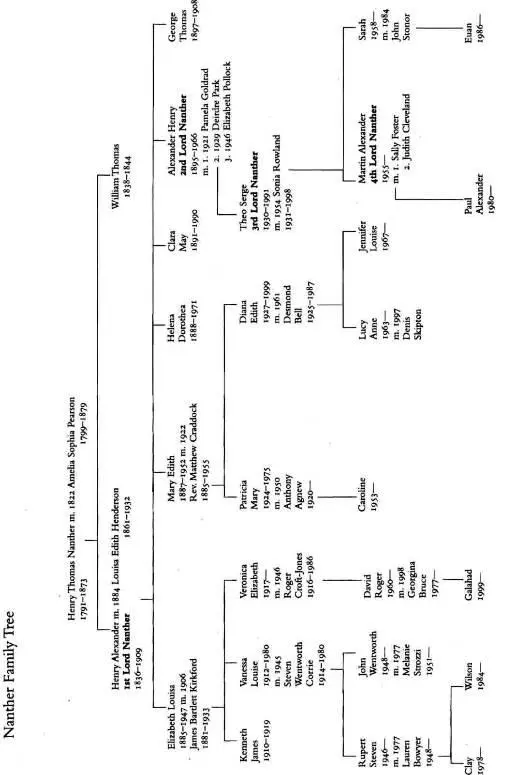
In her tenth novel writing as Barbara Vine, Ruth Rendell offers a novel of suspense based in 19th-century England and centering on deceit, murder, and various other family skeletons. Martin Nanther, the fourth Lord Nanther, has a comfortable life in present-day London as a Hereditary Peer in the House of Lords and as a historical biographer. He chooses as his most recent subject his own great-grandfather, the first Lord Nanther, physician to the royal family (Victoria and Albert) and an early noted researcher into the cause and transmission of hemophilia. The reader is taken through the family history as Martin painstakingly uncovers some not so savory bits of his own family's past. The story is dense with characters, and the author provides family trees of the two principal families, for which any reader will be eternally grateful. The story lacks the usual page-turner suspense of the Rendell/Vine novels but makes up for that with unusually detailed glimpses into Victorian life and the inner workings of the House of Parliament, which American readers will find particularly intriguing. Recommended for all public libraries. Caroline Mann, Univ. of Portland, OR
The Blood Doctor — читать онлайн бесплатно полную книгу (весь текст) целиком
Ниже представлен текст книги, разбитый по страницам. Система сохранения места последней прочитанной страницы, позволяет с удобством читать онлайн бесплатно книгу «The Blood Doctor», без необходимости каждый раз заново искать на чём Вы остановились. Поставьте закладку, и сможете в любой момент перейти на страницу, на которой закончили чтение.
Интервал:
Закладка:
When it fell to my lot to announce the prize list last Thursday, I did something I have certainly never done before in such an assembly. In the midst of the applause I congratulated your son. Unorthodox though my conduct was, I could not help myself, I was so struck by the substance of his exercises, their scholarly style, and evidence of a truly awesome command of their subject.
Easy to see why Henry kept it. In the following year he became a member of the Royal College of Surgeons and licentiate of the Society of Apothecaries in London. Very evidently, he had known what he wanted and had answered a genuine calling. While at Manchester Royal School he began to keep a diary and apparently made the first real friend of his life. This was a young Scotsman, Richard Fox Hamilton, one year older than himself, the youngest son of a cousin of Lachlan Algernon Hamilton, Lord Hamilton of Luloch. Henry notes all this in his diary, including Hamilton’s full name and details of his cousin’s peerage. Entries in those early days were much fuller, and even though they could hardly be described as emotional, at least they were less unemotional than they later became.
Henry writes in the diary of his parents and their pleasure at his success, of an increase his father has made in his allowance and, in the summer of 1859, of taking Hamilton home with him to Yorkshire to meet his father and mother and enjoy a walking holiday on the moors. It seems that Amelia took such a fancy to Richard Hamilton that Henry describes him as regarded by her as a substitute for her lost son Billy. Henry had himself apparently never been considered as a replacement.
The first post he had was as house physician at St Bartholomew’s Hospital, London, and while there he contributed two articles to the British Medical Journal , ‘Haemorrhagic Disease’ and ‘Cases of Epistaxis’. These were his first publications. I found yellowed copies of the journal in one of the trunks under a bundle of letters from Richard Hamilton. Before taking up a post at the Great Northern Hospital, he went abroad for the first time in his life. This was to spend a year studying at the University of Vienna, recognized as a world leader among medical schools. No doubt this was financed by his father who would have been much mollified by Henry’s obvious brilliance at his medical studies. At Vienna he showed an aptitude for languages, learning to speak fluent German within three months.
His mother kept every letter he sent to her and his father. Henry made copies too.
I find in myself [he wrote] an unexpected aptitude for learning foreign languages. I had not attempted it before, with the exception of Latin which is hardly to be thought of as a spoken language. Here I have made the acquaintance of a Swiss gentleman who vows to teach me his own peculiar tongue within the remainder of my stay. The language in question is Romansch or Rhaeto-Romanic, derived from the Vulgar Latin – therefore not entirely unfamiliar to me – and spoken in southern parts of Switzerland.
While at Vienna he indulged two of his favourite interests, walking and train travel. From the train to Salzburg he had a ‘glorious view’ of the monastery at Melk, which he describes in a letter home as ‘one of the most beautiful edifices this world has to offer’. He enjoyed a walking tour in the Austrian Tyrol and later made a trip to Lake Thun in Switzerland, taking with him his Baedeker, the famous travel guide first published some thirty years before. Whether he had an opportunity to use his newly acquired Romansch he doesn’t say. But these holidays established for him a lifelong fondness for Central Europe, its mountains and lakes.
If he also wrote to Hamilton the correspondence has been lost. In his absence his friend had become assistant physician at University College Hospital and the two men shared a set of rooms they took in Great Titchfield Street. Henry was back at Barts, lecturing on anatomy when he was only thirty-two. While there he wrote his first book: Diseases of the Blood . For many years it was regarded as the definitive authority on haemophilia and used by generations of medical students. Henry was made a Fellow of the Royal College of Physicians.
That same year he and Hamilton went together on a walking tour in Austria, staying at a pension outside Innsbruck. Both wrote home and Hamilton also wrote to Henry’s mother, no doubt appreciating the fondness she had for him. Henry’s friendship with Hamilton was genuine and deep but there may have been some element of admiration on Henry’s part for the Scotsman’s aristocratic relations. Several times in his letters to his parents he reminds them that Hamilton was related to Lord Hamilton of Luloch. He seems to have enjoyed hob-nobbing with the great. An occasional visitor to Great Titchfield Street was Richard’s sister Caroline, a few years younger than he, who was living as a companion to her aunt not far away in a gloomy house in Percy Street. Henry, in a burst of frankness unusual for him at any time, describes Caroline Hamilton in the diary as ‘a handsome young lady’. She is mentioned several times and he was evidently very attracted by her. He mentions her ‘elegant manners’ and her modesty, her affection for her brother and concern for her aunt, who was some kind of invalid. Was he in love with her? Perhaps. In a curious way he seems to have been a little in love with both brother and sister. He writes about them in more affectionate and more admiring terms than of any other characters who appear in the diary at that stage of his life. I have to add the caution here that about those who appear in later years he writes in no terms at all. Their presence, as for instance dining companions or acquaintances he called on, is merely noted.
He went from strength to strength in his profession, holding several offices, as lecturer in comparative anatomy in St Mary’s Hospital Medical School, consulting physician at the London Fever Hospital and physician to the Western General Dispensary. Somehow he found time to write another book, even longer than the first, and to revisit his beloved Alps. In 1872 he accepted a professorship of pathological anatomy at University College London, and at the same time set up in private practice in Wimpole Street.
Richard Hamilton had become consulting physician at Edinburgh Royal Infirmary and left for that city in 1869. His aunt had died the year before and Caroline had returned to the parental home. How Henry felt about this double departure from his life of the only two friends he had is recorded nowhere in the diary. He writes only, ‘Hamilton has departed for Edinburgh. I drove with him to the King’s Cross station this morning and saw him off on the train to the north.’ Trains were to play a significant part in Henry’s life and a disastrous one. But if the two tragedies, the first involving his best friend, the second the woman he was engaged to, put him off travelling by rail himself, there’s no hint of it in his writings. Though train journeys were among his pleasures, he owed his life – and I my existence – to his avoiding one of them.
By the time of her brother’s departure for Edinburgh, Caroline had been absent from the diary for a year. Had Henry asked her to marry him and been refused? This is the merest speculation. I’ve no reason to believe it. She never appears in the diary again, but he corresponded regularly with Hamilton and many of the letters he received from him were carefully dated and packed in one of the trunks.
Hamilton writes of his work, of his family, of the Miss Susannah Murray he had become engaged to, but whom he never married, and occasionally of Caroline. A letter of autumn 1874 describes her wedding to a doctor in Aberdeen. Hamilton was best man. No mention of this is made in the diary, in which by then the entries are growing shorter and more repressive. Henry does, however, record visits to Scotland in 1876 and 1879, commenting in the first entry at unusual length on the pleasures of train travel. He stayed at Hamilton’s parents’ home, he and Richard went on a tour of the Trossachs, and one glorious evening dined at Luloch Castle near Dundee with Lord and Lady Hamilton. Another time the two men spent a fortnight at Godby Hall with Henry’s mother, still apparently doting on Hamilton, and his now ailing father.
Читать дальшеИнтервал:
Закладка:
Похожие книги на «The Blood Doctor»
Представляем Вашему вниманию похожие книги на «The Blood Doctor» списком для выбора. Мы отобрали схожую по названию и смыслу литературу в надежде предоставить читателям больше вариантов отыскать новые, интересные, ещё непрочитанные произведения.





Обсуждение, отзывы о книге «The Blood Doctor» и просто собственные мнения читателей. Оставьте ваши комментарии, напишите, что Вы думаете о произведении, его смысле или главных героях. Укажите что конкретно понравилось, а что нет, и почему Вы так считаете.