Joanna Rakoff - My Salinger Year
Здесь есть возможность читать онлайн «Joanna Rakoff - My Salinger Year» весь текст электронной книги совершенно бесплатно (целиком полную версию без сокращений). В некоторых случаях можно слушать аудио, скачать через торрент в формате fb2 и присутствует краткое содержание. Город: New York, Год выпуска: 2014, ISBN: 2014, Издательство: Alfred A. Knopf, Жанр: Современная проза, Биографии и Мемуары, на английском языке. Описание произведения, (предисловие) а так же отзывы посетителей доступны на портале библиотеки ЛибКат.
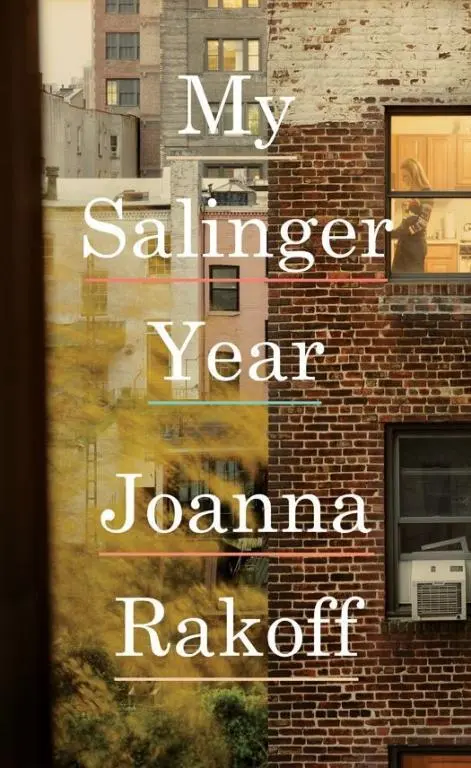
- Название:My Salinger Year
- Автор:
- Издательство:Alfred A. Knopf
- Жанр:
- Год:2014
- Город:New York
- ISBN:978-0-307-95800-6
- Рейтинг книги:4 / 5. Голосов: 1
-
Избранное:Добавить в избранное
- Отзывы:
-
Ваша оценка:
My Salinger Year: краткое содержание, описание и аннотация
Предлагаем к чтению аннотацию, описание, краткое содержание или предисловие (зависит от того, что написал сам автор книги «My Salinger Year»). Если вы не нашли необходимую информацию о книге — напишите в комментариях, мы постараемся отыскать её.
At twenty-three, after leaving graduate school to pursue her dreams of becoming a poet, Joanna Rakoff moves to New York City and takes a job as assistant to the storied literary agent for J. D. Salinger. She spends her days in a plush, wood-paneled office, where Dictaphones and typewriters still reign and old-time agents doze at their desks after martini lunches. At night she goes home to the tiny, threadbare Williamsburg apartment she shares with her socialist boyfriend. Precariously balanced between glamour and poverty, surrounded by titanic personalities, and struggling to trust her own artistic instinct, Rakoff is tasked with answering Salinger’s voluminous fan mail. But as she reads the candid, heart-wrenching letters from his readers around the world, she finds herself unable to type out the agency’s decades-old form response. Instead, drawn inexorably into the emotional world of Salinger’s devotees, she abandons the template and begins writing back. Over the course of the year, she finds her own voice by acting as Salinger’s, on her own dangerous and liberating terms.
Rakoff paints a vibrant portrait of a bright, hungry young woman navigating a heady and longed-for world, trying to square romantic aspirations with burgeoning self-awareness, the idea of a life with life itself. Charming and deeply moving, filled with electrifying glimpses of an American literary icon, My Salinger Year is the coming-of-age story of a talented writer. Above all, it is a testament to the universal power of books to shape our lives and awaken our true selves.
My Salinger Year — читать онлайн бесплатно полную книгу (весь текст) целиком
Ниже представлен текст книги, разбитый по страницам. Система сохранения места последней прочитанной страницы, позволяет с удобством читать онлайн бесплатно книгу «My Salinger Year», без необходимости каждый раз заново искать на чём Вы остановились. Поставьте закладку, и сможете в любой момент перейти на страницу, на которой закончили чтение.
Интервал:
Закладка:
“Things are changing,” she told me one afternoon, lingering by my typewriter with cigarette, as always, in hand. She’d just returned from lunch with a friend at the InterContinental. It was nearly four. Later, it would occur to me that she was perhaps a bit tipsy. We were still waiting to hear from Salinger about the “Hapworth” deal. “Literary agencies used to be honorable. Business was personal. You had lunch with an editor. You showed him a manuscript you thought he might like. He bought it. And then he’d work with that writer for years . For that writer’s whole career!” I nodded, thinking of Maxwell Perkins and Thomas Wolfe. “Now people just jump around. You sell a book to an editor, the editor leaves. The writer gets passed around to three different editors before the book comes out.” She shook her head in exasperation, a smooth wave of ash brown falling in her face. Her hair was beautiful—shiny, smooth, ungrayed—though cut in an odd style, almost a bowl cut. “Then the publisher says the book didn’t sell well enough and they don’t want the next one.”
I nodded my head in sympathy.
“And agents used to be upstanding . None of these multiple submissions”—she wrinkled her nose with distaste at this term—“no auctions, with publishers bidding against each other. It’s uncouth. That’s not the Agency way. We send things out to one editor at a time. We match writers with editors. We have morals .”
I knew Max held auctions for his books—and knew that my boss knew this—but I simply nodded. In truth, I didn’t fully comprehend her objection to auctions. The idea, as I understood it, was to get the most money for the author. Why was that bad? She answered my question without my having to ask it.
“No good comes of it, anyway. They say it’s good for the writers, but”—she waved her hand dismissively—“it just creates these inflated advances that never earn out.”
Taking off her glasses, she rubbed the inside corners of her eyes with one slender thumb and forefinger. Until that moment, I’d never seen her without her glasses. She looked at least ten years younger, her pale eyes twice as large when not dwarfed by the massive frames. They were green, I saw now, not blue. I’d thought her my mother’s age—sixty-five or so—but now I wondered if she wasn’t younger, perhaps even much younger, got up in the garb of the elderly: the orthopedic shoes, the caftans, the dinner rings. Was this all some sort of costume? To what end? “Listen. You give a writer money, he’s going to spend it. That’s just how writers are. If you give him a lot of money up front, he’s just going to spend it all. Better to give the writer a little money up front. Enough to live on, but not enough to think he’s rich. Enough so that he won’t take forever to write his next book.”
For my boss, the Agency was not just a business, it was a way of life, a culture, a community, a home. It had more in common with an Ivy League secret society or—though it would take me time to see the extent of this—a religion , with its practices defined and its gods to worship, Salinger being the first and foremost; Fitzgerald as a sort of demigod; Dylan Thomas, Faulkner, Langston Hughes, and Agatha Christie, lesser deities. The agents, of course, were mere priests, there to serve the gods, which meant that they were interchangeable. And which, in turn, meant that my boss—in her view—was as qualified as Claire to represent Claire’s clients. But more important, she believed that those clients saw the world from her perch: that their loyalty was to the Agency first, to Claire second.
She was truly shocked that their loyalties were, first, to themselves, to their work. I couldn’t tell her much—I was twenty-four—but I could have told her that.
Don was tired. Tired of working menial jobs, tired of having no—or little—money. He was determined to finish his novel by the summer, to get it out to agents. Now, when I got home from work, I found him not at the gym but sitting at his desk, staring at the screen and chewing on his nails or frantically typing, barely able to tear himself away and say hello to me. “I can’t change gears just because you’re home,” he explained testily. “I’m working.” I understood this and I appreciated the freedom, too, that it gave me to work or read. Though it still smarted, somehow, that he didn’t want to rip himself from his novel and kiss me, to sit down on the couch with me and hear about my day.
One night in May, the phone rang as I left the office. “Meet me at the L,” he said. “I have to get out of the house. Maybe we can just sit and work?”
“That would be great,” I said. An hour later, I walked through the café’s creaky wooden door and found him sitting at one of its small, round tables, his head bent over his laptop, hair falling in his face, journal splayed open on his lap. “Buba,” he said, standing up and taking me in his arms. “You’re all flushed from the rain.”
We drank coffee and ate bagels with cream cheese and roasted peppers—the L’s culinary specialty—Don as always staring at his screen, occasionally typing a word or two; me, trying to figure the bones of a poem on a legal pad. Every so often, he took my hand and gave it a squeeze across the small table. His hands were no bigger than mine; no longer in finger and thumb, but wider and always warm, like a child’s. For a moment, I thought of my college boyfriend’s hands, which were long and elegant and cool; I had loved watching him turn the pages of a book or slice an apple, loved feeling them on my ribs, my neck. My breath slowed with desire. Stop , I told myself, taking a bracing sip of coffee. I had not imagined life with Don. There was no time for that: he had entered my life like a gale force, making me question all the small assumptions I’d held to be true without ever quite knowing it. That it was important to pay one’s taxes and sleep eight hours each night and fold one’s sweaters with tissue. But if I’d considered what drew me to Don, it would be this: that for him a night spent in a café working on a novel was the greatest pleasure. We wanted the same thing, I thought. And we wanted it more than anything. The life of the writer.
A few minutes later—my poem somewhat complete—I looked up from my legal pad to see Don staring off into what appeared to be the middle distance. Turning, I followed his gaze to the counter, where a woman stood ordering coffee. Williamsburg was small and I’d seen this woman here before. She was tall and thin, with striking features: a large, hawkish nose; small, deep-set eyes; a long, curving slash of a mouth. Her hair was black and straight, but with dramatic streaks of yellow at her temples. She had the look of a gallery girl: fashionable and severe, her legs long in slim-cut pants. “Do you know her?” I asked Don.
“No, but I kind of want to,” he said. “Looking at her, I was just thinking about how plenty of ugly men are sexy. When you’re a man, you can be, objectively, ugly, but also be really sexy. Like Gérard Depardieu. But most ugly women are just, well, ugly.” He laughed, folding his hands behind his head and stretching. “But then there are the few who aren’t.”
“Like her,” I said slowly. I couldn’t quite believe that Don—my boyfriend, ostensibly—was assessing the attractiveness of the woman standing behind me. But he was.
“Yeah, look at her.” He leaned in across the table toward me. “She has an amazing body but her nose is huge and yet it somehow makes her more attractive.”
“Hmm,” I said, hastily sliding my legal pad into my bag. “I’m going home.”
Don looked at me. “I’ll come with you.”
“No, you stay. There’s a lot”—I splayed my arms open—“to interest you here. I’ll see you later.”
Читать дальшеИнтервал:
Закладка:
Похожие книги на «My Salinger Year»
Представляем Вашему вниманию похожие книги на «My Salinger Year» списком для выбора. Мы отобрали схожую по названию и смыслу литературу в надежде предоставить читателям больше вариантов отыскать новые, интересные, ещё непрочитанные произведения.









Обсуждение, отзывы о книге «My Salinger Year» и просто собственные мнения читателей. Оставьте ваши комментарии, напишите, что Вы думаете о произведении, его смысле или главных героях. Укажите что конкретно понравилось, а что нет, и почему Вы так считаете.