Kenzaburo Oe - Somersault
Здесь есть возможность читать онлайн «Kenzaburo Oe - Somersault» весь текст электронной книги совершенно бесплатно (целиком полную версию без сокращений). В некоторых случаях можно слушать аудио, скачать через торрент в формате fb2 и присутствует краткое содержание. Жанр: Современная проза, на английском языке. Описание произведения, (предисловие) а так же отзывы посетителей доступны на портале библиотеки ЛибКат.
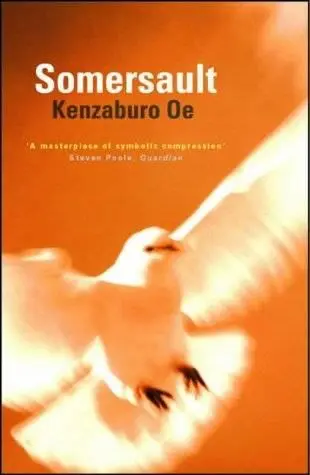
- Название:Somersault
- Автор:
- Жанр:
- Год:неизвестен
- ISBN:нет данных
- Рейтинг книги:4 / 5. Голосов: 1
-
Избранное:Добавить в избранное
- Отзывы:
-
Ваша оценка:
Somersault: краткое содержание, описание и аннотация
Предлагаем к чтению аннотацию, описание, краткое содержание или предисловие (зависит от того, что написал сам автор книги «Somersault»). Если вы не нашли необходимую информацию о книге — напишите в комментариях, мы постараемся отыскать её.
From Publishers Weekly
Nobelist Oe's giant new novel is inspired by the Aum Shinrikyo cult, which released sarin gas in Tokyo 's subway system in 1995. Ten years before the novel begins, Patron and Guide, the elderly leaders of Oe's fictional cult, discover, to their horror, that a militant faction of the organization is planning to seize a nuclear power plant. They dissolve the cult very publicly, on TV, in an act known as the Somersault. Ten years later, Patron decides to restart the fragmented movement, after the militant wing kidnaps and murders Guide, moving the headquarters of the church from Tokyo to the country town of Shikoku. Patron's idea is that he is really a fool Christ; in the end, however, he can't escape his followers' more violent expectations. Oe divides the story between Patron and his inner circle, which consists of his public relations man, Ogi, who is not a believer; his secretary, Dancer, an assertive, desirable young woman; his chauffeur, Ikuo; and Ikuo's lover, Kizu, who replaces Guide as co-leader of the cult. Kizu is a middle-aged artist, troubled by the reoccurrence of colon cancer. Like a Thomas Mann character, he discovers homoerotic passion in the throes of illness. Oe's Dostoyevskian themes should fill his story with thunder, but the pace is slow, and Patron doesn't have the depth of a Myshkin or a Karamazov-he seems anything but charismatic. It is Kizu and Ikuo's story that rises above room temperature, Kizu's sharp, painterly intelligence contrasting with Ikuo's rather sinister ardor. Oe has attempted to create a sprawling masterpiece, but American readers might decide there's more sprawl than masterpiece here.
Somersault — читать онлайн бесплатно полную книгу (весь текст) целиком
Ниже представлен текст книги, разбитый по страницам. Система сохранения места последней прочитанной страницы, позволяет с удобством читать онлайн бесплатно книгу «Somersault», без необходимости каждый раз заново искать на чём Вы остановились. Поставьте закладку, и сможете в любой момент перейти на страницу, на которой закончили чтение.
Интервал:
Закладка:
"They're pretty small crabs, and so many of them. They're not even boiled, yet look how red they are. Anyone would think it's blood flowing."
Her slender taut calves emerged from under her pajama bottoms. Her whole body, from her thighs, butt, and waist-trained through her dancing- to her straight shoulders and thin neck, was a strange mix of firmness and fragility.
"You spent your childhood in Tokyo," Ogi said, "and earlier in down- town Asahikawa, right? I imagine you've never seen crabs float up like this before."
"So you know all about the flora and fauna in Hokkaido. But do you know the names of the birds that were just here? The Japanese great tit."
Standing beside the window, Dancer turned toward Ogi, seated on his box bed, the color quickly returning to her face.
"I agree with Asa-san that this is a special place," she said, trying to regain the upper hand. "I guess I jumped to conclusions. I find it amazing how the abandoned followers of Patron and Guide, while the two of them were in hell, laid the groundwork right here, in this land. You know something? In the middle of the night, I saw a sign that the land here accepts our church!"
Ogi recalled what he'd seen the night before. But he'd also been there when Dancer had been handed the complete set of keys to the chapel. It was hard to imagine that someone else had gotten into the chapel and turned on the lights in the middle of the night.
Leaving Ogi to his thoughts, Dancer disappeared toward the bathroom near the entrance, her pajamas swishing like a dance costume.
As they ate a repeat of last night's supper, they heard a new disturbance from the far shore. Dancer was sitting at the dining table diagonally across from Ogi, her back to the east as they ate, and they both turned to look at the glistening trees and the building, newly washed in the rain. In the forest be- hind the chapel, people hidden by the stand of trees were rushing by. In the wind blowing up from the south there was the sound of feet, a line of people tutting through the forest.
"Lumberjacks, maybe?" she asked. "Heading toward jobs in the woods?"
"If that's what it is, it'd just be a couple of them. And wouldn't they use animal trails to go up the hill?"
"People hunting wild boars?"
"It sounds too orderly, like a troop of Boy Scouts out on a hike."
"I thought this was a quiet place, but I guess not."
"But at least we're not being surrounded by people with placards op- posing the arrival of the 'fanatics,'" Ogi said.
Dancer said she wanted to go over that morning to see if the cottage Asa-san had suggested for Patron to use was suitable. Before she went down along the narrow path toward the dam she went out to look at the crabs close up, only to report back to Ogi that they must have slipped into new holes that had opened up in the soil because they'd disappeared. Her shoes were muddy, and in one hand she held a newly emerged brown cicada on a butterbur leaf.
One of the cicada's forelegs was missing its first joint, and as it tried to clam- ber up the higher edge of the butterbur leaf it tumbled down in a comical way.
"I imagine it must have been pretty surprised after spending a thousand days tucked away under the soil to emerge and find it doesn't have enough legs to cling to the trees. Would you choose a branch where its cry can be heard easily and put it there? The reason they cry is in order to mate, right?"
Ogi took the cicada, leaf and all, and placed the poor little creature on the branch of an oak that faced the lake, the leaves heavy after the rain.
When they stood at the entrance to the house set aside for Patron, an entrance made up of round stones held together with cement, they remem- bered they had left all the keys for the other buildings on top of the lectern in the chapel. Dancer went back to retrieve them.
For the five minutes she was gone, the sound of the water coursing down the channel from the forest into the lake grew noticeably louder. Worried about Dancer, Ogi peeked in from the entrance of the chapel carved into the wall. In front of the space between the lined-up chairs and the far wall, Dancer was down on her knees, leaning against the lectern. Ogi removed his shoes, went inside, and found her gazing up at him like some young girl who'd been beaten as she pointed in front of her. On the floor lay a small unblemished little skull facing in their direction. Thigh bones, ribs, and other large bones were laid out to form a complete skeleton, the finger bones and other smaller bones pushed over to one side. Next to this were fragments of bones, like small branches, laid out to spell YOUNG FIREFLIES.
Dancer's shoulders shuddered slightly, and in a tearful voice she said, "I thought that was a sign, but all it was was them stealing the keys to this place and doing this. In the morning we weren't likely to come over here, so they grew impatient and kicked up a racket. I can't believe how cunning these people are who don't want Patron's church here."
2
After Ogi made a call from the office beside the chapel, Asa-san got in touch with Mr. Matsuo, the head priest, and they both rushed over. They didn't think the bones had anything to do with a crime, but they didn't dis- turb them until finally Asa-san told Mr. Matsuo to gather them all up in a cardboard box. Ogi returned to the office where he'd made the phone call, and Asa-san told them about the YOUNG FIREFLIES.
"That's a name found in legends from the Old Town, the section apart from Maki Town. The name and practice died out long ago, but when one of the elderly people in the main house of my family passed away, they re- vived the practice at his funeral because he put great stock in the old customs.
I think I have a good idea where those bones came from.
"I'm sure you got this impression yesterday when you looked up from the road along the riverbed, but the land around here is shaped like the in- side of an urn. Young Fireflies refers to a custom where the young people ot the town light torches and climb up to the top of the forest at night. The young people here just liked the name, apart from the ceremony associated with it, and gave it to their young men's association.
"Children are basically very conservative, you know. Your moving in here marks a change in the status quo, so they're against it. I'd heard rumors that they were eager to do something to express their opposition. If this is what they came up with, I'd have to say it's pretty scurrilous. Scurrilous is the word old people use here when something's vulgar… "Since it's come to this, I'll have my husband talk with the junior high principal.
"Be that as it may, I was in charge of the keys for this building. I thought if I let them make spare keys for the chapel, they might use it for their junior high chorus practice. But they've repaid good with evil, you could say. It's all quite scurrilous, and I'm ashamed and truly sorry you had to be upset this way."
The next day, Patron, accompanied by Ms. Tachibana and Morio, arrived at the Matsuyama airport. Twenty or so former radical-faction members joined them there, having driven down from Tokyo in a caravan of sedans and a minivan. After linking up with Kizu, Ikuo, Dr. Koga, and Mr. Hanawa, who'd arrived at Matsuyama Station on the Yosan Line, the entire group arrived at the Hollow in force.
Apart from Dancer and Ogi, this was the first contingent of the new church to arrive in the area, and a few local people waited along the road by the riverbed to watch their arrival. In the lead car Morio sat next to Patron in the backseat, dressed quite stylishly in a long midnight-blue overcoat, gray chinos, and lightly tinted metal-frame glasses. Seeing him sitting there gaz- ing up with his splendid forehead and strongly etched nose, someone reported later to Asa-san that he was sure Morio must be the founder of the church.
Читать дальшеИнтервал:
Закладка:
Похожие книги на «Somersault»
Представляем Вашему вниманию похожие книги на «Somersault» списком для выбора. Мы отобрали схожую по названию и смыслу литературу в надежде предоставить читателям больше вариантов отыскать новые, интересные, ещё непрочитанные произведения.





Обсуждение, отзывы о книге «Somersault» и просто собственные мнения читателей. Оставьте ваши комментарии, напишите, что Вы думаете о произведении, его смысле или главных героях. Укажите что конкретно понравилось, а что нет, и почему Вы так считаете.