Sarah Waters - The Night Watch
Здесь есть возможность читать онлайн «Sarah Waters - The Night Watch» весь текст электронной книги совершенно бесплатно (целиком полную версию без сокращений). В некоторых случаях можно слушать аудио, скачать через торрент в формате fb2 и присутствует краткое содержание. Жанр: Современная проза, на английском языке. Описание произведения, (предисловие) а так же отзывы посетителей доступны на портале библиотеки ЛибКат.
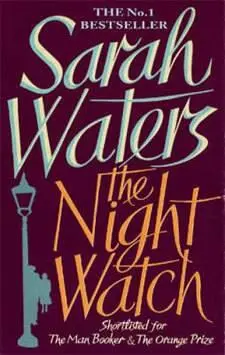
- Название:The Night Watch
- Автор:
- Жанр:
- Год:неизвестен
- ISBN:нет данных
- Рейтинг книги:4 / 5. Голосов: 1
-
Избранное:Добавить в избранное
- Отзывы:
-
Ваша оценка:
The Night Watch: краткое содержание, описание и аннотация
Предлагаем к чтению аннотацию, описание, краткое содержание или предисловие (зависит от того, что написал сам автор книги «The Night Watch»). Если вы не нашли необходимую информацию о книге — напишите в комментариях, мы постараемся отыскать её.
The structure of The Night Watch is worth remarking upon as it begins at the end in 1947. The second section takes us back to 1944, and the third and final section is set in 1941. The decision to use this type of structure is brave, even foolhardy, because of the problems in pulling it off convincingly, but Waters’ subtlety and restraint in pulling back the layers reveals the extent of her authorial control.
This novel is essentially concerned with five main characters (Kay, Viv, Helen, Julia and Viv’s brother, Duncan) and their separate private lives. The connections between these people are also elemental to the narrative. Coincidence plays a significant role in the unfolding of past events as their lives are shown to overlap. This use of coincidence has been a feature of Waters’ previous novels, but this time she uses it casually, and as an extra element, rather than for the purposes of manipulating the plot out of hand as was deemed necessary in a melodrama such as Fingersmith.
The love stories of Kay, Viv and Helen are central and, as the narrative traces back to 1941, we learn how their present views of relationships have been shaped by these past events. As with her previous novels, Waters continues to use lesbian relationships as a main focus of the narrative, but shifts away to examine the affair between Viv and Reggie, and the horrific illegal abortion she undergoes to spare her father from further shame.
Repression becomes a touchstone as many of the characters keep a secret or carry a weight of shame. The converse of this theme of fear of discovery is the examination of bravery. This is most notable in the second and third sections which are, necessarily, concerned with the bombing of London. A re-evaluation of the definition of courage is undertaken and is perhaps most poignant in the prison scene, where Duncan ’s cell mate, conscientious objector Fraser, asks himself if he is ‘simply a – a bloody coward’ when he is overwhelmed by the fear of death. The deconstruction of received morality, of what is to be brave or selfish in this time of heightened emotions, is also examined when Helen considers the effect the war has had on her ethics: ‘In the first blitz, she’d tried to help everyone; she’d given money to people, sometimes, from her own purse. But the war made you careless. You started off, she thought sadly, imagining you’d be a kind of heroine. You end up thinking only of yourself.’
The reason for Duncan ’s imprisonment is one of the well-kept secrets of the novel and is only (partially) explained in the third section. This use of the hidden truth and the hints at the unspoken strengthen the evocation of the period, where loose lips could potentially sink ships, and walls had ears. When revelations are made, they are, more often than not, as subdued as the repressed tone permits and this allows the novel to maintain the same pace throughout.
Despite this steady pace, Waters still enables the readers to see how the war also had a liberating effect on women such as Kay. Her gallantry and masculine demeanour was of use during the bombings whilst she worked as an ambulance driver, but in the beginning of the novel, in 1947, it is clear that with the return to peace time her short hair and male clothing are once more worthy of ridicule.
As with all of Waters’ novels, The Night Watch has been praised by critics for the attention to detail and meticulous research. This work stretches beyond the limits of the previous three, though, and is certainly her most impressive to date. Her control in depicting the central characters gradually is in itself an indicator of skilful writing. As this is also combined with a believable and interested evocation of period and place, this novel must be recommended highly.
The Night Watch — читать онлайн бесплатно полную книгу (весь текст) целиком
Ниже представлен текст книги, разбитый по страницам. Система сохранения места последней прочитанной страницы, позволяет с удобством читать онлайн бесплатно книгу «The Night Watch», без необходимости каждый раз заново искать на чём Вы остановились. Поставьте закладку, и сможете в любой момент перейти на страницу, на которой закончили чтение.
Интервал:
Закладка:
'No, I couldn't bear it,' said Julia.
'They've got nowhere else, though. And look, it's all old ladies and men, and children.'
'It's horrible. People being made to live like moles. It's like the Dark Ages. It's worse than that. It's prehistoric.'
There was something elemental, it was true, to the heavily-laden figures, as they made their uncertain way into the dimly-lighted mouth of the Underground. They might have been mendicants or pedlars; refugees from some other, medieval, war-or else, from some war of the future, as imagined by HG Wells or a fanciful writer like that… Then Helen caught snatches of their conversation: ' Head over heels! How we laughed! '; ' A pound of onions and a saddle of pork '; ' He said, “It's got fancy teeth . ” I said, “It ought to have better teeth than I've got, at that price … ” '
She pulled at Julia's arm. 'Come on.'
'Where to?'
'The river.'
They walked to the middle of the bridge, then turned off their torches and looked out, westwards. The river ran gleamlessly beneath a starless sky, so black it might have been of treacle or of tar-or else, might not have been a river at all, but a channel, a gash in the earth, impossible to fathom… The sensation of feeling yourself supported at a height above it, by an almost-invisible bridge, was very unnerving. Helen and Julia had unlinked their arms, to lean and peer; now they moved close together again.
But as Helen felt the pressure of Julia's shoulder against her own she remembered, with awful vividness, standing on the quaint little bridge on Hampstead Heath, a few hours before, with Kay. She said quietly, 'Damn.'
'What's the matter?' asked Julia. But she spoke quietly, too: as if she knew what the matter was. And when Helen didn't answer she said, 'Do you want to go back?'
'No,' said Helen, after a little hesitation. 'Do you?'
'No.'
So they were still for another moment, but then started to walk again: back, at first, the way they had come; back to the bottom of Ludgate Hill. But here, without debate, they turned, and headed up towards St Paul 's.
The streets grew quieter again and, once they'd passed under the railway bridge, the mood of the city seemed transformed. There was a sense-for it could not be seen, so much as felt-of exposed ground, unnatural space. The pavements were edged with fences and hoardings, but Helen found her thoughts slipping past the the flimsy panels of wood to the rubble, the burnt and broken things, the uncovered girders and yawning basements and smashed brick, beyond… She and Julia walked without speaking, awed by the strangeness of the place. They stopped at the base of the cathedral steps and Helen looked up, trying to trace the outline of the huge, irregular silhouette against the dark of the sky.
'I looked at this, this afternoon,' she said, 'from Parliament Hill.' She didn't say she had also looked, anxiously, for Mecklenburgh Square; she'd forgotten it herself, for the moment. 'How it seemed to loom over London! Like a great big toad.'
'Yes,' said Julia. She seemed to shudder. 'I'm never very sure I like it here. Everyone says how grateful they are, that St Paul 's hasn't been touched, but- I don't know, it seems freakish to me.'
Helen looked at her. 'You can't wish it had been bombed?'
'I'd rather it had been bombed, naturally, than a family in Croydon or Bethnal Green. Meanwhile it sits here, like-not like a toad, but like some great Union Jack, or-like Churchill, “ Britain can take it”, all of that-somehow making it all right that the war's still going on…'
'It does make it all right, though-doesn't it?' asked Helen quietly. 'In the sense, I mean, that while we've still got St Paul 's- I'm not talking about Churchill, or flags. But while we've still got this and all it stands for: I mean, elegance, and reason, and-and great beauty-then the war is still worth fighting. Isn't it?'
'Is that what this war's about?' asked Julia.
'What do you think it's about?'
'I think it's about our love of savagery, rather than our love of beauty. I think the spirit that went into the building of St Paul 's has shown itself to be thin: it's like gold leaf, and now it's rising, peeling away. If it couldn't keep us from the last war, and it couldn't keep us from this-from Hitler and Hitlerism, from Jew-hatred, from the bombing of women and children in cities and towns-what use is it? If we have to fight so hard to keep it-if we have to have elderly men patrolling the roofs of churches, to sweep incendiaries from them with little brushes!-how valuable can it be? How much at the centre of the human heart?'
Helen shivered-impressed, suddenly, by the awful sadness of Julia's words; and glimpsing a sort of darkness in her-a frightening, baffling darkness. She touched her arm.
'If I thought like that, Julia,' she said softly, 'I'd want to die.'
Julia was still for a moment; then moved-took a step, swept her foot, kicked gravel. 'I suppose,' she said, in a lighter voice, 'I don't think like it, really; or I'd want to die, too. It's a thing one can't think, can one? Instead one concentrates one's mind'-she must have been remembering the men and women they'd seen going into the Underground with pillows-'on the price of combs; on pork and onions. On cigarettes.-Do you want one, by the way?'
They laughed, and the darkness passed. Helen drew back her hand. Julia brought out a packet from her pocket, fumbling slightly because of her gloves. She struck a match, and her face sprang startlingly into life, yellow and black. Helen bent her head to the flame, then straightened up and made to move on. The light had made her feel blind again. When Julia tugged at her arm, she let herself be led.
Then she saw where Julia was heading: eastwards, towards the ground beyond St Paul 's. 'This way?' she asked, in surprise.
'Why not?' answered Julia. 'There's somewhere, now, I'd like to take you. If we keep to the road, I think we'll be all right.'
So they left the cathedral behind and started on the line of stone and broken tarmac that had once been Cannon Street, but was now more like the idea or the ghost of a road, on a landscape that might have been flat open country. Within a minute or two the sky seemed to have expanded over their heads, giving the illusion of light; as before, however, they could not see so much as sense the devastation that lay about them: they tried to peer into the utter darkness of the ground, and their gazes slid about. Two or three times Helen put her hand to her eyes as if to wipe veils or cobwebs from them. They might have been walking through murky water, so absolutely strange and dense was the quality of the night here, and so freighted with violence and loss.
They kept the beams of their torches very low, following the whitened line of the kerb. Every time a car or a lorry passed they slowed their step, pressed themselves against the feeble-seeming fences that had been put there to separate pavement from rubble, and felt earth and bramble and broken stone beneath their shoes. When they spoke, they spoke in murmurs.
Julia said, 'I remember making this walk, on New Year's Day in 1941. The road was almost impassable, even on foot. I came to look at the damaged churches. I think even more have gone since then. Back there'-she nodded over her left shoulder-'must be the remains of St Augustine 's. It was bad enough when I saw it then; it was bombed again, wasn't it, right at the end of the last blitz?'
'I don't know,' said Helen.
'I think it was. And ahead of us, there-can you see?' She gestured. 'You can just make it out-that must be all that's left of St Mildred, Bread Street. That was awfully sad…'
She named more churches as they walked: St Mary-le-Bow, St Mary Aldermary, St James, St Michael; she seemed to be able to identify, quite clearly, the shapes of their battered towers and attenuated spires, while Helen struggled to pick them out at all. Now and then she flicked the beam of her torch across the waste-ground, to guide Helen's eye; the light caught fragments of broken glass, patches of frost, and found colour: the green and brown and silver of nettle, bracken, thistle. Once it lit up the eyes of some creature.
Читать дальшеИнтервал:
Закладка:
Похожие книги на «The Night Watch»
Представляем Вашему вниманию похожие книги на «The Night Watch» списком для выбора. Мы отобрали схожую по названию и смыслу литературу в надежде предоставить читателям больше вариантов отыскать новые, интересные, ещё непрочитанные произведения.






Обсуждение, отзывы о книге «The Night Watch» и просто собственные мнения читателей. Оставьте ваши комментарии, напишите, что Вы думаете о произведении, его смысле или главных героях. Укажите что конкретно понравилось, а что нет, и почему Вы так считаете.