Sarah Waters - The Night Watch
Здесь есть возможность читать онлайн «Sarah Waters - The Night Watch» весь текст электронной книги совершенно бесплатно (целиком полную версию без сокращений). В некоторых случаях можно слушать аудио, скачать через торрент в формате fb2 и присутствует краткое содержание. Жанр: Современная проза, на английском языке. Описание произведения, (предисловие) а так же отзывы посетителей доступны на портале библиотеки ЛибКат.
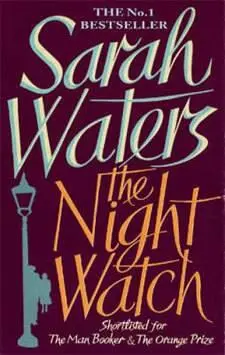
- Название:The Night Watch
- Автор:
- Жанр:
- Год:неизвестен
- ISBN:нет данных
- Рейтинг книги:4 / 5. Голосов: 1
-
Избранное:Добавить в избранное
- Отзывы:
-
Ваша оценка:
The Night Watch: краткое содержание, описание и аннотация
Предлагаем к чтению аннотацию, описание, краткое содержание или предисловие (зависит от того, что написал сам автор книги «The Night Watch»). Если вы не нашли необходимую информацию о книге — напишите в комментариях, мы постараемся отыскать её.
The structure of The Night Watch is worth remarking upon as it begins at the end in 1947. The second section takes us back to 1944, and the third and final section is set in 1941. The decision to use this type of structure is brave, even foolhardy, because of the problems in pulling it off convincingly, but Waters’ subtlety and restraint in pulling back the layers reveals the extent of her authorial control.
This novel is essentially concerned with five main characters (Kay, Viv, Helen, Julia and Viv’s brother, Duncan) and their separate private lives. The connections between these people are also elemental to the narrative. Coincidence plays a significant role in the unfolding of past events as their lives are shown to overlap. This use of coincidence has been a feature of Waters’ previous novels, but this time she uses it casually, and as an extra element, rather than for the purposes of manipulating the plot out of hand as was deemed necessary in a melodrama such as Fingersmith.
The love stories of Kay, Viv and Helen are central and, as the narrative traces back to 1941, we learn how their present views of relationships have been shaped by these past events. As with her previous novels, Waters continues to use lesbian relationships as a main focus of the narrative, but shifts away to examine the affair between Viv and Reggie, and the horrific illegal abortion she undergoes to spare her father from further shame.
Repression becomes a touchstone as many of the characters keep a secret or carry a weight of shame. The converse of this theme of fear of discovery is the examination of bravery. This is most notable in the second and third sections which are, necessarily, concerned with the bombing of London. A re-evaluation of the definition of courage is undertaken and is perhaps most poignant in the prison scene, where Duncan ’s cell mate, conscientious objector Fraser, asks himself if he is ‘simply a – a bloody coward’ when he is overwhelmed by the fear of death. The deconstruction of received morality, of what is to be brave or selfish in this time of heightened emotions, is also examined when Helen considers the effect the war has had on her ethics: ‘In the first blitz, she’d tried to help everyone; she’d given money to people, sometimes, from her own purse. But the war made you careless. You started off, she thought sadly, imagining you’d be a kind of heroine. You end up thinking only of yourself.’
The reason for Duncan ’s imprisonment is one of the well-kept secrets of the novel and is only (partially) explained in the third section. This use of the hidden truth and the hints at the unspoken strengthen the evocation of the period, where loose lips could potentially sink ships, and walls had ears. When revelations are made, they are, more often than not, as subdued as the repressed tone permits and this allows the novel to maintain the same pace throughout.
Despite this steady pace, Waters still enables the readers to see how the war also had a liberating effect on women such as Kay. Her gallantry and masculine demeanour was of use during the bombings whilst she worked as an ambulance driver, but in the beginning of the novel, in 1947, it is clear that with the return to peace time her short hair and male clothing are once more worthy of ridicule.
As with all of Waters’ novels, The Night Watch has been praised by critics for the attention to detail and meticulous research. This work stretches beyond the limits of the previous three, though, and is certainly her most impressive to date. Her control in depicting the central characters gradually is in itself an indicator of skilful writing. As this is also combined with a believable and interested evocation of period and place, this novel must be recommended highly.
The Night Watch — читать онлайн бесплатно полную книгу (весь текст) целиком
Ниже представлен текст книги, разбитый по страницам. Система сохранения места последней прочитанной страницы, позволяет с удобством читать онлайн бесплатно книгу «The Night Watch», без необходимости каждый раз заново искать на чём Вы остановились. Поставьте закладку, и сможете в любой момент перейти на страницу, на которой закончили чтение.
Интервал:
Закладка:
There was no reason, she thought, as she climbed the stairs, for feeling self-conscious about it. Julia had never said, for example, that she would prefer it if Helen left her study alone. The subject had never arisen between them; on the contrary, there were times when Julia had gone out to some meeting or other and had telephoned to say, 'I'm sorry Helen, I've been an idiot and left a paper behind. Would you mind running up to my room and fishing it out?' That showed she didn't mind the thought even of Helen going through the drawers of her desk; and certainly, though the drawers had keys to them, the keys were never turned.
Still, there was something furtive, something troubling, about visiting Julia's study when Julia wasn't there. It was like going alone to your parents' bedroom when you were a child: you suspected that things went on there-precise, unguessable things, that were both about you and yet excluded you utterly… So Helen felt, anyway. She'd feel this even while, as now, she was simply standing in the room-not lifting up papers or peering gingerly into unsealed envelopes-just standing still in the middle of the room and looking around.
The room took up almost all of the attic floor. It was dim, quiet, with sloping ceilings-a real writer's garret, she and Julia liked to joke. The walls were a pale shade of olive; the carpet was a genuine Turkey rug, only slightly worn. A desk like a bank-manager's, and a swivel chair, were in front of one of the windows; an aged leather sofa was in front of the other-for Julia wrote in bursts, and in between liked to doze or read. A table at the sofa's end held dirty cups and glasses, a saucer of biscuit crumbs, an ash-tray, ash. The cups and stubs of cigarettes had Julia's lipstick on them. A tumbler had a smudge left by her thumb. Everywhere, in fact, there were bits of Julia-Julia's dark hairs on the sofa cushions and the floor; her kicked-off espadrilles beneath the desk; a clipping of nail beside the waste-paper basket, an eye-lash, powder from her face…
If I were to hear , Helen said to herself, that Julia had died today, I'd come in here, in exactly this way, and all this rubbish would be the stuff of tragedy . As it was, she gazed from thing to thing and felt the chafing within her of a familiar but uneasy mix of emotions: fondness, annoyance, and fear. She thought of the haphazard way in which Julia had used to write, in that studio flat in Mecklenburgh Square she'd been describing to Viv, today, on the fire-escape. She remembered lying on a divan bed while Julia worked at a rickety table by the light of a single candle-her hand, as it rested on the page, seeming to cradle the flame, her palm a mirror, her handsome face lit up… She would come to bed at last, after writing for hours like that, and lie tired-out but sleepless, distracted and remote; Helen would sometimes softly lay a hand on her forehead and seem to be able to feel the words jostling and buzzing about behind it like so many bees. She didn't mind. She almost liked it. Because the novel after all was only a novel; the people in it weren't real; it was she, Helen, who was real, she who was able to lie at Julia's side like that and touch her face…
She moved closer to Julia's desk. It was, like everything of Julia's, untidy, the blotting-paper over-inked, a pot of treasury-tags upturned, a heap of papers mixed with dirty handkerchiefs and envelopes, dried apple peel and tape. In the middle of it all was one of Julia's cheap blue Century notebooks. Sicken 2 , she had put on its cover: it held her plans for the novel she was working on now, a novel set in a nursing-home and called Sicken and So Die … Helen had come up with that title. She knew all the ins and outs of the complicated plot. She opened the book and looked inside it, and the apparently cryptic jottings- Inspector B to Maidstone – check RT , and Nurse Pringle – syrup, notneedle!! -made perfect sense to her. There was nothing here that she didn't understand. It was all as ordinary and as familiar to her as her own lopsided face.
Why, then, did Julia seem to recede from her, the closer she drew to objects like this? And where the hell was Julia now? She opened the notebook again and began to look more desperately through its pages, as if searching for clues. She picked up an inky handkerchief and shook it out. She looked beneath the blotting-pad. She opened drawers. She lifted a paper, an envelope, a book-
Underneath the book was the Radio Times from a fortnight before, folded open at the article about Julia.
URSULA WARING introduces Julia Standing's thrilling new novel-
And there, of course, was the little photograph. Julia had gone to a Mayfair man to have it done, and Helen had gone with her, 'for the fun of it'… The afternoon had been no fun at all. Helen had felt like a dowdy schoolgirl accompanying a good-looking friend to the hairdresser's-holding Julia's bag while the man made her pose and move about; having to watch while he smartened her hair, tilted her jaw, took her hands in his, the better to place them… The finished pictures were flattering, though Julia pretended not to like them; they made her look glamorous-but not glamourous, Helen thought, in the way she really, effortlessly was-as she lounged about the flat, say, in her unironed trousers and patched shirts. They made her look marriagable ; Helen didn't know if there was any better term. And she had thought, in great dismay, of all the ordinary people who must have picked up the Radio Times and opened it at Julia's face and said to themselves, idly and admiringly, 'What a handsome woman!' She'd pictured them as so many grubby fingers, rubbing down the image on a coin; or as quarrelling birds, pecking at Julia, taking her away, crumb by crumb…
She had been secretly glad when that issue had gone out of date and been replaced by another. Now, however, she looked at the magazine-at Julia's picture, at Ursula Waring's name-and all the old anxiety rose up in her as if fresh. She got into a squat, and closed her eyes, and bowed her head until her brow met the edge of Julia's desk; she moved her face so that the edge ground into her and hurt her. I'd suffer more pain than this , she thought as she did it, to be sure of Julia! She thought of the things she'd readily give up-the tip of a finger, a toe, a day from the end of her life. She thought there ought to be a system-a sort of medieval system-whereby people could earn the things they passionately wanted by being flogged or branded or cut. She almost wished that Julia had failed. She thought the words: I wish she'd failed! What a little shit she must be! How the hell had she got to this place?-this place where she wished things like that on Julia? But it's only , she said wretchedly to herself, because I love her -
As she said the words, she heard the rattling of Julia's key in the lock of their front door. She scrambled to her feet, switched off the light and dashed downstairs; she went into the kitchen and pretended to be doing something at the sink-turning on the tap, filling a glass with water and emptying it out again. She didn't look round. She was thinking, Don't make a fuss . Everything's all right . Be perfectly natural . Be quite calm .
Then Julia came to her, and kissed her; and she smelt wine and cigarette smoke on Julia's mouth, and saw the bright, flushed, pleased expression on her face. And then her heart-for all that she was trying so desperately to hold back its jaws-her heart shut tight inside her, like a trap.
Julia said, 'Darling! I'm so sorry.'
Helen spoke coldly. 'What are you sorry for?'
'It's so late! I meant to be back hours ago. I had no idea.'
'Where have you been?'
Читать дальшеИнтервал:
Закладка:
Похожие книги на «The Night Watch»
Представляем Вашему вниманию похожие книги на «The Night Watch» списком для выбора. Мы отобрали схожую по названию и смыслу литературу в надежде предоставить читателям больше вариантов отыскать новые, интересные, ещё непрочитанные произведения.








Обсуждение, отзывы о книге «The Night Watch» и просто собственные мнения читателей. Оставьте ваши комментарии, напишите, что Вы думаете о произведении, его смысле или главных героях. Укажите что конкретно понравилось, а что нет, и почему Вы так считаете.