Tim Gautreaux - The Missing
Здесь есть возможность читать онлайн «Tim Gautreaux - The Missing» весь текст электронной книги совершенно бесплатно (целиком полную версию без сокращений). В некоторых случаях можно слушать аудио, скачать через торрент в формате fb2 и присутствует краткое содержание. Жанр: Современная проза, на английском языке. Описание произведения, (предисловие) а так же отзывы посетителей доступны на портале библиотеки ЛибКат.
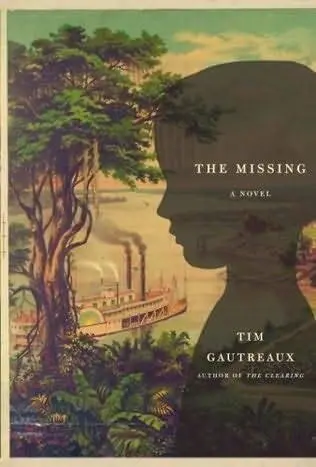
- Название:The Missing
- Автор:
- Жанр:
- Год:неизвестен
- ISBN:нет данных
- Рейтинг книги:4 / 5. Голосов: 1
-
Избранное:Добавить в избранное
- Отзывы:
-
Ваша оценка:
The Missing: краткое содержание, описание и аннотация
Предлагаем к чтению аннотацию, описание, краткое содержание или предисловие (зависит от того, что написал сам автор книги «The Missing»). Если вы не нашли необходимую информацию о книге — напишите в комментариях, мы постараемся отыскать её.
After World War I, Sam Simoneaux returns to New Orleans determined to leave mayhem and destruction behind, and to start anew with his wife years after losing a son to illness. But when a little girl disappears from the department store where he works, he has no recourse but to join her musician parents on a Mississippi excursion steamboat, hoping to unearth clues somewhere along the river. Though ill-prepared for this rough trade in hamlets where neither civilization nor law is familiar, he enforces tolerable behavior on board and ventures ashore to piece together what happened to the girl – making a discovery that not only endangers everyone involved but also sheds new light on the murder of his own family decades before.
Against this vivid evocation of a ragged frontier nation, a man fights to redeem himself, parents contend with horrific loss, and others consider kidnapping either another job or a dream come true. The suspense – and the web of violence linking Sam to complete strangers – is relentless, compelling, and moving, the finest demonstration yet of Gautreaux's understanding of landscape, history, and human travail and hope.
The Missing — читать онлайн бесплатно полную книгу (весь текст) целиком
Ниже представлен текст книги, разбитый по страницам. Система сохранения места последней прочитанной страницы, позволяет с удобством читать онлайн бесплатно книгу «The Missing», без необходимости каждый раз заново искать на чём Вы остановились. Поставьте закладку, и сможете в любой момент перейти на страницу, на которой закончили чтение.
Интервал:
Закладка:
“How’s the boy that got cut?” Sam asked.
“I think he’ll do fine. Sure thing there wasn’t no infection alive in that whiskey bottle.”
“What about the old gal who lost her dress overboard?”
“She’s passed out on the Texas deck. The maids’ll drag her down directly. Nobody can find her beau. I swear we come back with several less than we went out with.”
Sam handed over a rusty revolver. “You’re tempted to laugh, but if you think about it, none of it’s funny.”
Charlie handed the large Bowie back to its grim owner. “The things you laugh at never are funny. That’s why you just got to laugh.”
“I’ll think about that.”
“If you figure it out, explain to me what I said.”
Chapter Seventeen
ALL NIGHT the crews dried the skylight roof with a wood-alcohol wash, then wiped, scraped, and repainted it. They turned on every light and washed soot, cinders, tobacco ash, spit, snot, chili, beer, moonshine, popcorn, and chicken salad off of everything, and either repaired the broken furniture or threw it overboard.
Sam got up for breakfast and sat with August in the restaurant for the morning potatoes and eggs.
The boy looked at Sam’s denim shirt and frowned. “You going somewhere?”
“Just want to check out something onshore. Where’s your mother?”
He rolled his eyes. “In bed with the headache. A woman she was waiting on last night didn’t like the food she brought and punched her. Knocked her down.”
“I didn’t hear about that.”
“You hear about the man chased the woman through the firing gallery?”
Sam grabbed a hot biscuit and pulled it apart. “Ah, no.”
“She picked up that hammer we use to bust apart the big coal pieces and laid him out. He was asleep in the coal pile till an hour or so ago. I’ve never seen such people.”
Sam slathered butter on the steaming biscuit. “Well, I’m about to meet some more of them.”
THE TOWN OF BUNG CITY had no automobiles for hire but still supported three liveries. Sam held the reins before a mellow, listing mare and resigned himself to another ride. The animal was long legged and he let her walk up the hill as he read Morris Hightower’s telegram again. He put it back in his pants pocket and surveyed the two blocks of gray storefronts faced with cupped pine boards bleeding nail rust. Behind these sat a line of whitewashed houses faded to the color of wood smoke. The street was full of animals, and his mare stepped on a chick, leaving behind a yellow hoofprint in the hot dust. At the edge of town he went into a swaybacked store to ask where Ferry Road was, and the proprietor took ten minutes to make sure Sam wasn’t a revenuer, bounty hunter, deputy, or Northerner before he answered.
He found the unmarked turn in the cottonwoods that was the start of Ferry Road and several miles later he saw a shiplap-siding farmhouse in the back of a field of green beans. The man at the store had told him that this was where Biff Smally lived. The thought occurred to him that he might have brought a pistol along. He sat the mare and looked for someone in the field. The place had good wire fences, he’d give him that. The roof was of painted iron and the porch had rails. He turned in at the gate and wished himself luck.
Before he could dismount at the front porch, a woman about thirty years old came out. She wore a sunbonnet and was smoking a pipe. “You come to bid on our beans, mister?”
“I was looking for Smally.” He saw twin girls around ten years old come out from behind her to stare at him.
“What for?”
He didn’t know how to explain and just said, “It’s about the new child.”
The woman let out a puff of smoke. She was not unpleasant looking, what he could see of her. She raised a rawboned hand over her eyes and peered to the west. “They’re off in the barn yonder, loadin’ stakes in the dray.” She stepped off the porch, the girls following like ducklings as she walked to the pump.
He touched the animal up and rode to the barn and got down. A man came out and took off his straw hat. “You come about the beans?”
“I ain’t after your beans, Mr. Smally. I’m trying to help some folks find their young child that was taken from them, and I heard one showed up here.”
Smally was a young man and fair skinned for a farmer. “Who told you I brung in a child?”
“A friend in Greenville. I was already in Bung City and decided to see about it.”
Smally threw a thumb over his shoulder. “Well, this here child wasn’t lost from nobody. He come off the orphan train that stopped in town from New York City. You know, they line ’em up on the station platform and you can take your pick.”
“He?”
“Yeah.” He turned to the hayloft and called, “Jacob.”
A dark-eyed boy who looked about seven stepped tentatively up to the loft gate, his head bristling with a two-inch growth.
“When we got him his scalp was buggy, so we had to shave his head.”
Sam touched his chin. “I was looking for a little girl,” he said absently. He looked up at the child. “You doing all right?”
“Yes,” the boy said. “I have my own clothes.”
“All right, you can start throwin’ down those sticks into the dray,” Smally told him. The child backed off into the dark loft. “Where was this little girl took from?”
Sam told him the story, and the farmer listened to all of it patiently. He motioned for Sam to walk over a few yards by a heart-pine corncrib that might have been sitting there for a hundred years. “Unless you foolin’ me, you look like a good feller and I don’t talk to no other kind. My daddy was a peace officer got shot out of the saddle for doin’ the right thing. He raised me to not let the bad stuff go on.” He looked behind him and lowered his voice. “What I’m gettin’ to is that I didn’t fetch that boy off the orphan train myself. A old boy three mile from here you don’t need to know the name of got him off that train some time ago and brought him home like a bought tool and made him chop firewood till doomsday. Beat him when he fell out.” Smally looked right into Sam’s eyes. “At night he’d come get in the bed with the boy and fool with him. His hired man told me that because he saw what was goin’ on.” Smally’s eyes drew up tight, and wrinkles blossomed around his eye sockets. “Men in these parts don’t mess in each other’s business, but we know what’s happenin’ just the same. Most of us work like a pump handle all our lives, hard and hot work all of it, but we never forget those five years or so when we’re kids. When we’re looked after, I guess. Not hurt by our elders unless we do somethin’ to deserve it.” He looked back to the barn, and Sam thought for a moment that Farmer Smally was about to shed tears. “When we’re little shavers we don’t think there’s nothin’ bad in the world, and nothin’ that can make us hurt. If we do get a little pain we kin put our face on our daddy’s shirt or momma’s dress and it’ll go away, sure. I hope that’s what it’s like again after I die.” He turned back. “Them that takes that from children are robbin’ heaven from earth.”
Sam looked up at the barn loft. “How’d you get him away?”
“Some of my neighbors paid that man a visit, and I understand he pulled out a shotgun from behind his door.”
“What’d he say?”
“I don’t know. He don’t say much of nothin’, anymore.”
Sam watched a crow light on the edge of the bean field. “They ran him out of the country?”
“You could say that,” Smally said softly, but in a way that told Sam not to ask further.
He looked over at the rented mare, which was cropping grass by a fence where he’d tied her off. The boy came again to the loft opening and looked out at them. Here was another one with no parents or siblings. “They just give those kids away like calendars at the drugstore?”
Читать дальшеИнтервал:
Закладка:
Похожие книги на «The Missing»
Представляем Вашему вниманию похожие книги на «The Missing» списком для выбора. Мы отобрали схожую по названию и смыслу литературу в надежде предоставить читателям больше вариантов отыскать новые, интересные, ещё непрочитанные произведения.



Обсуждение, отзывы о книге «The Missing» и просто собственные мнения читателей. Оставьте ваши комментарии, напишите, что Вы думаете о произведении, его смысле или главных героях. Укажите что конкретно понравилось, а что нет, и почему Вы так считаете.