Adriana Trigiani - Very Valentine
Здесь есть возможность читать онлайн «Adriana Trigiani - Very Valentine» весь текст электронной книги совершенно бесплатно (целиком полную версию без сокращений). В некоторых случаях можно слушать аудио, скачать через торрент в формате fb2 и присутствует краткое содержание. Жанр: Современная проза, на английском языке. Описание произведения, (предисловие) а так же отзывы посетителей доступны на портале библиотеки ЛибКат.
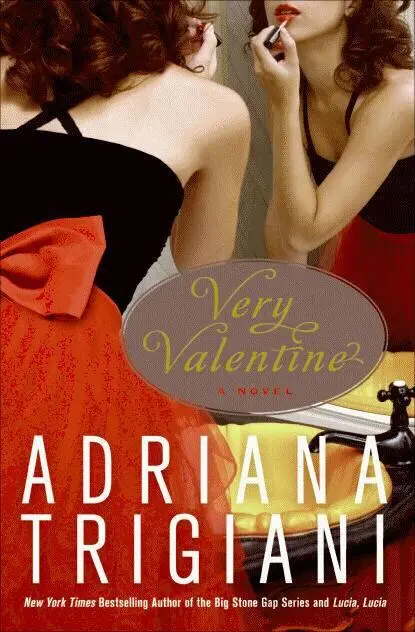
- Название:Very Valentine
- Автор:
- Жанр:
- Год:неизвестен
- ISBN:нет данных
- Рейтинг книги:3 / 5. Голосов: 1
-
Избранное:Добавить в избранное
- Отзывы:
-
Ваша оценка:
Very Valentine: краткое содержание, описание и аннотация
Предлагаем к чтению аннотацию, описание, краткое содержание или предисловие (зависит от того, что написал сам автор книги «Very Valentine»). Если вы не нашли необходимую информацию о книге — напишите в комментариях, мы постараемся отыскать её.
In this luscious, contemporary family saga, the Angelini Shoe Company, makers of exquisite wedding shoes since 1903, is one of the last family-owned businesses in Greenwich Village. The company is on the verge of financial collapse. It falls to thirty-three-year-old Valentine Roncalli, the talented and determined apprentice to her grandmother, the master artisan Teodora Angelini, to bring the family's old-world craftsmanship into the twenty-first century and save the company from ruin.
While juggling a budding romance with dashing chef Roman Falconi, her duty to her family, and a design challenge presented by a prestigious department store, Valentine returns to Italy with her grandmother to learn new techniques and seek one-of-a-kind materials for building a pair of glorious shoes to beat their rivals. There, in Tuscany, Naples, and on the Isle of Capri, a family secret is revealed as Valentine discovers her artistic voice and much more, turning her life and the family business upside down in ways she never expected. Very Valentine is a sumptuous treat, a journey of dreams fulfilled, a celebration of love and loss filled with Trigiani's trademark heart and humor.
Very Valentine — читать онлайн бесплатно полную книгу (весь текст) целиком
Ниже представлен текст книги, разбитый по страницам. Система сохранения места последней прочитанной страницы, позволяет с удобством читать онлайн бесплатно книгу «Very Valentine», без необходимости каждый раз заново искать на чём Вы остановились. Поставьте закладку, и сможете в любой момент перейти на страницу, на которой закончили чтение.
Интервал:
Закладка:
Costanzo offers me a cigarette, which I decline. He lights up his cigarette and puffs.
“What do you do in the winter, when the tourists are gone?” I ask him.
“I cut leather. I make the soles. I rest. I fill up the hours,” he says. Costanzo looks off in the distance. “I fill up the days and wait.”
“For the tourists to return?” I ask him.
He doesn’t answer. The look on his face tells me not to pry. He puts out his cigarette. “Now, we work.”
I follow Costanzo back into the shop. He takes his seat behind the workbench as I sit down behind my table. Costanzo lifts a new pattern out of his bin and studies it. I pick up il trincetto and a sole from the stack Antonio has left for me. I follow the pattern and peel the outside edge of the sole like an apple, just as I saw Costanzo do on the first day. He looks over at me approvingly and smiles.
“Go and get your sketchbook,” Costanzo commands as we finish a cappuccino in the afternoon. “I want to see your work.”
I get up from the table and go back inside the shop. I pull my sketchbook out of my tote.
“Everything all right?” Antonio says to me.
“Your father wants to see my sketches. I’m scared to death. I’m a self-taught artist, and I don’t know if my drawings are as good as they might be.”
Antonio smiles. “He’ll be honest.”
Great, I think as I go back through the storage room to the portico. Costanzo peels a fig as I sit down next to him. I tell him about the contest for the Bergdorf windows, then I open the sketchbook and show him the shoe. He looks at it. Then he narrows his eyes and squints at it.
“High fashion,” he says. “Molto bene.”
“You like it?”
“It’s ornate.”
“Is that a good thing?”
“This I like.” He points to the vamp of the shoe, where the braiding meets the strap. “Original.”
“My great-grandfather named his six basic dress shoes for brides after characters in the opera. They’re dramatic. They can also be simple. They’re classics, and we know this for sure because a hundred years later, we’re still making his designs and selling them.”
“What shoe do you make for the working girls?”
“We don’t make everyday shoes,” I tell him.
“You should start,” he says.
This is not the advice I expected to get from an Italian master craftsman, but I go with it because Costanzo knows so much more than me. “You sound like my friend Bret. He wants me to come up with a shoe to sell to the masses. He said that I could finance my custom shoes with a shoe made to be sold in large quantities.”
“He’s right. There should be no difference between making shoes for one woman and making shoes for many. All of your customers deserve your best. So, sketch a shoe that can serve them all.”
“I don’t really know how.”
“Of course you do. You drew that shoe for the window; you can draw another shoe for every day. I am giving you an assignment. Take your pad and go out on the piazza. Sketch as many shoes as you can.”
“Just general shoes?”
“Anything that you see that you like. Watch how the woman moves in her shoes.”
“The tourists wear tennis shoes.”
“Forget them. Look at the Capri shopgirls. You’ll see what to draw.” He smiles. “Now go.”
I take my pad and pencils and go out into the piazza.
I pick a spot in the shade, on the far stone wall, and sit. I put down my sketchbook and watch, just as Costanzo instructed me.
My eye sifts through the clumps of tourists wearing Reeboks, Adidas, and Nikes to find the locals, the women who work in the shops, restaurants, and hotels. I look down at their feet as they move through the crowd with purpose. These working women wear flats, practical yet beautiful shoes, smooth leather slip-ons in navy blue or black, beige lace-ups with a slight stacked heel, sandals in plain leather with a functional T-strap, and one daring shopgirl wears sensible mules made of bright pink calfskin. My eye typically goes to the color, but I notice it’s only the occasional woman who wears a vivid shade on her feet. For the most part, the women choose a classic neutral.
After a while, I pull my legs up and cross them under me. I begin to sketch. I draw a simple leather flat with a low upper that covers the toes but does not come too high on the vamp. I sketch it over and over, until I get a shape that pleases my eye and that would best flatter a woman’s foot regardless of size, length, or width.
I see a mother and daughter talking outside the jewelry store on the corner of the piazza. The mother, in her forties, wears a slim navy blue skirt with a white blouse. On her arm, thick bangles of shiny silver click together as she talks. She wears navy blue leather flats with a simple bow on the upper. Her daughter wears a black tissue paper T-shirt with a cropped bolero of brown linen. Her slim-legged jeans ride low and tight. She wears brown flats with a matching grosgrain ribbon edge. The flats on the mother are classic, and she stands tall, with an ease that comes from wearing a comfortable shoe. The shoe is soft, but not slouchy. The daughter bounces on the balls of her feet as she talks excitedly with her mother. The brown flat fits her foot without gapping at the heel, and the leather moves with her in a smooth, full bend of the arch when she’s on her toes. The leather does not crease or buckle.
An older woman, around Gram’s age, moves toward the wall and sits down a few feet from me. She is round and squat, and has thick gray hair pulled back from her face with a red ribbon. She wears a black cotton A-line sundress with cap sleeves. Her shoes are plain, black suede slip-ons. She leans against the wall and opens a brown paper bag. She reaches in, pulls out a ripe cherry, and takes a bite. She throws the pit over the wall and down the cliffs. The sun hits something sparkly by her collar. A brooch. I lean over to get a closer look.
The brooch is in the shape of a wing. It’s inlaid with small beads of turquoise and coral, hemmed by what have to be genuine diamond chips. I can tell they’re real from the way they throw light. I work with the faux jewels, and they give bright shine, but a real diamond ingests the light and sparkles from the facets within.
I get gutsy and move close to her. I smile. “Your brooch is beautiful.”
“Mia Mama’s.” She smiles and points to the jewelry store. “My family shop.”
“Oh, how nice.”
“My father made this pin for my mother.”
“It looks like an angel wing,” I tell her. My mother has a Christmas ornament of a cherub with beaded wings that reminds me of the wing shape on the brooch.
“ Si. Si. My mother’s name was Angela.”
The woman folds down the edge of her paper bag, closing it. She stands up and waves to me as she goes. I open my sketchbook and draw the pin, an angel wing dense with stones and outlined in diamonds. I take my time drawing the shapes. Slowly, I begin to fall in love with this shape. I draw it over and over until the page is full of wings. The piazza empties as the tourists get on the bus for the last haul down the mountain to the piers.
I draw one last wing, connecting the curve to the line to the point of the wing. Simple, but I’ve never seen a shape like this before, not on a shoe. I write:
Angel Shoes
Then I close the notebook and return to Costanzo to show him my sketch.
By the time I return, Costanzo is closing up the shop. He checks his watch and makes a tsk-tsk sound, faux guilt from my pretend padrone. He’s joking that I’m late, and he’s getting a kick out of himself. I let him. Then I show him my assignment. I hand him the sketch. He looks at it and points to the embellishment. “Wings?”
Читать дальшеИнтервал:
Закладка:
Похожие книги на «Very Valentine»
Представляем Вашему вниманию похожие книги на «Very Valentine» списком для выбора. Мы отобрали схожую по названию и смыслу литературу в надежде предоставить читателям больше вариантов отыскать новые, интересные, ещё непрочитанные произведения.


Обсуждение, отзывы о книге «Very Valentine» и просто собственные мнения читателей. Оставьте ваши комментарии, напишите, что Вы думаете о произведении, его смысле или главных героях. Укажите что конкретно понравилось, а что нет, и почему Вы так считаете.