Adriana Trigiani - Very Valentine
Здесь есть возможность читать онлайн «Adriana Trigiani - Very Valentine» весь текст электронной книги совершенно бесплатно (целиком полную версию без сокращений). В некоторых случаях можно слушать аудио, скачать через торрент в формате fb2 и присутствует краткое содержание. Жанр: Современная проза, на английском языке. Описание произведения, (предисловие) а так же отзывы посетителей доступны на портале библиотеки ЛибКат.
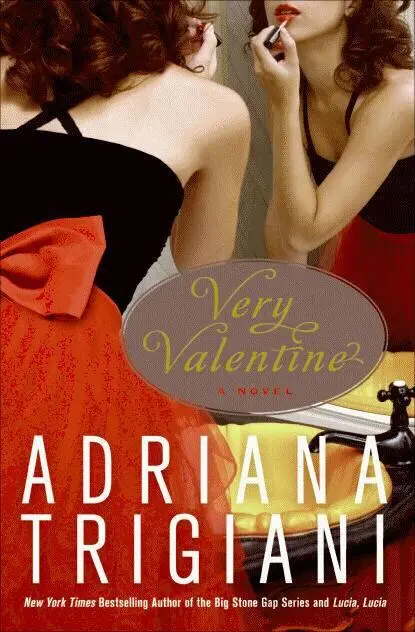
- Название:Very Valentine
- Автор:
- Жанр:
- Год:неизвестен
- ISBN:нет данных
- Рейтинг книги:3 / 5. Голосов: 1
-
Избранное:Добавить в избранное
- Отзывы:
-
Ваша оценка:
Very Valentine: краткое содержание, описание и аннотация
Предлагаем к чтению аннотацию, описание, краткое содержание или предисловие (зависит от того, что написал сам автор книги «Very Valentine»). Если вы не нашли необходимую информацию о книге — напишите в комментариях, мы постараемся отыскать её.
In this luscious, contemporary family saga, the Angelini Shoe Company, makers of exquisite wedding shoes since 1903, is one of the last family-owned businesses in Greenwich Village. The company is on the verge of financial collapse. It falls to thirty-three-year-old Valentine Roncalli, the talented and determined apprentice to her grandmother, the master artisan Teodora Angelini, to bring the family's old-world craftsmanship into the twenty-first century and save the company from ruin.
While juggling a budding romance with dashing chef Roman Falconi, her duty to her family, and a design challenge presented by a prestigious department store, Valentine returns to Italy with her grandmother to learn new techniques and seek one-of-a-kind materials for building a pair of glorious shoes to beat their rivals. There, in Tuscany, Naples, and on the Isle of Capri, a family secret is revealed as Valentine discovers her artistic voice and much more, turning her life and the family business upside down in ways she never expected. Very Valentine is a sumptuous treat, a journey of dreams fulfilled, a celebration of love and loss filled with Trigiani's trademark heart and humor.
Very Valentine — читать онлайн бесплатно полную книгу (весь текст) целиком
Ниже представлен текст книги, разбитый по страницам. Система сохранения места последней прочитанной страницы, позволяет с удобством читать онлайн бесплатно книгу «Very Valentine», без необходимости каждый раз заново искать на чём Вы остановились. Поставьте закладку, и сможете в любой момент перейти на страницу, на которой закончили чтение.
Интервал:
Закладка:
Roman texts:
You first. Forever and ever. R.
I smile.
“Good news?” Gianluca asks.
“Oh, yeah.” I put the phone back in my purse.
The Prato silk-factory building is a modern, rambling complex painted a dull beige, and has a tall steel-ornamental fence enclosing it. Low landscaping around the border gives it a manicured look.
Many great designers come here to shop for fabric. The old-guard, visionary Europeans like Karl Lagerfeld and Alberta Ferretti, to new talents like Phillip Lim and Proenza Schouler, make the trip to Prato. Some designers even take the scraps from the floor and weave them into original fabric designs; evidently, even the chuff of this factory is valuable.
Gianluca shows his ID as we pull up to the guard’s gate. They ask me for my passport. Gianluca opens it to the page with my picture and hands it to the guard.
Once we park, I wait for Gianluca to come around and open my door. He was polite about my beeping phone, so I’m not about to undercut his proper Italian manners. When he opens my door, he takes my hand to help me out. When our hands touch, a slight shiver runs down my spine. It must be the spring air, which blows cool under the hot sun.
We go through the entrance where there’s a small reception area with a window. Gianluca goes up to the window and asks to see Sabrina Fioravanti. In a few moments, a woman around my mother’s age, with reading glasses on a chain around her neck, greets us.
“Gianluca!” she says.
He kisses both her cheeks. “This is Signora Fioravanti.”
She takes my hands, pleased to meet me. “How is Teodora?” she wants to know.
“She’s doing fine.”
“Vecchio?” Signora says. “Like me.”
“Only in numbers, not in spirit.” I start thinking about what my eighty-year-old Gram is up to this very minute.
I follow Sabrina into the mill, to the finishing department, where the ornate silks are being pressed and mounted onto bolts, which spin the fabric onto giant wheels that fill to the size of tree trunks. I can’t resist touching the fabrics, buttery cotton sateen embroidered with fine gold thread, and cut velvet with squares of raw silk.
“Double-sided fabrics you need?” Sabrina asks.
“Yes.” I reach inside my purse for my list. “And taffeta with a velvet backing, and, if you have it, a silk striate.” I take a deep breath.
“Is there a problem?” Gianluca asks me. He points to the deep lines forming a number eleven between my eyebrows. “You look concerned.”
“No, I’m just thinking,” I lie. “And when I think, I get a uni-brow.”
“What?”
“You know, worry lines. Ignore them.”
Sabrina returns with a young man carrying a pile of fabric swatches. It will take me the better part of the day to look through them. Now I know why I have the worry lines. This is a big job and Gram isn’t here to guide me. She’s too busy pitching woo with Dominic under the Tuscan sun to schlep to this factory and sort through hundreds of fabric samples to find what we need. I’m feeling abandoned, that’s all. But it’s too late, we’re here now, and I have to go it alone.
Sabrina goes. I pull up a stool and put my purse on the table behind me. Gianluca pulls up a stool and sits across from me at the worktable. I place my written list on the table and begin to sort through the fabrics.
“Okay.” I look at Gianluca. “First, I need a durable satin jacquard. Beige.”
Gianluca sorts through a pile and pulls one. He holds it up.
“Not too much pink in the beige,” I tell him. “More gold.”
I put aside the fabrics that would be too flimsy even if we backed them ourselves. Gianluca follows my lead. Then he begins to make a stack of the heartier varieties. I find a heavy double-sided satin embroidered with filigreed gold vines. I wonder if we can cut on the embroidery and reluctantly put it aside.
“You don’t like that one?” he says.
“I love it. But I don’t think I can cut around the pattern.”
Gianluca picks up the sample. “But you can. You just buy extra, and repeat the pattern across.” He drapes the fabric on the table, then tucks it under. “See? It’s the same with the leather.”
“You’re right.”
I place the silk with vines on the top of my buy pile. There are so many to choose from, but the selection is enthralling. I begin to imagine shoes in every sample I pick up: canton crepe, peau-de-soie, matelasse, velveteen, faille, and a silk broadcloth with a tone-on-tone stripe. I throw myself into the fun of it, and the process picks up speed as we sort for a good while.
“You like making shoes?” Gianluca asks.
“Can you tell?” I check another item off my list. “Do you like working as a tanner?”
“Not so much.” Now Gianluca gets the number eleven between his eyes. “Papa and I fight. We have for many years. But it’s worse since my mother died.”
“How long has your father been a widower?”
“Eleven years in November.” He picks up a stack of crisp linen samples from the end of the table. “Are both your parents living?”
I nod that they are.
“How old are they?” he asks.
“My father is sixty-eight. If you ever meet my mom, you mustn’t let on, but she is sixty-one. We have an age thing in my family.”
“What is an age thing?”
“We don’t like getting old.”
“Who does?” He smiles.
“How old are you?”
“I am fifty-two,” he says. “That’s too old.”
“For what?” I ask him. “To change careers? You could do that in a second.”
Gianluca shrugs. “Working with my father is my obligation.” He seems resigned, but not actually unhappy about his situation.
“In America, when something isn’t working for us, we change. We go back to school and develop a new skill, or we switch jobs, or employers. There’s no need to toil away at something you don’t love.”
“In Italy, we don’t change. My desires are not the most important thing. I have responsibilities and I accept them. My father needs me. I let him think he’s the boss, but his siesta has become longer the older he gets.”
“So do Gram’s.”
“You work in your family business.” He sounds defensive.
“Yes, but I chose it. I wanted to be a shoemaker.”
“Here, we don’t choose. The dreams of the family become our dreams.”
I think about my family, and how that used to be true for us. It was family first, but now, it seems, my generation has let go of all of that. I could never work with my mother, but it’s different with my grandmother. The generation that separates Gram and me seems to bind us to a common goal. We understand each other in a way that works professionally and at home. Maybe it’s because she needs the help, and I was here at the right moment to give it to her. I don’t know. But my dreams and the dreams of my grandmother somehow met, and blended, creating something new for each of us. Even now, it seems, she is handing the reins over to me; never mind that the horse has a lame leg and can’t see, to her the Angelini Shoe Company is worth something, and to me, even with mounting debt and the production of custom shoes in jeopardy, it’s a priceless legacy. I only hope that I can hang on to it so I might pass it along to the next generation.
Gianluca and I enter a tall atrium in the center of the complex where the factory workers take their breaks. Some of the younger ones are on their BlackBerries, others chat on cell phones, while the middle-aged employees have an espresso and a piece of fruit. There are workers here close to Gram’s age, which is a huge difference compared with back home. Here, the older artisans-the masters-are revered and an integral part of the process of making fabrics. My brother, Alfred, should see this so he might understand why Gram keeps working. The satisfaction a craftsman seeks, after years of work, is perfection itself. A master may not reach it, but after years of study, training, and experience, she may come close. This, in itself, is a goal worth aiming for.
Читать дальшеИнтервал:
Закладка:
Похожие книги на «Very Valentine»
Представляем Вашему вниманию похожие книги на «Very Valentine» списком для выбора. Мы отобрали схожую по названию и смыслу литературу в надежде предоставить читателям больше вариантов отыскать новые, интересные, ещё непрочитанные произведения.








Обсуждение, отзывы о книге «Very Valentine» и просто собственные мнения читателей. Оставьте ваши комментарии, напишите, что Вы думаете о произведении, его смысле или главных героях. Укажите что конкретно понравилось, а что нет, и почему Вы так считаете.