Adriana Trigiani - Very Valentine
Здесь есть возможность читать онлайн «Adriana Trigiani - Very Valentine» весь текст электронной книги совершенно бесплатно (целиком полную версию без сокращений). В некоторых случаях можно слушать аудио, скачать через торрент в формате fb2 и присутствует краткое содержание. Жанр: Современная проза, на английском языке. Описание произведения, (предисловие) а так же отзывы посетителей доступны на портале библиотеки ЛибКат.
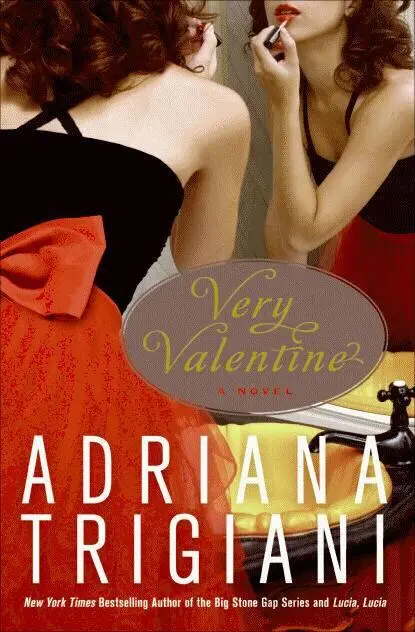
- Название:Very Valentine
- Автор:
- Жанр:
- Год:неизвестен
- ISBN:нет данных
- Рейтинг книги:3 / 5. Голосов: 1
-
Избранное:Добавить в избранное
- Отзывы:
-
Ваша оценка:
Very Valentine: краткое содержание, описание и аннотация
Предлагаем к чтению аннотацию, описание, краткое содержание или предисловие (зависит от того, что написал сам автор книги «Very Valentine»). Если вы не нашли необходимую информацию о книге — напишите в комментариях, мы постараемся отыскать её.
In this luscious, contemporary family saga, the Angelini Shoe Company, makers of exquisite wedding shoes since 1903, is one of the last family-owned businesses in Greenwich Village. The company is on the verge of financial collapse. It falls to thirty-three-year-old Valentine Roncalli, the talented and determined apprentice to her grandmother, the master artisan Teodora Angelini, to bring the family's old-world craftsmanship into the twenty-first century and save the company from ruin.
While juggling a budding romance with dashing chef Roman Falconi, her duty to her family, and a design challenge presented by a prestigious department store, Valentine returns to Italy with her grandmother to learn new techniques and seek one-of-a-kind materials for building a pair of glorious shoes to beat their rivals. There, in Tuscany, Naples, and on the Isle of Capri, a family secret is revealed as Valentine discovers her artistic voice and much more, turning her life and the family business upside down in ways she never expected. Very Valentine is a sumptuous treat, a journey of dreams fulfilled, a celebration of love and loss filled with Trigiani's trademark heart and humor.
Very Valentine — читать онлайн бесплатно полную книгу (весь текст) целиком
Ниже представлен текст книги, разбитый по страницам. Система сохранения места последней прочитанной страницы, позволяет с удобством читать онлайн бесплатно книгу «Very Valentine», без необходимости каждый раз заново искать на чём Вы остановились. Поставьте закладку, и сможете в любой момент перейти на страницу, на которой закончили чтение.
Интервал:
Закладка:
There’s nothing like December in Manhattan when the Christmas trees go on sale. Every other street corner becomes an outdoor garden, as freshly cut trees are stacked and displayed in their corridors of evergreen. Peels of pungent pine bark fall onto the sidewalk as the sellers trim the trunks and wrap the trees in their umbrellas of webbed plastic before delivery. Glossy wreaths with red velvet bows and sprays of holly tied with gold mesh ribbons hang on rough-hewn stepladders, ready for pickup. You cannot help but close your eyes and believe in the possibility of the perfect Christmas.
I arrange for delivery of our blue spruce as Gram chooses a wreath for the shop door. Mr. Romp places our ten-foot tree on a turnstile and gives it the umbrella treatment. Gram takes my arm as we walk back to the shop.
“Are you inviting Roman to Christmas dinner?”
“Think he’s ready for us?” I joke.
The truth is, I’ve prepared Roman. The good news, he’s from a crazy Italian family, too, so he gets it, we have a shorthand. I worry about that though, a romance at our stage of things should feel solid. Our feelings are clear, but scheduling the time? That’s the tricky part. That, and I live with my grandmother. I’ve never brought a man home to stay. I wouldn’t even know how to ask. I suppose I could do what Italian girls have done for decades: sneak. But when?
Maybe this is the state of romance for two self-employed people over thirty. Between his schedule at the restaurant, and mine in the shop, our communication is like a stack of unread mail; we get to it and each other when we can. It all began with a slow, delicious meal at Ca’ d’Oro; I thought it was the ultimate to have a man cooking for me, feeding me, pleasing me. But the truth is, the last time we ate together we had take-out cold sesame noodles from Mama Buddha on a park bench on Bleecker Street before I had a shoe fitting with a customer.
“Roman has to do something for Christmas,” Gram says, pushing the door to the vestibule open. “He’d liven things up.”
“Just what we need.”
Gram goes into the kitchen to make us a dish of spaghetti marinara for dinner. I climb the stairs to take the Christmas decorations out of storage in my mother’s old bedroom closet. I flip on the small bedside lamp and pull cardboard cartons full of ornaments out of the closet and stack them on the bed. Boxes labeled SHINY BRIGHT are filled with vintage gold-glass teardrops, and silver, green, red, and blue balls embossed with stripes or flocking, each loaded with meaning and memory.
The old Roma lights, oversize bulbs of ruby red, navy blue, forest green, and taxicab yellow, are the only lights my sisters allow on Gram’s tree. Tess and Jaclyn may have the small, mod twinklers in their own homes, but here at Gram’s, the tree has to be exactly as we remember it: a live blue spruce loaded with smoky glass ornaments that have been around since my mother was a girl. We cherish the ornaments that are a little the worse for wear, the felt reindeer with an eye missing, the plastic choirboys in faded red flannel cassocks, and the tinfoil-star tree topper that Alfred made in kindergarten.
The bed is now covered in boxes. I look for the extension cord with the foot pedal for turning the tree lights on and off. I can’t find it. “Gram?” I holler from the top of the stairs.
“What is it?” She appears on the landing a flight below.
“Where are the extension cords?”
“Look in my room. Check my dresser. It’s got to be in one of those drawers,” she says, heading into the kitchen.
I flip on the light in Gram’s room. Her perfume lingers in the air, freesia and lilies, the same scent that you catch when Gram pulls off her scarf or hangs up her coat.
I pull open her dresser drawer and search for the extension cords. Gram is a pack rat, like me. Her drawers are well-organized but are filled with stuff. The top drawer holds stacks of her lingerie anchored by stockings still in their packages. I lift them carefully, looking for the cords.
An unopened bottle of Youth Dew perfume sits on top of a stack of pressed antique handkerchiefs, which she still uses in evening bags on special occasions. I lift out a box of lightbulbs in their flimsy carton. Searching under it, I find a shoe box of receipts, which I carefully place back where I found it.
I look in the second drawer. Her wool cardigans are folded neatly. In an open plastic bin, there’s a flashlight, a bottle of holy water from Lourdes, and an envelope marked “Mike’s report cards.”
I open the last drawer. Gram’s purses and evening bags are neatly stacked in felt bags. I lift a cigar box filled with small metal gizmos, wheels, latches, and hook replacements for repairing the machines in the shop. Under the box, there’s a black velvet pouch lying flat against the bottom of the drawer. I pull out a heavy gold picture frame.
Inside is a picture of Gram from about ten years ago. The background is unfamiliar and rural. Gram stands next to an olive tree with a man who is not my grandfather. She must be in the hills of Italy. The man has thick white hair brushed to the side, crackling slate blue eyes, and a wide smile. His skin is golden, as is hers, tawny with summer.
The hills behind them are in full bloom with sunflowers. The man has his arm around Gram’s waist, and she is looking down, smiling. I quickly shove the photograph into the pouch and bury it at the bottom of the drawer with the small box of machine parts on top of it. I see the cord for the Christmas lights hidden in the far corner. “I found it!” I call out to her. I close the drawer carefully and turn out the light.
“Maybe it’s one of her cousins,” Tess whispers as we wait for my parents to arrive in the vestibule of Our Lady of Pompeii Church on Carmine Street for Christmas Eve mass. Garlands of fresh greens hang from the columns leading to the altar, covered with gold-foil pots of red poinsettias. A series of small trees with tiny white lights forms a backdrop for the ornate gold tabernacle.
“He didn’t look like a cousin.”
Gram is seated inside, with the grandkids and Alfred, Pamela, Jaclyn, and Tom, while Tess and I wait for our parents while they park.
“Who could it be?”
“It looked romantic to me.”
“Oh, come on! You’re talking about our grandmother.”
“Older people have relationships.”
“Not Gram.”
“I don’t know. She gets a lot of phone calls from Italy, and remember what she said to Keely Smith about having a boyfriend.”
“She didn’t say she had one. She was just playing along for the show. Gram is not the type,” Tess insists.
“The picture is hidden in a velvet pouch in her dresser, like it matters.”
“Okay, I’ll tell you what. When we go back, you keep her busy in the kitchen and I’ll go up and check it out. I’m sure it’s nothing.”
“It’s a mob scene out there,” Dad says as he and Mom enter the church.
Tess, Mom, and Dad follow me to the side aisle. We squeeze in next to Charlie and the girls. Gram sits on the far end of the pew, next to Alfred. She leans forward and checks to make sure every member of our family is in place. She smiles happily as she surveys the lot of us before turning her eyes back to the altar. Maybe Tess is right. Gram is not the type to have a life outside of the family she loves. She’s eighty years old. That ship has definitely sailed.
Gram’s kitchen was designed with holidays and the preparation of big meals in mind, so there is no such thing as too many chefs in this kitchen. The long marble counter is a crack workstation, while the fully loaded galley kitchen can accommodate several of us as we reheat and arrange the platters. Christmas Eve dinner is exactly as it was when we were kids, except now, instead of Gram doing all the cooking, we pot-luck the food.
Читать дальшеИнтервал:
Закладка:
Похожие книги на «Very Valentine»
Представляем Вашему вниманию похожие книги на «Very Valentine» списком для выбора. Мы отобрали схожую по названию и смыслу литературу в надежде предоставить читателям больше вариантов отыскать новые, интересные, ещё непрочитанные произведения.












Обсуждение, отзывы о книге «Very Valentine» и просто собственные мнения читателей. Оставьте ваши комментарии, напишите, что Вы думаете о произведении, его смысле или главных героях. Укажите что конкретно понравилось, а что нет, и почему Вы так считаете.