John Fowles - The Magus
Здесь есть возможность читать онлайн «John Fowles - The Magus» весь текст электронной книги совершенно бесплатно (целиком полную версию без сокращений). В некоторых случаях можно слушать аудио, скачать через торрент в формате fb2 и присутствует краткое содержание. Жанр: Современная проза, на английском языке. Описание произведения, (предисловие) а так же отзывы посетителей доступны на портале библиотеки ЛибКат.
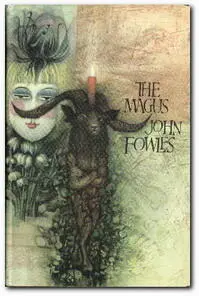
- Название:The Magus
- Автор:
- Жанр:
- Год:неизвестен
- ISBN:нет данных
- Рейтинг книги:4.33 / 5. Голосов: 3
-
Избранное:Добавить в избранное
- Отзывы:
-
Ваша оценка:
The Magus: краткое содержание, описание и аннотация
Предлагаем к чтению аннотацию, описание, краткое содержание или предисловие (зависит от того, что написал сам автор книги «The Magus»). Если вы не нашли необходимую информацию о книге — напишите в комментариях, мы постараемся отыскать её.
The novel was a bestseller, partly because it tapped successfully into—and then arguably helped to promote—the 1960s popular interest in psychoanalysis and mystical philosophy.
The Magus — читать онлайн бесплатно полную книгу (весь текст) целиком
Ниже представлен текст книги, разбитый по страницам. Система сохранения места последней прочитанной страницы, позволяет с удобством читать онлайн бесплатно книгу «The Magus», без необходимости каждый раз заново искать на чём Вы остановились. Поставьте закладку, и сможете в любой момент перейти на страницу, на которой закончили чтение.
Интервал:
Закладка:
“I know I’m trying too hard. But you make me like that.”
“If—”
“Nicko.”
“Alison, if only you—”
“Nicko, listen. Last week I was in my old room in the flat. The first night. And I could hear footsteps. Upstairs. And I cried. Just as I cried in the taxi today. Just as I could cry now but I’m not going to.” She smiled, a little twisted smile. “I could even cry because we keep using each other’s names.”
“Shouldn’t we?”
“We never did. We were so close we didn’t have to. But what I’m trying to say is… all right. But please be kind to me. Don’t always sit so in judgment on everything I say, everything I do.” She stared at me and forced me to look her in the eyes. “I can’t help being what I am.” I nodded, looked sorry and touched her hand to mollify her. The one thing I did not want was a row; emotion, the past, this eternal reattachment to the past.
After a moment she bit her mouth and the small grins we exchanged then were the first honest looks since we had met.
I said good night to her outside her room. She kissed me on the cheek, and I pressed her shoulders as if, really, it was a far, far better thing that I did then than woman could easily imagine.
39
By half-past eight we were on the road. We drove over the wide mountains to Thebes, where Alison bought herself some stronger shoes and a pair of jeans. The sun was shining, there was a wind, the road empty of traffic, and the old Pontiac I had hired the night before still had some guts in its engine. Everything interested Alison—the people, the country, the bits in my 1909 Baedeker about the places we passed. Her mixture of enthusiasm and ignorance, which I remembered so well from London, didn’t really irritate me any more. It seemed part of her energy, her candor; her companionability. But I had, so to speak, to be irritated; so I seized on her buoyancy, her ability to bob up from the worst disappointments. I thought she ought to have been more subdued, and much sadder.
She asked me at one point whether I had discovered any more about the waiting room; but eyes on the road, I said, no, it was just a villa. What Mitford had meant was a mystery; and then I slid the conversation off onto something else.
We drove fast down the wide green valley between Thebes and Livadia, with its cornfields and melon patches. But near the latter place a large flock of sheep straggled across the road and I had to slow down to a stop. We got out to watch them. There was a boy of fourteen, in ragged clothes and grotesquely large army boots. He had his sister, a dark-eyed little girl of six or seven, with him. Alison produced some airline barley sugar. But the little girl was shy and hid behind her brother’s back. Alison squatted in her dark green sleeveless dress ten feet away, holding out the sweet, coaxing. The sheep bells tinkled all around us, the girl stared at her, and I grew restless.
“How do I ask her to come and take it?”
I spoke to the little girl in Greek. She didn’t understand, but her brother decided we were trustworthy and urged her forward.
“Why is she so frightened?”
“Just ignorance.”
“She’s so sweet.”
Alison put a piece of barley sugar in her own mouth and then held out another to the child, who, pushed by her brother, went slowly forwards. As she reached timidly for the barley sugar Alison caught her hand and made her sit beside her; unwrapped the sweet. The brother came and knelt by them, trying to get the child to thank us. But she sat gravely sucking. Alison put her arm round her and stroked her cheeks.
“I shouldn’t do that. She’s probably got lice.”
“I know she’s probably got lice.”
She didn’t look up at me or stop caressing the child. But a second later the little girl winced. Alison bent back and looked down her neck. “Look at this, oh, look at this.” It was a small boil, scratched and inflamed, on the child’s shoulder. “Bring my bag.” I went and got it and watched her poke back the dress and rub cream on the sore place, and then without warning dab some on the child’s nose. The little girl rubbed the spot of white cream with a dirty finger; and suddenly, like a crocus bursting out of winter earth, she looked up at Alison and smiled.
“Can’t we give them some money?”
“No.”
“Why not?”
“They’re not beggars. They’d refuse it anyway.”
She fished in her bag and produced a small note, and held it out to the boy and pointed to him and the girl. They were to share it. The boy hesitated, then took it.
“Please take a photo.”
I went impatiently to the car, got her camera, and took a photo. The boy insisted that we take his address; he wanted a copy, to remember us.
We started back for the car with the little girl beside us. Now she seemed unable to stop smiling—that beaming smile all Greek peasant children have hidden behind their solemn shyness. Alison bent and kissed her, and as we drove off, turned and waved. And waved again. Out of the corner of my eye I saw her bright face turn to me, then take in my expression. She settled back.
“Sorry. I didn’t realize we were in such a hurry.”
I shrugged; and didn’t argue.
I knew exactly what she had been trying to tell me; perhaps not all of it had been put on for me; but some of it had. We drove for a mile or two in silence. She said nothing until we got to Livadia. We had to talk then, because there was food to buy.
It should have cast a shadow over the day. But it didn’t, perhaps because it was a beautiful day and the landscape we came into one of the greatest in the world; what we were doing began to loom, like the precipitous blue shadow of Parnassus itself, over what we were.
We wound up the high hills and glens and had a picnic lunch in a meadow dense with clover and broom and wild bees. Afterwards we passed the crossroads where Oedipus is reputed to have killed his father. We stopped and stood among the sere thistles by a dry stone wall; an anonymous upland place, exorcized by solitude. All the way in the car up to Arachova, prompted by Alison, I talked about my own father, and perhaps for the first time in my life without bitterness or blame; rather in the way that Conchis talked about his life. And then as I glanced sideways at Alison, who was against the door, half-turned towards me, it came to me that she was the only person in the world that I could have been talking like that to; that without noticing it I had slipped back into something of our old relationship… too close to need each other’s names . I looked back to the road, but her eyes were still on me, and I had to speak.
“A penny for them.”
“How well you look.”
“You haven’t been listening.”
“Yes I have.”
“Staring at me. It makes me nervous.”
“Can’t sisters look at their brothers?”
“Not incestuously.”
She sat back obediently against the seat, and craned up at the colossal gray cliffs we were winding under.
“Just a walk.”
“I know. I’m having second thoughts.”
“For me or for you?”
“Mainly for you.”
“We’ll see who drops first.”
Arachova was a picturesque shoulder of pink and terracotta houses, a mountain village perched high over the Delphi valley. I made an inquiry and was sent to a cottage near the church. An old woman came to the door; beyond her in the shadows stood a carpet-loom, a dark red carpet half-finished on it. A few minutes’ talk with her confirmed what the mountain had made obvious.
Alison looked at me. “What’s she say?”
“She says it’s about six hours’ walk. Hard walk.”
“But that’s fine. It’s what Baedeker says. One must be there at sundown.” I looked up at the huge gray mountainside. The old woman unhooked a key from behind the door. “What’s she saying?”
Читать дальшеИнтервал:
Закладка:
Похожие книги на «The Magus»
Представляем Вашему вниманию похожие книги на «The Magus» списком для выбора. Мы отобрали схожую по названию и смыслу литературу в надежде предоставить читателям больше вариантов отыскать новые, интересные, ещё непрочитанные произведения.



Обсуждение, отзывы о книге «The Magus» и просто собственные мнения читателей. Оставьте ваши комментарии, напишите, что Вы думаете о произведении, его смысле или главных героях. Укажите что конкретно понравилось, а что нет, и почему Вы так считаете.