Malena Lott - Dating da Vinci
Здесь есть возможность читать онлайн «Malena Lott - Dating da Vinci» весь текст электронной книги совершенно бесплатно (целиком полную версию без сокращений). В некоторых случаях можно слушать аудио, скачать через торрент в формате fb2 и присутствует краткое содержание. Жанр: Современная проза, на английском языке. Описание произведения, (предисловие) а так же отзывы посетителей доступны на портале библиотеки ЛибКат.
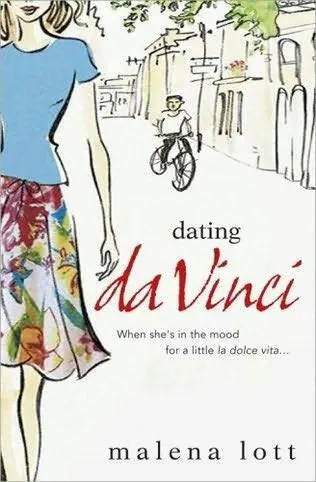
- Название:Dating da Vinci
- Автор:
- Жанр:
- Год:неизвестен
- ISBN:нет данных
- Рейтинг книги:3 / 5. Голосов: 1
-
Избранное:Добавить в избранное
- Отзывы:
-
Ваша оценка:
Dating da Vinci: краткое содержание, описание и аннотация
Предлагаем к чтению аннотацию, описание, краткое содержание или предисловие (зависит от того, что написал сам автор книги «Dating da Vinci»). Если вы не нашли необходимую информацию о книге — напишите в комментариях, мы постараемся отыскать её.
A linguist and English teacher, Ramona Elise (who Leonardo calls his "Mona Lisa") knows she shouldn't take him home, but he has nowhere to live, and barely speaks English. She really feels she ought to help…
Together they experience their own renaissance, "awakening" to life and love. She helps him forge a new life in America, and he helps her to find joy again after grieving her beloved husband
Picking up the pieces of her life, Ramona can finally finish her dissertation on "The Language of Love" (fascinating excerpts of which are sprinkled throughout the book!) and find a way to honor her husband's memory, put to rest a suspicion that he had cheated on her just before he died, and finally move on to a new relationship…
Dating da Vinci — читать онлайн бесплатно полную книгу (весь текст) целиком
Ниже представлен текст книги, разбитый по страницам. Система сохранения места последней прочитанной страницы, позволяет с удобством читать онлайн бесплатно книгу «Dating da Vinci», без необходимости каждый раз заново искать на чём Вы остановились. Поставьте закладку, и сможете в любой момент перейти на страницу, на которой закончили чтение.
Интервал:
Закладка:
With nearly 7,000 languages in the world, there are nearly as many ways to say, “I love you.”
Albanian: “ Te dua. ”
Chinese: “ Wo ie ni. ”
Dutch: “ Ik hou van jou. ”
Greek: “ S' agapo. ”
Italian: “ Ti amo. ”
Zuni: “ Tom ho' ichema. ”
The words may be different, but scientists say the chemistry behind the words is the same. Love is, in effect, a chemical reaction. The cuddling chemical is known as oxytocin, linked to milk production in women, making both men and women calmer and more sensitive to others. Oxytocin levels are highest for women just after childbirth, which can explain how moms are able to cope with screaming newborns and care for them.
The hormone also plays a huge role in romantic love during sexual arousal, prompting couples to pair up and cuddle before, during, and after lovemaking. Production of this love hormone can come from both emotional and physical cues, including the loved one's voice and look or even just thinking about the lover.
So, what? The Duke of Milan's hormones made him drop his royal drawers for every blushing countess he had chemistry with? Sorry, lovey, the oxytocin made me do it! Right.
Addicted to Love
Oxytocin then passes the love baton to a new group of hormones, morphine-like opiates that calm and reassure lovers with intimacy, dependability, warmth, and experiences.
These steady hormones are more addictive, explaining why the longer two people have been married, the more likely they will stay married. Staying together becomes addictive, with lovers relying on the endorphins and marital serenity they bring one another. Absent lovers yearn for each other when they are apart because, like a drug, they yearn for the steady high endorphins bring. Similarly, the absence of endorphins plays a part in grief over the death of a spouse.
I lifted my hands from the keyboard and noticed they were shaking. So I wasn't crazy after all. It was those pesky absent endorphins making me miss him so. Making all those absent lovers write such eloquent love letters across the miles. How long? I wondered. How long does it take to come down off of a lover's high? After I had been bonded, addicted to Joel for so many years? If a part of my grief was chemical, then could falling in love cure me of my grief once and for all?
I stared at the date on the calendar, Joel's death date, and yearned for my boys to return home from my parents so I could hug them. I couldn't even go hug da Vinci because he was gone again at another temp job and then to a study group with kids his own age. There I go again, calling him a kid. If our age difference wasn't a big deal to him, why did I think of it at all?
I took a sip of hot tea and picked up the album Cortland helped me create on Joel's computer. It arrived while I was gone with da Vinci in Galveston. I tried not to be sad that I wasn't here when the postman delivered it. I didn't want him to think I didn't care about the delivery, that the album meant nothing, because in fact, it meant everything. Of course the “him” I was referring to wasn't the postman at all, but Joel.
I had carefully laid copies of the book on the pillows of the boys' beds to surprise them when they returned. I took my own copy and lay with it on Lumpy, a bed I knew I had to replace sooner rather than later, and carefully looked through its glossy four-color pages at the happy family we had been. By the tenth time I viewed it, I saw the pictures through clear eyes, the tears dried, and my heart was full once again.
When I returned to the computer, I could finish the section, now three-quarters complete. Besides, I had to know about the Monogamy drug, and even more so, if my husband had it in his system when he'd died.
Monogamous Mating
Only three percent of mammals are monogamous, and scientists say humans are not among them. Monogamous: mating and bonding with one partner for life. Scientists claim a drug called vasopressin would help. It is called the monogamy chemical.
Lifelong mating is linked to the action of vasopressin, which kicks in within 24 hours after mating, at least for the male vole (a mouse-like rodent) that falls into that small three percent of monogamous mammals.
Once vasopressin kicks in, he is indifferent to all other lady voles, no matter how comely or come-hither. In addition, he becomes aggressive toward other males, a classic exhibition of the jealous husband syndrome.
What keeps a lover from straying, then, may not be one isolated chemical, but the love potion created by all of them: a dose of oxytocin, a scoop of endorphins, and a dash of vasopressin for long-lasting kick.
If humans were ruled by one drug, vasopressin, then might their ability for long-lasting love die along with their spouse? Would they never love again, forced to live out the rest of their lives alone and loveless?
If I had wanted a monogamous mate, I should've married a rat. Literally. I turned off the computer, thinking again about Monica and trying the breathing exercises Cynthia had recommended for when I felt anxious. After twenty-one counts, I had stopped thinking about Her and decided to get out of the house.
Sometimes Grievers do irrational things such as sit on the porch, willing their loved ones to return home, even when those loved ones have passed on. For months after his death, I imagined Joel would walk through the door. “Where have you been?” I would ask him, half-angry, half-relieved he had returned. He would wrap me into his embrace and say, “I love it when you worry about me,” and kiss me, and we'd go on with our lives.
I waited on the bench in the yard on Joel's DD, not awaiting his return, but that of my boys. I craved time away from them until I got it, and it didn't take long before separation anxiety kicked in. It had, in fact, kicked in back in Galveston, but I tried to be a Normal and just enjoy time alone with da Vinci. Still. Sometimes I felt as though I needed my boys to verify my existence. I couldn't survive another two days without them, and I needed the strength of their smiles to get me through that day.
Gabriella spotted me and waved, and I silently wished she wouldn't come over, but she did anyway, dressed in a warm brown and blue floral dress that fell to her calves. From across the street, she looked like a bunch of violets drifting towards me. Sometimes I thought Gabriella paid no mind to seasons. She dressed as if it were spring year-round. She carried something in her hand-food, I presumed. With her steady stream of casseroles and baked goods, Gabriella had kept the boys and me alive after Joel had died. The boys must've thought the food train would never end, because the first day she didn't bring us food, Bradley said, “Great. I guess it's back to eating Mom's type of cooking,” which is to say not very good, and I'd relied too much on fast food to nourish us.
Today it was a meatloaf; I could smell it before she even told me what lay beneath the aluminum foil. “We just got back from Joel's grave,” she said with a bright smile, inhaling as she sat next to me on the bench. “Such a beautiful day.” Yes, I thought, as beautiful as it had been two years before, same blue sky and spotted puffy clouds and warm October afternoon. A beautiful day to die.
“I was there a few days ago,” I whispered.
“The orange pansy was a nice touch. They were his favorite, weren't they?”
“Orange pansy?”
“The one on his grave.”
There was no pansy. If there had been, I would've smashed it when I had lain on his grave. “Only one pansy?”
Gabriella nodded. “As if it had been planted there on purpose. No other pansies as far as I could see, either direction.”
I wondered how I could miss an orange pansy and who might've planted one there. But one? Who would plant one pansy? I squelched the thought that Monica had done it; that my call had brought up old feelings for Joel that sent her to his grave with his favorite flower.
Читать дальшеИнтервал:
Закладка:
Похожие книги на «Dating da Vinci»
Представляем Вашему вниманию похожие книги на «Dating da Vinci» списком для выбора. Мы отобрали схожую по названию и смыслу литературу в надежде предоставить читателям больше вариантов отыскать новые, интересные, ещё непрочитанные произведения.



Обсуждение, отзывы о книге «Dating da Vinci» и просто собственные мнения читателей. Оставьте ваши комментарии, напишите, что Вы думаете о произведении, его смысле или главных героях. Укажите что конкретно понравилось, а что нет, и почему Вы так считаете.