Emily Winslow - The Whole World
Здесь есть возможность читать онлайн «Emily Winslow - The Whole World» весь текст электронной книги совершенно бесплатно (целиком полную версию без сокращений). В некоторых случаях можно слушать аудио, скачать через торрент в формате fb2 и присутствует краткое содержание. Жанр: Современная проза, на английском языке. Описание произведения, (предисловие) а так же отзывы посетителей доступны на портале библиотеки ЛибКат.
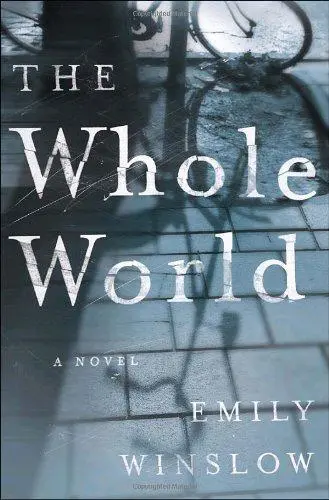
- Название:The Whole World
- Автор:
- Жанр:
- Год:неизвестен
- ISBN:нет данных
- Рейтинг книги:5 / 5. Голосов: 1
-
Избранное:Добавить в избранное
- Отзывы:
-
Ваша оценка:
The Whole World: краткое содержание, описание и аннотация
Предлагаем к чтению аннотацию, описание, краткое содержание или предисловие (зависит от того, что написал сам автор книги «The Whole World»). Если вы не нашли необходимую информацию о книге — напишите в комментариях, мы постараемся отыскать её.
Set in the richly evoked pathways and environs of Cambridge, England, The Whole World unearths the desperate secrets kept by its many complex characters – students, professors, detectives, husbands, mothers – secrets that lead to explosive consequences.
Two Americans studying at Cambridge University, Polly and Liv, both strangers to their new home, both survivors of past mistakes, become quick friends. They find a common interest in Nick, a handsome, charming, seemingly guileless graduate student. For a time, the three engage in harmless flirtation, growing closer while doing research for professor Gretchen Paul, the blind daughter of a famed novelist. But a betrayal, followed by Nick's inexplicable disappearance, brings long-buried histories to the surface.
The investigation raises countless questions, and the newspapers report all the most salacious details – from the crime that scars Polly's past to the searing truths concealed in photographs Gretchen cannot see. Soon the three young lovers will discover how little they know about one another, and how devastating the ripples of long-ago actions can be.
The Whole World — читать онлайн бесплатно полную книгу (весь текст) целиком
Ниже представлен текст книги, разбитый по страницам. Система сохранения места последней прочитанной страницы, позволяет с удобством читать онлайн бесплатно книгу «The Whole World», без необходимости каждый раз заново искать на чём Вы остановились. Поставьте закладку, и сможете в любой момент перейти на страницу, на которой закончили чтение.
Интервал:
Закладка:
“All right,” he finished at last. “Thank you for your time, Miss Bailey. May I give you my card? I’d like you to ring me if you think of anything else. I’ll come by again.”
I’d hidden my hands inside my sleeves. Two fingers peeped out to take the card.
“He’s not really missing,” I called out to the policeman’s back. He turned around and stared hard at me. I realized what I’d said was ridiculous. “I mean,” I added in a whisper, “that this isn’t happening. Okay?”
The policeman nodded slowly. Allison stepped in. I think she’d listened through the door. “We have a lot of work to do,” she announced.
She watched out the window to see the policeman leave. She waited for him to pass the Porters’ Lodge before turning back to me. “Polly, you look awful,” she said, surprised. Then, to make everything better: “I’ll make you a cup of tea.”
I burst out laughing. Now I know where my mother got it from. It’s not a personal tic, it’s just English.
“The police came to talk to me,” I told Liv. We faced each other cross-legged on my bed, in my room at the top of St. Peter’s Terrace. The ceiling was all jagged from the slant of the roof and the protruding window. “Well,” I amended. “One policeman. Singular.”
“What? About Nick?”
“Yes. Did someone talk to you too?”
She picked at the clasp of her bracelet. “No. Not yet. Why did they want to talk to you?”
“Somebody said I was Nick’s girlfriend.”
“What?”
“I know.”
“You’re not his girlfriend.”
“I said I know.”
“Why would somebody say that?”
“Because they’re stupid? Why does anybody say anything?”
“What did you tell him?”
“He wanted to know if Nick had problems. I told him that Nick was the last person in the world to be in trouble.” Nick had started life as a coddled baby, become a much-flattered boy soprano, and finished his childhood at fancy boarding schools. He easily attained an undergraduate “first,” the highest grade, at Magdalene, and currently pursued his doctorate there, much doted on by the faculty. He did what he did because he loved it, and had absolutely nothing to prove. I’d never met anyone with such a lack of unfinished business. “Nick is, like, the nicest person I’ve ever known. He’s just… he’s a sweet, gentle person, and I just-”
“You sound like a girlfriend,” she accused me.
“I’m not anybody’s girlfriend, okay? I’m not. And I know you like him. But I can’t make him like you back. Okay? He’s not even here anymore. What is it that you want me to do?”
She sprang across the duvet and hugged me. She did this crying thing that made her head bounce on my shoulder.
Then she showed me a card she’d made for Nick’s family. She’d folded a piece of parchment paper and sketched one of the arches of Pepys Library on the front. “They put those flower baskets up in the spring,” she explained. I felt like a little kid, needing to be told. I’d only been here two months, months too cold for flower baskets. Liv had seen them hanging from the arches last year.
I was surprised by the envelope. “His family is in Cambridge?”
“Sure. They moved here when he was a kid, when he became a chorister at King’s.”
“I didn’t know that.”
Liv sat up straight and smiled. “That’s okay,” she comforted me. “I mean, you’re not his girlfriend, right?”
“He told me about his sister. I just didn’t know she lived here.”
“It’s okay, Polly. You don’t need to get competitive.”
“I’m not!”
But she knew his family address. She knew his parents’ first names. She knew that flowers are hung from the arches of Pepys Library in the spring. She knew everything that I didn’t.

A group of undergraduates made the “Have you seen…?” posters that went up all over town. One of them wanted me to tell them Nick’s eye color, which is when I blathered about his hands.
The poster had two photos on it, recent enough, but both before his last haircut: a formal picture in a tie, and a candid shot of him punting on the river, on one of those thin, flat boats. It wasn’t the time he’d taken me and Liv.
Of course he’d taken many people punting in his life, of course he had… He had a whole other life, a history. Of course. I wondered who’d taken the photo, who’d been sitting in the boat, looking up at him standing at the end, driving the pole into the water. I was jealous, which was stupid. The posters were everywhere, wet through from that week’s unusual, near-constant rain. Because it had become December, the posters shared space with holly and fir branches, tinsel and little twinkling lights.
The policeman came back to me like he said he would. His name was Morris. I don’t know if that was his first or last name, but he said I should call him that. I’d lost his card.
Morris told me that the cleaner for Earth Sciences said Nick’s office was a mess on Tuesday evening. Apparently he’d been sick. Did I know anything about this, since I’d been with him Tuesday?
This was the worst thing he could have asked me. I didn’t lie immediately. I considered whether and how much to lie.
“That was me. I had a bug. When he saw I wasn’t feeling well he brought me up to his office.”
“Oh. All right.” Morris fiddled through his notes. “I understand his office is up several flights of stairs and near the end of a long corridor? How is it that he thought that would be a comfort to an ill friend?”
“I don’t know, Morris, but that’s how it was.” There was something about calling him by his name that felt satisfyingly insubordinate, even though he had asked me to call him that.
“Look, Miss Bailey, I don’t think you’ve done anything wrong, but I do think you could shed some light on his state of mind. I really don’t see the motivation behind your brevity. If you’re not attached, and neither was he, there’s no one to protect…”
Morris may have been a shrewd cop but he was a naïve person. There was myself to protect, of course. My sanity. Who else would be more important?
“It’s all right to tell me,” he said. Then he waited. His not-going filled the room more and more until it pressed me near flat.
I sucked in a breath. He cleared his throat. It took that little to crack me.
He swore he didn’t know how it ended up in the news. He wouldn’t share his case notes with the press, he said. Nevertheless, there it was, all I’d told him, leaked by whatever usual gutters ran between the police and the paper. They described it more luridly than I had, but they did capture my vehemence that we were nothing to each other.
It was reported in Monday evening’s edition. On Tuesday, everyone knew.
I was grateful for the rain; it allowed me an umbrella to hide under. I didn’t want to look at anyone, even my friends. Liv would lord it over me. I was broken and she wasn’t.
She was coming out of the big brick library as I headed in. I’d just pulled my umbrella down for the revolving door. We saw each other through the glass, spinning around the same axis. She went all the way around to end up back inside. “You bitch,” she hissed at me.
I wished to be outside, anonymous in the rain. I wished to be upstairs among the books, where she wouldn’t be allowed to talk to me. I wished she would let go of my arm. My closed umbrella pressed against my leg and soaked my jeans through.
People stared. The person behind the desk asked if there was a problem. Liv said in a raised voice that the problem was that I was ungrateful, which was baffling. Did she mean I’d been ungrateful to her for something? But it was Nick. She meant toward Nick. She called me an ungrateful bitch. We were asked to leave.
Читать дальшеИнтервал:
Закладка:
Похожие книги на «The Whole World»
Представляем Вашему вниманию похожие книги на «The Whole World» списком для выбора. Мы отобрали схожую по названию и смыслу литературу в надежде предоставить читателям больше вариантов отыскать новые, интересные, ещё непрочитанные произведения.







Обсуждение, отзывы о книге «The Whole World» и просто собственные мнения читателей. Оставьте ваши комментарии, напишите, что Вы думаете о произведении, его смысле или главных героях. Укажите что конкретно понравилось, а что нет, и почему Вы так считаете.