Jim Gorant - The Lost Dogs - Michael Vick's Dogs and Their Tale of Rescue and Redemption
Здесь есть возможность читать онлайн «Jim Gorant - The Lost Dogs - Michael Vick's Dogs and Their Tale of Rescue and Redemption» весь текст электронной книги совершенно бесплатно (целиком полную версию без сокращений). В некоторых случаях можно слушать аудио, скачать через торрент в формате fb2 и присутствует краткое содержание. Жанр: Современная проза, на английском языке. Описание произведения, (предисловие) а так же отзывы посетителей доступны на портале библиотеки ЛибКат.
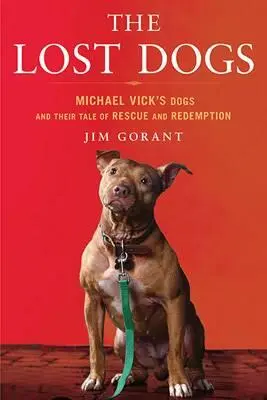
- Название:The Lost Dogs: Michael Vick's Dogs and Their Tale of Rescue and Redemption
- Автор:
- Жанр:
- Год:неизвестен
- ISBN:нет данных
- Рейтинг книги:5 / 5. Голосов: 1
-
Избранное:Добавить в избранное
- Отзывы:
-
Ваша оценка:
The Lost Dogs: Michael Vick's Dogs and Their Tale of Rescue and Redemption: краткое содержание, описание и аннотация
Предлагаем к чтению аннотацию, описание, краткое содержание или предисловие (зависит от того, что написал сам автор книги «The Lost Dogs: Michael Vick's Dogs and Their Tale of Rescue and Redemption»). Если вы не нашли необходимую информацию о книге — напишите в комментариях, мы постараемся отыскать её.
The Lost Dogs: Michael Vick's Dogs and Their Tale of Rescue and Redemption — читать онлайн бесплатно полную книгу (весь текст) целиком
Ниже представлен текст книги, разбитый по страницам. Система сохранения места последней прочитанной страницы, позволяет с удобством читать онлайн бесплатно книгу «The Lost Dogs: Michael Vick's Dogs and Their Tale of Rescue and Redemption», без необходимости каждый раз заново искать на чём Вы остановились. Поставьте закладку, и сможете в любой момент перейти на страницу, на которой закончили чтение.
Интервал:
Закладка:
McClay had made up her mind, but she watched the tape one more time anyway. She looked at the way he wagged his tail and shook his whole body with excitement; she looked at his big goofy body. “I like goofy,” she thought. She looked into his big brown eyes again and picked up the phone. “I’ll do it.”

Nicole Rattay was going home. Finally. Her four-week dog-sitting assignment had turned into six weeks, but the time spent had been worth it. She had helped the dogs fight off some of their kennel stress and many had even shown distinct improvement. Now she was on the road again.
There was no RV with thirteen dogs crated up in the cabin this time. Instead, she drove a rented four-door sedan with only one dog along for the ride. The drive, though, was the same: Virginia to Oakland. She could move a lot faster in the car, but she was on her own, with just the radio and Bouncer panting in the backseat to keep her company.
She and Steve would have brought him out on the first trip, but Huss hadn’t yet secured a home for him, so he’d stayed behind. But now that McClay had agreed to take Bouncer, and since Rattay was heading west, she had agreed to drive him out. Getting out of town proved a little harder than Rattay had imagined. Before she could leave with Bouncer, she had to call a few of the shelter attendants at home. They had grown so attached to him that they had begged for a chance to come down and say good-bye. So Rattay waited patiently while everyone sobbed through their send-offs before hitting the highway.
Once they were on the road, Rattay kept Bouncer crated up in the backseat and tried to cover as much distance as possible. When she finally pulled into a motel for the night, her watch showed almost 11:00 P.M. Rain fell. She was road-weary and didn’t feel like hauling the crate into the room. She decided to let Bouncer sleep on the floor. They got into the room and she passed out almost immediately, but he was a ball of energy.
As she drifted in and out of sleep she could hear him barreling around the room and bouncing off the furniture. Finally he settled down. Some sound, a sort of crunching, filtered into her subconscious, but she couldn’t make herself care where it was coming from.
When Rattay woke in the morning the room looked as if a tornado has passed through it. Things were knocked over, the sheets on the other bed were tossed and there was paper everywhere, torn up little bits of yellow and white paper. During the night Bouncer had shredded a phone book. As Rattay cleaned she came up with a new plan: She would let him roam free in the car during the day so he could burn up a little energy and then she’d crate him up at night.
Back on the trail, this seemed to work better. Bouncer quickly made his way into the front seat. He spent time looking out the window, watching the sky and the trees and the other cars. He took great interest in what Rattay was doing and checked out all the controls, sniffing everything from the radio dials to the steering wheel. When he was done he looked at Rattay with those big brown eyes and goofy expression, as if to say, “Anything I can do to help?”
There was. Over the next two days he helped Rattay stay awake and entertained on the long cross-country haul. Finally they arrived at Donna and Tim’s.

I’m crazy. What made me think this was going to work? What made me think I could take a dog from Michael Vick’s fighting operation and make it better?
Mathina McClay was standing in the street watching the big brown dog jump up and down, up and down. The ridiculousness of it all was crashing down on her. Besides questioning her own sanity, she wondered how she had missed the signs. She’d seen the jumping and the high energy on the video; did she really think that would magically cure itself once the dog got here? Hell, Huss and Racer had named him Bouncer.
Now she was stuck. Donna and Tim had driven the beast down to her home in Los Gatos, about an hour south of Oakland, and as soon as he stepped out of the car the big dope started with the kangaroo impression. She wished she could call the whole thing off, but she knew she was committed. She took the leash and waved as the pair drove away.
She turned toward the house, a tidy one-story structure appointed with Renaissance reproductions and a hand-painted sign that read COLD NOSE, WARM HEART. The place contained three other dogs, and McClay wondered if it would survive the fourth.
McClay locked the other dogs in her bedroom before she brought Bouncer inside-that would have been way too much for him. But nothing seemed to make Bouncer any less bouncy. He continued to jump and jump and jump. He jumped on McClay, even nipping at her to get her attention. He jumped on the furniture. He found a pair of socks and chewed on them. When the socks were rescued, he grabbed a pillow and began gnawing on that. He tried to pee on everything: the kitchen floor, the couch, the TV.
Finally, McClay coaxed him into his crate and he seemed to settle a little bit, as if he knew the drill. She offered food and toys, neither of which held his attention. He was uneasy and scattered, and McClay felt bad for him. She dropped a pillow on the floor, sat down next to the crate, and settled in for a long night.
29
CATALINA STIRLING FELT AS though she were carrying a package. Maybe a large box or a bag of groceries. The thing hugged close to her chest was that stiff and lifeless, and yet Sweet Jasmine was alive. The dog was simply frozen, locked in a rigid pose that spoke volumes about her anxiety and fear.
It was a bright morning in mid-December, and Stirling and her husband, Davor Mrkoci, had made the short drive from outside Baltimore to D.C. to retrieve Jasmine from the Washington Animal Rescue League. Their station wagon had a built-in grate that enclosed the back section and Catalina had lined the area with blankets to make it more comfortable.
Jasmine, locked in a sort of living rigor mortis, lay where she was placed, silent and motionless. Stirling had heard from others that many of the dogs peed or puked on their car rides home, but Jasmine did none of that. Stirling would’ve preferred a few body fluids-any signs of life-to the otherwise catatonic state Jasmine displayed.
When the couple reached their suburban home, in a cul-de-sac at the bottom of a hill, they lifted Jasmine out and carried her into the backyard, where she remained motionless. Then Stirling brought out her other three dogs: Rogue, a Lab mix; Sophie, a blind fifteen-year-old cocker spaniel; and Reymundo, a shepherd mix. While Stirling held Jasmine’s leash she introduced the new housemates one by one. To Catalina’s surprise, Jasmine stirred.
She perked up. Her whole body changed, became more relaxed. She stood. Her legs were bent, her back hunched, and her head and tail lowered, but she was up. She walked a little. She sniffed at the other dogs. She was suddenly, and literally, if only in the smallest way, animated. Stirling had found the moment hopeful, although she had to admit she had no idea how the Jasmine experiment would turn out.
A lifelong dog lover, Catalina had grown up in Argentina, where the family’s German shepherd, Malebo, would walk with her to school every morning, then take himself home after she went inside. At sixteen she moved to the States and studied painting in college. Afterward she was looking for a job to pay the bills while she worked on her art when she stumbled upon an opening at the Washington, D.C., Humane Society. If she had to work at a real job, she might as well do something that allowed her to be close to animals. For better or worse, the position was in the Society’s abuse and neglect division, and working with dogs and cats that had been mistreated or ignored became much more than a job. It was an emotional roller coaster.
Читать дальшеИнтервал:
Закладка:
Похожие книги на «The Lost Dogs: Michael Vick's Dogs and Their Tale of Rescue and Redemption»
Представляем Вашему вниманию похожие книги на «The Lost Dogs: Michael Vick's Dogs and Their Tale of Rescue and Redemption» списком для выбора. Мы отобрали схожую по названию и смыслу литературу в надежде предоставить читателям больше вариантов отыскать новые, интересные, ещё непрочитанные произведения.












Обсуждение, отзывы о книге «The Lost Dogs: Michael Vick's Dogs and Their Tale of Rescue and Redemption» и просто собственные мнения читателей. Оставьте ваши комментарии, напишите, что Вы думаете о произведении, его смысле или главных героях. Укажите что конкретно понравилось, а что нет, и почему Вы так считаете.