Stanley Elkin - George Mills
Здесь есть возможность читать онлайн «Stanley Elkin - George Mills» весь текст электронной книги совершенно бесплатно (целиком полную версию без сокращений). В некоторых случаях можно слушать аудио, скачать через торрент в формате fb2 и присутствует краткое содержание. Год выпуска: 2010, Издательство: Open Road Integrated Media LLC, Жанр: Современная проза, на английском языке. Описание произведения, (предисловие) а так же отзывы посетителей доступны на портале библиотеки ЛибКат.
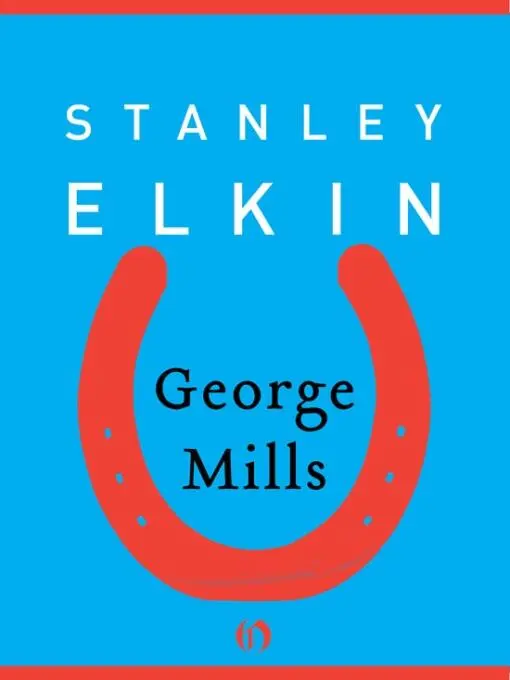
- Название:George Mills
- Автор:
- Издательство:Open Road Integrated Media LLC
- Жанр:
- Год:2010
- ISBN:нет данных
- Рейтинг книги:3 / 5. Голосов: 1
-
Избранное:Добавить в избранное
- Отзывы:
-
Ваша оценка:
George Mills: краткое содержание, описание и аннотация
Предлагаем к чтению аннотацию, описание, краткое содержание или предисловие (зависит от того, что написал сам автор книги «George Mills»). Если вы не нашли необходимую информацию о книге — напишите в комментариях, мы постараемся отыскать её.
George Mills — читать онлайн бесплатно полную книгу (весь текст) целиком
Ниже представлен текст книги, разбитый по страницам. Система сохранения места последней прочитанной страницы, позволяет с удобством читать онлайн бесплатно книгу «George Mills», без необходимости каждый раз заново искать на чём Вы остановились. Поставьте закладку, и сможете в любой момент перейти на страницу, на которой закончили чтение.
Интервал:
Закладка:
“They even lived like everybody else. In a first-floor apartment in one more of Mindian’s buildings. They took the youth bed, but they were just another couple now, just more neighbors. That’s not she.”
“Who?” George said.
“Your sister.”
“Where?”
“Never mind. It isn’t she.
“Your father wanted a girl. He hoped for a girl. Though he knew that no Mills in a thousand years had put forth any but male children only, he even expected a girl. That was at the back of his mind all along, of course. That’s why he’d agreed to marry her. If you’d been a girl he thought he would still have been able to dodge his fate. He still believed in his fate, you see, still saw himself in the myth victim’s delicious position, squeezed dry of force to change his life, with, at the same time, his eye on all the eleventh-hour opportunities that could change it for him. Almost, as it were, on fate’s side, confident he’d broken the code, taking the position that destiny has its fine print, oracle its double entendre, that whatever happens to people is a trick — God’s fast one. If she could find me all the way down there, he thought, in these conditions, living like someone on the lam, and if she not only stood still for what we did to each other but didn’t even once get up on her high horse or stand on her rights or read me the riot act when I put a bun in her oven or call in the Marines to shotgun the wedding and Mindian himself practically saying no harm done even if I didn’t marry her, well, it’s been too easy for all concerned, I think, for me and the grand George Mills design, and for Nancy, too. There’s a dozen ways I could have blocked it, stymied circumstance, and I’m still only twenty, I haven’t known this crap but a year yet, I wasn’t even trying, or shown them my stuff, or seen theirs. Hell, I practically didn’t put up no fight at all, I’m hardly winded and nothing I seen yet, nothing they thrown at me and nothing I been forced to take, could have busted the will of a child. It’s been too easy for all concerned so there’s got to be a catch. We’ll name the little tyke Nancy.
“But he named it George because it was a boy, because you were a boy. He named it George who wanted the character of a rebel without any of the expense.
“Because if he’d been really serious he could have stopped it right then, asked your mother to marry him like a proper gent and never used Mindian as a broker at all. If he’d really been serious he could have called you Bill or Steve or anything at all, or teased what he thought he had for nemesis with the very initial ‘G,’ calling you Gill or Giles or Greg or God knows what. The point is it was always in his power to break the chain, as it was in the power of any of his ancestors before him, back to and including the first George Mills. But he didn’t. None of them did. (Because people are suckers for fate, for all the scars to which they think they’re entitled.) The point is he never wanted to.
“Though by the time of the second pregnancy Nancy did. Look sharp. She’s coming. She’s almost here.”
The boy looked up. It was an ordinary afternoon. He could not have told by looking if it were Thursday or Monday, March or November. He was only twelve years old. There were people who believed he carried messages from the dead, that when he spoke their loved ones used his voice, that he knew things they would have to die to find out, that he had power, dread gifts. It was an ordinary afternoon. He knew his place in history and was waiting to be shown an infant ghost whom he would not be able to question because she had no vocabulary. It was an ordinary afternoon in his life. In Cassadaga. Where ego did not exist. Where it merged with bereavement, where grief was the single industry. Where children grieved. And soon his sister would be there. To give him a message. Which he thought he had already guessed. That there were no ordinary afternoons. That not just houses but the world itself was haunted. That death was up the palm tree. On the hoarding. In the square. It was an ordinary afternoon.
“Quite simply, she was bored. Fed up. She was the myth victim’s victim and, now she had heard the whole story and was actually a part of it, wanted nothing more to do with a man who saw everything that happened to him as a decree, a doom, whose every action, no, activity, whose every activity was part of some ritual of resignation, who believed, and performed because he believed, that history was looking. Or not history, autobiography, diary, home movies and scrapbook and family album — all self-absorbed church rolls and records, deeds and registers: ‘Now I am taking out the garbage.’ ‘Now I am shoveling coal.’ ‘Now I am fixing a toilet.’ ‘Now my sweat stinks of the lower oils and grimes, all the menial silts.’ ‘Now my back’s stiff and there’s a cramp in my leg.’ ‘Now I’m thirsty, now I’m hungry.’ ‘Now I am fucking my wife whose people are country people, farm people, and who has no references.’ He was not even serving God, only some image of his own abasement, his soul gone groveling beneath the thousand top-heavy lean years of his second-fiddle fate.
“While all she wanted was to be like Mrs. Simon. To learn bridge. Mah-jongg. The ladyfied games and graces. Gossip and shopping and haggling with tradesmen not over price but quality. Learning pot roast and studying chop, a fruit wisdom and a vegetable cunning. Now that she was no longer a lover she yearned to be a wife, Mrs. Simon’s kind of wife, not George Mills’s, to decide menu and judge drape, to fuss furniture and worry hors d’œuvre. To run her house like some Wisconsin geisha and know the neighbors. She even looked at those manuals — God knows where she got them — that explain what goes where and when, and set up the secret asiatic pleasures like a blueprint or a diagram for wiring houses, the simple line drawings, about as erotic as the illustrations in gymnastic texts. (Though she knew your father would never have permitted these refinements, declining them not on moral grounds but on aesthetic and class ones, as he would have refused to eat cold soups and high-faluting breads if she had prepared them.)
“To be like Mrs. Simon, who had become in even the short time Nancy worked for her a kind of heroine to the country girl. Not resenting for a moment that the master bath was off limits to her but, on the contrary, made a little weak in the knees in the presence of such contrived disdain, for, give her credit, she had it on the evidence of Mrs. Simon’s underwear that the disdain and distancing were entirely willed. That’s what she wanted. That complete, casually indifferent and solidly confident social hypocrisy. Not, you will see, to make herself over — that’s too hard, it can’t be done anyway — so much as to make others over, to get them to accept at least a little her judgment of them. That’s what she wanted. You will see that it was the exact opposite of what your father wanted. Who lived by other people’s judgment of him. Who refused to live otherwise.
“Above all, she wanted to write references. (If she wanted a maid it wasn’t so someone else might do her work for her, it was so she could always have someone around who would feel the force of her judgments.) In the absence of a maid of her own she borrowed other people’s, the girls she saw in the laundry room, or the ones who came to their apartment to report things that required the janitor’s attention. She watched them in the park with their charges, the children of the other tenants, who would never quite be neighbors, when she wheeled you in your carriage, when she pushed you in your stroller — both, not gifts exactly, hand-me-downs from those strange storage lockers which had served first your father, then your mother, and now yourself, like some queer furniture and appliance mine (so that in a way you were already sister’d, brother’d, not just because older children had outgrown the baby and toddler implements which you yourself would outgrow and which would be held in a kind of brotherly escrow for the child your mother would bear dead, but because they came up out of those same dampnesses and darknesses where you yourself were conceived, the ground of your being in the ground) — and carefully noted how attentive or inattentive they were, whether they exceeded their authority by abusing children who did not mind, and observed them marketing, whether they watched the scales when meat was weighed, produce, whether they counted their change. Discovering what she could of their personal habits, whether they were clean, whether they flirted.
Читать дальшеИнтервал:
Закладка:
Похожие книги на «George Mills»
Представляем Вашему вниманию похожие книги на «George Mills» списком для выбора. Мы отобрали схожую по названию и смыслу литературу в надежде предоставить читателям больше вариантов отыскать новые, интересные, ещё непрочитанные произведения.



Обсуждение, отзывы о книге «George Mills» и просто собственные мнения читателей. Оставьте ваши комментарии, напишите, что Вы думаете о произведении, его смысле или главных героях. Укажите что конкретно понравилось, а что нет, и почему Вы так считаете.