Stanley Elkin - George Mills
Здесь есть возможность читать онлайн «Stanley Elkin - George Mills» весь текст электронной книги совершенно бесплатно (целиком полную версию без сокращений). В некоторых случаях можно слушать аудио, скачать через торрент в формате fb2 и присутствует краткое содержание. Год выпуска: 2010, Издательство: Open Road Integrated Media LLC, Жанр: Современная проза, на английском языке. Описание произведения, (предисловие) а так же отзывы посетителей доступны на портале библиотеки ЛибКат.
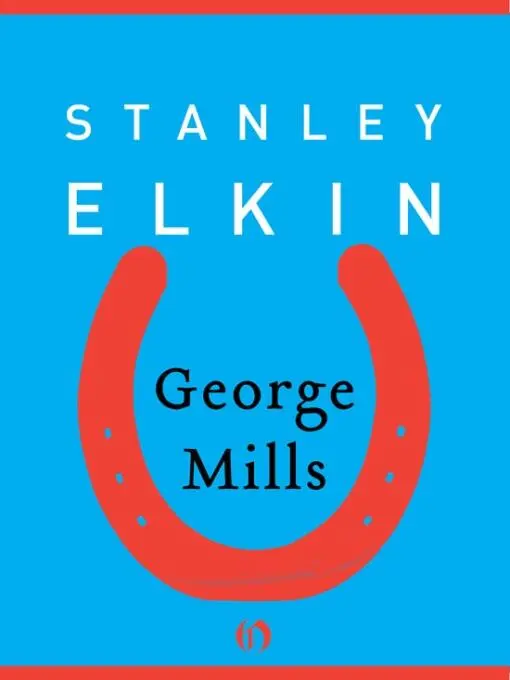
- Название:George Mills
- Автор:
- Издательство:Open Road Integrated Media LLC
- Жанр:
- Год:2010
- ISBN:нет данных
- Рейтинг книги:3 / 5. Голосов: 1
-
Избранное:Добавить в избранное
- Отзывы:
-
Ваша оценка:
George Mills: краткое содержание, описание и аннотация
Предлагаем к чтению аннотацию, описание, краткое содержание или предисловие (зависит от того, что написал сам автор книги «George Mills»). Если вы не нашли необходимую информацию о книге — напишите в комментариях, мы постараемся отыскать её.
George Mills — читать онлайн бесплатно полную книгу (весь текст) целиком
Ниже представлен текст книги, разбитый по страницам. Система сохранения места последней прочитанной страницы, позволяет с удобством читать онлайн бесплатно книгу «George Mills», без необходимости каждый раз заново искать на чём Вы остановились. Поставьте закладку, и сможете в любой момент перейти на страницу, на которой закончили чтение.
Интервал:
Закладка:
“May I have my glass of lemonade?” she asked.
She seemed less than inches off, her body glowing with its presence and weight and power.
“Give me the lemonade,” she said. “I’ve already asked you once.”
He picked the drink up from the table and held it out to her. She made no move to take it from him.
“The lemonade,” she repeated. He pushed his hand closer, but felt reined, checked, doing some strange balancing act of the level ground, some odd, squeezed constraint like a resisted fart.
“Set it down,” she commanded. “Do I look like a woman who drinks lemonade? Stop that whimpering.” She handed him a tissue.
“What is it?” he asked.
“Rush hour,” she said. “My askew totemics.”
“It’s the black lipstick, your blue face powder.”
She didn’t answer.
“It’s the dress,” he said, “it’s the turban.”
She said nothing.
“It’s my good posture,” she said softly. “It’s my sealegs. It’s my specific gravity and unsprawled essence.”
“You scared me,” George said.
“Ah,” said Madam Grace Treasury.
He was a bit scared of all of them.
Even of Professor John Sunshine, psychic historian and Cassadaga buff, who lectured him on the subjects of Cassadaga, midgets, freaks, and what Sunshine called “the marked race of Romany.”
“The development of Cassadaga and the establishment of the circus’s winter quarters in De Land were almost attendant,” he said. “You could have had the other without the one but not the one without the other. It’s almost as if the town were founded on some debased bedrock of declined, vitiate genes, as if blemish and the sapped heart were to the origins of Cassadaga what a fresh water supply and the proximity of a railroad were to the development of Chicago, say.
“We don’t know either the significance of the name or how the area came to have it in the first place, but in all probability it goes back to that marked race of Romany, that same hampered, degraded, clipped-wing brood which was the town’s reason for being. Perhaps a curse or threat, some gypsy-hissed snarl or deterrent. Perhaps even an ultimatum, some sinister dun, the soul’s dark invoice. So even if I don’t have the literal translation — this would be slang, you see, idiom, some word or words fugitive (Cassadaga. Cas sa daga! Cassa! da Ga!) even to that touring company of the fugitive, double-talk to the ensemble, the swarthy old-timers and pierce-lobed regulars, slang, patter, argot, cant — I have the metaphorical one: some busted negotiation between buyer and seller. Maybe not even language finally, maybe only furious extemporized sound, the clicks and spirants, dentals and velars of Romany rage. Cassadaga! Ca ssad a ga! Cock-a-doodle-doo!
“Nor do we understand why, if the founding of Cassadaga and the founding of the circus’s winter quarters in De Land were practically collaborate, Cassadaga would be fifteen miles from De Land. We may speculate, of course.
“The mark of the marked race of Romany is to a large extent self-inflicted. They are an aloof, self-exiled, stand-offish people, wanderers who carry their ghetto with them, who move through the world like refugees, as if whatever they may have left in any direction in which they are not immediately traveling is either already burning or contagious. Cassadaga wouldn’t have been Cassadaga then. Whatever it was that happened between the gypsy girl and the gadge wouldn’t have happened yet. It would have been a clearing, a place to put the caravan down, at once far enough off from De Land and close enough in, situated nearby the gadge money and opportunity which would have been the marked race of Romany’s equivalent of fresh water and the proximate railroad.
“Of course they fraternized with the stiffs and roustabouts. It wouldn’t even have been fraternization in the strict sense of the term, the stiffs and roustabouts — my God, even the tumblers, acrobats and flyers; even the clowns, wire walkers and animal trainers themselves — barely a step up the evolutionary ladder from the marked race of Romany.”
He looked at George with his intense eyes, examining him as he spoke. He didn’t miss a beat. He didn’t miss anything, and the boy felt Sunshine’s hot scrutiny and wondered if perhaps something shameful weren’t happening on the surface of his skin. Sunshine might have been a G-man, George suspect currency.
“Have you seen them? When you go into De Land with your father or to school, do you take a good look at them? Not just giving them the once-over for ringlets or swarthy skin, for holes in their ears or a garlic in their mouth — hair can be combed straight or hidden under a cap, skin can bleach out in winter quarters; holes fall in on themselves and a clove can be covered by a tongue, though most of them don’t bother — but really looked at them, at their foreigners’ cheekbones like subcutaneous wales or some dead giveaway marked Romany spoor of indefinite half-life, at their scars and tattoos like marked trees or a vulgar postage? Have you looked in their eyes or smelled the smoke on their skin? (It gets into their pores. They can never get rid of it.) Have you seen their bunkhouses? The floors have great wooden wheels under them and the wheels are buried in the ground. You didn’t look at them, you look at them next time.”
All the while looking at George — who hadn’t seen his sister yet but had recently had from his father a bit of the story of the first George Mills — examining him as he’d advised George to examine the roustabouts and circus performers. (And when, George wondered, will I be brave enough to look at another human being the way this strange man is looking at me?)
“Of course they fraternized. Hell, maybe it wasn’t even fraternization, maybe it was just family reunion. But remember what they were there for, too. Marked race of Romany or no, cousins or no, these roustabouts and artistes were just so much gadge gold to the gypsies. (And maybe that’s why you don’t find rings in a roustabout’s ear. Because the gypsies stole them!) They sold them their daughters’ virginity, or its appearance, its raw chicken skin prosthetic equivalency, its family secret recipe cosmetic blood, or sold them to the roustabouts anyway, the artistes having daughters of their own, their own merchandise, and gambled with them, the artistes, too, and told their fortunes and worked spells against their enemies for money, and something which was even of more importance and real value to them, to the artistes, not the roustabouts, than anything else. They sold them magic.
“The marked race of Romany sold the circus people their talent. They sold them magic balance. Before the gypsies came in from Cassadaga, the wire walkers were merely skilled, trained, vaguely equilibriumally inclined, say. Afterward, they were surefooted as mules, as cats and mountain goats, with a gift for recovery and balance like a bubble in a level. There was inner ear in the soles of their feet. They could walk up a tree as casually as you climb stairs.
“They sold strength to the acrobats, infusing their legs and arms with the force of bombs, selling them flexibility, endurance, the tractables of great apes, a lung capacity that was operatic. The pyramids they did now were Cheopsic, Pharaonic. They could hang by a pinkie or stand on their hair.
“And height to the flyers, loft and lift, the tucks, spins and gainers of birds, the timing of salmon.
“And sold to the animal trainers, the lion tamers and bear and elephant handlers, the equerry and equestriennes, a Doolittle knowledge of the beastly heart, some Braille brute feel for fauna that was not so much mastery as plain hard bargaining, actual clausal, contractual negotiation, some stipulate Done! Shake! binding agreement, and the locked cage like a union shop! Selling them not magic courage, because you can’t buy courage, but a gift for magic enterprise, magic haggle — the bull market, the bear — faerie quid pro quo, the tiger’s leap through a fiery hoop knocked down for red meat, the bears and horses humbled for a sweet, extra straw. Selling them not courage but courage’s opposite — risklessness: that watered cement and short-cut materiel of the soul which permitted the purchaser never even ever to need courage again, so that each time he walked into the cage or raised the now entirely ornamental whip in the center ring as the panthers fled past in lively lockstep dressage, it was with the knowledge — his and the animals’—that the fix was in. (Maybe that’s what ‘Cassadaga’ means. Perhaps it’s only Gypsy for ‘Do this trick and I’ll leave you alone.’)
Читать дальшеИнтервал:
Закладка:
Похожие книги на «George Mills»
Представляем Вашему вниманию похожие книги на «George Mills» списком для выбора. Мы отобрали схожую по названию и смыслу литературу в надежде предоставить читателям больше вариантов отыскать новые, интересные, ещё непрочитанные произведения.

Обсуждение, отзывы о книге «George Mills» и просто собственные мнения читателей. Оставьте ваши комментарии, напишите, что Вы думаете о произведении, его смысле или главных героях. Укажите что конкретно понравилось, а что нет, и почему Вы так считаете.