Mahmoud Dowlatabadi - Missing Soluch
Здесь есть возможность читать онлайн «Mahmoud Dowlatabadi - Missing Soluch» весь текст электронной книги совершенно бесплатно (целиком полную версию без сокращений). В некоторых случаях можно слушать аудио, скачать через торрент в формате fb2 и присутствует краткое содержание. Год выпуска: 2012, ISBN: 2012, Издательство: Melville House, Жанр: Современная проза, на английском языке. Описание произведения, (предисловие) а так же отзывы посетителей доступны на портале библиотеки ЛибКат.
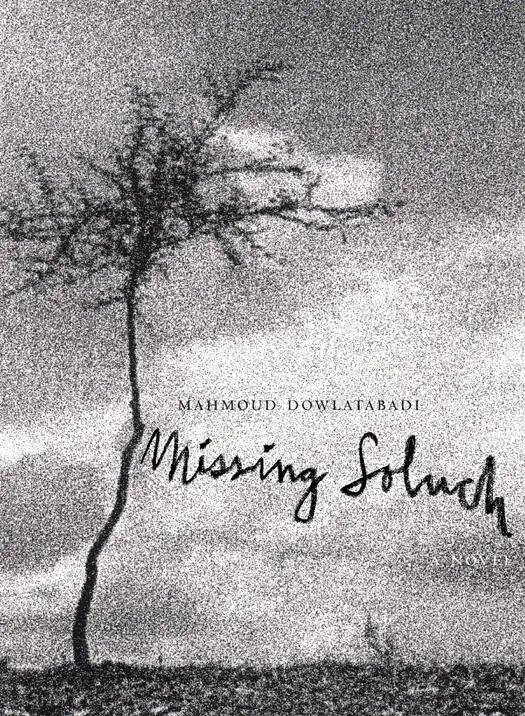
- Название:Missing Soluch
- Автор:
- Издательство:Melville House
- Жанр:
- Год:2012
- ISBN:978-1-61219-180-5
- Рейтинг книги:4 / 5. Голосов: 1
-
Избранное:Добавить в избранное
- Отзывы:
-
Ваша оценка:
Missing Soluch: краткое содержание, описание и аннотация
Предлагаем к чтению аннотацию, описание, краткое содержание или предисловие (зависит от того, что написал сам автор книги «Missing Soluch»). Если вы не нашли необходимую информацию о книге — напишите в комментариях, мы постараемся отыскать её.
Lyrical yet unsparing, the novel examines her life as she contends with the political corruption, authoritarianism, and poverty of the village. It follows her vacillations between love for Soluch and anger at his absence, and her struggle to raise her children without their father.
The novel critically evokes the unfulfilled aspirations of modern Iran, portraying a society caught between a past and a future that seem equally weighed down by injustice.
This landmark novel — the first ever written in the everyday language of the Iranian people — revolutionized Persian literature in its beautiful and daring portrayal of the life of a marginal woman and her struggle to survive.
Missing Soluch — читать онлайн бесплатно полную книгу (весь текст) целиком
Ниже представлен текст книги, разбитый по страницам. Система сохранения места последней прочитанной страницы, позволяет с удобством читать онлайн бесплатно книгу «Missing Soluch», без необходимости каждый раз заново искать на чём Вы остановились. Поставьте закладку, и сможете в любой момент перейти на страницу, на которой закончили чтение.
Интервал:
Закладка:
It was dusk. The shadows from the thistle bushes were long on the earth. She left the field and turned to look at the watermelon plants. The plants had been upended in the dirt. Most of them had dried out. No, nothing would be harvested this year. What harvest? What work? Mergan, all alone and between her various jobs, had come and planted seeds and left them. But that was it. She’d not had the opportunity to tend to the patch. She had to go. With regret in her heart, she turned and left.
* * *
Zaminej was sinking into the dark embrace of dusk. Shadows came to and fro. Women walked, carrying containers of water on their backs. Men passed in small groups, walking shoulder to shoulder. A donkey, with no saddle, stood looking lost. A dog passed slithering alongside the wall. An owl sat in a ruined house.
Mergan walked along the wall. She was lost in thought, walking in the dark alleys. A silent darkness. In the old village, even intimate friends would fail to recognize one another. Mergan walked with her head lowered. Her home was not in the alley she had chosen to walk along. This alley led to the Sardar’s home. The back alley. Mergan was worried about Abbas. But she had decided that she would have to ask the Sardar to give her his pay. She felt that if she at least was able to collect his pay, it might have some effect on her son’s poor health.
The Sardar’s camels were scattered here and there. Sitting, standing, lying. The Sardar was sitting, busy tying up his tools and rope in the light of a lantern hanging from a nail in the wall. It seemed he was readying to take out the camels at the break of dawn. Quietly, softly, Mergan entered the yard and walked toward the Sardar. He had finished tying a knot and looked up. Mergan was standing before him. He wiped the flecks of hay that were stuck to his beard and eyebrows with the palm of his thick hand and set his big dark eyes on Mergan.
“So. You’ve come then. What do you want?”
Mergan said, “Just Abbas’ pay.”
“His pay? What pay?”
“Just the pay for his work. For herding your camels. We can’t get any work now. He hasn’t even been able to take my hand and go work. I went to see my land and …”
“Aha! So … pay! Ha! Fine. But what about my camel? Who will pay me for that?”
“I don’t know! What does it have to do with me?”
“You know it was worth a hundred toman ?”
“Why should I know?”
“That camel was my best animal. Your son killed it!”
“Why do you say that?”
“Well then, who killed it?”
“Snakes! It was bit by a snake!”
“Well, fine, it was bit by a snake. But your son was responsible. Why do we send a herder out to watch the herd?”
“Your camel was crazed. You should have had it tied down!”
“How should I have known? You think I have second sight? Or that my mother was …”
“You knew. You knew. How can you call yourself a camel breeder and not know something like that? Your job is to know everything about them!”
“Yes, fine. Okay. My job. But if a camel gets spring fever, what am I to do?”
“You don’t have to do anything right now! I just need to know what I can do. My son’s turned into an old man. From working for you, he’s become an invalid! What am I to do with him? How am I to feed him? I’ve lost my young man. What do you think I should do?”
“What do I know? God will provide.”
“I’m not here begging from you, for you to say that God will provide! I just want my son’s pay.”
“Your son killed my camel, and you still want me to pay him? There were forty knife wounds on his head and neck! Didn’t you see? I couldn’t sell the hide for half the usual price, since it was full of cuts. Were you blind or didn’t you see the field was full of blood? How do you think I found your son that night? By following the footprints in the blood, blood that was on the earth, the blood of my camel!”
The Sardar rose and began to walk toward the stables for the camels. Mergan hesitated, then said to him, “Sardar, you’ll never be able to rest. My son will be a curse on you!”
The Sardar stuck his head into the stables and said, “You go on then. The cat’s prayers won’t bring rain!”
Then he was lost in the darkness of the stables.
Mergan waited by his sack, hoping that he would come out again. But it seemed he wasn’t planning on coming out anytime soon. So she went to the stables. There was too much left to say! She stood by the door. The Sardar had lit an oil lamp and had busied himself with mending a camel shawl. She leaned in the doorway and stared at him. He looked like a huge ghoul fixated on his work.
“Eh! So you’re still here?”
Mergan said with a broken voice, “Sardar, we’re relatives now. My daughter’s married to your cousin. You can’t leave us like this! Tradition …”
“All right! Go fetch me a cup of water to drink and we’ll see what we can do!”
Mergan was familiar with the homes of everyone in the village. She went, took a bowl from the pantry, filled it with water, and brought it back to the Sardar.
The light only illuminated the face and knees of the Sardar, where he had laid out the camel shawl he was mending. The rest of the stables remained dark. It was a wide room with a high ceiling, where the camels would stay during the depths of the winter. The smell of wool and hay and cottonseed, and the odor of the mud-brick walls, filled the air. She walked slowly toward the Sardar with the bowl of water, then stood before him. He raised his large head, and before he took the water from her, he fixed his eyes on her. There was something strange fluttering in the depths of his eyes. It was frightening, wild, and barbaric.
Mergan blinked. He had the same look, persistent and penetrating. Her hands began to tremble. The water poured from the edges of the bowl. A few drops poured onto the Sardar’s hand. The cup was clearly shaking in her hands. A crooked smile cut a crack through his beard and moustache. Her heart beat faster, feeling like a bird caught in the sights of a viper. She was caught in the spell; something was growing within her. A new and terrifying world seemed to open up.
Until this moment, Mergan hadn’t thought to make a mention of the Sardar’s wife, who had run away from him. This was twenty years ago, and he had not yet remarried. Since then, he’d lay his head on his pillow alone each night. During his camel-herding days, he had brought his wife — who was still no more than a girl — back from Yazd. Within a year, she had run away. Her brothers and uncle, who were traveling to Kashmir, had come to buy wheat in the village and had taken her away with them while he was gone. So, she had run away with her own relatives. When he returned, the Sardar couldn’t bring himself to go looking for a new wife.
The water was pouring from the bowl. Mergan was trembling. She was frozen and trembling; she didn’t know how to escape. Oh God! She dropped the bowl and leapt toward the door of the stables. She ran. Just then a camel stepped into the doorway. She stopped, and before she knew it, her leg was in the clasp of the Sardar’s rough hands. He pulled her back to the darkness at the end of the stable.
“Where do you think you’re running to, my little bird?!”
“No! Not this … Not this!”
He paid no mind to her cries. The camel shawl and bridle were tangled up around her head. These lands had been left fallow for too long.
She gave in. Enough!
When she pulled off the camel bridle and shawl and threw them aside, the Sardar was gone. First, she took a breath; the suffocating thought that she was about to lose something had overwhelmed her. This was replaced by incredulity, disbelief. She waited a second in the darkness. Then she leapt up, like a bird with its head cut off. A camel was looking at her. Her mind felt beaten, kicked to a pulp. She grabbed her breeches and went into the yard. It was quiet there. The camels were still as they had been. She heard the chains of the door being shut; she saw the Sardar shutting the door. She put on her breeches quickly. He entered the yard; his eyes and lips were still trembling. It was as if she were seeing him for the first time. She came to herself. Terror. She was filled entirely with a sense of terror. She covered her mouth with one hand to stop herself from screaming. The scream was caught like a bullet in her throat. The Sardar stood still; he didn’t move. But Mergan sensed he was coming closer. Why was he facing her now? She walked backward until she hit the wall. The stairs to the roof were behind her. Still covering her mouth, she began backing up the steps, using her other hand as she went. She was on the roof. He kept looking at her; his eyes watched her. Mergan pulled herself over the rooftop. Open fields, the other side was only open fields. She jumped down and into the fields. She threw herself into the night. She leapt and took her hand from her mouth. The fields were full of cries, and the night full of wailing. Like the cries of the jackal. The howling of the jackal.
Читать дальшеИнтервал:
Закладка:
Похожие книги на «Missing Soluch»
Представляем Вашему вниманию похожие книги на «Missing Soluch» списком для выбора. Мы отобрали схожую по названию и смыслу литературу в надежде предоставить читателям больше вариантов отыскать новые, интересные, ещё непрочитанные произведения.






Обсуждение, отзывы о книге «Missing Soluch» и просто собственные мнения читателей. Оставьте ваши комментарии, напишите, что Вы думаете о произведении, его смысле или главных героях. Укажите что конкретно понравилось, а что нет, и почему Вы так считаете.