Kader Abdolah - My Father's Notebook
Здесь есть возможность читать онлайн «Kader Abdolah - My Father's Notebook» весь текст электронной книги совершенно бесплатно (целиком полную версию без сокращений). В некоторых случаях можно слушать аудио, скачать через торрент в формате fb2 и присутствует краткое содержание. Год выпуска: 2007, Издательство: Canongate Books, Жанр: Современная проза, на английском языке. Описание произведения, (предисловие) а так же отзывы посетителей доступны на портале библиотеки ЛибКат.
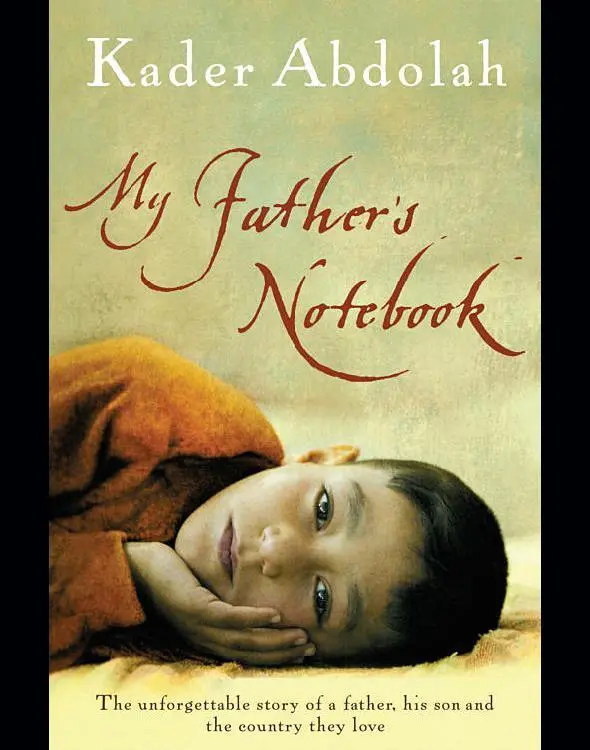
- Название:My Father's Notebook
- Автор:
- Издательство:Canongate Books
- Жанр:
- Год:2007
- ISBN:нет данных
- Рейтинг книги:3 / 5. Голосов: 1
-
Избранное:Добавить в избранное
- Отзывы:
-
Ваша оценка:
My Father's Notebook: краткое содержание, описание и аннотация
Предлагаем к чтению аннотацию, описание, краткое содержание или предисловие (зависит от того, что написал сам автор книги «My Father's Notebook»). Если вы не нашли необходимую информацию о книге — напишите в комментариях, мы постараемся отыскать её.
My Father's Notebook — читать онлайн бесплатно полную книгу (весь текст) целиком
Ниже представлен текст книги, разбитый по страницам. Система сохранения места последней прочитанной страницы, позволяет с удобством читать онлайн бесплатно книгу «My Father's Notebook», без необходимости каждый раз заново искать на чём Вы остановились. Поставьте закладку, и сможете в любой момент перейти на страницу, на которой закончили чтение.
Интервал:
Закладка:
My father went away again for a long time. When he came back, I was eighteen and ready to leave home.
In the last five years, our society had changed completely. The shah was firmly entrenched on his throne and in control of almost everything.
Oil prices had risen and the United States was helping him become the region’s watchdog. The opposition had been crushed and the economy had started to grow — more jobs, higher salaries.
Everything was different. Even the seasons weren’t what they used to be. The winters didn’t seem as cold. Maybe that was because we’d bought a decent heater, or because we ate better — more meat, more fruit, more vegetables.
Tina no longer had to work. My father, who had gone back to mending carpets, now earned enough to support us.
Our remote city, which used to be controlled by the imams, was now divided among the Americans, who built a new refinery, the Germans, who revamped our railway system, the Dutch, who dug our canals, and the Russians, who were building a tractor factory.
For the first time ever, we painted the doors of our house and replaced the front door, a worn-out wooden affair, with a sturdy iron one. We had the courtyard paved with yellow tiles. Tina was delighted with all these changes.
Imagine that your daughters had a deaf-mute for a father and a house with an ugly front door. Who would come to ask for your daughter’s hand in marriage?
One chilly evening in autumn, I took hold of my father’s arm and said, “Come with me. I have something to tell you.”
The wind was blowing sand in our eyes and mouths. We needed to find a place where we could warm ourselves inside and out, so we went to a nearby teahouse.
“How are you, Ishmael?” the owner asked as he wiped the table. “What are father and son doing in my teahouse? Important business?”
“The autumn wind brought us here.”
“Welcome. You’re the finest boy in the area. If I had a daughter, you’d be the perfect son-in-law. You take good care of your father and your sisters. Boys these days have no respect for their parents. You’re a good boy. This first round is on the house. And here’s a bowl of fresh dates to go with it.”
“Fresh dates in the cold autumn?”
“Oh, I just said the first thing that popped into my head. You see, you’re different. You listen. Boys don’t listen anymore. Here, scoot over towards the heater, where it’s nice and warm. Praise be to Allah! You respect your parents.”
It was the first time I’d taken my father to that teahouse. Maybe that’s why he realised that I had something important to tell him.
“I’ve finished high school,” I began. “I’ve stopped going to—”
“You’ve stopped going to school?”
“I’ve graduated. I don’t have to go anymore. But I’m going to study somewhere else. What I mean to say is, I’m leaving home.”
He sat bolt upright.
“Leaving home? Why? Where?”
“I have to read other kinds of books.”
“Can’t you get the books here?”
“It’s not just the books. I have to go to another school, to a university, a big school in the capital, where the shah lives.”
“OK, I understand that you’re going to a big school in the city of the shah, but not what kind of books you’re going to read.”
“Books about light, for example.”
“Light?”
“About darkness and light, about air, about aeroplanes, about—”
“Air? Aeroplanes?”
“Yes, air is very important. Aeroplanes can’t fly without air.”
My father thought it over. He had no concept of a university, didn’t understand how a person could die without air, had no idea where Tehran was located and was puzzled by my field of study, but he did realise that something important was about to happen. He slumped back against the chair, exhausted.
“What’s the matter? I’m not dying, I’ll be back. The studying will be good for me, good for you and good for Tina.”
“How long will you be gone?”
“Five or six years, I’m not sure, but I’ll come home from time to time.”
The owner put two fresh glasses of tea down in front of us.
“He’s leaving,” gestured my father.
“Leaving? Where’re you going?” asked the owner.
“I’ve been accepted at the University of Tehran.”
“The University of Tehran!” he exclaimed.
“Yes, but it’s hard to leave my family behind.”
“What’s that you’re saying? Hard? Leave them. Of course you should go!”
“He’s going to learn about the sun,” my father gestured. “He’s going to read books about air, because air is important. If there’s no air, you die, he says.”
“What’s your father saying?”
“Oh, nothing special, he … he’s talking about what I’m going to study.”
My father went on. “Did you know that at first there was nothing and then suddenly there was a big bang and then the stars began to glow? You didn’t know that? I didn’t, either, but Ishmael knows everything. He’s very important, he’s going to the city of the shah to study.”
“What’s he talking about?” the owner asked.
I laughed. “Oh, nothing special, he said that I’m going to study physics.”
We drank our tea and sat for a while. I had another surprise in store for my father.
“I have to ask you to stop going away.”
“What?”
“To stop going to the mountains, to stop leaving home.”
“Why?”
“Because there has to be a man around the house when I’m gone.”
“But I … I have to. I can’t stop.”
“I’m going to open a shop for you.”
“A shop? For me?”
“Yes, a shop, a workshop, so you won’t have to go from place to place. You can stay in your shop, and when people need something, they’ll come to you.”
This idea was more shocking to him than the fact that the earth revolves around the sun.
“What kind of a shop? I can’t run it without you.”
“Don’t worry. Golden Bell will come and help you.”
“Golden Bell?”
“Yes, I’ve already talked to her about it. S he’ll come to the shop every day after school.”
The arrangements had already been made. The editor of the newspaper for which I was still working had helped me get a loan, and through friends of his, who worked for the municipal government, I was granted official permission to look for a shop in our neighbourhood.
My father had no choice. He couldn’t believe the preparations were at such an advanced stage. On the one hand, he was delirious with joy. On the other hand, he had a secret. He insisted that he had to go away sometimes.
“OK, but only for a few days.”
A month later my father, my mother, my sisters and I opened the shop. Golden Bell promptly sat down at “her” table. She had bought a mirror for my father with her own money. We all had on new clothes. I was wearing the suit that Tina and I had bought for me to wear to the university.
The shop was open. A dream had come true. Aga Akbar was standing in his own shop.
*Tina worked at home, mending textiles for the mill. Her job helped her to rid herself of the wolf.
Giant Shadows
Soon after he moves to Tehran, Ishmael joins an underground
movement. All contact with his father has to be
broken. Akbar is forced to stand on his own two feet. Or
perhaps Ishmael is the one who has to learn how to
stand on his own.

To my surprise, even here in the polder, people or events can have a direct, or sometimes indirect, bearing on my father’s notebook.
Читать дальшеИнтервал:
Закладка:
Похожие книги на «My Father's Notebook»
Представляем Вашему вниманию похожие книги на «My Father's Notebook» списком для выбора. Мы отобрали схожую по названию и смыслу литературу в надежде предоставить читателям больше вариантов отыскать новые, интересные, ещё непрочитанные произведения.




Обсуждение, отзывы о книге «My Father's Notebook» и просто собственные мнения читателей. Оставьте ваши комментарии, напишите, что Вы думаете о произведении, его смысле или главных героях. Укажите что конкретно понравилось, а что нет, и почему Вы так считаете.