Andre Malraux - Man's Fate
Здесь есть возможность читать онлайн «Andre Malraux - Man's Fate» весь текст электронной книги совершенно бесплатно (целиком полную версию без сокращений). В некоторых случаях можно слушать аудио, скачать через торрент в формате fb2 и присутствует краткое содержание. Год выпуска: 1990, Издательство: Vintage, Жанр: Современная проза, на английском языке. Описание произведения, (предисловие) а так же отзывы посетителей доступны на портале библиотеки ЛибКат.
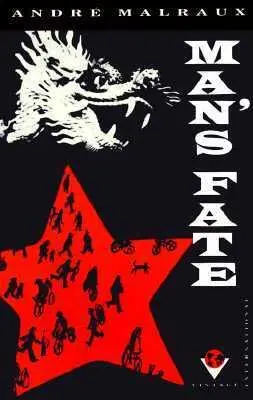
- Название:Man's Fate
- Автор:
- Издательство:Vintage
- Жанр:
- Год:1990
- ISBN:нет данных
- Рейтинг книги:3 / 5. Голосов: 1
-
Избранное:Добавить в избранное
- Отзывы:
-
Ваша оценка:
Man's Fate: краткое содержание, описание и аннотация
Предлагаем к чтению аннотацию, описание, краткое содержание или предисловие (зависит от того, что написал сам автор книги «Man's Fate»). Если вы не нашли необходимую информацию о книге — напишите в комментариях, мы постараемся отыскать её.
As a study of conspiracy and conspirators, of men caught in the desperate clash of ideologies, betrayal, expediency, and free will, Andre Malraux's novel remains unequaled.
Man's Fate — читать онлайн бесплатно полную книгу (весь текст) целиком
Ниже представлен текст книги, разбитый по страницам. Система сохранения места последней прочитанной страницы, позволяет с удобством читать онлайн бесплатно книгу «Man's Fate», без необходимости каждый раз заново искать на чём Вы остановились. Поставьте закладку, и сможете в любой момент перейти на страницу, на которой закончили чтение.
Интервал:
Закладка:
Ch’en and his companions now had to separate. There were surely plain-clothes men in the crowd, along the whole way traveled by the car. From a small Chinese bar Pei was going to watch for Ch’en’s signal; farther off, Suan would wait for Pei to come out. At least one of them would probably be killed, Ch’en no doubt. They were afraid to speak-afraid of the finality of words. They separated without even shaking hands.
Ch’en entered the shop of the antique-dealer and asked to see one of those small bronzes found in excavations. The dealer pulled a stack of purple satin boxes from a drawer. They tumbled in a pile on the counter, and he began to spread them out. He was not from Shanghai, but from the North or from Turkestan; his sparse, soft mustache and beard, the narrow slits of his eyes, were those of a low-class Mohammedan, as was also his obsequious mouth; but not his ridgeless face, which resembled that of a flat-nosed goat. Anyone who denounced a man found on the general’s path carrying a bomb would receive a fat sum of money and great esteem among his people. And this wealthy bourgeois was perhaps a sincere partisan of Chiang Kai-shek.
“Have you been in Shanghai long?” he asked Ch’en. What sort of fellow was this strange customer? His embarrassment, his constraint, his lack of curiosity in the objects displayed, made the dealer uneasy. The young man was perhaps not used to wearing European clothes. Ch’en’s thick lips, in spite of his sharp profile, gave him a good-natured look. The son of some rich peasant from the interior? But the big farmers did not collect ancient bronzes. Was he buying for a European? He was neither a houseboy nor an agent-and if he was a collector himself, he was looking at the objects he was being sho- n with very little love: he seemed to be thinking of something else.
For Ch’en was already watching the street. From the shop he could see to a distance of two hundred meters. How long would he be able to see the car? But what chance had he to calculate while confronted with this fool’s curiosity? First of all he had to answer. To remain silent was stupid:
“I used to live in the interior," he said. “The war forced me to leave."
The other was going to question him again. Ch’en felt that he was making him uneasy. The dealer was now wondering if he was not a burglar who had come to look over his shop to plunder it the next time disorders broke out; however, the young man did not ask to look at the finest pieces. Only bronzes or fox-heads, and of moderate price. The Japanese like foxes, but this customer was not Japanese. He would have to try to draw him out with other questions.
“No doubt you live in Hupei? Life has become very hard, they say, in the central provinces."
Ch’en was wondering if he could not pretend to be partly deaf. He did not dare, afraid of seeming even stranger.
“I don’t live there any more," was all he answered. His tone, the structure of his sentences, had something abrupt about them even in Chinese: he expressed himself directly, without using the customary circumlocutions. But it occurred to him to start bargaining.
“How much?” he asked, pointing to a clasp with a fox’s head such as are found in great number in tombs. “Fifteen dollars.”
“I should think eight would be a good price. ” “For such a piece? How can you think. Consider that I paid ten for it. Put my profit on it yourself.” Instead of answering, Ch’en was looking at Pei seated at a little table in the open bar, his eye-glasses reflecting the light; the latter probably could not see him because of the window-pane of the antique-shop. But he would see him come out.
“I can’t pay more than nine,” he said finally, as if expressing the result of careful reflection. “At that I can’t really afford it.”
The formulas, in this realm, were traditional and they came readily to his lips.
“It’s my first deal today,” answered the antique-dealer. “Perhaps I’ll make this little sacrifice of a dollar. If you make a sale with your first customer it’s a good omen. ”
The deserted street. A rickshaw, in the distance, crossed it. Another. Two men appeared. A dog. A bicycle. The men turned to the right; the rickshaw had crossed. The street once more deserted; only the dog. …
“Just the same, couldn’t you make it nine and a half? …”
“AE right, to show my good-will.”
Another porcelain fox. More bargaining. Ch’en, since his purchase, inspired greater confidence. He had earned the right to reflect: he was deciding what price he would offer, the one which would subtly correspond to the quality of the object; his worthy meditation must not be disturbed. “In this street the car travels at forty kilo- meters-more than a kilometer in two minutes. I’ll be able to see it a little less than a minute. Not very much. Pei must keep his eye right on this door. ” No car was passing in this street. A few bicycles. He bargained over a jade belt buckle, did not accept the dealer’s price, said he would discuss it later. One of the clerks brought tea. Ch’en bought a small crystal fox- head, for which the dealer asked only three dollars. The shopkeeper’s suspicion, however, had not completely disappeared.
“I have some other very fine pieces, very authentic, with some very pretty foxes. But they are pieces of great value, and I don’t keep them in the shop. We could arrange a meeting. ”
Ch’en said nothing.
“. I might even send one of my clerks for them. ”
“I’m not interested in the very valuable pieces. Unfortunately I’m not rich enough.”
Apparently he was not a thief; he did not even ask to see them. The antiquarian went back to the jade belt buckle, displaying it with the delicacy of one who specializes in handling mummies; but in spite of the words which passed one by one between his gelatinous lips, in spite of his concupiscent eyes, his customer remained indifferent, distant. Yet it was he who had picked out this buckle. Bargaining is a collaboration, like love; the dealer was making love to a board. Why in the world did this man buy? Suddenly he guessed: he was one of those poor young men who let themselves become childishly infatuated with the Japanese prostitutes of Chapei. They have a passion for foxes. His customer was buying these for some waitress or cheap geisha; if he was not interested in them it was because he was not buying them for himself. (Ch’en did not cease thinking about the arrival of the car, the speed with which he would have to open his brief-case, pull out the bomb, throw it.) But geishas don’t like objects from excavations. Perhaps they make an exception in the case of little foxes? The young man had also bought a crystal object and one in porcelain.
The tiny boxes, open or closed, were spread out on the counter. The two clerks were looking on, leaning on their elbows. One of them, very young, had put one elbow on Ch’en’s brief-case. Each time he shifted his weight from one leg to the other he pushed it a little closer to the edge of the counter. The bomb was on the right side, three centimeters from the edge.
Ch’en could not move. Finally he put out his arm, puUed the brief-case towards him, without the slightest difculty. None of these men had had the sensation of death, nor of the failure of his plot; nothing-a briefcase which a clerk has pushed towards the edge of the counter and which its owner pulls back. And suddenly everything seemed extraordinarily easy to Ch’en. Things, even actions, did not exist; they were dreams, nothing but dreams which take possession of us because we give them force, but which we can just as easily deny. At this moment he heard the horn of a car: Chiang Kai-shek.
He seized his brief-case like a weapon, paid, threw the two little packages into his pocket, went out.
Читать дальшеИнтервал:
Закладка:
Похожие книги на «Man's Fate»
Представляем Вашему вниманию похожие книги на «Man's Fate» списком для выбора. Мы отобрали схожую по названию и смыслу литературу в надежде предоставить читателям больше вариантов отыскать новые, интересные, ещё непрочитанные произведения.










Обсуждение, отзывы о книге «Man's Fate» и просто собственные мнения читателей. Оставьте ваши комментарии, напишите, что Вы думаете о произведении, его смысле или главных героях. Укажите что конкретно понравилось, а что нет, и почему Вы так считаете.