Steven Millhauser - The Barnum Museum - Stories
Здесь есть возможность читать онлайн «Steven Millhauser - The Barnum Museum - Stories» весь текст электронной книги совершенно бесплатно (целиком полную версию без сокращений). В некоторых случаях можно слушать аудио, скачать через торрент в формате fb2 и присутствует краткое содержание. Год выпуска: 1997, Издательство: Dalkey Archive Press, Жанр: Современная проза, на английском языке. Описание произведения, (предисловие) а так же отзывы посетителей доступны на портале библиотеки ЛибКат.
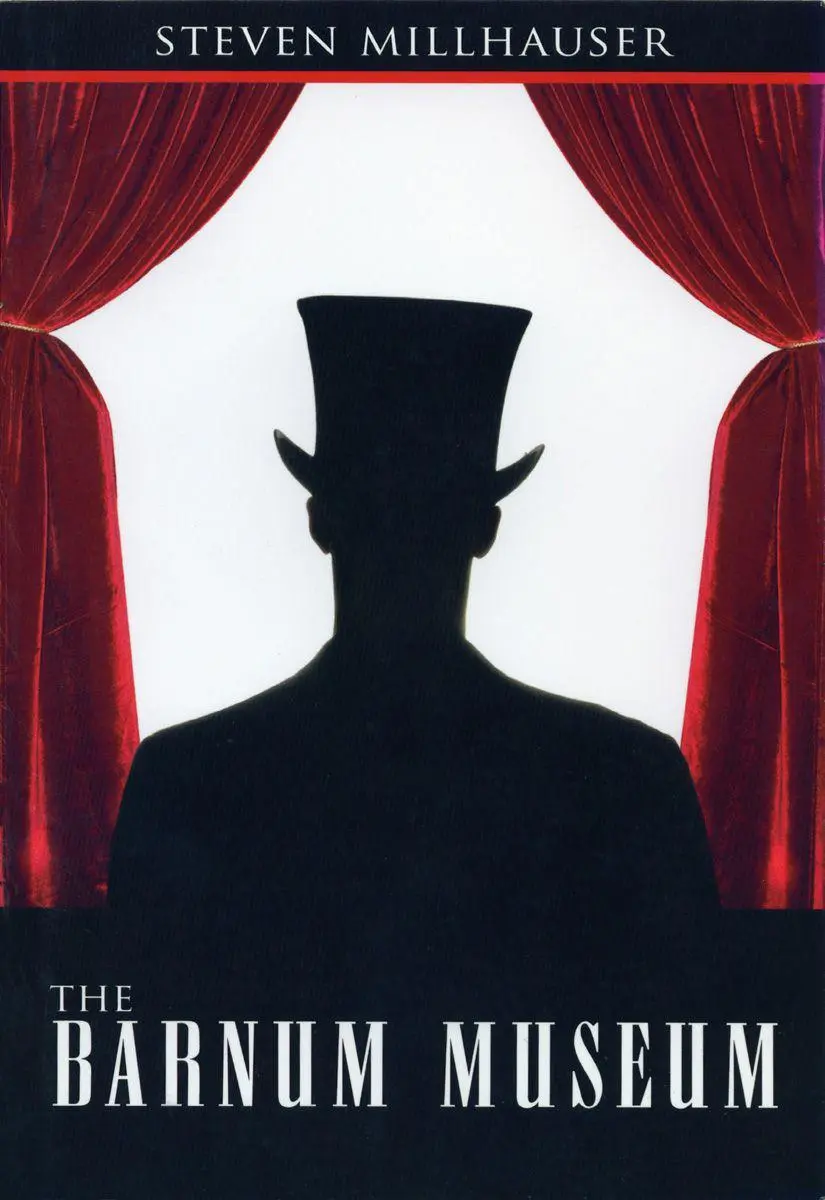
- Название:The Barnum Museum: Stories
- Автор:
- Издательство:Dalkey Archive Press
- Жанр:
- Год:1997
- ISBN:нет данных
- Рейтинг книги:4 / 5. Голосов: 1
-
Избранное:Добавить в избранное
- Отзывы:
-
Ваша оценка:
The Barnum Museum: Stories: краткое содержание, описание и аннотация
Предлагаем к чтению аннотацию, описание, краткое содержание или предисловие (зависит от того, что написал сам автор книги «The Barnum Museum: Stories»). Если вы не нашли необходимую информацию о книге — напишите в комментариях, мы постараемся отыскать её.
The Barnum Museum: Stories — читать онлайн бесплатно полную книгу (весь текст) целиком
Ниже представлен текст книги, разбитый по страницам. Система сохранения места последней прочитанной страницы, позволяет с удобством читать онлайн бесплатно книгу «The Barnum Museum: Stories», без необходимости каждый раз заново искать на чём Вы остановились. Поставьте закладку, и сможете в любой момент перейти на страницу, на которой закончили чтение.
Интервал:
Закладка:
In the nights that followed I began to sense a remoteness in Olivia. She seemed a little tired, a little listless; it was as if she had fewer gestures at her command. She avoided my eyes. Was she, even then, preparing her departure? Scrupulously I planned intricate night-wanderings in little-known parts of town, but always I had the feeling that her inner attention was elsewhere; and from behind every house corner, from behind every fir tree and hydrangea bush, I waited for that fiend Orville to appear. One night Olivia held both elbows and gave a little shiver. “Summer’s almost over,” she said. Her words pierced me like a farewell; I noticed it was cool. “Curtain,” Orville said, and gave a sneering bow.
But the nights grew hot again. As if to oblige me, Orville caught a cold and took to his bed. We resumed our carefree wandering, Olivia and I, through the summer-lovely streets, past the sprinklers on the lawns of ranch houses, under the thruway overpass, along rural lanes lined by sycamores and low stone walls; and all was happy, all was well; only sometimes I would raise my head and look about in confusion, as if I had lost track of something; and a pain, a little pain, began in the back of one eye, beating with the rhythm of my heartbeat.
“Oh Robert,” my father said one evening as I ate alone in the kitchen. The swinging door shut behind him; the breeze of its closing touched my face. “About our little talk.” He stood with his hands clasped behind his back. “Have you made up your mind? Interesting expression: to make up your mind. As if the mind were an unmade bed.”
“I’m not feeling well,” I said, scraping back my chair.
Late one night when I was feeling tired, terribly tired, I waited longer than usual before setting forth on my night journey. It was after midnight. Outside I waited impatiently for Olivia. She had not been looking well lately. I searched the yard, walked around the block, set off hesitantly and returned. It was a windy night, nervous gray-blue clouds rushed across the sky, covering and uncovering the moon. I climbed the two staircases to my attic room, descended suddenly and waited outside, returned to my room. There I sat down at my desk for no particular reason and immediately stood up and joined myself on the bed. Through the slightly raised window I heard a soft riot of crickets and a faint rustle or susurration that puzzled me before I suddenly solved it: the dim rush of trucks on the distant thruway. I imagined the austere, heavy-shouldered tribe of truckdrivers crossing and crisscrossing the night, stopping at islands of yellow light in the darkness to sit on gleaming red stools and loop their fingers in the handles of heavy, thick-edged cups. The stools creaked under the truckdrivers and mingled with the chirr of crickets and the distant rustle of trucks. On the attic steps I heard a faint creaking. Slowly her footsteps ascended. I saw the series of comic mishaps — I returning to my room, she looking for me in vain before going off, I descending to look for her in vain — and as I waited for the door to open I remembered the night when I had finished my work and Olivia stood resting one hand on my desk and staring at the window. What had she been thinking? I felt a burst of tenderness and unease, my head was beating like a drum, suddenly the door opened with a cracking sound.
Slouched and slack, with a look of exaggerated innocence, flourishing an unlit cigarette, he slinked his way forward over the black bookpiles, the strewn underwear, the stray shoes and slippers lying on their sides. “Match?” he said, throwing himself into my reading chair and hooking a leg over the arm.
“Where is she?” I demanded.
“Where she’s always been.” He gave a soft snort of laughter and looked about. “Nice setup you’ve got here. Not my style exactly, but then, what is. Match?”
“Look, I’m not feeling well. What do you want?”
“But I’ve just told you. Oh: here’s one. A pause as the villain of the piece strikes a match. In the sudden spurt of the hellish match-flame his pale satanic features — which reminds me, Robert, that line of yours was awful. ‘Look, I’m not feeling well. What do you want?’ Very third-rate stuff. Have you noticed that whenever people feel deeply they speak in cliches? I love you. Do you love me? Don’t leave me. Don’t. The real justification for cynicism is that it improves one’s style. She asked me to bring you this.”
He reached into his shirt pocket and removed a folded envelope. I snatched it from him and removed a folded piece of paper. I shook it open and saw at the top of the page the words Dear Robert . The page itself was blank.
“Is this some sort of joke?” I said angrily.
“Now now, don’t lose your temper, Robert. Artists should never lose control. I hope you’re not losing control, Robert. Not losing control, are you? You know, you don’t understand the first thing about her, you don’t even believe in her, no one is called Olivia, and besides, what’s the point of it all? It’s hopeless, pal. Might as well throw in the towel. Time to hang up your tights, buster. You’re all washed up. It’s all over, bub. This is it.”
He reached into his pants pocket and removed a small black gun. He pointed it at me and his face knotted in rage. I threw up an arm. A stream of water shot past my cheek at the window curtain. He gave a gulp of unpleasant laughter.
I looked at him with contempt.
“But then, Robert, how does that line go? I forget.” He laid a long finger along his cheek and frowned in thought. “Oh, I have it. We are such stuff and nonsense as dreams are made of. And what about me? Poor li’l ol’ me? Sprung up out of god knows where, ill conceived, hastily patched together, a few threadbare gestures — difficult to be civilized, all things considered, under the circumstances. You really might have given it more thought.”
“I don’t know what you—”
“Not that I hold it against you, Herendeen old world-shaker. It suits my, my what, well say my sense of ironic detachment, not to mention my um charming cynicism and my attraction to extremes. And so I live out my life at the edge of the plausible. An example to us all. God bless us one and all, and Tiny Tim. Here. Pick a card.”
He produced from a pocket a fistful of cards and held them fanlike before him. On the glossy backs were pictured a young nun kneeling in prayer, her palms pressed together at her throat, her eyes raised yearningly.
“I don’t have to listen to you.”
“Of course not! And yet you do, don’t you. Here. This one?” He held out daintily a card chosen from one end. I snatched it from him with disdain. On the other side was a slightly blurred black-and-white photograph of the same nun standing with her back to the viewer and looking over her shoulder with a smile. Her wimple was down and her long blond hair lay fanned across her back. She was holding up her habit, revealing black high heels, black fishnet stockings, tense black garters, and the round white bottom of one firm buttock.
I swept my hand through his outspread cards. “You’re nothing but a pack of cards!” I said. Falling slowly, as if they were dry leaves, the cards floated down to the bed, to the floor, to the arms of the chair, and lay still.
“Very nice, Robert. Very nicely done. A nice effect.” Suddenly he sat upright. “It’s unbearably hot in here. Mind if I take off my head?” Placing his hands on his jaw he began pushing, pushing, his eyes were twisted in anguish—“Stop!” I commanded. He dropped his hands and looked at me with a sly smile.
“Why certainly, Robert. Anything you say.” His expression changed to intense concern. “May I speak frankly? You’re not a well man, Robert. Maybe you ought to — you know, go away for a while.” He sighed. “And now I’m tired. Why is that? Good God!” He glanced at his wrist, which was without a watch. “So late already? By jingo, I hope to heaven she. By Jove, I hope it isn’t too late to.”
Читать дальшеИнтервал:
Закладка:
Похожие книги на «The Barnum Museum: Stories»
Представляем Вашему вниманию похожие книги на «The Barnum Museum: Stories» списком для выбора. Мы отобрали схожую по названию и смыслу литературу в надежде предоставить читателям больше вариантов отыскать новые, интересные, ещё непрочитанные произведения.






Обсуждение, отзывы о книге «The Barnum Museum: Stories» и просто собственные мнения читателей. Оставьте ваши комментарии, напишите, что Вы думаете о произведении, его смысле или главных героях. Укажите что конкретно понравилось, а что нет, и почему Вы так считаете.