Steven Millhauser - The Barnum Museum - Stories
Здесь есть возможность читать онлайн «Steven Millhauser - The Barnum Museum - Stories» весь текст электронной книги совершенно бесплатно (целиком полную версию без сокращений). В некоторых случаях можно слушать аудио, скачать через торрент в формате fb2 и присутствует краткое содержание. Год выпуска: 1997, Издательство: Dalkey Archive Press, Жанр: Современная проза, на английском языке. Описание произведения, (предисловие) а так же отзывы посетителей доступны на портале библиотеки ЛибКат.
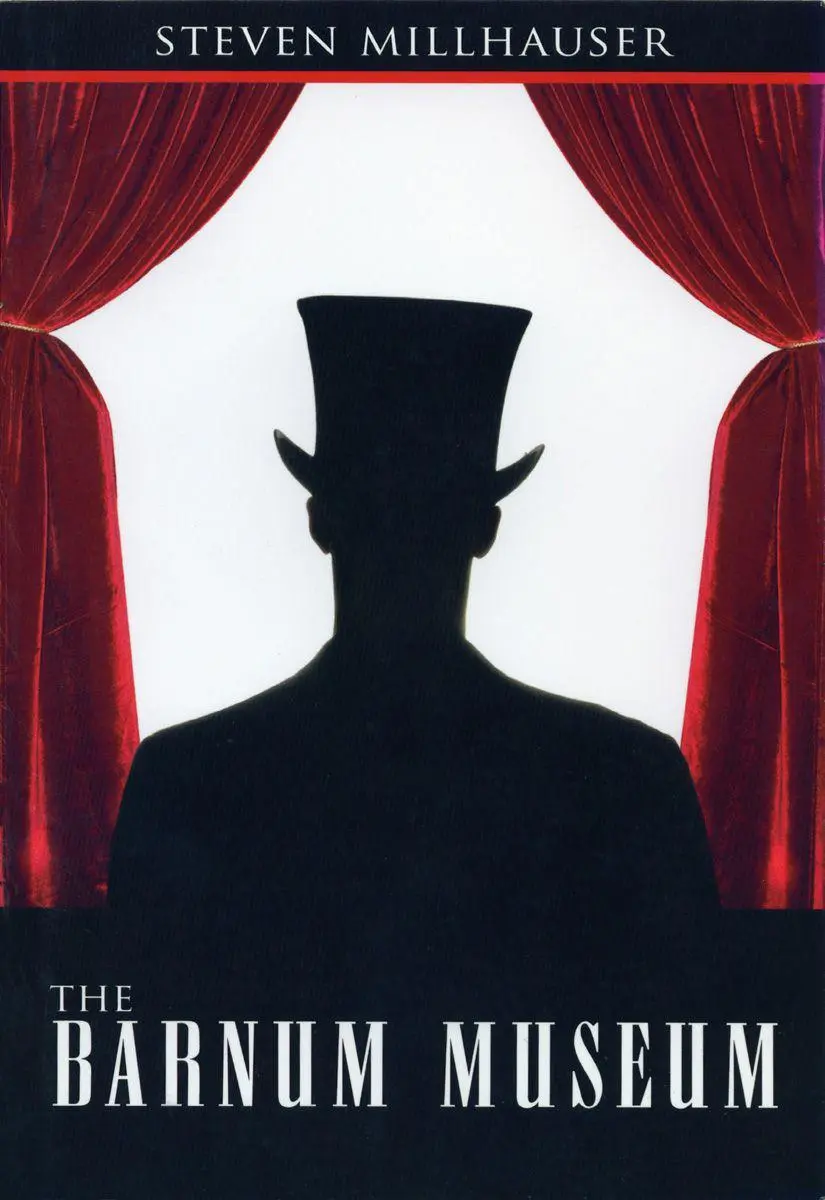
- Название:The Barnum Museum: Stories
- Автор:
- Издательство:Dalkey Archive Press
- Жанр:
- Год:1997
- ISBN:нет данных
- Рейтинг книги:4 / 5. Голосов: 1
-
Избранное:Добавить в избранное
- Отзывы:
-
Ваша оценка:
The Barnum Museum: Stories: краткое содержание, описание и аннотация
Предлагаем к чтению аннотацию, описание, краткое содержание или предисловие (зависит от того, что написал сам автор книги «The Barnum Museum: Stories»). Если вы не нашли необходимую информацию о книге — напишите в комментариях, мы постараемся отыскать её.
The Barnum Museum: Stories — читать онлайн бесплатно полную книгу (весь текст) целиком
Ниже представлен текст книги, разбитый по страницам. Система сохранения места последней прочитанной страницы, позволяет с удобством читать онлайн бесплатно книгу «The Barnum Museum: Stories», без необходимости каждый раз заново искать на чём Вы остановились. Поставьте закладку, и сможете в любой момент перейти на страницу, на которой закончили чтение.
Интервал:
Закладка:
Late.It is growing late. Susan yawns through tightly shut teeth, slitting her eyes and giving a faint shudder. She wonders whether Jacob will tuck her in and talk to her, she wonders whether he will make love to her in the narrow bed in his attic room before leaving for the cot in David’s room. Marian’s large eyes are half closed; she leans her temple on the heel of a hand, so that the skin above her eyebrow is taut, giving her a look of alertness that clashes with her drooping, sleepy air. Jacob has been steadily drinking glasses of wine and cups of coffee; the whites of his eyes are cracked with red, his irises glitter. Now he leans forward on both elbows and runs three fingers of each hand slowly along his temples, over and over; his thick, springy hair has a slightly mussed look. David’s eyes are tired, and burn with Jacob’s cigarette smoke; his heart is beating quickly, as if he has been running. Upstairs, Samuel Ross lies asleep on his back, breathing through his mouth, rasping lightly. Martha Ross, turning heavily in her sleep, half wakes and hears voices from downstairs. She must tell Sam that the children are still up, the children, yes, but again she is asleep. Across from the Ross house a light goes out in an upstairs window of the Warren house. Sandra Warren, closing her eyes in the dark, can hear through the open window the sound of the exhaust fan in the Rosses’ attic and a faint sound of voices from the Ross back porch as she thinks of Bob Schechter coming out of the water with his hair flattened down and his streaming body shining in the sun. A foghorn sounds. The tide is going out; on a blanket on the dark beach, two lovers lie facing each other, stroking each other’s cheeks. Far out on the water a blinking lighthouse shows where the dark water meets the dark sky, before plunging both into blackness. On the other side of the beach a dull red glows in the sky, from the shopping center a mile away. Again the foghorn sounds; on the Ross porch, David listens to it and thinks of train whistles, night journeys, distant cities, all the unseen places longing to be seen.
The rigors of civilized life.Better and better: at the bottom of the stairs Professor Plum comes to another passage, from which he notices stone stairways going up and down. At this point it is still not too late to turn back. The Professor has only to return to the carpeted steps, climb to the top, turn left along the passageway of doors, and proceed to the open space, which stands at the end of the carpeted passage that leads to the fissure; as he rehearses this information, he continues along the new passage, which is intersected by other passages. The Professor is enchanted — by a stroke of luck, he has discovered a honeycomb of secret passages under the mansion. No doubt the original owner, bored by the rigors of civilized life, constructed this shadowy escape from the sunlit realm; or perhaps a number of owners, each discovering the fissure in the SECRET PASSAGE, constructed independent systems of passageways that they cunningly joined to existing systems. As he explores the proliferating realm of crisscrossing passages, connected by numerous stairways to passages above and below, the Professor does not forget that he is on his way to the KITCHEN, or is it the CONSERVATORY. At any moment he plans to turn back.
An unscreamed scream.As Miss Scarlet struggles with the Colonel, she opens her mouth to scream but does not scream. To scream is to secure rescue, to assure the flinging open of the door, the clatter of feet across the hard floor; but rescue means discovery, and Miss Scarlet does not wish to be discovered sprawled beneath the odious Colonel with her crimson dress above her hips and her pink crepe de chine knickers at her knees. She cannot but hope that the door will remain closed; even to struggle is to risk discovery. The unscreamed scream struggles inside her, ripples across her abdomen, makes her fingertips itch. Miss Scarlet realizes that her sudden, involuntary resistance has aroused the Colonel, whose dull brain no doubt teems with juicy images of struggling maidens; she further realizes that the necessary cessation of struggle will satisfy his trite image of conquest. As the seconds pass, and no other sound is heard at the far end of the BALLROOM, Miss Scarlet marvels at the way in which the world has conspired with the Colonel, for whom even the act of vision is hackneyed and hand-me-down, to absorb her into the realm of the imaginary.
Hair.The game is winding down now, and Marian wonders whether David has had a good birthday. He appears to be engrossed in the game; he studies his cards intensely, continually makes marks on his pad, shakes the die over and over in his fist, flings it vigorously onto the board. He is taking on some of Jacob’s characteristics, as he sometimes does: when he flings the die onto the board he gives his wrist a twist that is Jacob’s, and he talks to the die in Jacob’s voice: come on baby, three baby, three big ones for Brother Dave. Jacob has thrown himself into the game; his excitement, which has infected David, makes Marian uneasy. There is sweat-shine on Jacob’s cheekbones and on one side of his nose; his thick hair, ruffled by his thrusting fingers, has sprung out of place. David’s hair has always been different: straight and pale brown, it falls slantwise across his forehead almost to his eyes. From time to time he sweeps it up with a hand, leaving a few long hairs fallen. Marian looks across at Susan, startled by the beauty of her hair. Marian has always been troubled by the thick abundance of her own hair, which breaks the teeth of combs. She remembers David’s childhood hair, silky and brown, the fineness of it, and the sweetness of his scalp’s smell. Susan looks tired. She is far from home, in a strange house. She too is part of David’s birthday. “Susan,” she says, reaching for the bowl of potato chips and realizing that it’s the first time she has said the name aloud. “Can you use some more of these?”
In the darkening corridor.In the darkening corridor Mr. Green stands with his hand on the turned doorknob. It seems to him that he hears dim sounds from deep within the dangerous BALLROOM, but the sounds are so faint that they may be nothing more than sounds of the house itself. The house is full of sounds: loose window sashes knock in their frames, water pipes mutter, floorboards creak, the very walls seem to breathe and sigh. The memory of his discovery in the shadowy corner, and of his awkward, guilty retreat, is so vivid to Mr. Green that he cannot continue his arrested motion. With alarm he realizes that his current posture is no less dubious — anyone happening along the corridor might well mistake him for an eavesdropper, for his hand is on the knob, his forehead is bent forward almost to the wood of the door. Indeed, it would not be difficult to imagine that he harbored a weapon in his waistcoat. Mr. Green looks stealthily over his shoulder: no one. He is alone. He thinks of the quiet arbor in the garden behind his mother’s house, of the well-worn leather of the armchair in his room. His mother had been right: he would not enjoy the weekend.
The Black Hag.The Colonel, at the instant he enters Miss Scarlet, begins to lose interest in her. Miss Scarlet has exhausted her purpose as prey; her remaining usefulness is severely limited. The Colonel prides himself on not being a sentimentalist. His interest, he reflects, will steadily diminish as his thrusts increase in intensity until, at the famous moment, Miss Scarlet will become superfluous: and the Black Hag, bending over him with cold fingers and heavy-lidded eyes, will claim him once again.
The die.The die is a translucent red cube with slightly rounded corners. The spots are sunken, opaque, and white. It is difficult to tell whether the spots are small holes in the surface that have been painted white, or whether they are small white plugs that have been set in holes in the surface. Through any of the six translucent sides, other spots are visible as little reddish lumps shaped like the heads of bullets.
Читать дальшеИнтервал:
Закладка:
Похожие книги на «The Barnum Museum: Stories»
Представляем Вашему вниманию похожие книги на «The Barnum Museum: Stories» списком для выбора. Мы отобрали схожую по названию и смыслу литературу в надежде предоставить читателям больше вариантов отыскать новые, интересные, ещё непрочитанные произведения.






Обсуждение, отзывы о книге «The Barnum Museum: Stories» и просто собственные мнения читателей. Оставьте ваши комментарии, напишите, что Вы думаете о произведении, его смысле или главных героях. Укажите что конкретно понравилось, а что нет, и почему Вы так считаете.