Sarah Hall - The Beautiful Indifference - Stories
Здесь есть возможность читать онлайн «Sarah Hall - The Beautiful Indifference - Stories» весь текст электронной книги совершенно бесплатно (целиком полную версию без сокращений). В некоторых случаях можно слушать аудио, скачать через торрент в формате fb2 и присутствует краткое содержание. Год выпуска: 2013, Издательство: Harper Perennial, Жанр: Современная проза, на английском языке. Описание произведения, (предисловие) а так же отзывы посетителей доступны на портале библиотеки ЛибКат.
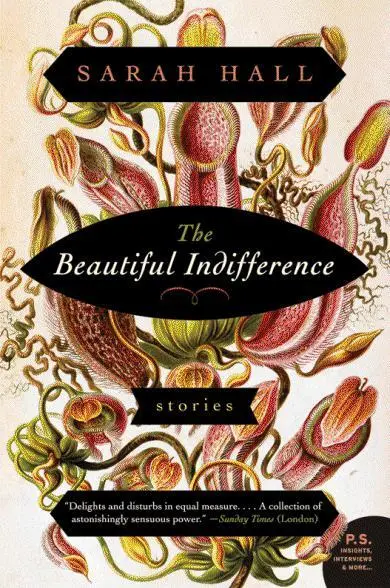
- Название:The Beautiful Indifference: Stories
- Автор:
- Издательство:Harper Perennial
- Жанр:
- Год:2013
- ISBN:нет данных
- Рейтинг книги:5 / 5. Голосов: 1
-
Избранное:Добавить в избранное
- Отзывы:
-
Ваша оценка:
The Beautiful Indifference: Stories: краткое содержание, описание и аннотация
Предлагаем к чтению аннотацию, описание, краткое содержание или предисловие (зависит от того, что написал сам автор книги «The Beautiful Indifference: Stories»). Если вы не нашли необходимую информацию о книге — напишите в комментариях, мы постараемся отыскать её.
The serenity of a Finnish lake turns sinister when a woman's lover does not come back from his swim. . A bored London housewife discovers a secret erotic club. . A shy, bookish girl develops an unlikely friendship with the schoolyard bully and her wild, horsey family. . After fighting with her boyfriend, a woman goes for a night walk on a remote tropical beach with dark, unexpected consequences.
Sarah Hall has been hailed as "one of the most significant and exciting of Britain's young novelists" (The Guardian). Now, in this collection of seven pieces of short fiction, published in England to phenomenal praise, she is at her best: seven pieces of uniquely talented prose telling stories as wholly absorbing as they are ambitious and accessible.
The Beautiful Indifference: Stories — читать онлайн бесплатно полную книгу (весь текст) целиком
Ниже представлен текст книги, разбитый по страницам. Система сохранения места последней прочитанной страницы, позволяет с удобством читать онлайн бесплатно книгу «The Beautiful Indifference: Stories», без необходимости каждый раз заново искать на чём Вы остановились. Поставьте закладку, и сможете в любой момент перейти на страницу, на которой закончили чтение.
Интервал:
Закладка:
After a minute Alistair looked up and smiled.
Hannah, there’s a lounge upstairs that’s very comfortable. It’s free at the moment. Would it be convenient for you to wait ten minutes or so, while I make a quick phone call? That outfit really is beautiful.
When I arrived home it was getting dark. I checked my emails, put a load of laundry into the machine and ran a bath. In the bedroom I took off the suit, covered it with the plastic sleeve and hung it up in the wardrobe. I sat on the edge of the bed and removed my shoes. I turned them over. There was slight scuffing on the soles, nothing more than if they’d been trodden across the gravel path outside the house to break them in. A ladder ran through one of my stockings, following its black seam. I unhooked the clasp and rolled the material down my leg, then took off the other. A bruise was spreading under my hip bone. If he noticed, I would tell John that the car door had swung shut against it in the wind. The marks around my wrists I would have to cover until they faded. I put the stockings back in their packet, took them to the rubbish bin in the kitchen and placed them underneath the topmost items. I reached inside the plastic drum and pushed the waste matter further down towards the bottom, then emptied a half-eaten container of yogurt over everything. I washed my hands, poured a glass of water and went back upstairs.
My skin felt tender as I climbed into the bath. I took my hair down, lay back against the enamel and closed my eyes. I could still see the patterns in the green wallpaper at The Agency and the elaborate wrought-iron rosettes in the banister of the staircase. Those dripping orchids. I could see the interior of the cab that had driven me through the wet, leaf-strewn streets. The hotel foyer and the number of the room. The black petals of the brooch pinned to my burgundy jacket, and the jacket lying in a dark pool of material on the floor. He was not exact, not as I had imagined. He had asked for a phrase, to stop everything, and I had given John’s mother’s name, Alexandra, but it had not been used.
After half an hour in the bath I felt loose and hot, as if I were beginning to come apart, as if I was as smooth as the water. I stood up, pulled the plug out and turned the shower to a cool setting. When I had dried myself and dressed I went into the lounge to clear up the children’s mess. Jamie’s school jumper was stuffed behind the settee, there were magazines and books scattered about, a sweet stuck in the fibres of the rug. It was too late to think about work, so I shut the computer down. In the hallway my bag was open and inside it I could see the blue light on my phone flashing. There were three missed calls. The first was from John, saying he would be home about seven with Katie after her swimming lesson. The second was from Alistair, confirming my next appointment. I deleted both after listening. The last message was from Anthea King, asking if I could mind her daughter after school the following day. A note of distraction sounded in her voice, and I heard the rattle of the keyboard as she typed something. The message ended. I called her back and agreed to mind Laura. We spoke for a moment or two. There was a pause in the conversation, and then came her gay, indecorous laughter.
Oh, we must catch up soon. I do hope you had a jolly time in the city today.
I was just visiting a relative, I said.
She laughed again. Yes. Of course, darling. Of course.
She Murdered Mortal He
When the fight was over she left the salon tent and walked towards the beach. The way through the jungle was signposted. It was not yet dark. She was not sure what to do. Everything was out of control. She wanted to think clearly, get her bearings. She wanted not to feel so lost, or to feel so lost that nothing more could be taken. Mostly she just wanted to leave their room. She followed the path through the bowed and necking trees. The air was heavy, greenly perfumed, and the avian calls were loud and greasy. The dust felt cool against her feet. She turned left, then right. They had walked this way earlier, after arriving in the complex, to get to the town a mile up the coast, and they’d been surprised by the sudden vertiginous drop. The jungle ended abruptly and the dunes were incredibly steep. There was no gradation. The dark canopy, with its humidity and silicone music, gave way to a long corrugated ramp, ionic sea wind, vast space — two utterly different realms. The path wove through the brush. She stooped under low branches, careful, despite the surging recklessness, where she trod, not wanting to disturb snakes coiled under the leaves.
What’s wrong, she had asked him, as they lay on the bed after their trip into town, stroking his back. You seem distracted.
Nothing, he had said a few times.
But she had persisted. What? What is it?
After a while he had turned.
Something feels different, he had said. Don’t you think so?
They had been together a year. He had said nothing like this before. She had knelt upright at the corner of the bed, and put her arms round herself. He had begun breathing hard, blowing out, as if what he was saying, or was about to say, was heavy labour.
Something feels wrong between us. We should talk about it.
Then, with such terrible ease, it had all begun to unravel. Their meeting at the Hallowe'en party, and his ridiculous bloody stump. Their conversation about Flaubert, the shared cigarette. The kiss, in his terrible heatless flat. The late-night texts. Their first dinner party with its triumphant co-concocted fish soup. The formative moments, winding away, as if they had never been safe.
She picked her way through the foliage, through muggy, scented chambers. Now the birds around her sounded electrical, like mobile phones. Every time she heard a melodic stammer she thought she would come upon someone talking. But there was no one on the path — the lodge was almost deserted, the other salon tents were empty. And there was no phone signal here. An occasional bar crept up on the display, then disappeared, a faint or false satellite. She stopped. All around were intimately knotted branches. The pulp inside the peeling bark was an extraordinary garish orange. There were leopards in here, they had been told by their driver — elusive, flaxen-eyed creatures that were almost never seen. Or seen too late. They were gradually coming back after years of being hunted. And the thought occurred to her, that if one of them were to take her now, powerfully by the neck, and drag her up into the crux of a tree, what then? Nothing then. She began walking again.
The tide was on the way out. She knew this even before coming upon the beach. She could hear its retreat, the sonorous hiss at the back of its throat. The trees finished. The air thinned. She saw the ocean for the second time that day, and drew a breath. How had she forgotten its scale, its grandeur? The water was a literal blue. All blues. For a moment the scene looked like one of the cheap plasticised paintings of the Mediterranean on sale in the harbours of southern Europe. But this was not the Mediterranean. This was a body of water so prodigious it looked almost solid, except for the ragged crests, the series of spraying breakers that came from far out and swept up the shore, driving sand high into the jungle. This ocean generated its own wind. It bellowed. Its inhabitants were huge breaching creatures that were of no consequence. After an aborted attempt earlier that day they had not swum. Even knee-deep the undertow had been too strong, dragging their feet down into trenches, making them flap their arms, squat forward and wade against the pull.
The holiday had been her idea. She had read an article in the travel section of the Guardian . The writer had urged people to come before the character of the place changed irreversibly. She’d pitched the idea, of being more intrepid, of a different kind of trip, and after a week or two he’d agreed. They had left the hire car at the South African border and been brought to the tiny, fledgling resort in an old white Land Rover with an insecure driver’s door that kept swinging open. The driver’s name was Breck. He was from Richards Bay, but had come north because the opportunities for new tourism were exciting. He taught scuba and arranged whale-watching during migration season. As he drove down the unmade roads he waved to the women carrying canisters and baskets on their hips and heads, and to the children. There were children everywhere. When they passed a man with no hands sitting on an oil drum he said, Look. Long sleeves, I reckon. He’s from Zimbabwe. A few have come here. It used to be the other way round. What do you do? he’d asked them.
Читать дальшеИнтервал:
Закладка:
Похожие книги на «The Beautiful Indifference: Stories»
Представляем Вашему вниманию похожие книги на «The Beautiful Indifference: Stories» списком для выбора. Мы отобрали схожую по названию и смыслу литературу в надежде предоставить читателям больше вариантов отыскать новые, интересные, ещё непрочитанные произведения.









Обсуждение, отзывы о книге «The Beautiful Indifference: Stories» и просто собственные мнения читателей. Оставьте ваши комментарии, напишите, что Вы думаете о произведении, его смысле или главных героях. Укажите что конкретно понравилось, а что нет, и почему Вы так считаете.