Sarah Hall - The Electric Michelangelo
Здесь есть возможность читать онлайн «Sarah Hall - The Electric Michelangelo» весь текст электронной книги совершенно бесплатно (целиком полную версию без сокращений). В некоторых случаях можно слушать аудио, скачать через торрент в формате fb2 и присутствует краткое содержание. Год выпуска: 2010, Издательство: Faber and Faber, Жанр: Современная проза, на английском языке. Описание произведения, (предисловие) а так же отзывы посетителей доступны на портале библиотеки ЛибКат.
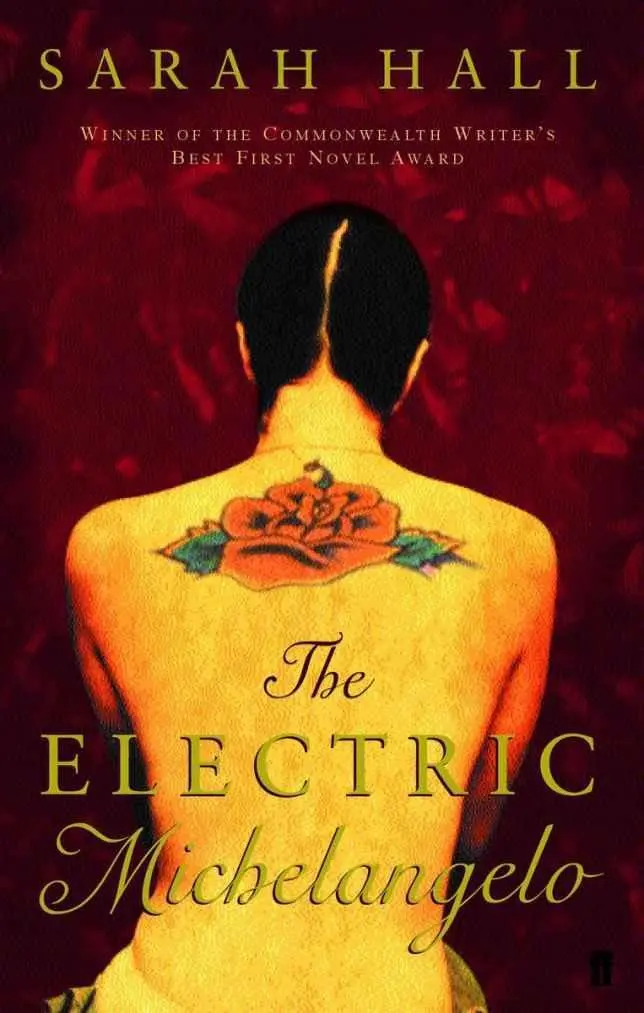
- Название:The Electric Michelangelo
- Автор:
- Издательство:Faber and Faber
- Жанр:
- Год:2010
- ISBN:нет данных
- Рейтинг книги:3 / 5. Голосов: 1
-
Избранное:Добавить в избранное
- Отзывы:
-
Ваша оценка:
The Electric Michelangelo: краткое содержание, описание и аннотация
Предлагаем к чтению аннотацию, описание, краткое содержание или предисловие (зависит от того, что написал сам автор книги «The Electric Michelangelo»). Если вы не нашли необходимую информацию о книге — напишите в комментариях, мы постараемся отыскать её.
The Electric Michelangelo — читать онлайн бесплатно полную книгу (весь текст) целиком
Ниже представлен текст книги, разбитый по страницам. Система сохранения места последней прочитанной страницы, позволяет с удобством читать онлайн бесплатно книгу «The Electric Michelangelo», без необходимости каждый раз заново искать на чём Вы остановились. Поставьте закладку, и сможете в любой момент перейти на страницу, на которой закончили чтение.
Интервал:
Закладка:
Cy had heard it said that twenty thousand light bulbs blew out on Coney every day — he himself lost one every month or so. In the first decade of the new century it boasted to consume more power a week than an average American city, and when Cy got there it had only added to itself after the sporadic fires that from time to time took down its magnificently housed attractions. Perhaps it was the smell that characterized the place for Cyril Parks. Not the perspiring adrenalin of its customers or the popped corn, the fry of meat and potato knishes, Nathan’s nickel hotdogs, not even the grease on the runners of the newly refurbished Steeplechase, or the salty sea air on the skins of the customers. Other seaside resorts had those qualities, Morecambe Bay had those qualities. What characterized Coney Island was the bitter, slightly sulphuric odour of lights popping, of electric energy being fundamentally used up and escaping from behind glass.

The day that Lulu died was the day Cy knew with certainty that the place itself was also doomed to expire. Something had belly-flopped hard and was smarting. Some vital ingredient of the Island was curdling. The management was killing one of the park’s elephants. It turned out to be blasé amusement, for all its hideous effort. The beast, normally gentle, had accidentally killed a man, backing over him while avoiding a speeding vehicle on the road so that his chest and legs were crushed, and his bones made themselves known to the world through his flesh. Lulu was usually found wearing tassels and twirling batons in the Luna circus. She had spent years carrying excited children in a woven basket on her back. Her execution was advertised in the papers and Cy did not truly know why he attended it but he did so. And he was sorry that he did, sorry with himself and his disgraceful curiosity, and sorry for Lulu, who must have known from the way the eyes of humans had changed from kind to cold when they regarded her after she felt the delicate crickle-crackle of skeleton underneath her foot, that she was no longer loved. And then Cy was sorry for Coney Island, for its maliciously disassociated behaviour and its fate. Lulu had been, at one time, a very popular attraction. She could stand up on her hind legs and balance a person on her head. She could kneel and turn tricks with balls and hula-hoops and blow peanuts into the crowd, catch them in the gripping tip of her trunk when they were thrown back. Nobody seemed to care that the twenty-year-old mascot of the circus was condemned, except for her trainer who was restrained in his house that day and eventually given a sedative by a doctor to prevent him from harming himself or anyone else in an effort to save her. Nobody else shed a tear when the switch was thrown, and maybe that was not so very surprising.
Because the place was going down the tubes. Because it had begun to stink. Because there had been a reduction of reactivity to stimulus lately, for it seemed even in the new world with its distant limits to freedoms, you could only go so far before nothing worthwhile and appealing was left. The people had become unimpressed, like devilish abusers who were filled with ennui, they had molested entertainment, consumed it and driven up their tolerance for being entertained, they wanted bigger, they wanted better, more muck, more magic, and they were not getting it. Cy could see it in the glassy, unblinking eyes of onlookers when Madame Electra took to her mains-fed chair and hit the button, and he knew just what they were thinking.
— So the broad likes to sizzle, so what else is new?
And when Swiss Cheese Man threaded metal hooks through holes in his body and was hoisted up on cables into the roof of the tent where he performed, the applause was staccato, bored. There was a disinclination to ride the chutes more than once, children used to run back for another go, and another, and another, now they whined to their parents for candy instead. Things changed accordingly and rapidly. If a ride didn’t appeal and make money it was dismantled. It was out with the old, in with the new, and nobody wanted to put a hand to a brow and squint down the road to the future to see where the artificial replacement would end, at what point there would be nothing left to consume. It seemed that every day when Cy came to work there was something being packed away in crates and something else being unloaded and bolted together. The Island’s thrill was diminishing year after year. Movies were now in vogue and cheap and a step further out into an abstract world where fantasy was less touchable, less refutable, wires were less visible when people flew.
As a reward for their dissatisfaction, the public had been given new and more shocking shows, spineless children in wicker baskets, human beings born as if through a washingmangler, things Cyril Parks, with his moderate sensibilities, had trouble reconciling. But the worst had already been seen and there was not the strange anthropology of Nature’s Mistakes any more, which had once educated and delighted New York’s citizens, it was simply perpetual titillation, sickness for its own sake, the search for a high. Dreamland itself had burned years earlier and the original dreams of the place were still being eaten by the flames. Gone was the noble entertainment model. The crowds had become hooked on the salacious, that feeling in the stomach, that rush. The once-great inventors and builders of the Island had died or were bankrupt, now the place was reduced to the mere business of fake-freakery and fast metal, the give-them-what-they-want theory. And the crowds knew it. And the workers knew it, and they knew the crest of the wave could not last. It was why everyone talked quickly and at cross-purposes to each other about work, not answering questions about new routines or costumes. It was why the dwarfs in Midget Land grew suddenly concerned with their bank accounts and their retirement plans.
Coney now had all the desperation of a mistress high on some cheap substance, eager to please her lover, terrified and motivated by the knowledge that he was becoming less interested in her charms and she could no longer instinctively guess his fetish or cavort to his wishes. So there was a sense that, although things continued at an alarmingly intense level of savage entertainment and consumer demand, the full-steam-ahead status quo could not go on. If Coney was the city’s whore, the city’s narcotic escape, the desperation of her sexual effort was climaxing in some unimaginable and deviant and tragic way.
And so Lulu’s death became more of a thrill than her life. And it disappointed. The circus management charged ten cents entry to see her demise. She was led into the ring she had been led into so many times before and though it was not the man she was used to having lead her, she still went. She was about to kneel and begin her act when she felt unfamiliar copper coils placed around her two front legs but she was a trusting animal and she did not protest. She lifted her trunk and showed her crinkled lips to the audience, expecting a cheer. Cy looked around. People were chewing on roast nuts they had bought from a vendor, picking sticky pieces out of their back teeth with their fingernails. After a few seconds of massive voltage Lulu’s hide began to smoulder and her eyes rolled back. After years of service, one wrong back-step over a passing pedestrian and she was no better than glue, or four hollow umbrella stands, no better than the profit she represented. She made no sound, not even the bleat of a smaller animal, her mouth was paralysed and unable to vocalize what she felt. But Cyril Parks knew what she felt, or at least he knew in part what she felt. That rigid, disempowering energy that makes every fibre in the thing it touches a slave to its command, that white-hot possession. He knew from Mrs Preston’s electro-therapy head-gear. Except that Lulu had no friend to knock off the switch when she had taken her fill of electricity, the courtesy that Jonty and Morris had once paid him. Her quivers seemed not to match her size, and to Cy that marked the tragedy of the event, the pathos of it — that muted quality, which ultimately failed to please the audience, for their gladiatorial thumbs remained down. Her death throes were just subtle ripples in her great grey body, small ruffles on the vast surface of skin and along her ears. Her trunk straightened a fraction, her softer parts began to blacken. She must have died before the power was knocked off, for she did not stagger and sway before slumping to the side when it was finished. Her life popped. She dropped. She went out immediately like another of Coney’s bulbs.
Читать дальшеИнтервал:
Закладка:
Похожие книги на «The Electric Michelangelo»
Представляем Вашему вниманию похожие книги на «The Electric Michelangelo» списком для выбора. Мы отобрали схожую по названию и смыслу литературу в надежде предоставить читателям больше вариантов отыскать новые, интересные, ещё непрочитанные произведения.



Обсуждение, отзывы о книге «The Electric Michelangelo» и просто собственные мнения читателей. Оставьте ваши комментарии, напишите, что Вы думаете о произведении, его смысле или главных героях. Укажите что конкретно понравилось, а что нет, и почему Вы так считаете.