Sarah Hall - The Electric Michelangelo
Здесь есть возможность читать онлайн «Sarah Hall - The Electric Michelangelo» весь текст электронной книги совершенно бесплатно (целиком полную версию без сокращений). В некоторых случаях можно слушать аудио, скачать через торрент в формате fb2 и присутствует краткое содержание. Год выпуска: 2010, Издательство: Faber and Faber, Жанр: Современная проза, на английском языке. Описание произведения, (предисловие) а так же отзывы посетителей доступны на портале библиотеки ЛибКат.
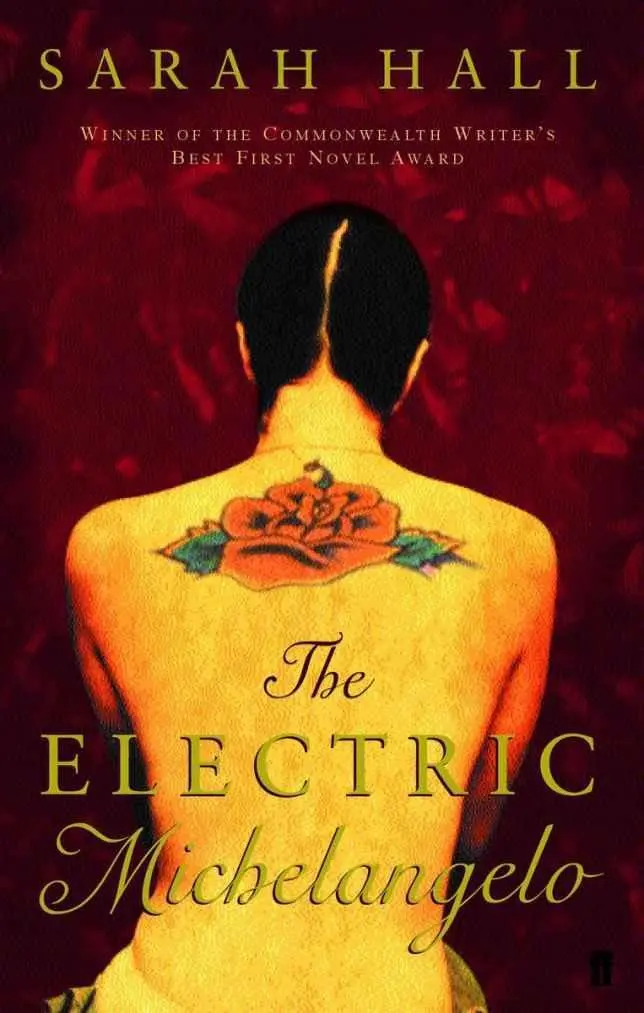
- Название:The Electric Michelangelo
- Автор:
- Издательство:Faber and Faber
- Жанр:
- Год:2010
- ISBN:нет данных
- Рейтинг книги:3 / 5. Голосов: 1
-
Избранное:Добавить в избранное
- Отзывы:
-
Ваша оценка:
The Electric Michelangelo: краткое содержание, описание и аннотация
Предлагаем к чтению аннотацию, описание, краткое содержание или предисловие (зависит от того, что написал сам автор книги «The Electric Michelangelo»). Если вы не нашли необходимую информацию о книге — напишите в комментариях, мы постараемся отыскать её.
The Electric Michelangelo — читать онлайн бесплатно полную книгу (весь текст) целиком
Ниже представлен текст книги, разбитый по страницам. Система сохранения места последней прочитанной страницы, позволяет с удобством читать онлайн бесплатно книгу «The Electric Michelangelo», без необходимости каждый раз заново искать на чём Вы остановились. Поставьте закладку, и сможете в любой момент перейти на страницу, на которой закончили чтение.
Интервал:
Закладка:

But always there were the times of seizure, when thoughtful doctrine and moments of kindness or enlightenment were lost. Times when the man took back every decent thing he issued. Like the sea coming quick up the shore, opaque and silty and fouling, to retrieve its temporary leavings. Cy was no longer just an associate, just an orderly who collected the wandering drunken madman from the piers and alleyways of Morecambe, he was not indulged with satisfactory distance any more. He was Riley’s Boy. He was implicated in his behaviour. The stories that went about town, that bit at Riley’s ragged temper and fanned the flame of belligerence within him, now included Cyril Parks — he was the antidote to all the venom, the one they’d come searching for to talk the man off a half-beaten body and retract the knife nicking a throbbing jugular, or to help Paddy carry the purpling, moaning body from the Dog and Partridge to the rooms above the tattoo parlour, and sometimes to fetch the doctor when Riley was pissing blood. Cy was the tidy, busy suffix by name and then by nature, the coda at the end of all the stories. The story of Riley drunk at the carnival and livid, overturning a float carrying rice-throwers, sending children flying, because the drains of Pedder Street were blocked up with rice and Riley’s pipes were overflowing so he had to see his own shit, he had to smell his own shit, and it was too close to something in him or of him to simply clean it up without roaring down the culprits and blaming them for his stench. And Cy had to talky-talk the mothers away from their primordial fury over their children’s injuries, for they would have lynched the goading, unrepentant Riley, torn him into shreds, he saw it in their faces, had there not been a grey-eyed boy between them, like a single, durable ash tree between two quaking mountains. The story of the fire in 1925, that took away the central pier, a slow fire this time without a helpful blizzard, that meant the looters could first charge through the abandoned buildings over the sea and help themselves to what the owners couldn’t carry, and Riley and six other men sat drinking beer as fast as their oesophagus tunnels could convey it to their stomachs in the Pier bar. Then just Riley, daft with alcohol and alone, pouring another glass of ale as the fire crept past him on the counter, singeing his jacket sleeve, until, hearing that some skinflint idiot was left inside the now-prodigal inferno, Cy ran in and screamed murder at Riley and called him Eliot and hit him for the first time in his jaw to get him to follow him out. Jack-Frost eyes couldn’t quite decide whether to pummel his lackey for laying one on him or shake his hand for the rescue operation as the pier collapsed behind them, so in the end he did neither, just stared at the boy. The story of the General Strike in ’26, when Riley made a point of shutting up the shop, politically, with a banner hung in the window, while all the other businesses scabbed the order, and he went about the town like a proletariat crusader unhooking the horses from their trams and throwing their bells into the ocean, until he was arrested for being a public nuisance. The bail money spent from the sum that Reeda had left her son was never recovered by Cyril Parks from he whom it had saved. And it was more than any wage the man had ever paid him.
The art lessons, if they could be called such a thing, had no formal structure and no chronology. They had decidedly riprap foundations. They came whenever Riley felt like sharing his wisdom, axe-hewn from history and varnished into hard fact-like items by his own resinous, sap-seeping philosophy. How Raphael faked his genius, fooled the world with his too-posed, too-pretty, too-poncy figures, the more refined and idealized he got the more he gave back what the Renaissance had recovered from the Dark-Age graves of mighty empires, namely the accurately imperfect human anatomy. How Dante Gabriel Rossetti went grave robbing to retrieve some poems he had coffined with his lover, because art and desecration were as close as an incestuous brother and sister. How Rembrandt painted his portrait face from adolescence into death and wasn’t afraid to show just what an ugly bugger he had been, because ugly was simply beauty in a place across the river. How Courbet, Gustave Courbet, now there was a rabble-leader, there was a people’s hero, armed with undeniable talent had won his way into the most prestigious gallery in his native country and shocked the whole of France with his masterpiece, The Stone Breakers, as well as if he’d laid his castrated tackle in a dish before Le Salon. How Edouard Manet had put a slut along a sacred icon’s bed, posing her with symbols of her wayward cunt, how he’d cut the childbearing hips off every woman in artistic memory to say that she was pleasure without responsibility, how he’d made a whore out of faithful, chaste tradition. How Caravaggio had painted the portrait of a poor carpenter, possibly his own father, and dared to say that the son of God was surrogated to this old, this broken-bodied, callused-handed worker. And there was Blake with his mutative, folded-together mind and his temporal visions and his careful illustrations of heaven and hell, of tigers and lambs, the opposing hemispheres of humans. These were the things of art. Taken by the rich from the poor, but a poor man’s currency no less. They were beautiful and they were malignant and they were the things of genius.
There were always fellows hanging around Riley’s studio. Men and boys drawn to the base intrigue of the profession, that which it represented, the disreputable image. They were males on the cusp of maturity, or just past where its borders were considered to be, those who wanted an endorsement of their manhood, their tougher qualities, and so they sought out models straddling the rawer end of society with which to affiliate themselves, from which to draw estimation, or perhaps identity. They would last the duration of Riley’s tolerance, or until his curt humour, his abuse, became unworthy of the thrill of association with the town’s best and most infamous tattoo artist. Until the myth of butchery and colouring skin was exploded for them or until professionally damaged flesh was no longer violence enough and trouble took them someplace new.
At heart Riley was a solitary, and though he was open to flattery, to appreciation of his showmanship, he did not require crowds to conduct business. In each of the other shops in town similar hangers-on might have been found; they amplified and reinforced the proprietor’s ego, his position as noncomformist hard man. They might be turned by the owner’s hand or barking command and aimed at potential troublemakers, the inevitable brawling, like the big dogs employed to guard the fairground rides from thieves and travelling gypsies out of season. But at Riley’s they served no such purpose. There was little titillation for them beyond the art. The curtain remained mostly closed when Eliot Riley was working. He himself waded in to any turbid situations, to break up fights, to threaten those angling for a scuffle, he did not need mercenary goons at his disposal. But he let the young men sit, two or three at a time, in the outer rooms of the building. For reasons that Cy could never completely grasp, his employer’s shop became host to a variety of scar-faced adolescents and potentially rough young men. Fighters, energetic loafers. Lads not unknown to the local constabulary and the courts. Dirty-faced, unshaven and hatless, they hung about. They had hair that suggested the slip from maternal care, or conventional pride, or employed and codified appearance, into near poverty and reckless self-opinion, the absence of standards. Occasionally an old seadog hung about for a week or so too before the character moved on to another out-of-season coastal town where obscurity and initial pity would bring him luck, drink, and while the vagrant was there Riley might be generous with a quarter-bottle of rum in passing. But the youths were always a guaranteed feature.
Читать дальшеИнтервал:
Закладка:
Похожие книги на «The Electric Michelangelo»
Представляем Вашему вниманию похожие книги на «The Electric Michelangelo» списком для выбора. Мы отобрали схожую по названию и смыслу литературу в надежде предоставить читателям больше вариантов отыскать новые, интересные, ещё непрочитанные произведения.




Обсуждение, отзывы о книге «The Electric Michelangelo» и просто собственные мнения читателей. Оставьте ваши комментарии, напишите, что Вы думаете о произведении, его смысле или главных героях. Укажите что конкретно понравилось, а что нет, и почему Вы так считаете.