Robert Coover - Gerald's Party
Здесь есть возможность читать онлайн «Robert Coover - Gerald's Party» весь текст электронной книги совершенно бесплатно (целиком полную версию без сокращений). В некоторых случаях можно слушать аудио, скачать через торрент в формате fb2 и присутствует краткое содержание. Год выпуска: 2011, Издательство: Penguin Books, Жанр: Современная проза, на английском языке. Описание произведения, (предисловие) а так же отзывы посетителей доступны на портале библиотеки ЛибКат.
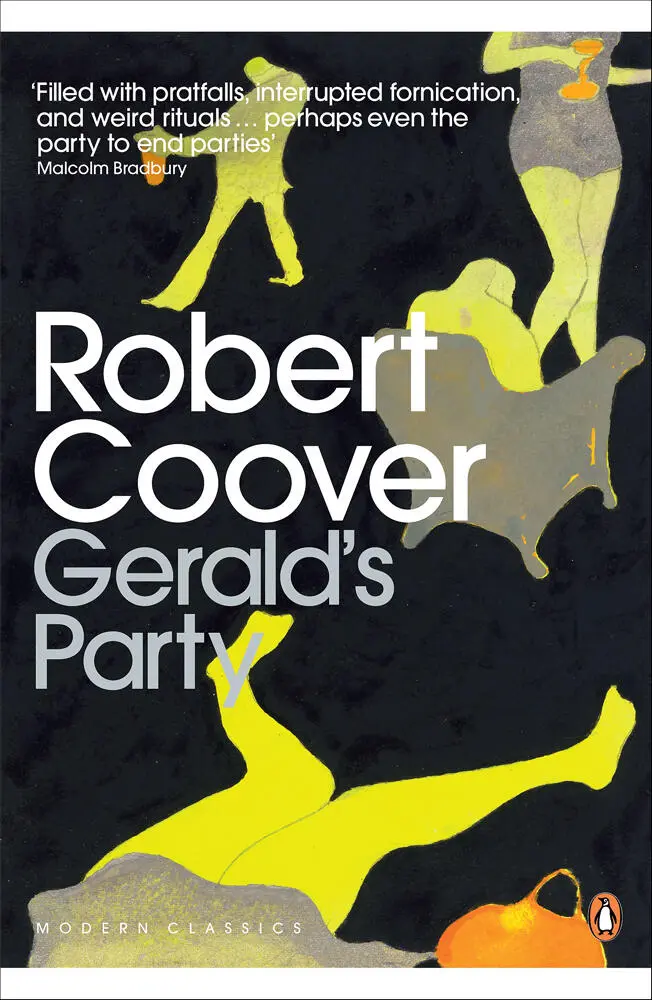
- Название:Gerald's Party
- Автор:
- Издательство:Penguin Books
- Жанр:
- Год:2011
- ISBN:нет данных
- Рейтинг книги:4 / 5. Голосов: 1
-
Избранное:Добавить в избранное
- Отзывы:
-
Ваша оценка:
Gerald's Party: краткое содержание, описание и аннотация
Предлагаем к чтению аннотацию, описание, краткое содержание или предисловие (зависит от того, что написал сам автор книги «Gerald's Party»). Если вы не нашли необходимую информацию о книге — напишите в комментариях, мы постараемся отыскать её.
Gerald's Party — читать онлайн бесплатно полную книгу (весь текст) целиком
Ниже представлен текст книги, разбитый по страницам. Система сохранения места последней прочитанной страницы, позволяет с удобством читать онлайн бесплатно книгу «Gerald's Party», без необходимости каждый раз заново искать на чём Вы остановились. Поставьте закладку, и сможете в любой момент перейти на страницу, на которой закончили чтение.
Интервал:
Закладка:
But when I turned around, there was Cynthia holding the rabbit up, waving it like a flag. Mark ran to her, arms outstretched, and I followed. It even had its ears on again. ‘Thanks, you saved my life,’ I said.
‘His ears are all funny!’ Mark exclaimed. She’d pinned them on backward.
‘Oh, I’m sorry — I guess I don’t know much about rabbits!’
‘He’s wearing them that way for the party,’ I suggested. ‘You know Peedie — anything for a laugh.’ I winked wearily and Cynthia smiled. There was a faint blush on her skin from the darkroom light. ‘We’ll fix them back tomorrow.’
‘Naughty Peedie!’ Mark scolded, giving the thing a thump. Then he hugged it close, pushing a finger up its hole, a thumb in his mouth.
‘You’re so good with children,’ Cynthia said.
‘Did you get into the TV room?’ Woody asked her, coming up from the cellar stairs as I was leading Mark away.
‘Yes. It was a disappointment.’ Someone behind us laughed at that: ‘It always is!’ Woody, I’d noticed, was still in his underwear, but his shorts were on backward now. His hair was mussed, his eyes dilated from the cellar dark. ‘They’re in there now watching slow-motion replays of the doctor’s wife.’
‘Mavis …?’
‘… A story …’
My grandmother used to tell me a story about a man who had to climb a staircase with a thousand steps to get to heaven. She’d start at the bottom and take them one by one, and I’d always fall asleep, of course, before the man reached the top. I remembered — would always remember — the terrible ordeal of that climb, as I struggled desperately to keep my eyes open to the end, and I still had dreams about it: poised halfway up an infinite staircase, my legs gone to lead. For a while I even supposed a thousand might be an infinite number, but I tried counting it in the daytime and found it only took me ten or fifteen minutes. In fact, as I learned on mountain holidays with my father, it’s not even that high a climb. Of course my grandmother always counted slower than I did, but that still didn’t explain why I always fell asleep halfway up and usually sooner. I thought it might be the sleepy rhythm of the counting itself, so to counteract it I tried to distract myself with puzzles and memories and silent stories of my own. This was even less successful than concentrating on the counting, and what was worse, I seemed to lose the stories and memories I used that way. It was as if they were getting sucked up into the counting and there erased. Not that I wouldn’t have sacrificed them willingly to reach the top, to be able to see what the man saw, but clearly they were not the route. It seemed that nothing was, and I even began to worry that there might be something wrong with me, something having to do with words I’d been learning about like ‘souls’ and ‘corruption’ and ‘predestination.’ I remembered startling my parents one day on a drive to my grandmother’s house by asking them what was original sin. ‘Not being able to read a roadmap,’ my mother said drily, and my father laughed and said: ‘Being born.’ Then one day I suddenly discovered my grandmother’s secret. It was simple. There was always a preamble to the climb, a story about who the man was or how he’d died — often she claimed it was a relative or someone who’d lived there in town — and then a more or less elaborate account of his travels through the next world before he finally reached the stairs. And of course my grandmother was tailoring the length of this prologue to my own apparent sleepiness and the lateness of the hour. So I laid a trap for her, curling up in a corner early as though exhausted, pretending to fall asleep on her shoulder as she put my pajamas on, yawning and dozing through her preliminary tale until she got the man to the bottom step, letting him climb the first dozen or so, so there’d be no turning back. During these first ponderous footfalls, as I lay there with my eyes closed, I felt a momentary rush of guilt for having done this to my grandmother, and I nearly chose to carry the deception right on into feigned sleep — or real sleep, it might have got mixed up. But curiosity got the best of me, I’d waited too long for this: before I even knew it, I was sitting bolt upright in bed, hugging my knees, my eyes wide open, watching her intently. She gave no sign that anything was different, proceeding resolutely, step by step, toward the top, as though this was the way she’d always told it — and how could I be sure she hadn’t? The first four hundred steps or so were excruciatingly difficult — I was partly right about the incantatory powers of the slow ascent, and in spite of all my preparations, they nearly did me in. I perked up a bit after that, animated by the challenge of getting at least halfway, but then faded again around seven hundred, even losing a number of steps altogether — or perhaps my grandmother, seeing my eyes cross and my head dip, skipped a few. As the man started up the last hundred steps, I felt a surge of excitement — suddenly it was the best story I’d ever heard and I was wide awake. At last! But, typically, I’d peaked too early. Fifty steps later I was sinking again, overwhelmed by a thick numbing stupor. I couldn’t believe it. What was the matter, I asked myself fiercely, didn’t I want to see it? Didn’t I want to know what it was like? I pinched myself, shook my head, bugged my eyes, tried to bob up and down in the bed, but I couldn’t shake it off. Each step the man took fell like lead in my brain. It was as though my whole body had turned against me, refusing me at the last moment all I’d struggled for. I couldn’t see my grandmother, just the steps, looming high above me. The numbers tolled hollowly in the back of my head like heavy bells. It was my first true test of will, if there is such a thing, and as the man climbed the last steps up through the clouds, I must have looked a bit like him — largely lifeless, staring rigidly, teeth bared, grimly hanging in. Amazingly, we both made it. When he pulled himself up that final step, I was paralyzed with fatigue and anxiety, but I was at least able to see my grandmother again. ‘And what do you think he found?’ she asked. Her expression was the same as when she’d begun. ‘What?’ I responded hoarsely, almost afraid. ‘You tell me,’ she said. I thought it might be a riddle, a final test, or her way of helping me wake up enough to hear the end. ‘Angels,’ I said. The back of my neck ached from trying to hold my head up. ‘And lots of toys and candy and things.’ This didn’t seem serious enough. I was trying to remember things I’d read or been told. ‘God — and his own father and mother. And grandmother.’ ‘Yes …’ She seemed to want something more. I sank back on the pillow, trying to think. ‘Streets made of gold. Flowers that taste good, and … and happiness …’ ‘That’s right.’ I hesitated. My tongue was sore where I’d been biting. And my eyes, which hurt from holding them open, wouldn’t close now. ‘Is that … is that all?’ She tucked me in and gave me a kiss. ‘He found everything he wanted,’ she said and left me. It was a terrible disappointment. I stayed awake for hours thinking about it and it made my head ache for days after. I couldn’t quite think what it was, but I felt I’d lost something valuable — the story for one thing, of course: that special bond, while it remained unfinished, between my grandmother and me, now gone forever. And especially those preambles about the different climbers and how they’d died and then their travels in the afterlife — I found I’d enjoyed them more than I’d realized at the time, obsessed then by the need for denouement, and I wanted them back, but they’d lost their footing, as it were. No stairs at the end now, just an abyss. I kept wondering for a long time afterward if I’d missed something, if I’d maybe dozed off at the wrong moment after all or failed to understand a vital clue. Only years later, about the time my grandmother died and began her own climb — or rather, vice versa — did I finally understand that there was nothing more to search for, that I had indeed got the point. It was, as my grandmother had intended from the first step on, her principal legacy to me …
Читать дальшеИнтервал:
Закладка:
Похожие книги на «Gerald's Party»
Представляем Вашему вниманию похожие книги на «Gerald's Party» списком для выбора. Мы отобрали схожую по названию и смыслу литературу в надежде предоставить читателям больше вариантов отыскать новые, интересные, ещё непрочитанные произведения.





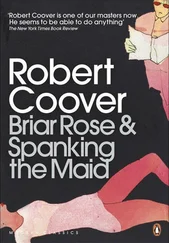
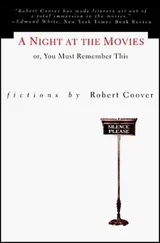
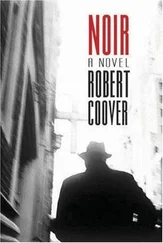

Обсуждение, отзывы о книге «Gerald's Party» и просто собственные мнения читателей. Оставьте ваши комментарии, напишите, что Вы думаете о произведении, его смысле или главных героях. Укажите что конкретно понравилось, а что нет, и почему Вы так считаете.